Over 25 Chinese domestic brands are showcased at the Paris Motor Show. China's automotive industry is pushing forward systematic overseas expansion, and the competitive dynamics between Chinese and European enterprises have completely reversed.
This year's Paris Motor Show really has a distinct vibe of a Chinese auto show.
Why do we say so? Among the more than 60 automakers participating in this year's Paris Motor Show, 16 are Chinese auto companies, with a total of 25 brands, which can be said to occupy a considerable part of the entire exhibition. The presence of Chinese automakers has also increased significantly compared with the last show. This scene reminds Dianchetong of the IAA in September 2025. At that auto show held in Munich, Germany, the participating Chinese manufacturers were only a few brands such as XPeng. Only one year has passed, and the landscape of overseas auto shows has completely changed.
The world-famous auto show thousands of miles away is becoming a new stage where Chinese automakers compete to demonstrate their overseas expansion capabilities, which means that the speed of the Chinese auto industry's going global far exceeds our imagination. Then, what are the new highlights of this Paris Motor Show, and what trend does the gathering of Chinese automakers at the Paris Motor Show represent?
Today, Dianchetong (ID: dianchetong233) will have an in-depth discussion with everyone.
BMW's Temporary Absence, Chinese New Energy Vehicles Collectively Show Their Strength
As one of the world's five major auto shows, this year's Paris Motor Show has seen obvious changes compared with the last edition in 2024.
The first is BMW's absence. Earlier this year, BMW officially announced its participation in the Paris Motor Show, but after the BMW Group issued a profit warning in June and its new CEO Milan Nedeljković launched a series of cost reduction measures, in July this year, both the BMW and MINI brands under the group officially announced their withdrawal from this year's Paris Motor Show.
It is worth mentioning that this year is actually a big product year for BMW, including three models of the new-generation (Neue Klasse) all-electric vehicle lineup: the BMW i3, iX3 M60, and iX4.
All of these models were officially released this year, alongside the mid-cycle facelifted 7 Series, i7 and the fifth-generation X5.
In such a transitional year, BMW's temporary absence from this Paris Motor Show held in its home continent of Europe is somewhat regrettable.
In addition, among Japanese brands, Toyota, Nissan, Mazda, Mitsubishi and other brands have missed the Paris Motor Show for three consecutive editions since 2022, while Honda, which skipped the 2022 and 2024 shows, has returned this year.
After looking at the absent brands, let's take a look at the new highlights of the Chinese brands participating in the Paris Motor Show.
The "old friends" that participated in the 2024 Paris Motor Show, such as BYD, XPeng, Seres and other brands, have also brought new products and technologies this year.
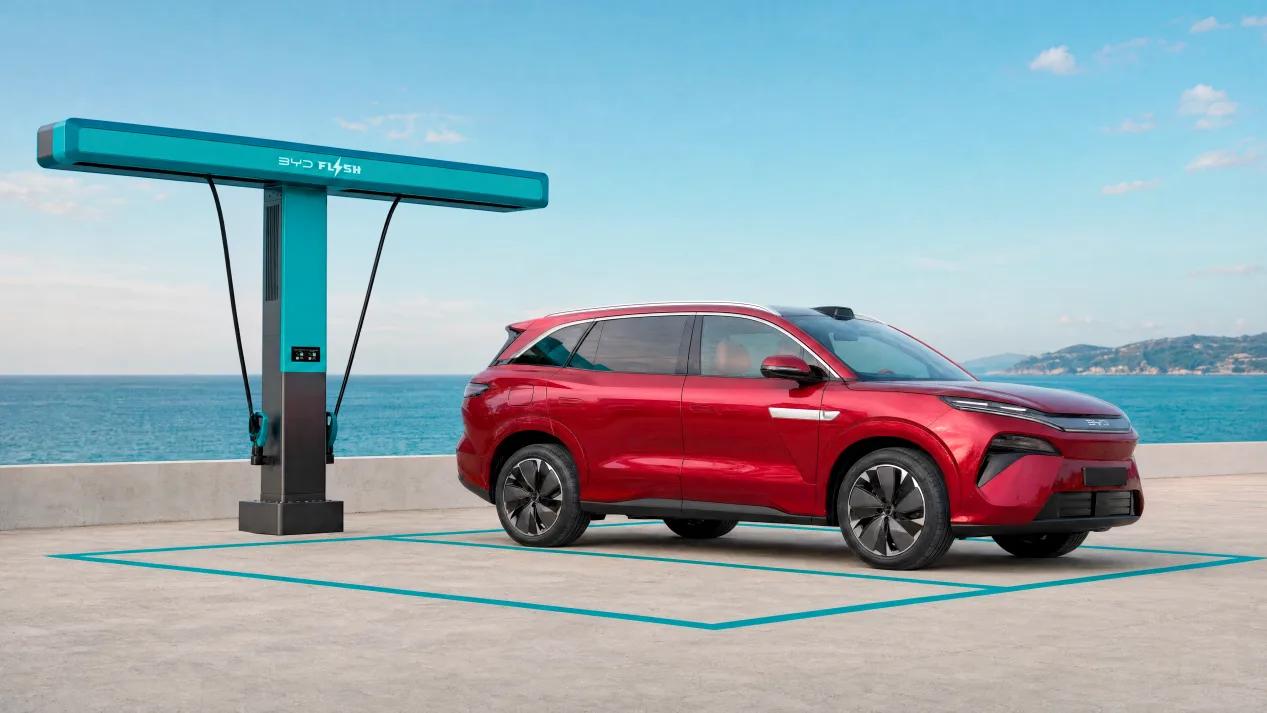
First of all, BYD has two booths at this year's Paris Motor Show, namely the BYD booth and the Denza booth (including the domestic Denza and Fangchengbao brands). Among them, The BYD brand launched its first fast-charging model ATTO 8 (named Tang L in the Chinese market) for the European market, which will be officially launched in the first quarter of 2027. In addition, BYD also officially announced its plan to build 3,000 fast-charging stations in the European market by the end of 2027.
From the perspective of Dianchetong (ID: dianchetong233), the debut of ATTO 8 in the European market marks that BYD's fast-charging technology and fast-charging energy replenishment network are expanding from China to the European market. Moreover, with higher energy replenishment efficiency and a relatively complete fast-charging system, the ATTO 8 and other fast-charging models to be launched in the future are expected to bring considerable competitive pressure to other local new energy vehicle models in Europe.
(Image source: BYD)
As for the focus of the Denza brand, it will be the two-door sports car Denza Z launched in Europe this year. This model has been launched in the UK with a starting price of 142,900 pounds (about 1.3 million RMB) and has not yet been sold in the Chinese market. In addition, BYD's Divine Eye assisted driving system will also be deployed in Europe in 2027, with the first batch of compatible models being the Denza Z9 GT, which will be updated via OTA.
At this year's Paris Motor Show, XPeng not only exhibited products such as new energy vehicles, land aircraft carriers, and IRON robots, but its biggest highlight is the demonstration of its intelligent assisted driving NGP.
At this Paris Motor Show, the organizer organized the "Intelligent Driving Lab" activity, but among all participating automakers, only XPeng and Tesla signed up for this activity. The activity is carried out on public roads in Paris, allowing the audience to intuitively experience the capabilities of the vehicle's assisted driving system, and also testing the adaptation of the assisted driving model to the local roads in Paris, which poses considerable challenges for automakers.
For XPeng, the "Intelligent Driving Lab" activity at this Paris Motor Show is of great significance.
On the one hand, XPeng is competing head-to-head with Tesla, the leading brand in the US smart electric vehicle sector, in Europe, demonstrating the technical strength of Chinese brands in the field of intelligent driving to consumers in Europe and around the world.
On the other hand, XPeng has been actively promoting the deployment of its NGP high-level assisted driving system in the local European market in recent years. Previously, XPeng planned to officially launch the NGP application in the European market in 2027. This public demonstration of the NGP function at the Paris Motor Show can help local consumers better understand XPeng's comprehensive strength in the field of high-level assisted driving, and also attract more local European consumers to place orders for purchases.
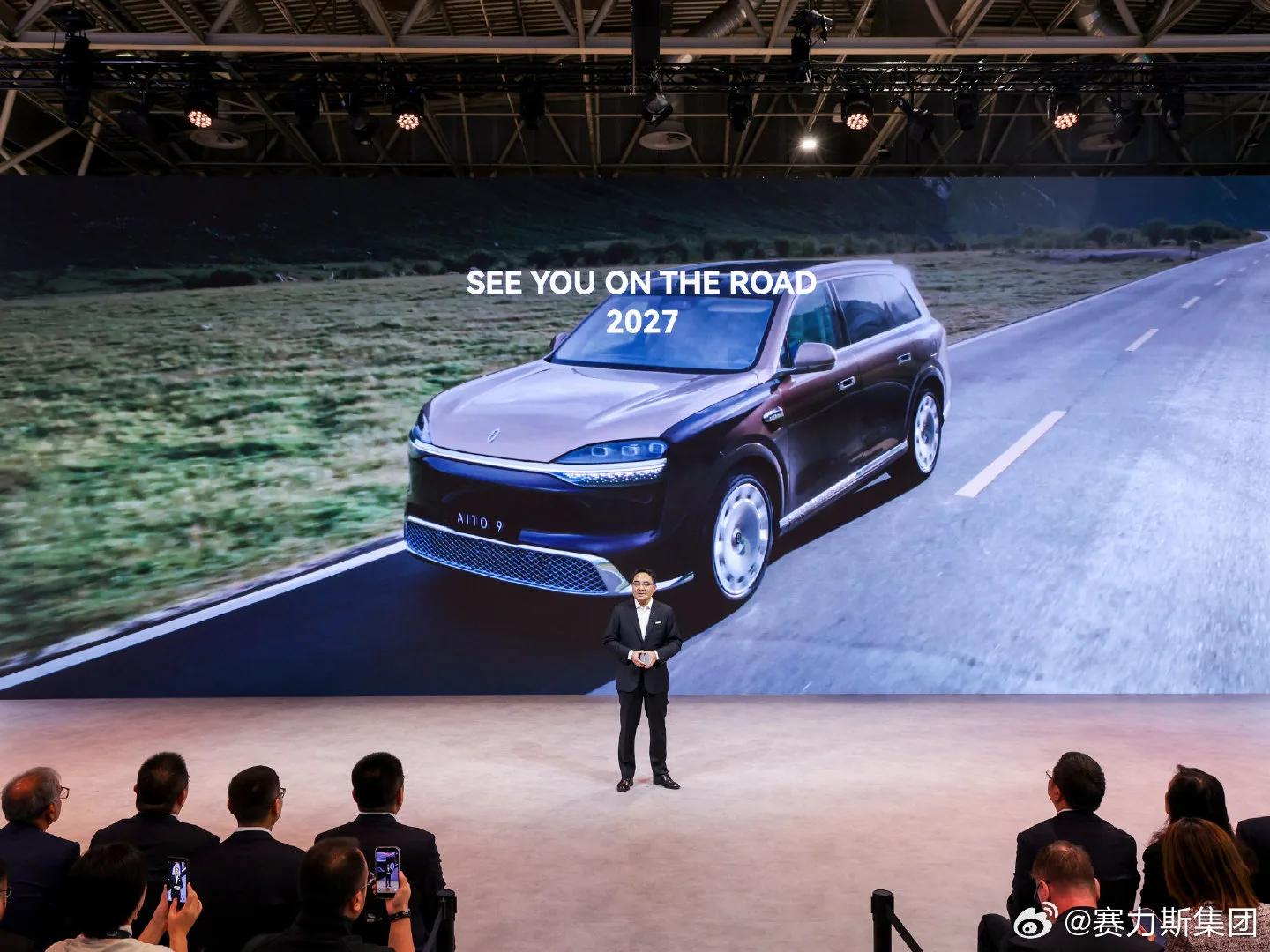
As for the Seres brand, it exhibited four SUV models at the Paris Motor Show this time: AITO 6, AITO 7, AITO 8, and AITO 9 (corresponding to the domestic Wenjie M6, M7, M8, and M9). At the booth, Seres also stated that AITO vehicles will enter the European market in 2027.
(Image source: Seres)
As a leading brand of domestic new energy luxury SUVs, the overseas expansion of the AITO brand finally has a clear timeline this time. With the empowerment of Huawei in product definition, software and hardware technologies, as well as the advantages of the AITO brand in channel construction under the new exclusive network operation model, it is believed that the AITO brand's overseas expansion will bring a small Chinese shock to other local luxury brands in Europe.
After talking about the old friends, let's take a look at the new faces.
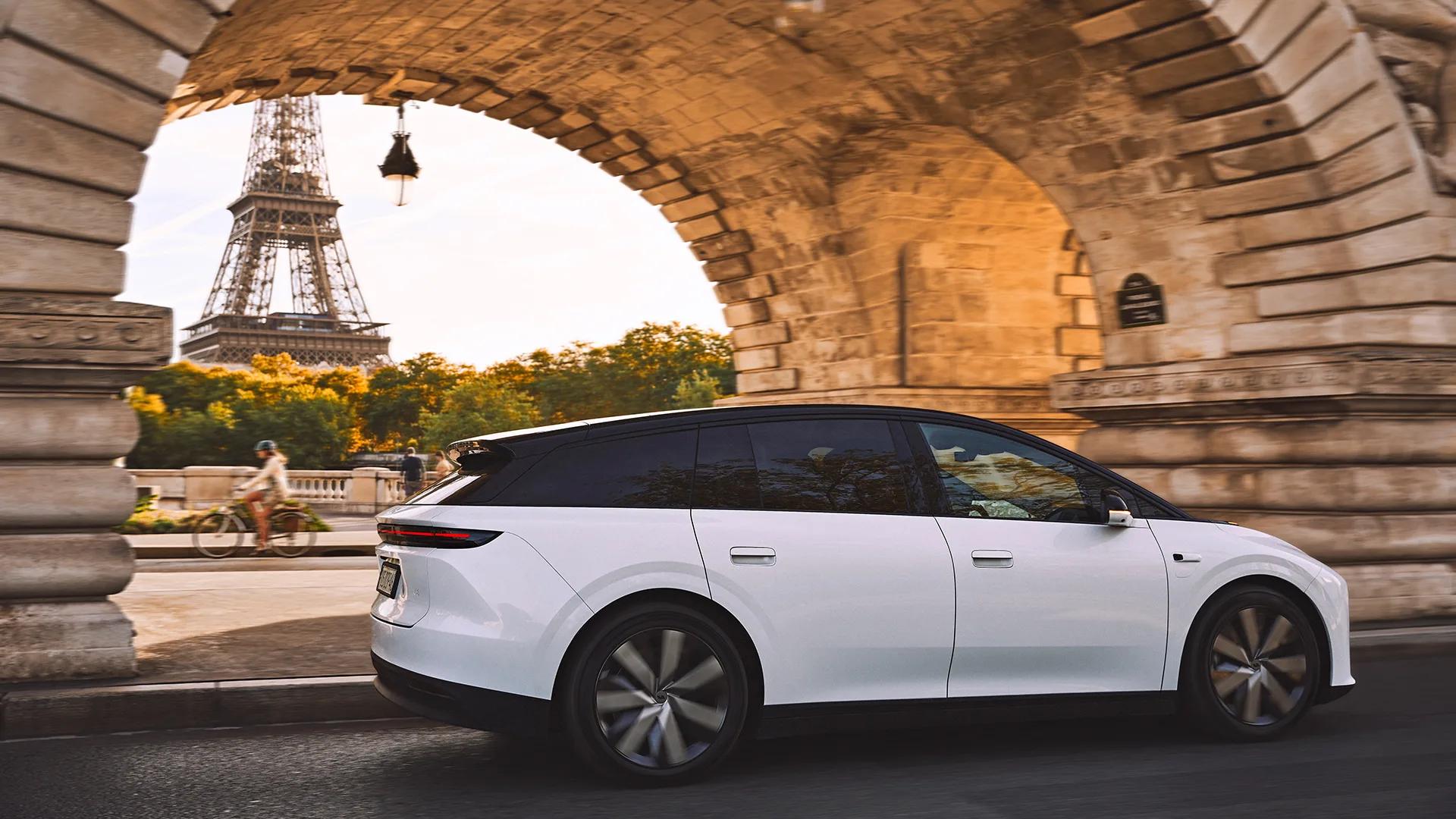
Among the new faces making their debut at the Paris Motor Show, Li Auto is the Chinese brand that has received the highest attention. In recent years, Li Auto's overseas expansion process has been relatively slow, and this Paris Motor Show marks Li Auto's first appearance in the European market. Li Auto's first model for sale in the European market, the Li 6 (named i6 in the domestic market), will also meet European consumers at the show.
In addition to Li Auto, Zeekr and Avatr are also participating in the Paris Motor Show for the first time. Zeekr has brought heavyweight models such as the 9X to demonstrate its exploration in the luxury new energy sector to the European market, while Avatr has brought the global debut of the T09 concept model.
The above examples of automakers participating in the 2026 Paris Motor Show are actually a microcosm of the Chinese auto industry's expansion into Europe. Leveraging advantages in three core electric vehicle technologies, intelligent technology and premium experience, Chinese vehicles are further competing head-on with established local automakers in overseas markets such as Europe.
So, are local European brands ready?
When Systematic Overseas Expansion Becomes the New Normal, Chinese and European Automakers Swap Offensive and Defensive Positions
Looking back at the 2024 and 2026 editions of the Paris Motor Show, we can see that Chinese automakers have undergone considerable changes in both technical level and overseas expansion over the past two years.
At the 2024 Paris Motor Show, Chinese participating automakers focused more on the vehicles themselves, and the core content displayed at the booths of various brands was mostly models for sale in the European market.
That is to say, at that time, the main focus of Chinese automakers at the Paris Motor Show was on vehicle export, that is, their vehicles had higher configurations and better cost-effectiveness than local European models.
By 2026, the situation is different. The main content displayed by Chinese automakers at the Paris Motor Show is no longer just exhibition vehicles, but the technologies and systems behind these vehicles, such as BYD's fast-charging network, XPeng's NGP high-level assisted driving, and so on.
To sum it up in one sentence, In 2024, Chinese automakers competed at the Paris Motor Show with high vehicle configurations and high cost-effectiveness, but by 2026, Chinese automakers are competing with systematic advantages such as more efficient energy replenishment systems and more advanced intelligent assisted driving systems.
(Image source: Li Auto)
If local European automakers can barely cope with the cost-effectiveness advantage of a single model, the dimensionality reduction strike brought by systematic advantages has truly made local European automakers and the auto industry panic.
On the eve of the Paris Motor Show, Oliver Blume, CEO of Volkswagen, stated that it is not too late for Europe to take action now to deal with the competition brought by Chinese automakers, which requires France and Germany to join hands to find solutions.
French Minister of Industry Sébastien Martin also publicly praised Europe's move to jointly build barriers to protect the local auto industry and cope with the impact of Asian automakers on the European auto market on the eve of the Paris Motor Show.
It is not difficult to see from the statements of automaker executives and government officials on the eve of the Paris Motor Show that the competition between Chinese and European automakers has reached a stage where their offensive and defensive positions have been swapped.
In the era of fuel vehicles, European automakers relied on their advantages in more advanced engines, chassis, transmissions and complete vehicle manufacturing to achieve huge sales in the Chinese market, which once became one of the main sales markets for these European automakers.
However, in the new energy era, these European automakers need to use Chinese teams and Chinese technologies to realize vehicle localization in order to boost their sales in the Chinese market. As a result, not only did they fail to stabilize their local sales performance in China, but their home markets were also invaded by Chinese automakers.
For China's auto industry, when the technical strength of various automakers is getting stronger and they have basically captured the local market, it is a natural choice to go global and develop new markets. But for Germany's auto industry, when Chinese automakers come to Europe with fast charging, high-level assisted driving and a series of solutions, the pressure they face is extremely huge.
Therefore, for both the Chinese auto industry and the European auto industry, the 2026 Paris Motor Show will be an important time node. It not only marks that the Chinese auto industry has begun a systematic "going global" process, but also marks a turning point where the local European auto industry begins to choose defensive responses under the impact brought by the Chinese auto industry.
Competing in Overseas Markets, Are Chinese Automakers Truly Ready?
On the same day as the Paris Motor Show opened, the Passenger Car Market Joint Committee of the China Automobile Dealers Association (CPCA) released the national passenger car market analysis report for September 2026.
The report shows that in September 2026, the retail sales volume of the national passenger car market was 16.18 million units, down 28.0% year on year; the cumulative retail sales volume of the national passenger car market from January to September was 13.334 million units, down 21.7% year on year.
The sharp decline in domestic terminal auto sales is also further pushing various automakers to explore markets overseas.
At this stage, the overseas sales of several leading independent brands have accounted for a considerable proportion of their total sales. Taking the data of September as an example, BYD's passenger car sales reached 456,713 units, of which overseas sales were 179,877 units, accounting for 39.43%; Geely Auto Group's sales reached 292,168 units, of which overseas sales were 106,685 units, accounting for 36.5%; Chery's sales reached 292,308 units, of which overseas sales were 207,814 units, accounting for 71.1%.
It can be seen that leading independent brands are resisting the impact of declining domestic market sales by developing overseas markets, and the next growth point for Chinese automakers will also be the overseas market.
Although Chinese automakers have made considerable achievements in overseas expansion with their own technical and systematic advantages at this stage, and even made some overseas automakers feel the pressure, the question is: are the leading domestic automakers truly ready to become global automakers and compete with international giants on a global scale?
In terms of product strength and technical strength, the performance of Chinese automakers is definitely not a concern. But aspects such as the refinement of product quality, targeted development and testing for the global market, whether they can obtain long-term trust from local consumers with vehicle quality, are still unknown for the time being and need to be proven over time.
But now that Chinese automakers have such a huge leading advantage in overseas competition, Dianchetong (ID: dianchetong233) still hopes that all automakers can cherish this good opportunity, and avoid the experience that China's motorcycle industry encountered in the Southeast Asian market from repeating itself in the automotive industry.
Building vehicles is not easy, and developing new markets is even more challenging. At this year's Paris Motor Show, we have seen the leading side of Chinese automakers in the European and even global markets. We also hope that the advantages of Chinese automakers can be expanded to more fields, helping China's auto industry gain greater influence in the world.