As AI churns out virtual stars in batches, what value do real celebrities still have?
During the live stream, actor Han Dong tearfully complained that he had no acting offers, and his income from live-stream sales could not even cover his monthly mortgage of more than 20,000 yuan, leaving him under enormous life pressure. At the Weibo Movie Night, Liu Haoran and Wen Qi stood on the podium, talking more about publicly asking for jobs than delivering acceptance speeches. Even Shen Teng joked on a variety show: "I've achieved my goal of taking a half-year break."
While domestic entertainment celebrities are "collectively unemployed", another group of "celebrities" are making their debuts in batches.
They don't need auditions, don't need to run between crews, and don't have to go through a long rookie period. As long as an AI manhua drama becomes a hit, the characters may quickly get their own social media accounts, appearance rankings, "fan station managers", CP pairings and commercial cooperation. Fans produce fan art, make promotional materials, and are deeply invested in the characters, and the whole star-chasing process is no less enthusiastic than that for real celebrities.
Obviously, AI-powered star creation is no longer just a concept. In the first 8 months of this year, 430,000 micro short dramas were launched nationwide, of which AI-generated dramas accounted for more than 90%. AI is entering content production with extremely high efficiency. As stories are produced in batches, batches of virtual characters are beginning to step out of the stories: falling in love in dramas today, posting daily updates on social media accounts tomorrow, and taking brand promotion deals the day after tomorrow. A virtual character is gradually gaining a commercial life cycle that is increasingly close to that of real celebrities.
In the past, becoming a celebrity was an extremely high-threshold thing. Appearance, talent, opportunities, works, and long-term professional accumulation together formed the scarcity of celebrities. But now AI is dismantling this production mechanism — it can create a perfect male lead with a complete persona and backstory; it can also design CP pairings for him, continuously produce interactive content, and even build a full set of fan culture around him.
When the assembly line can continuously produce pretty faces, complete personas, sweet CP pairings, and even a seemingly absolutely perfect "person", what exactly is left for real celebrities? When "becoming a celebrity" is increasingly easily replicated by AI, where does the value of celebrities lie?
AI is taking jobs from celebrities faster than expected
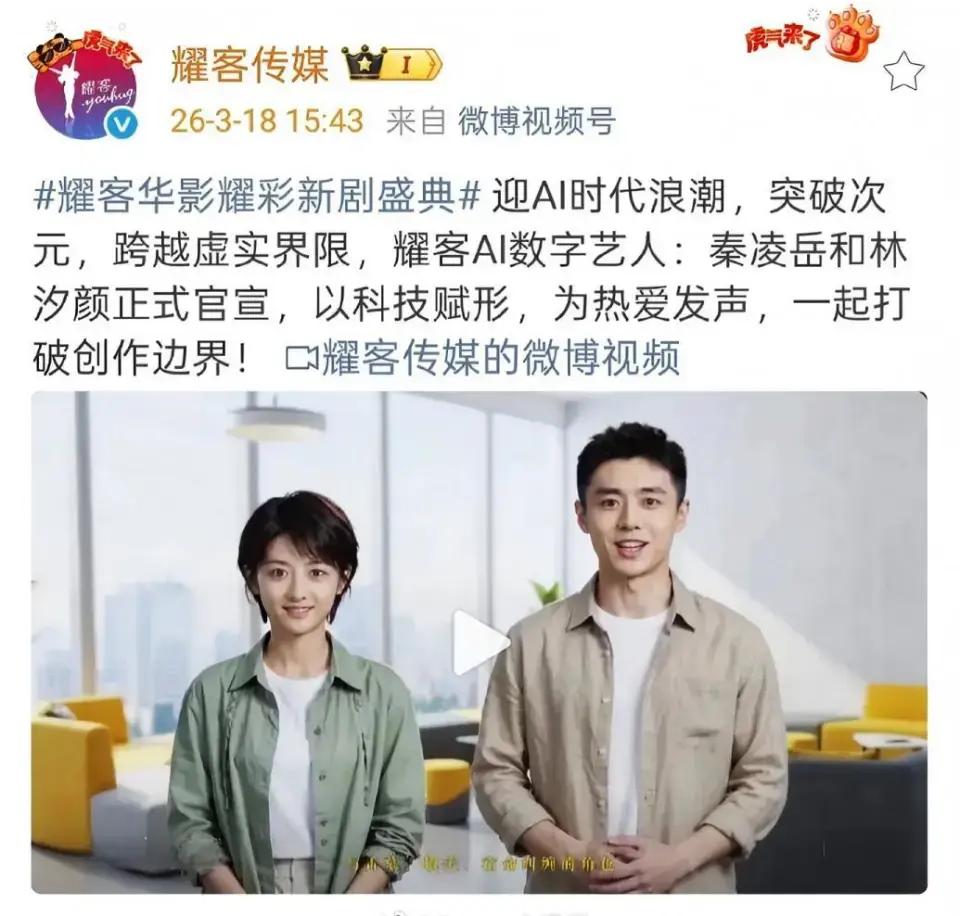
People's initial impression that "AI can become a celebrity" came from the trial operations of film and television companies. For example, Yaoke Media officially announced the signing of Qin Lingyue and Lin Xiyan; Yuxiao Media announced the signing of 6 AI actors, including exclusive digital avatars authorized by real online influencers. However, due to problems such as immature technology, obvious facial fusion in character images, and lack of continuous operation, the first round of AI star creation quickly fell silent amid public resistance.
But the new round of AI star creation is completely different. As video generation models such as Seedance continue to lower the creation threshold, MCN institutions, short drama companies and even ordinary creators have quickly entered the field. Instead of "cultivating celebrities" in the way of the traditional entertainment industry, they directly design characters in reverse starting from what users like.
As a result, a more and more complete "AI entertainment circle" is taking shape, covering a variety of character identities:
The first type is AI actors and AI CP pairs.
Duan Yan, the AI male lead who became popular through the manhua drama *Deep Love Invades the Rest of My Life With You*, is a typical case. After the character gained recognition through the content, the production studio Buming Culture opened social media accounts for him and his CP partner, continuously posting daily interactions and emotional materials. Similar characters include Zhou Suisui and Jiang Zongyan in *Pretending to Act Coquettishly at the Moon's Heart*, Tang Shi and Song Ci in *Vermilion Kiss*, Dongfang Yan and Su Xian'er in *Extra! The Reborn Big Shot Has Exposed His Vest*, and so on.
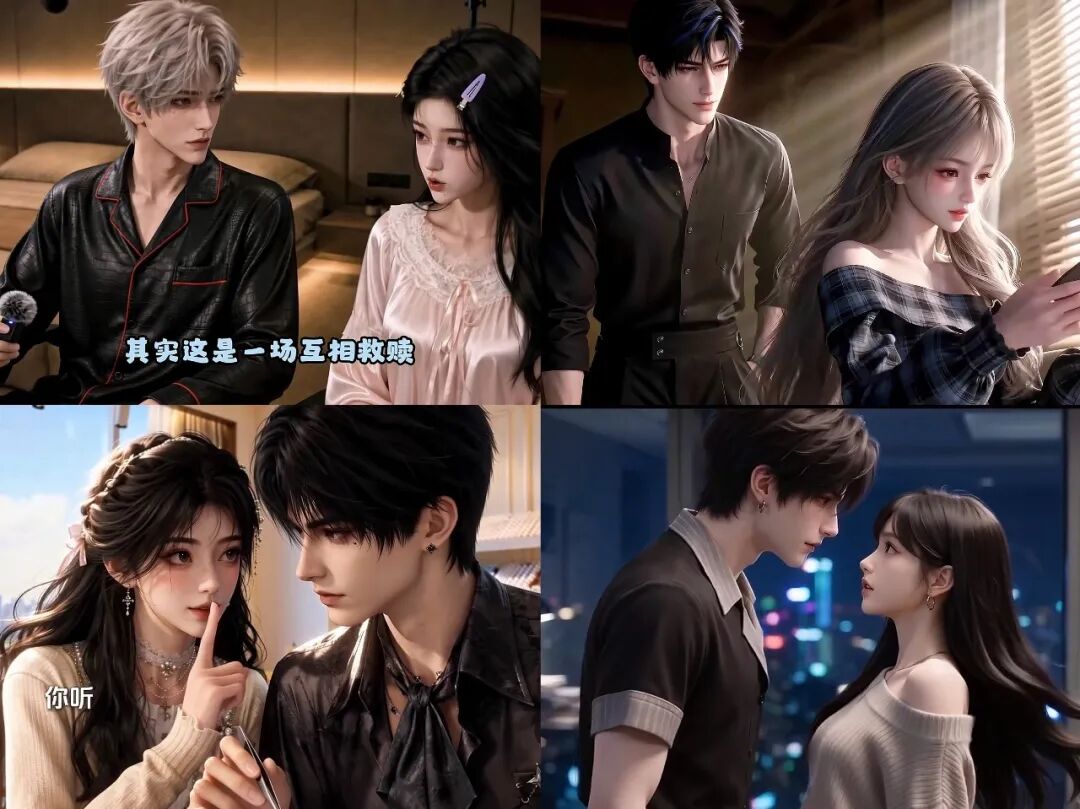
Duan Yan & Rong Jiqiao, Zhou Suisui & Jiang Zongyan, Tang Shi & Song Ci, Dongfang Yan & Su Xian'er
AI manhua short dramas are the origin of their popularity. Characters stand out in hit content to complete "identity binding" and fan accumulation; behind-the-scenes promoters follow the trend to carry out high-intensity personal IP operation for virtual images. A closer look will find that this set of gameplay is actually very similar to that of real celebrities: both build recognition through works, retain fans through personas, and often amplify commercial value through CP pairings during the work promotion period. AI's replication of this path is almost pixel-level, and it has more advantages in execution efficiency.
The second type is AI online influencers.
For example, Fang Taozi, the protagonist of the AI short drama *The Laid-off Girl*, gained more than 400,000 followers on her account in only about 30 days, becoming a phenomenal IP. Her commercial cooperation quotation even far exceeds that of real online influencers of the same size, directly matching or even surpassing some real bloggers with tens of millions of followers. There are many other similar AI online influencers, such as Jinyun that combines intangible cultural heritage, mixed-race model Mengke, etc. They have different styles and all show certain commercial value.
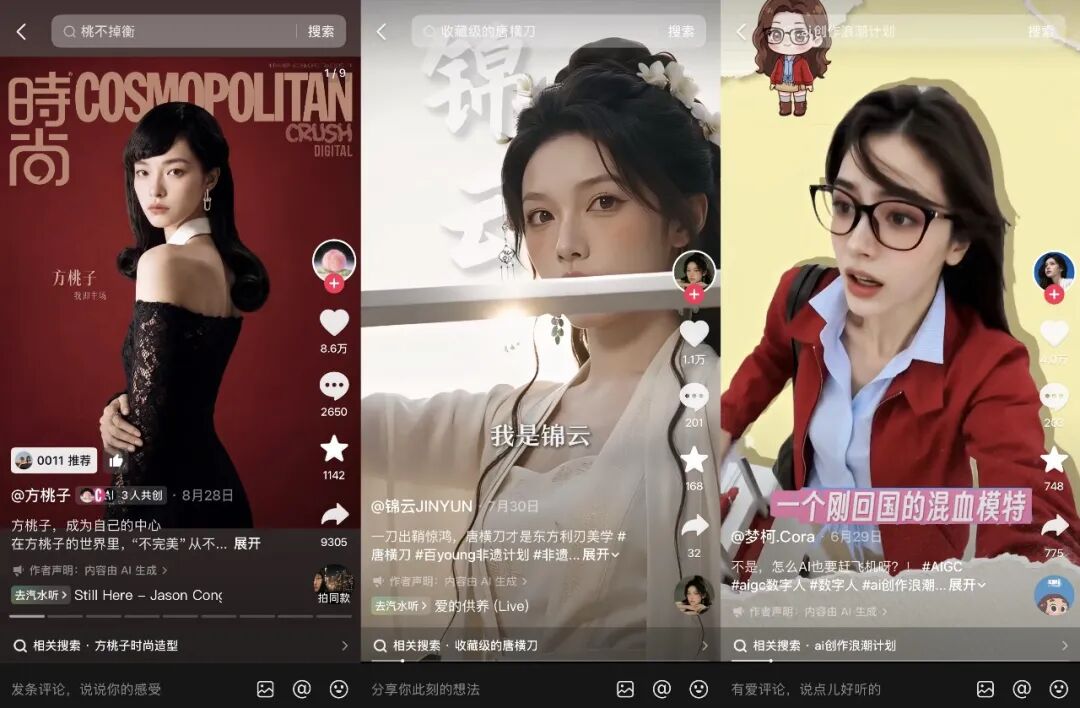
Online influencers have been the direct product of the attention economy since their birth, and traffic and public attention have always been the core foundation for their survival and development. This underlying logic is also completely valid for AI online influencers. AI creation comes with novel attributes, which can become a fresh attention grabber in the content market. At the same time, the core reason why Fang Taozi became a hit lies in the high-quality, well-finished AI story she is in, which closely follows real-world topics and accurately hits the emotional pain points of ordinary office workers.
The third type is AI singers.
From the consumer side, the core experience of music products lies in hearing, and the dependence on the performer's presence is much lower than that of film and television or live performances. Therefore, there are many AI singers covering songs on short video platforms, but most of them have no specific images. Their situation is more like online singers: the songs are popular but the singers are unknown.
Voices can be remembered, but to upgrade to a "celebrity", there must be a "person" that can be imagined and followed. At present, the most representative in this field are AI native singers such as Yuri Youli. She not only releases original songs, but also has a pleasing visual image, and her social media accounts are also operating normally. At present, she has successively cooperated with many brands such as Yijing Automobile and vivo, and this year she also participated in offline concerts where she performed on the same stage with real people, starting to enter the offline performance scene.
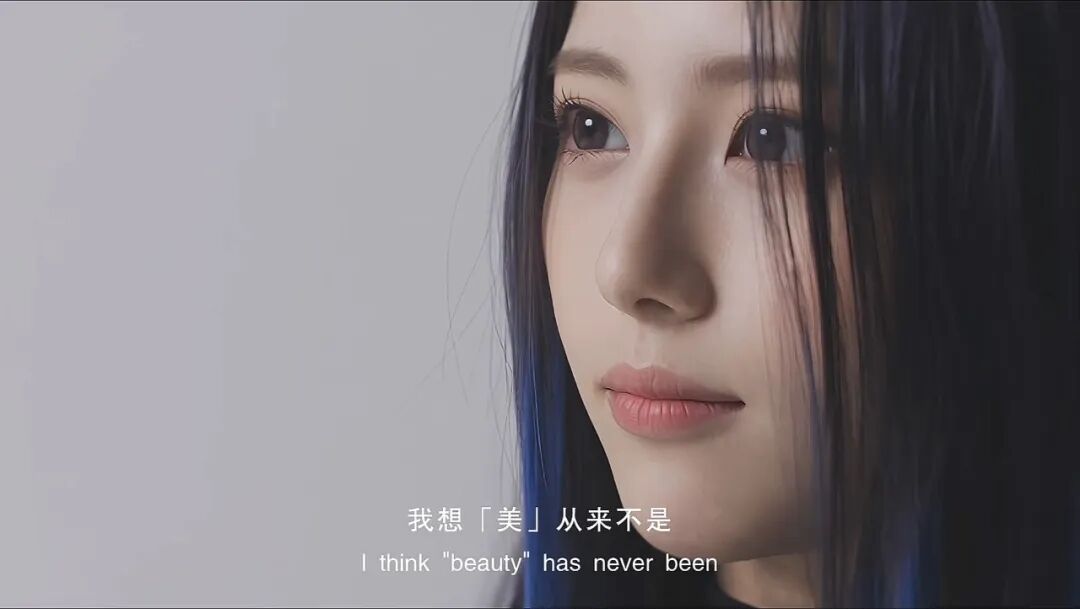
Yuri Youli
The fourth type is AI idols. Real-person idol talent shows have almost become "a thing of the past" due to various previous problems, but the public's desire for this kind of development-focused star-chasing has never been extinguished. Therefore, AI has begun to fill this gap.
Platforms took the lead in promoting it strongly. For example, Baidu's "AI Star Project" joined hands with Du Hua to hatch HeyDream, which is claimed to be Asia's first AI-driven real-person girl group, and also cooperated with Huolong Manhua to launch *I Can't Hide My Identity, The Top Girl Group Is Actually a Demon Hunter!*. Bilibili launched an AI idol selection and creation competition, cooperated with CCTV.com and Wajijiwa, and equipped with a cross-border expert judging panel including Long Danni from Wajijiwa, musician A Kun, well-known director Yu Baimei, and the person in charge of China Film Artificial Intelligence Research Institute, attracting nearly 10,000 creators to participate with millions of industry resource awards.
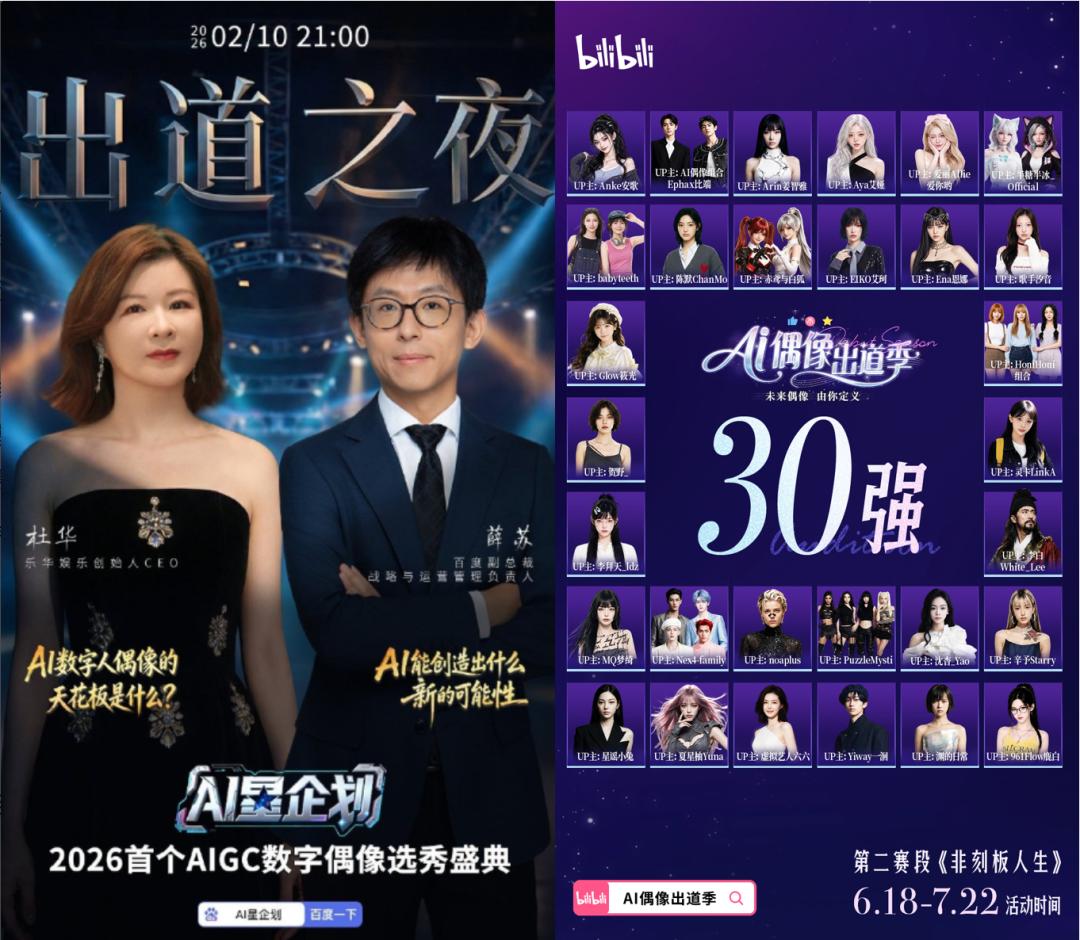
Baidu's "AI Star Project", Bilibili AI Idol Debut Season
The folk wild star-creating forces are also not idle. On Douyin, some people completely reproduced the classic voting mode of *Produce 101* and created the "Starlight 108" girl group talent show; creative talent shows such as the "16 Star Project" that divides camps by MBTI personality on Xiaohongshu emerge in endlessly. Voting, support activities, CP pairing, all the elements of talent shows are preserved.
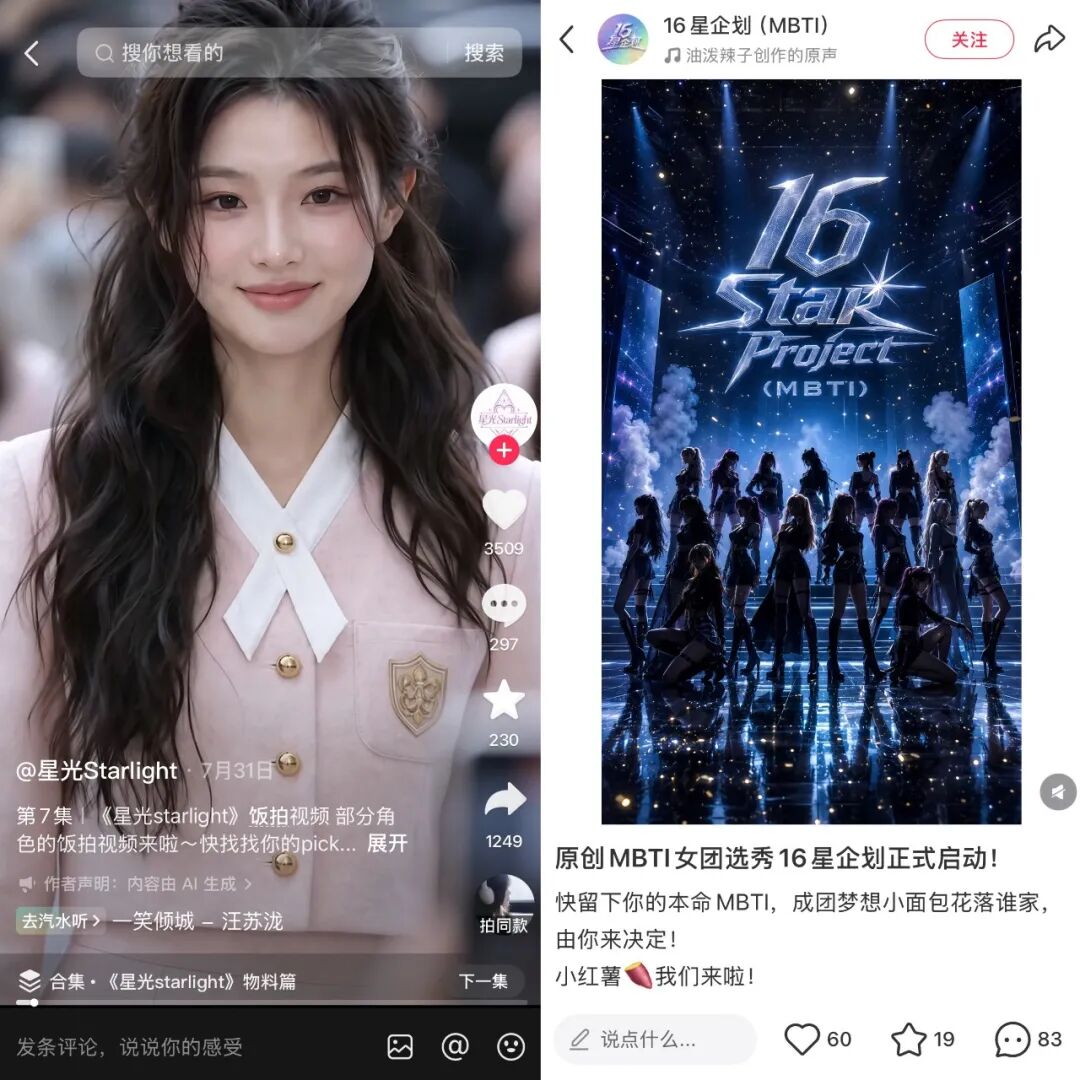
Starlight 108 Girl Group Talent Show, 16 Star Project
In the past, we thought "celebrity" was naturally equal to a real person.
But now AI is breaking this concept apart: faces can be created, voices can be created, personas can be created, works can be created, CP pairs can be created, and even the process of fans participating in the character's growth can be created.
What exactly are people chasing when they follow AI celebrities?
It can be seen from the above that the advantage of AI star creation is that it can completely replace "celebrities as office workers" — those highly standardized, repeatable, quantifiable tasks, and even do better than real people.
First is standardized content production with stable output around the clock.
The production capacity of real celebrities has a physical upper limit. They need to sleep, eat, get tired, have emotional breakdowns, reject commercial cooperation due to schedule conflicts, and fail to shoot promotional materials due to poor status. But AI is not restricted by these: no schedule conflicts, no fatigue, no emotional fluctuations. Short drama clips, daily vlogs, gesture dances, magazine blockbusters, and MV can all be produced continuously, and the rhythm is determined by the operator.
Secondly, IP-based personas can be built quickly, which is more efficient at the operation level.
The persona of a real celebrity requires the precipitation of time and works. You can't make a newly debuted artist be a cold and aloof male god today, suddenly become a comedian tomorrow, and then take a mature path the day after tomorrow. If the persona changes too fast, the public will find it unbelievable. But AI celebrities don't have this problem. Their personas are not grown, but designed. The data tells the operator what the audience prefers, and the character can quickly adjust in that direction.
In addition, the commercialization level is more stable and flexible.
The cooperation of real celebrities is often accompanied by a series of uncertainties. Schedules, status, personal image and even unexpected public opinions may affect the progress of a commercial cooperation. The advantage of AI celebrities is that their images and personas are relatively controllable, and content production can be continuously adjusted according to the marketing rhythm. Moreover, the same character can quickly adjust and design scenes, shapes and content expressions according to brand needs. For example, this year's Qixi Festival, Tmall directly packaged four AI male leads, Duan Yan, Lu Chuan, Yi Chenze and Fu Yanshen, for promotion, corresponding to the four major categories of beauty, digital, clothing and home furnishing respectively. Essentially, when cooperating with AI celebrities, what brands purchase is a set of continuously callable character assets and content capabilities.
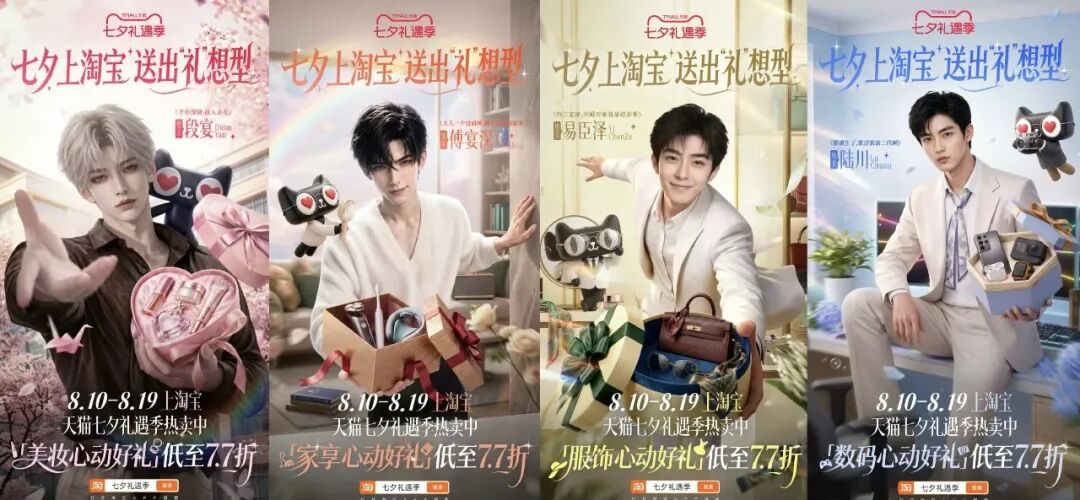
Tmall "packaged" four AI male leads for Qixi Festival
On the whole, what AI really replaces is the production link of celebrities on the assembly line of the entertainment industry. This part is what AI is best at. But the core question is, will humans really fall in love with AI celebrities? We can probably refer to the fan accumulation process of otome games and anime characters, and the answer is most likely: yes.
First of all, it meets the public's current demand for low-burden, high-density emotional consumption.
Work and life have already consumed enough energy. When users open short videos, short dramas or manhua dramas, most of the time they just want to temporarily escape from reality for ten or dozens of minutes. Hongguo Short Drama previously announced that its daily active users have reached 168 million, exceeding the sum of the daily active users of the four long video platforms iQiyi, Youku, Tencent Video and Mango TV. This data shows that high-frequency, short-time, strong-emotion and low-burden entertainment consumption has formed a sufficiently large market.
AI celebrities just adapt to this content consumption logic. From the character's appearance and personality to the story trend, they are designed according to public preferences. Moreover, their most important presentation methods at present are exactly serialized short videos, manhua dramas and short dramas. Users don't need to know what the character is like in real life, nor do they need to bear the complex cost of chasing a real celebrity. They only need to enter the story and get the emotions they want.
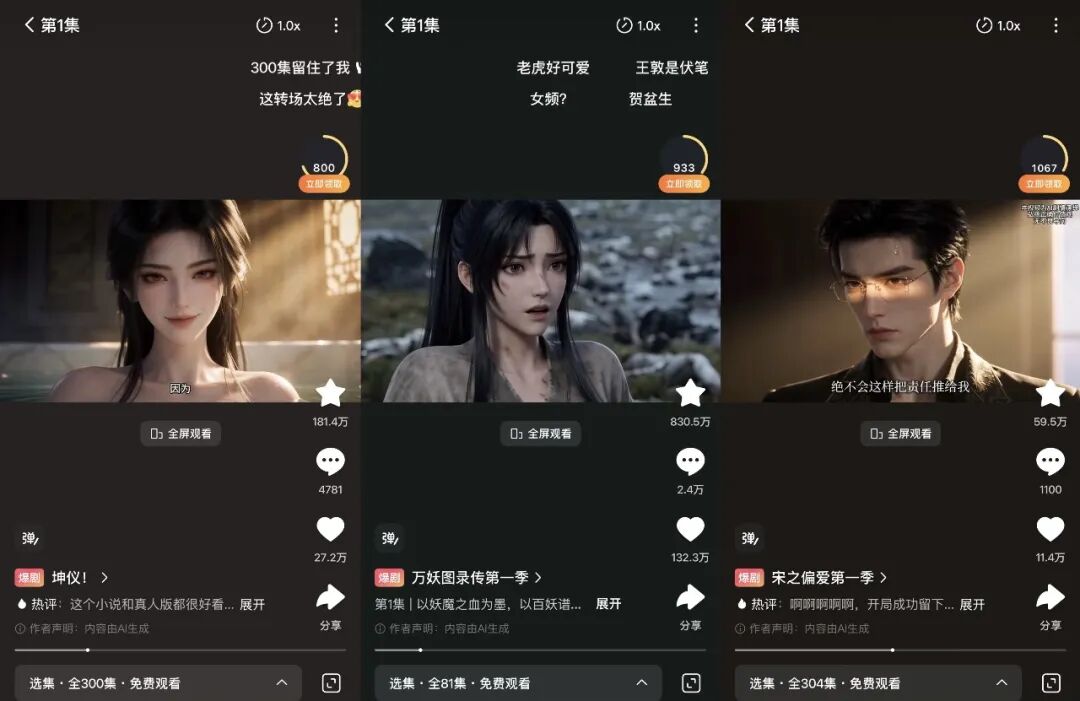
Hongguo Short Drama
Secondly, looking deeper, humans do not need the other party to be a real person to generate real emotions. For those who like to immerse themselves in stories and enjoy emotional projection, AI celebrities may even naturally adapt to their star-chasing needs.
Raymond Mar, a psychologist at York University, has long studied narrative and social cognition. His research points out that when people understand fictional characters, they will use cognitive processes similar to those used to understand real people; when a person is sufficiently immersed in the story, they may also develop a real sense of closeness to fictional characters.
Otome games have long run through this logic. For example, the male protagonists in *Love and Deep Space* can establish long-term emotional relationships with players that