Shenzhen has seen the birth of another RMB 15 billion embodied unicorn.
At a watershed moment, embodied intelligence has witnessed a landmark financing deal.
On October 13, Shenzhen-based embodied intelligence company Astribot announced the completion of a new round of financing worth 10 billion yuan, with its valuation reaching 150 billion yuan, making it one of the top-tier embodied intelligence companies in China. It has only been three months since the company closed its Series B financing of over 10 billion yuan.
Calculated on that basis, Astribot has completed 4 consecutive rounds of financing in nearly half a year, with the total financing amount of the latest two rounds exceeding 20 billion yuan. "4 rounds of financing in half a year, valuation soaring by 50 billion yuan in 3 months" — even in the booming embodied intelligence track this year, such a pace is extremely rare.
The list of investors in this round is still star-studded. It is led by TouKong Donghai (Shenzhen Investment Holdings), with participation from important state-owned and financial investors including Hongtai Fund, the Ninghai Xingtaihe Fund managed by Guanghua Sunshine, and Shanheng Capital, while existing shareholder Xianmu continues to inject additional capital. In the several rounds of financing before that, institutions including Yunqi Capital, Matrix Partners China, Jinqiu Fund, Ant Group, and CAS Investment have successively participated in the investment.
So far, the world's first mass production company of cable-driven robots has formed a diversified shareholder pattern of "state-owned capital funds + industrial groups + leading financial institutions". The industrial layout race has quietly kicked off.
Shenzhen State-owned Capital Enters the Market, A Benchmark Emerges
Why are investors pouring into this track one after another?
"From the underlying large AI model, embodied OS to the unique cable-driven ontology design, the Astribot team has demonstrated extremely strong technical closed-loop capabilities and a clear commercial implementation path." Mu Chunwei, CEO of Shenzhen Investment Pengcheng Strategic Emerging Industry Fund, mentioned when talking about the investment logic that they are optimistic about the scarcity of Astribot's "full-stack self-research" capability in the embodied intelligence track.
With the entry of this leading local state-owned capital, a clear signal has emerged: embodied intelligence has moved from the concept verification stage to the industrial layout stage, and companies with mass production and delivery capabilities are becoming the core targets for local governments to deploy the industry.
"Investing in Astribot is in line with the strategic emerging industry fund's direction of deploying cutting-edge hard technologies, and it is also an important step to help Shenzhen build a highland for the embodied intelligence industry and cultivate new quality productive forces," Mu Chunwei added.
A benchmark of Shenzhen's embodied intelligence enterprise has taken shape.
Nowadays, Astribot has shareholders with backgrounds of state-owned capital, industrial parties, and market institutions. It is widely believed that the diversified strategic shareholder pattern can provide systematic empowerment in aspects such as "policy guidance + industrial scenarios + financial support" — which also explains why Astribot can continuously complete large-scale financing in just a few months: it is an investment target that can run through the complete path from prototype verification to mass production.
"Investors are important peers and enablers of the company." Lai Jie, Founder and CEO of Astribot, said that this round of financing reflects the recognition and market consensus of all parties on Astribot's core philosophy and the trinity full-stack architecture route of "AI model — embodied OS — cable-driven ontology".
Behind the 150 Billion Yuan Valuation: Cable Drive is the Body, AI is the Soul
At the node where delivery capabilities are diverging, the global embodied intelligence industry is undergoing a brutal competition this year.
And Astribot is capable of standing firmly in this wave. According to public information, Astribot is the world's first enterprise to realize the commercial mass production of cable-driven AI robots, and its mass production progress of cable-driven AI robots is at least one generation ahead of 1X, a company on the same route invested by OpenAI.
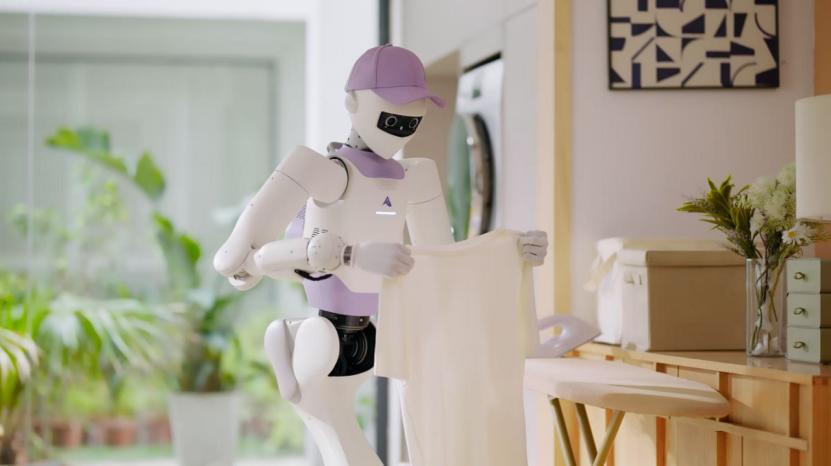
In fact, the value of cable drive goes far beyond the hardware itself. The cable plays the dual role of sensing medium and buffer layer, which can sense the tension in real time and achieve precise force control feedback, allowing the robot to "work by touching". Compared with the mainstream rigid joint route in the industry, cable drive naturally solves the structural contradiction between "precision and compliance": when a collision occurs, the cable first absorbs energy and disperses the impact, resulting in higher human-robot interaction safety, which is especially suitable for high-frequency interaction scenarios involving the elderly and children such as families, elderly care, and education.
However, the mass production of cable drive is extremely difficult, as cable wear, tension control, and long-life maintenance are closely linked, which is why this route has long remained in the laboratory stage.
In this regard, through strong hardware-software coupling and self-developed compensation algorithms, Astribot has gradually overcome world-class problems such as cable drive elasticity, creep, and deformation, formed complete engineering accumulation in links including tendon material, tension control, assembly calibration, reliability verification, and batch consistency, and transformed it into mass production capacity. In other words, it has provided the strongest verification for this niche route with the world's only mass production and continuous real delivery, and turned the engineering replication threshold into its own moat.
If the above-mentioned cable drive is the "physical body" of Astribot, then AI is the core "soul".
As a physical AI company oriented to the real world, Astribot adheres to the hardware-software integrated design concept of "Design for AI", carries out full-stack self-research around the Lumo embodied foundational model, Astribot OS and cable-driven ontology, builds a trinity full-stack architecture with the collaboration of model, operating system and ontology, and forms a technical closed loop of "ontology + data + model".
More specifically, the cable-driven ontology is responsible for execution, the Lumo model is responsible for understanding, reasoning and generating actions, and Astribot OS organizes everything into callable applications. This architecture can collaboratively improve understanding, decision-making and execution around actual tasks, enabling the robot to not only complete actual tasks, but also continuously improve by using the data accumulated in deployment.
"Astribot has formed a perfect closed loop at the three elements of ontology, data and model." Bohua Capital, an existing shareholder of Astribot, commented in this way.
Lai Jie, Founder and CEO of Astribot, also said recently: "We should design robots that can explore and learn in the physical world around the capabilities of AI, rather than designing robots first and then adding AI to them." This sentence points out the original design intention behind the "Design for AI" concept.
In Lai Jie's view, cable-driven robots are the most AI-adaptable robots. Why?
This is exactly the key for the outside world to understand Astribot's technical closed loop. The low end inertia, compliant contact and continuous force feedback of the cable-driven ontology, combined with teleoperation and the whole-body control system, enable the company to continuously collect multi-modal real physical interaction data such as vision, motion trajectory, force sense, joint state and task results — which is also the scarcest data raw material for training embodied models.
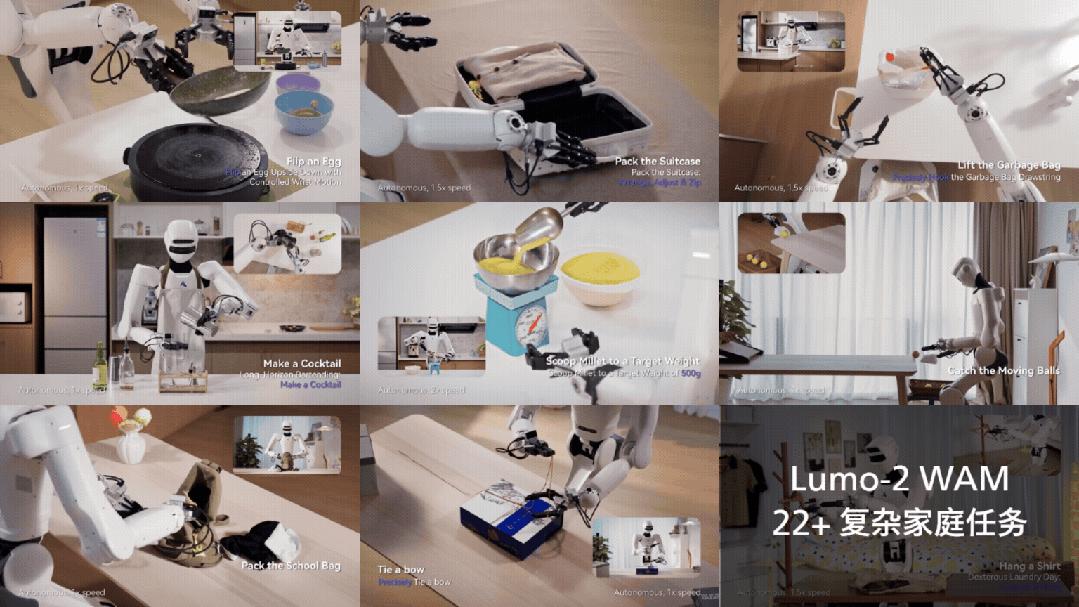
In July this year, Astribot released Lumo-2, the world's first implicit world action model oriented to home scenarios; in September, it released the online reinforcement learning framework SmoothRL, which enables robots to continuously optimize their behavior in the process of performing tasks, reduce dependence on offline training, and better cope with the uncertainty of the real world. In actual tests, both models have completed tasks with excellent performance.
Model iteration improves the task capability of delivered robots, mature skills are reused in more devices and scenarios through AOS, and deployment data flows back to train the models. In this way, once the flywheel of "ontology + data + model" starts to rotate, latecomers will no longer be catching up with a single technology, but a continuously evolving system and quantifiable results.
The Secret of Commercialization
"The technology is very good, but no one knows who will pay for it." This concern has almost always surrounded the embodied intelligence track. Astribot is dispelling such concerns: customers are already placing orders in batches.
"We've waited so long, and finally investors are concerned about commercialization." Lai Jie mentioned in a recent exchange. He recalled that during the financing in 2024, many investors said 'we won't invest if you don't do end-to-end', and by 2025, it became 'we won't invest if you don't do VLA'. But this year, more and more investors are starting to ask what progress has been made in commercialization?
In this regard, Lai Jie couldn't help but resonate inwardly: "You finally ask the right question."
It is reported that Astribot has long been prepared for the test of commercialization, and has clearly chosen the dual path of "commercial services" and "developer ecosystem" to promote commercial implementation.
In the commercial service market, Astribot integrates the full-stack capabilities of robot ontology, AI model and embodied operating system AOS into scenario solutions for retail, tour guiding, art performance and other scenarios, verifies product capabilities through actual operation, accumulates user feedback, and precipitates reusable interaction, operation and safety control capabilities, laying a foundation for expanding to home service scenarios.
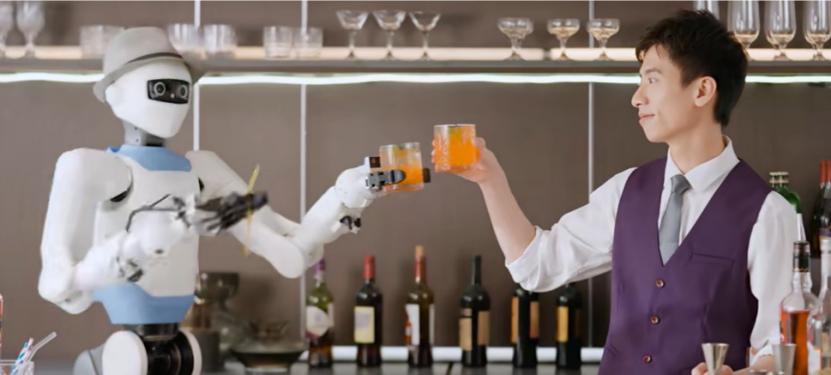
Public information shows that Astribot's sales of robot ontologies have entered the mass delivery stage. In September 2025, Astribot's S flagship series robots received orders of thousands of units, and in June 2026, its new generation humanoid robot T1 was officially shipped, with a starting price of 89,900 yuan, which took the lead in bringing high-precision operation robots into the price range below 90,000 yuan, entering the mid-to-high-end consumer electronics segment. It is revealed that the total production capacity of its S and T series products has reached the level of 10,000 units.
Scenario implementation is also flourishing in multiple fields: its applications cover retail, cultural tourism, industry, scientific research, education, etc. Its customers include Golden Horse Amusement, Thundersoft, Bold Smart, Syrius Robotics, CCTV and JD.com, among which many partners will deploy thousands of AI robots in commercial and industrial scenarios; it cooperates with Thundersoft to promote the implementation of thousands of units, and relies on the latter's global sales network to accelerate overseas expansion. In addition, the self-developed robot retail service store Robot MART has been deployed in batches in six cities including Beijing, Shanghai and Guangzhou since November 2025.
As for the developer ecosystem path, for developers in the fields of scientific research institutions, AI and industry application developers, Astribot provides standardized robot platforms, skill modules and development tools to lower the threshold of robot application development, and expand product capabilities and application scenarios with the help of the industry knowledge of ecological partners. It is reported that many AI companies including Ant Lingbo, Deep Transition, Shengshu Technology and Ju Nao Panshi have adopted Astribot's platform to carry out model deployment and scenario development.
From thousand-unit-level orders to ten-thousand-unit-level production capacity, from scenario verification to ecological co-construction, Astribot's commercialization is moving away from narrative to actual implementation.
"To Build a Company as Great as Apple"
Embodied intelligence is a typical industry where talent density determines the upper limit of technology.
No matter in the fields of VLA, world model, or dexterous operation, core algorithm talents are extremely scarce. From this perspective, this may be one of the core supports for Astribot's rapid valuation increase in the short term.
Astribot has a top-tier talent team: Lai Jie, Founder and CEO, has 17 years of R&D experience in robots, used to be the first employee and architect of Tencent Robotics X Lab, and the head of Baidu Xiaodu Robot Team, and led the R&D of the wheel-legged robot Ollie. He also has outstanding achievements in the academic circle, having published more than 10 papers at top international conferences such as IROS and ICRA;
Another founder, Dai Yuan, holds a bachelor's degree from UIUC in the United States and a PhD degree from UCLA, majoring in robot perception. She used to be a senior researcher at Tencent Robotics X Lab, and has published 45 papers in top journals such as Nature Communications and Science Advances, holding more than 70 robot patents;
The 6 core founding team members all come from Tencent Robotics X Lab, with their backgrounds covering Tencent, Google, Ubtech, Baidu and Huawei, possessing the composite capabilities of full-stack AI + robot R&D and industrial implementation.
Such high talent density is actually the result of Astribot's long-term layout.
For example, in 2026, the number of positions recruited by Astribot increased significantly year-on-year, with layouts in Shenzhen, Wuxi and Chengdu, and the 2027 campus recruitment was launched simultaneously. The social recruitment focuses on high-barrier positions such as VLA, world model foundational large model algorithm experts, joint modules, and complete machine testing. In September this year, Dr. Sun Peng, a reinforcement learning expert who previously worked at ByteDance and Tencent, officially joined the company to be responsible for the post-training of robot RL, further increasing the talent density of the algorithm team.
Astribot has a clear plan for the use of the 10 billion yuan financing in this round: model iteration, talent expansion, commercial implementation and production capacity construction. It can be seen that "talent expansion" is clearly listed as one of the four investment directions.
As for the commercialization plan, in addition to continuing to advance along the dual path of "commercial services + developer ecosystem", Astribot's series of products for family and individual users will become an important direction of the company's long-term product layout. It is revealed that this series of products is already under research and development. With the growth of installed capacity and usage frequency, the company also plans to expand the software and application services of AOS, and continuously explore the commercialization model of the models.
"We hope to bloom people's creativity through robot + AI, define robots with AI and release human creativity with intelligence, realize the company's long-term value with world-leading talents, product strength and commercial implementation, and build a future world of coexistence, co-creation and win-win between humans and robots," said Lai Jie. Astribot will adhere to the full-stack route of Physical AI, and turn every real deployment into fuel for the continuous evolution of models and products.
In his vision, Astribot should strive to become a company like Apple, which pushed the information revolution to a stage of rapid development back then. "Nowadays, AI is similar to the software in that era, and the robot ontology is similar to the hardware in that era. Astribot hopes to accelerate the development of the intelligent revolution by building such personal robots with strong AI capabilities."
Keep evolving and never stop, so that you can be among the first batch that are closest to the ChatGPT moment of embodied intelligence.
This article is from WeChat Official Account "Pedaily" (ID: pedaily2012), written by Feng Yuchen, authorized for release by 36Kr.