Wholesale production of "Little Genius Teenager"
At the WRC venue, there is a special group of audience. They are quite young, most of them wear unified T-shirts, walk in small groups of three to five, or follow their parents, carrying transparent plastic boxes in their hands with delicate and complex mechanical structures inside, hurrying towards the competition arena.
Take the elevator up from the exhibition hall, and the third and fourth floors are their destinations. The final of the World Robot Contest Adolescent Robot Design Competition is being held here.
Push the door and step in, and you will see teenagers who have stood out from national competitions after overcoming numerous challenges, concentrating on operating their own robots; outside the fence, teachers and parents wait quietly. The venue is filled with the clashing sound of machines, the hurried shouts of children, and the crisp whistle of referees.
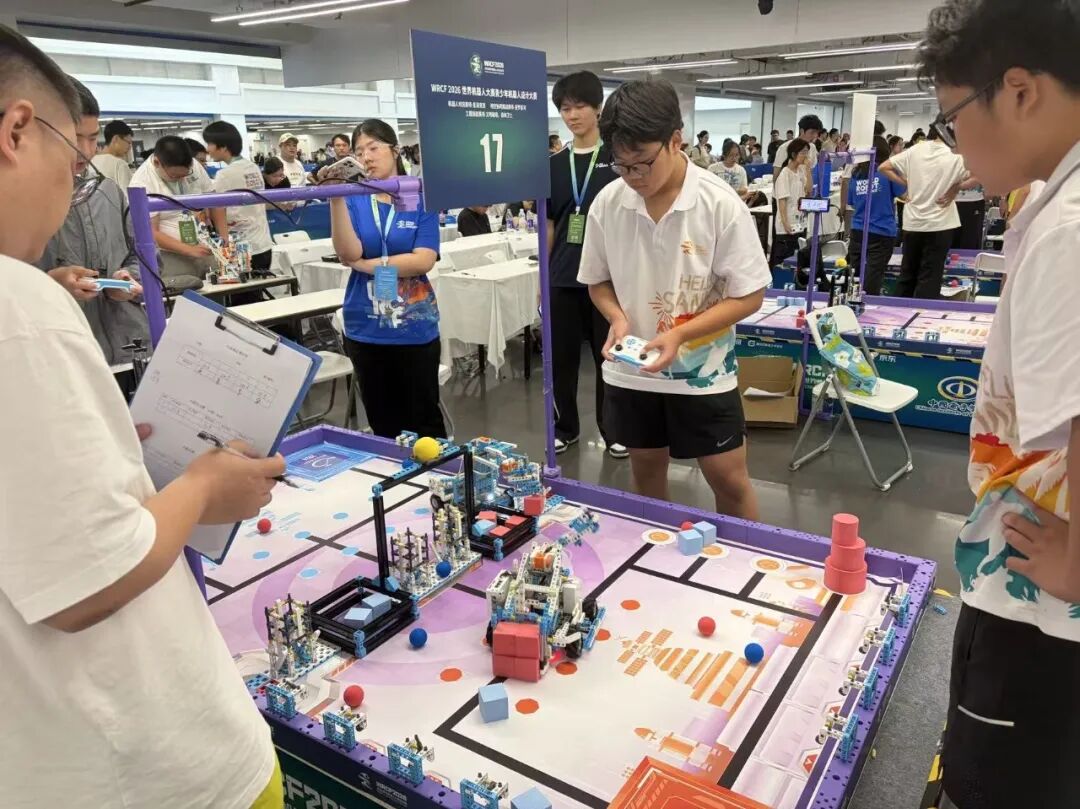
The youth competition arena on the upper floor and the industrial exhibition hall on the lower floor, two worlds that seem far apart, meet briefly in the same physical space, and the connection between the two is far deeper than it appears.
Over the past few years, robot education has remained a relatively niche track. It was not until the wave of embodied intelligence swept across the industry that this discipline was pushed into the public view. Behind the boom, macro policy support, academic admission anxiety, and the most simple passion of teenagers are intertwined with each other.
This intertwined energy is exactly the new driving force that the exhibition hall on the lower floor is waiting for.
Nowadays, the embodied intelligence industry is facing a core contradiction: the supply of talents cannot keep up with the speed of industrial expansion. Enterprises offer high salaries to compete for existing talents, and poach talents across industries from the fields of autonomous driving and automation.
In the industry, the idea of "achieving fame as early as possible" is becoming a reality. Post-2000 entrepreneurs and technical leaders are emerging constantly, and "young genius" has become a label that investors focus on. Fresh graduates alone can hardly meet the industry's demand for early-stage talents. Many enterprises have launched genius youth programs, hoping to lock in top talents in advance, and their sights are even set on primary and secondary school students.
So where do these future industrial talents come from? The answer may lie in the competition arena on the upper floor. Some children told Embodied Learning Lab that they had been exposed to robot-related courses as early as 3 years old.
The times are changing. The traditional score-only evaluation system is gradually loosening. More and more families are betting on quality-oriented education in advance, and turning to the cultivation of comprehensive abilities and diverse specialties.
In the era of AI boom, the spark of talent and inspiration can be ignited faster and put into practice quickly. But AI is a double-edged sword. There are more and more youth robot competitions, and the starting line of education is constantly moving forward. A core question follows: what exactly can children learn from robot competitions now? To what extent can these trainings be transformed into talents available for the embodied intelligence industry? Will robot education repeat the predicament that programming education once encountered? With these questions, we carried out a series of visits, trying to find the answers.
Two Forces Shaping Robot Education at Competitions
At the WRC site, participating children can be roughly divided into three categories.
The first category is led by schools. Many primary and secondary schools have robot clubs, and children usually participate in competitions led by teachers.
The second category is led by training institutions. Many students take extracurricular training courses in their spare time. In school clubs, the time and energy that teachers can allocate to each child are limited after all; while extracurricular training institutions have teachers with rich competition experience to provide systematic training and pre-competition intensive training.
There are also some children who are brought directly by their parents. The robot education system in the areas where these children are located is still in a relatively early stage, and the number of competition quotas is very small. A parent told us that the competition direction her child chose has limited quotas in the local area, and not enough people from their training institution were selected, so she had to bring her child to Beijing to compete by herself.
Schools and training institutions now constitute the two major forces in robot education. If school clubs allow more children to get in touch with robots directly, then training institutions are the accelerator for the improvement of competition capabilities.
One industry practitioner described that robots trained by schools are often more "stable and well-structured", emphasizing structural stability and anti-collision ability; while training institutions pay more attention to efficiency and speed. In competitions, there are many schools with strong traditions in robot competitions that have strong strength, such as the High School Affiliated to Beijing University of Technology, the High School Affiliated to Beijing Jiaotong University, etc. But now, more and more training institutions are starting to win better rankings.
Back to the children themselves. When asked why they learn robots, most children answered "My parents asked me to". This is a very East Asian answer, but it does not necessarily mean coercion. On the contrary, among the children interviewed, most of them showed real interest in robots.
Some people enjoy the happiness brought by the mental work of programming, some like the feeling of focusing highly and going all out to complete one thing, and some are willing to devote all their weekend time to robots.
The 14-year-old twin brothers Cai Mingxuan and Cai Yuxuan from Beijing No.19 High School had their parents take them to try different after-school classes such as drones very early. Eventually, they found their interest in robots through repeated attempts. Since they were 9 years old, the two have participated in VEX district competitions, municipal competitions, national competitions, as well as Asian and world events, and won a series of awards. Some other children have been exposed to robot courses since they were 3 years old, just because their mother judged through "talent numerology" that robots might be a more suitable direction for them.
No matter it is schools or training institutions, the final foothold of these two forces falls on parents. As the age at which teenagers get in touch with robots gets younger and younger, parents' choices have become a key variable.
In communications with parents, the term "science and technology specialty student" appears very frequently. Science and technology specialty student refers to a series of arrangements formed around the cultivation of specialties in scientific and technological innovation, artificial intelligence, robotics, informatics, engineering practice, etc. at the primary and secondary school stage in China. However, the competition ranking is only a stepping stone. Subsequent comprehensive investigations are required on students' academic performance, competition certificates, professional abilities, interview performance and practical abilities, and the specific requirements vary from school to school.
As for the specific content of this competition, the competition is divided into five categories: robot confrontation competition, embodied intelligence challenge, ground-air coordination challenge, engineering skill competition, and smart design popularization competition, focusing on robot adversarial competition, robot operation tasks, drone control, engineering problem solving and programming problem solving respectively. The five major categories are further divided into 60 sub-directions, and each major category includes competition categories for primary school students and secondary school students.
Beyond this single competition, youth robot competitions have formed a rich competition system, and the most mainstream ones include events such as FIRST, VEX, RoboMaster, and APM, each following different rules.
Both FIRST and VEX originated in the United States. FIRST has relatively higher freedom in robot design, and students need to participate in multiple links such as mechanical design, manufacturing, programming and operation, which is closer to making a robot by themselves. VEX is built on a more standardized robot platform, and students need to solve problems in a relatively unified hardware system, so it puts more emphasis on mechanical structure, programming, engineering design and competition strategy.
RoboMaster, initiated by DJI, is closer to an engineering confrontation. Robots not only need to complete tasks, but also carry out real mecha confrontations. Capabilities such as machinery, electronic control, vision, and algorithms will eventually be tested in the competition. APM is a relatively new comprehensive robot competition in China, covering a variety of different projects and competition systems.
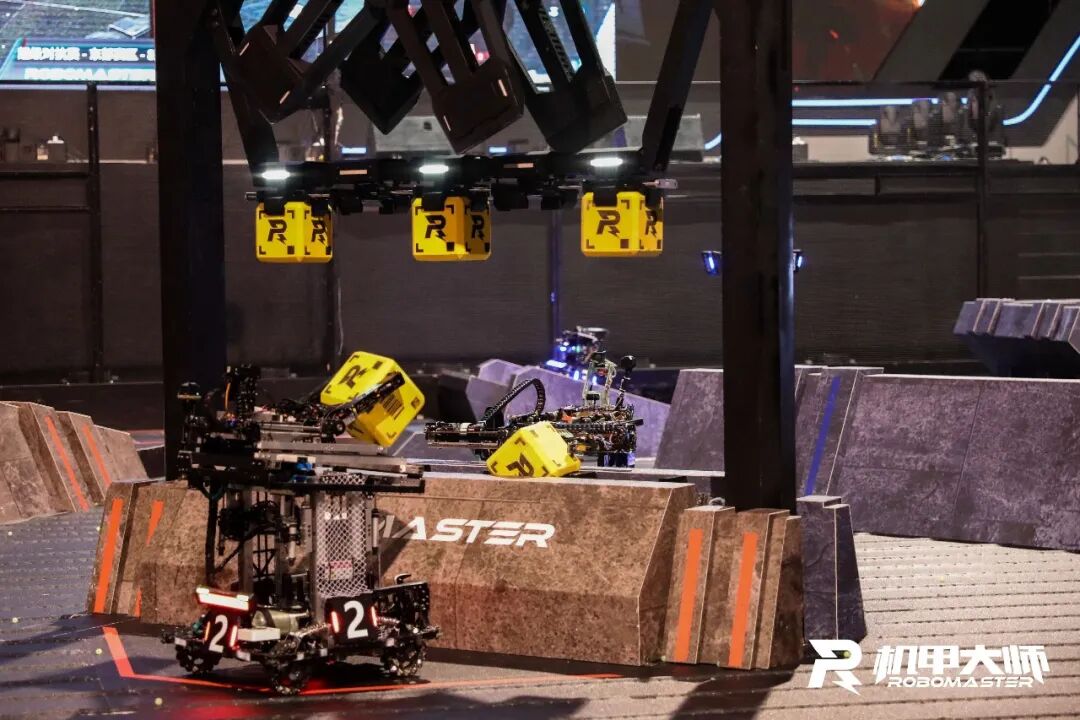
Different competitions entered China at different times and through different paths. Since 2000, robot education in the market has been dominated by the Lego model. But along with the changes in Lego's business model in China and the recent suspension of the FLL competition under FIRST, the popularity of Lego in China has slightly declined.
As schools, training institutions and competition organizers continue to join in, robot competitions have gradually developed from interest activities participated by a small number of science and technology clubs into a more and more mature education system. Competitions are no longer the end of learning robots, but have begun to define course content and training methods in turn, which has also led to the prosperity of a large number of robot training institutions.
What Exactly Are Children Learning in Robot Classes
When the subway pulls into the area near Haidian Huangzhuang, even the air seems to be filled with a little anxiety.
A mother and her son sitting next to each other are chatting: "In the future, we will use English to communicate more in daily life, integrate English into daily life, and speak more. How do you say 'take the subway home' in English?" The child mumbles "I don't know". At this noon on Saturday, he obviously does not want to answer such a question.
In this area that gathers the densest educational resources in the whole city, educational training institutions are almost everywhere. And robot training schools are a rather special existence among them.
When you arrive at the BestStar Youth Robot Activity Center, the first thing you see is a robot training ground, where students who come to practice on weekends are operating robots, making the sound of motor operation and mechanical collision. Compared with other classrooms that require students to sit upright, it looks more like a game field.
Tang Lei, founder of the institution, introduced that most children take one class hour of courses here every weekend, and some children like to stay here even when they have no classes, to meet friends and practice robots.
He stepped into the robot education industry in 2018, when he was a junior college student. He co-founded a robot training institution with his classmates in the school club. In 2025, he left his original institution to start his own business, and quickly won many domestic and foreign awards with years of accumulated competition experience.
Over these years, the popularity of the robot education industry has been rising, and the competition has become more fierce. Training institutions need to form differentiated advantages in teaching quality, competition results, teachers and services.
In many robot training institutions, competitions almost constitute the main axis of the entire education process. It is not only the most intuitive display of children's learning achievements, but also one of the most important evaluation criteria for institutions.
During the learning process, students not only need to learn to build robots or write programs, but also need to master multiple links such as design, programming, operation, team division of labor, tactic formulation, engineering recording and on-the-spot response in competitions.
In a competition team, roles are usually clear, including captain, builder, programmer, operator and other roles, and division of labor needs to be arranged according to the characteristics of team members. But when it comes to the actual competition scene, the division of labor will not always run according to the roles on paper. If the robot suddenly has a structural failure, the program has a temporary problem, or the team member who is originally responsible for a certain link is in poor condition, other people must quickly take over the work.
Therefore, robot competitions are very much like a reduced version of the engineering team, and they test a person's comprehensive abilities more.
In addition to the hard indicators of skills, students will also improve a series of soft skills. They need to plan the goals of the whole season, record engineering logs, analyze opponents, collect competition information, and communicate tactics with alliance teammates. Usually, these things are guided by teachers, but after entering the competition field, teachers cannot follow children into the competition area, and many decisions have to be made by themselves.
Some children with poor psychological endurance will cry on the spot after losing the competition. For them, while learning technology, robot education also forces children to face things that school classrooms rarely teach them directly: how to cooperate with strangers, how to take responsibility, how to make new decisions after the plan fails, and how to accept an unsatisfactory result.
The twin brothers mentioned earlier are studying at this institution. They said that learning robots has greatly improved their communication skills. The two have grown up together since childhood, and their tacit understanding once even became a shortcut. Most of the time, with just a few words, they can know what the other person wants to do. But after entering robot competitions, they have to cooperate with more unfamiliar teammates, and they also need to explain their ideas to others. Over time, the two have become more outgoing and more organized in doing things.
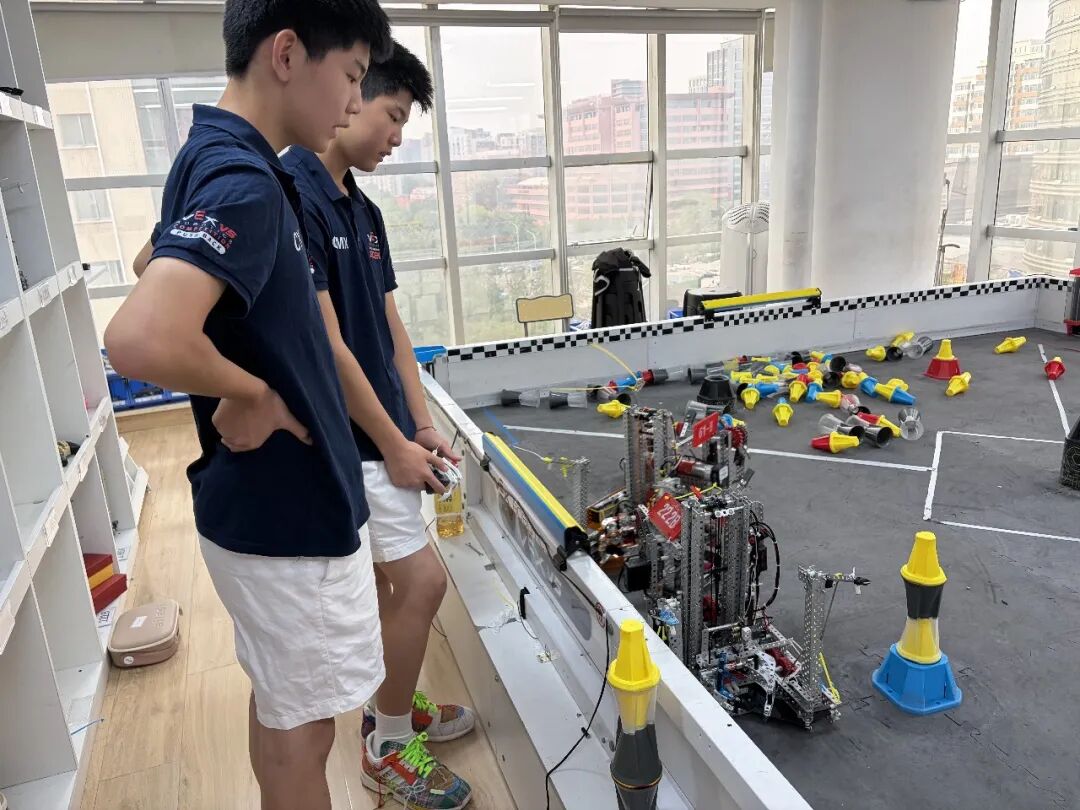
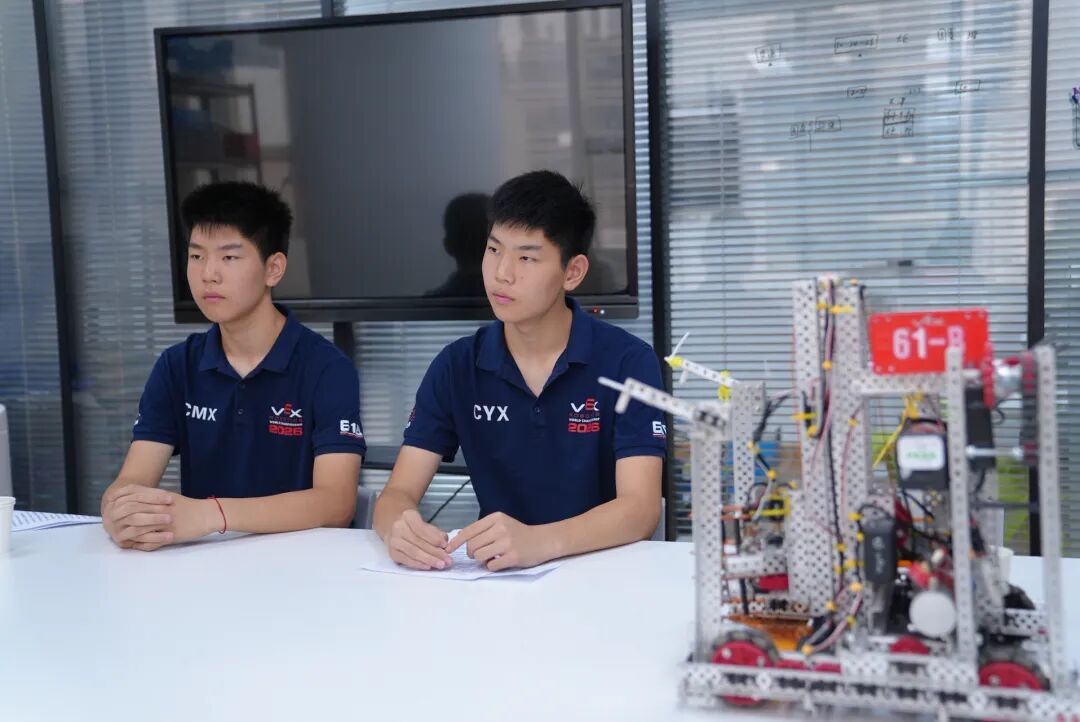
Later, they even started a robot club from scratch in their middle school, conducted interviews for new recruits, and communicated with school leaders and teachers. Outside of robot competitions, they gained a new kind of training: how to organize a thing from scratch.
Tang Lei said that the students who can really go further are often not necessarily the children with the best academic performance in the traditional sense, but those with stronger comprehensive abilities and who are willing to keep solving problems. Some children do not like the traditional learning method dominated by listening and written assignments, but in the open, practice-oriented robot courses, they can gain a sense of achievement through hands-on construction and solving practical problems. Interest will prompt them to invest more time, and phased achievements will enhance their confidence, forming a positive cycle.
What's more interesting is that when children find their own advantages and positions in robot projects, their understanding of school knowledge may also change accordingly. Mathematics, physics, Chinese comprehension and even English have begun to become tools that need to be called when solving practical problems.
When a student participated in an overseas competition, due to the language barrier, he could only communicate with foreign teams by gesturing. After returning to China, he experienced the gap in English ability for the first time, and instead took the initiative to learn English.
This is probably the most subtle relationship between robot education and traditional classrooms. It allows children to rediscover the importance of knowledge in traditional education in another real scenario.
From Robot Competitions to More Diversified Futures
What kind of life path will children who have experienced robot competitions embark on?
First of all, most children will not take up jobs related to robots. Life is like a huge diverter. Through repeated choices, as well as the screening of talent, interests, resources, and coincidences, people will eventually arrive at their own running tracks.
For children who take robots as their interest, there is a natural contradiction between their interest and academic work. At the competition site, we met an information technology teacher from a county high school. This is his first time leading a team to participate in a national robot competition. Most of the time, he needs to explore and learn by himself first, and then teach what he has learned to students. For high school students, the college entrance examination is the most important ultimate goal. According to the school's arrangement, they have to quit the club after entering the second year of high school and devote their energy to further education. But even so, children's interest in robots remains strong. "After finishing two classes, children often gather around the podium and won't let you leave, asking all kinds of questions."
If you don't just want to take robots as a hobby, but really win rankings in competitions, you need high cost investment. A parent who brought his child to the competition told us that in the latest month alone, he had spent tens of thousands of yuan for his child, including pre-competition intensive training, transportation and accommodation costs for going to Sanya and Beijing to participate in competitions. For students who take extracurricular robot training for a long time, the annual related expenditure is at least tens of thousands of yuan.
There are also