Cheese is popping up everywhere to constantly make its presence felt.
In *Tom and Jerry*, Tom and Jerry share a typical love-hate dynamic, and the large-hole Emmental cheese that frequently appears in the series is the first impression of cheese for many Chinese people.
Even with the endorsement of cultural symbols, restricted by origin and production capacity constraints, Emmental cheese has always remained a niche category in China's domestic cheese consumption market.
At present, mozzarella cheese is the only product that can be natively original-produced, mass-manufactured and sold locally. It is widely used in hamburgers and pizzas, and has now expanded to multiple scenarios including baked rice, bakery products and new-style tea drinks.
Cheese truly gained widespread popularity in China starting from Milkland, which secured a firm foothold in the segmented track of children's cheese sticks with aggressive marketing strategies.
However, the bigger opportunity for cheese lies in the all-age market. The domestic market is large, but the industry foundation is not yet stable. On one hand, consumers have limited awareness of cheese, and on the other hand, due to differences in dietary habits, the market penetration of cheese can only advance step by step.
From children-focused to all-age market
Regular visitors to supermarkets and convenience stores will find that the refrigerated shelves next to pasteurized milk are crowded with a wide range of cheese products. In addition to cheese sticks for children, cheese products suitable for family dining tables are becoming increasingly abundant.
As a widely recognized incremental track for dairy products in recent years, cheese is penetrating the adult market at an astonishing speed — after all, against the backdrop of declining new-born population, cheese brands have no choice but to implement all-age coverage strategies.
Domestic consumers are no strangers to cheese products. In the mid-1980s, Beijing Sanyuan produced the first domestically made cheese in China, and later became one of McDonald's major suppliers in China.
McDonald's hamburger products opened consumers' awareness of American fast food, while the yellow cheese slice sandwiched in the middle (a type of cheese) received polarized evaluations from consumers: some people would pick out the cheese and discard it, while many other consumers are very fond of it.
In 2004, Milkana, a French cheese brand that had entered the Chinese market for 7 years, launched the "suckable and chewable cheese stick" and pioneered the children's consumption market.
Three years later, the cheese industry witnessed three landmark events: Beijing Sanyuan independently developed and produced mozzarella cheese, French cheese brand La Vache qui Rit entered the Chinese market, and Chai Xiu from Guangze Dairy was inspired when attending the World Food Expo and decided to launch the cheese business.
At that time, Guangze Dairy, a regional dairy enterprise based in Jilin, mainly focused on pasteurized yogurt and ambient milk business. In 2015, the company successively acquired Tianjin Milkland and Danone's Shanghai factory, officially stepping into the cheese track, focusing on the segmented field of children's cheese, and launched the first Milkland cheese stick, which kicked off the development of the local cheese industry.
In 2018, Miaofei Food launched children's cheese sticks. The following year, dairy enterprises including Yili, Mengniu and Bright Dairy launched similar products to compete for the children's cheese consumption market.
In the children's cheese market, Milkana entered the market early, with deeply rooted brand influence and channel networks in first- and second-tier cities, so Milkland could only achieve breakthroughs through low-tier cities.
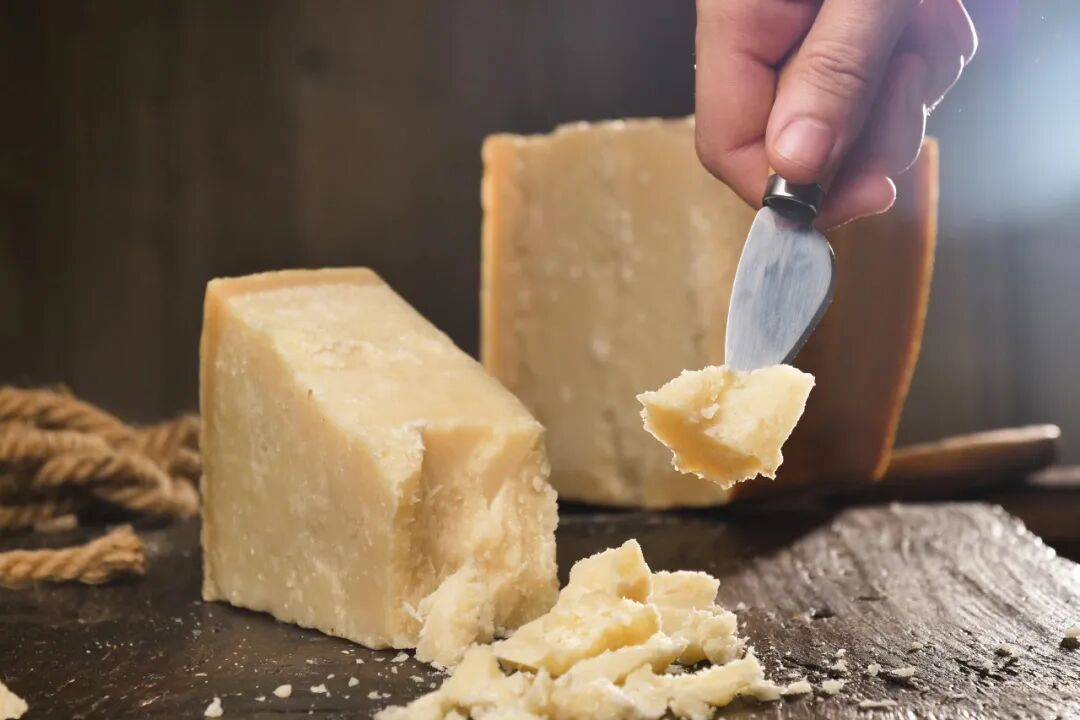
Following the suggestion of Jiang Nanchun from Focus Media, Milkland (600882.SH) adopted a high-profile and comprehensive marketing strategy. In 2021, the company's revenue exceeded 4 billion yuan, with a market share of 27.7%, taking the top spot in the cheese industry, and Chai Xiu got a new title — the Queen of Cheese.
Since then, cheese has received renewed attention from the market. But in terms of product forms, most products still belong to the category of processed cheese, and the mainstream consumer group is limited to children.
With the support of Mengniu Dairy, Milkland broke out of the children's cheese track, launched adult cheese and catering industrial series products, and implemented the market strategy of "making cheese enter every family".
In 2024, the revenue of Milkland's catering industrial series products and family dining table series products reached 1.313 billion yuan and 395 million yuan respectively, accounting for 45.44% of the company's total revenue in total.
From "drinking milk" to "eating milk"
Dairy enterprises are increasing their layout in the cheese track, which is driven by both the need to boost the performance of their main business and the pulling force of consumer demand.
With the upgrading of consumption, consumers' awareness of cheese has changed significantly. The public's impression of cheese is no longer limited to the cheese slices in hamburgers and children's cheese sticks. Compared with ambient milk and pasteurized milk, cheese has higher protein and calcium content, which is 8.6 times and 7.7 times that of ordinary milk respectively, and is less likely to cause lactose intolerance.
Consumers are shifting from "drinking milk" to "eating milk", which directly drives the iteration of product structure, expanding from cheese sticks to categories such as block cheese.
At present, Chinese families have not formed the habit of eating cheese slices alone like European and American families, but it is very common to add cheese to sandwiches and pizzas, or apply it in Chinese innovative dishes such as cheese hot pot and cheese ribs.
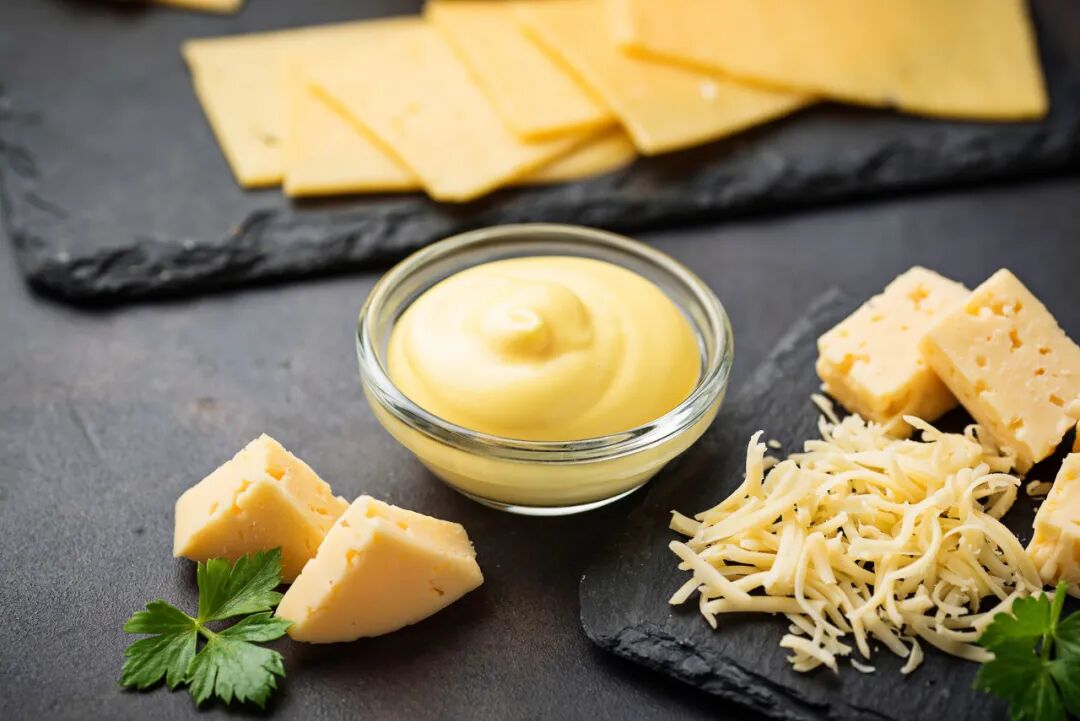
Walking into the dairy freezer in large shopping malls, you will find that the product forms of cheese have long gone beyond the traditional forms of cheese sticks and cheese slices, and new categories such as cheese sauce, cheese cups and cheese crisps are emerging in endlessly.
This reflects the shift of cheese consumption: cheese, which used to be exclusive for children in the early stage, is now facing a more diverse all-age consumer group. Third-party institutions predict that after cheese moves to the all-age market, the overall domestic market size will reach 20 billion yuan.
Although the current cheese products are still in the stage of low penetration, they have become an important incremental track for dairy enterprises to compete for.
According to public data, China's domestic cheese demand reached 420,000 tons in 2025, with a year-on-year increase of 16.7%. In the same period, China's per capita cheese consumption is only 0.3 kg per year, far lower than the per capita 18-20 kg per year in Europe and America.
From the supply side, the proportion of domestic original cheese is less than 20%, and the vast majority of cheese in China depends on imports.
The huge market space has attracted a large number of brands, and Milkland still occupies the leading position in the industry. According to data from Worldpanel and Euromonitor, Milkland has ranked first in China's packaged cheese brand sales and retail market for many consecutive years.
With dairy enterprises including Yili, Mengniu and Junlebao entering the market one after another, the cheese market is gradually concentrating on leading enterprises, forming a competitive pattern of "one dominant player with multiple strong followers".
Yili Co., Ltd. (600887.SH) established the cheese business division as early as 2018, and entered the cheese market through children's cheese sticks. In 2022, cheese has become the company's second growth curve, with its revenue increasing by more than 30% year on year.
The leading position of Milkland cannot be shaken for the time being. In 2025, the company's cheese business continued to perform well, achieving a full-year revenue of 4.615 billion yuan, representing a year-on-year increase of 22.84%.
Still need to overcome difficulties and climb the slope
Although the cheese market has a considerable volume, the pain points of the industry are still obvious.
The upstream infrastructure of China's dairy industry continues to develop, ranches with 10,000 cows are expanding rapidly, the stock of dairy cows is close to 6 million, and the annual output of raw milk exceeds 40 million tons. However, special ranches suitable for cheese production are very scarce.
The quality of raw milk has a far-reaching impact on the manufacturing of finished cheese. Due to different genes of dairy cow breeds, there is a huge difference in curdling performance: 9 kg of high-quality raw milk can produce 1 kg of cheese, while ordinary raw milk requires 11 kg to produce 1 kg of cheese.
The shortage of special milk source for cheese can be gradually improved through investment and construction, but the core strains required for fermented cheese are difficult to achieve independent breakthrough in the short term.
The changes of different strains during the cheese fermentation process will affect the quality and flavor of the final cheese. At present, starter cultures and surface ripening strains are monopolized by foreign brands.
According to public data, 90% of the strains in China's cheese industry currently rely on foreign companies such as Denmark's Chr. Hansen, and these strains are exactly the "soul" of cheese.
In addition to strains, cheese-related production equipment is also highly dependent on foreign countries. For example, many sophisticated equipment such as thermal stretch-resistant equipment for producing mozzarella cheese and fully continuous curdling tanks still need to be imported from overseas.
In addition, as China's domestic cheese consumption market was cultivated relatively late, the mainstream form of cheese is still children's cheese sticks, which is far from the level of Europe and America where cheese is used as an important daily protein supplement source.
Against this background, the industry has derived two different product and channel paths. On the B-end of catering and new-style tea drinks, dairy enterprises focus on outputting overall solutions to promote further penetration of cheese; on the C-end, products are more inclined to casual snacks. In addition to cheese sticks, Milkland, Yili and other enterprises have broken through the traditional form of cheese and successively developed products with crispy taste.
However, this is only a small step in the localization of cheese consumption.
This article is from the WeChat official account "Zebra Consumption" (ID: banmaxiaofei), written by Chen Xiaojing, and published by 36Kr with authorization.