Offering an annual salary of 1.5 million to poach talents, the brain-computer interface sector has ignited a fierce talent war.
The brain-computer interface (BCI) track is experiencing explosive growth, and a fierce talent war is also heating up.
Since 2026, BCI-related positions covering algorithms, hardware and product commercialization have continuously appeared in high-paying recruitment lists. Some enterprises are recruiting key technical talents globally with annual salaries of up to millions of yuan; the salaries for positions related to implantable BCI even surge to 1.5 million yuan per year.
With capital, industry and scientific research forces pouring in collectively, the industrialization process of BCI has accelerated significantly, as if it has entered a fanatical stage of "gold mining everywhere". However, behind the million-yuan annual salary, there are still some issues worthy of calm exploration: what kind of talents are enterprises competing for? What capabilities determine the market value of BCI talents?
01 BCI industry with abundant capital is scrambling for talents frantically
The BCI industry has entered a period of rapid development. Driven by factors such as diversified technical products and massive capital investment, the demand for talents of enterprises has risen sharply, and the talent war has already kicked off.
The current BCI technologies and product routes are increasingly diversified, which directly drives the growth of job demand.
In the industry, the two major technical directions of invasive and non-invasive BCI coexist, various electrode solutions and hardware forms are constantly enriched, and signal sensing and regulation technologies including optics, electricity, magnetism, ultrasound and chemistry are advancing synchronously. Implantable devices focus on R&D of high-density neural recording, brain intention recognition and neural stimulation, while non-implantable products are gradually applied in scenarios such as medical rehabilitation, auxiliary control and consumer electronics. Diversified R&D tasks require enterprises to allocate professionals in corresponding fields.
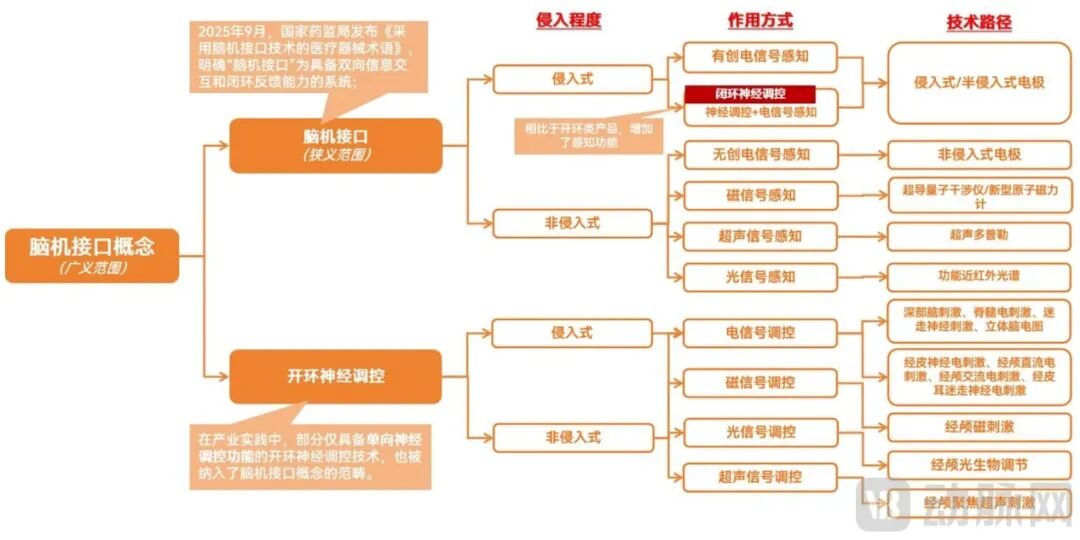
Diversified technical routes of BCI, Image source: *2026 Early Commercialization Exploration Report of Brain-Computer Interface* by Artery Think Tank
The surging capital enthusiasm accelerates enterprise expansion and pushes up the scale of talent demand.
In the first half of 2026, China's BCI sector witnessed dozens of financing events, with the total financing scale reaching tens of billions of yuan, and large financing of over 300 million yuan landed frequently. With sufficient capital in hand, expanding the team has become one of the key tasks of enterprises.
For example, Active Medical completed a 330 million-yuan angel round of financing, listing team expansion, clinical trials and hardware supporting construction as the main investment directions of the funds; Shenfu Jianxing completed a 300 million-yuan angel round series of financing, and while promoting clinical trials and global layout, it vigorously introduces interdisciplinary talents for brain-spinal interfaces; Gestalt Technology has gathered 45 top scientists and engineers from all over the world so far, and continuously reserving outstanding talents remains a key task in the future.
The continuous growth of the industrial scale will further expand the demand for talents, and recruiting talents with high salaries has gradually become a prominent feature of industry recruitment.
The *Human Resource Development Catalogue for New Quality Productive Forces in Beijing (2026 Edition)* released by Beijing Municipal Human Resources and Social Security Bureau shows that the reference annual salary range for BCI positions is 180,000 yuan to 470,000 yuan, and the human resource development rating is full five stars (the higher the star level, the higher the human resource development value).
Higher salaries have appeared in specific recruitment positions. Public recruitment information shows that an implantable BCI enterprise recruits FPGA experts and doctors in automatic control, with the maximum annual salary reaching 1.5 million yuan; the maximum annual salary for recruiting neural signal decoding experts and doctors in neuroscience reaches 1 million yuan.
Annual salaries of millions of yuan are not isolated cases. During the 2026 spring recruitment season, some BCI enterprises in the Greater Bay Area have recruited talents globally with annual salaries of millions of yuan. According to the statistics of Baitalent Technology based on national search data in the first half of 2026, the median annual salary of neural signal algorithm engineers on the enterprise side reaches 820,000 yuan, and leading enterprises can offer more than 1.2 million yuan to core candidates with more than 3 papers published in NeurIPS or *Journal of Neural Engineering*. The BOSS Zhipin platform also shows that the recruitment salaries of some positions such as BCI chip development director, BCI pre-research system engineer and multimodal algorithm director in some enterprises are above one million yuan.
The statistical calibers and sample ranges of these data are different, and they cannot be directly used as the average salary level of the whole industry. But it is not difficult to see that the diversification of technical products, coupled with the boost of capital, jointly drives the growth of recruitment scale in the BCI industry, and the status quo of the industry "having abundant capital and scrambling for talents" is prominent.
02 From mastering technology to delivering finished products, what kind of talents do enterprises actually lack?
As the industry development stage advances, the demand of BCI for talents is iterating, and the industry's criteria for judging scarce compound talents have become more specific.
In the early stage of the industry, the primary task of enterprises is to verify the technical feasibility. The work focus falls on technical route verification, algorithm debugging and prototype development. At this stage, when recruiting, enterprises give priority to scientific research talents in the fields of neuroscience, EEG signal processing, algorithm researcher and prototype R&D.
With a number of enterprises launching clinical trials, product registration applications and engineering mass production, the industry has entered a new stage of development, and enterprises also need human resources to support the stable operation of products, complete clinical verification and realize large-scale production. The demand for talents has expanded from a few scientific research positions to a complete set of industrialization positions.
Take Gestalt Technology as an example. In the early stage, the company's core priority was to prove whether the scientific problems and technical routes are feasible, and its talent structure was more focused on neuroscience, ultrasound, algorithms and prototype R&D.
With the operation of the Chengdu global headquarters and super factory, the company has entered a new stage of parallel engineering manufacturing and clinical transformation, and the demand for talents has extended to links such as system engineering, reliability verification, product development, quality system, registration regulations, clinical trials, production and manufacturing, and supply chain.
The talent layout of Steep Medical also shows a similar trend. The implantable wireless BCI system developed by the company has entered the "green channel" for innovative medical devices, becoming the first fully invasive BCI product in China to enter the "green channel".
At present, Steep Medical is carrying out a round of centralized recruitment around algorithm, hardware, device technology, electronics and clinical engineering to support the R&D of its implantable BCI products, promotion of clinical projects and technical iteration; the focus of talent construction in the next stage will extend to system integration and product transformation capabilities.
BCI itself has remarkable interdisciplinary characteristics. Under the changing trend of talent demand, the value of compound talents is further highlighted, but the market supply is seriously insufficient, which is a reality widely perceived by the industry.
"BCI is a field with extremely high technical thresholds, spanning materials, chips, algorithms, brain science and clinical medicine. It requires integrating multidisciplinary knowledge, promoting the integration and implementation of different technical modules to build a complete business platform," said Yang Zhiwen, founding partner of Nuoyu Capital.
The relevant person in charge of Steep Medical also mentioned that the team not only needs professionals with profound accumulation in a single field, but also compound talents who can connect neuroscience, engineering R&D and clinical needs.
Peng Lei, founder and CEO of Gestalt Technology, talked about the pain points of recruitment and sighed that the difficulty of recruiting for ordinary standardized positions is acceptable, and the hardest to find are compound leaders who have two or three kinds of capabilities at the same time. "For example, people who not only understand neuroscience problems, but also can convert multimodal brain data into algorithm and product capabilities. The number of such talents in the world is limited, and it takes longer for identification, communication and mutual verification."
"Compound talents" is often mentioned by insiders, but this concept is still relatively abstract. The scarcity of such talents is not only because they master more knowledge. BCI is still in a stage of rapid evolution of technical routes and continuous changes of product forms, so it is difficult for enterprises to define those core positions with a fixed professional label.
What characteristics should such talents have? Who can get high salaries? Nowadays, enterprises have more multi-dimensional evaluation criteria.
In the view of the relevant person in charge of Steep Medical, the ideal compound talents should have the control of the complete R&D chain: "We especially value whether practitioners can base on real clinical needs, promote the coordination of all links, and gradually turn technological breakthroughs into safe, reliable and usable products."
From the perspective of salary distribution, who are enterprises willing to give more competitive returns? In Peng Lei's view, it is usually those who can connect multiple disciplines and take responsibility for the final results. Most of them can reduce key technical risks, shorten the transformation cycle and build organizational capabilities. "Therefore, salary is not only determined by the position title, but also depends on the scarcity of talents, the difficulty of the tasks undertaken, and whether they have complete experience from scientific research to products or from clinical practice to registration. With the development of the industry, the competition for leading scientists, system architects and core clinical transformation directors will continue to heat up."
Combining the common views of the industry, we can see that the talent competition in the BCI industry is diverging: basic R&D positions are increasing with industrial expansion, and scarce high-end talents are increasingly concentrated in positions that can undertake key technical breakthroughs, system integration and clinical transformation responsibilities. High salaries mostly flow to these key roles that can directly affect the product R&D cycle and industrialization progress.
03 High-salary poaching is not enough, there are other solutions
Like other industries, talent flow is also the norm in the BCI industry. Mutual poaching between enterprises, executives job-hopping with their teams and other phenomena are very common. Yang Zhiwen observed that enterprises mastering core technologies such as electrodes and neural stimulation have become important sources of talents for a large number of emerging entrepreneurial teams.
This mode is mainly the stock flow of mature talents, which is difficult to fundamentally expand the overall talent supply of the industry. Mature BCI talents are scarce, and enterprises must actively broaden talent acquisition channels.
The first feasible idea to find talents externally is to look at the adjacent industries and tap practitioners who have the ability to cross-border transfer.
Peng Lei mentioned that the industry no longer only recruits talents from the traditional BCI circle. "Practitioners in fields such as precision medical devices, ultrasound imaging, semiconductor sensors, robots, artificial intelligence, neuroscience and clinical medicine all have the potential to transform into the BCI track."
If cross-industry talent recruitment is an important means to expand the professional skill team, targeted global search is the key path to seize top high-end talents.
For high-end talents, enterprises cannot screen candidates according to the job description. Instead, around key technical breakthroughs and core business objectives, they look for top talents who can independently define problems and lead the team to complete zero-to-one technological breakthroughs.
The personal connections of the founding team, scientist consultant network, international scientific research project cooperation, upstream and downstream industrial partners are all important channels to reach such top talents. With this set of global targeted recruitment ideas, Gestalt Technology has successfully introduced overseas senior experts including the former clinical director of Neuralink, and the R&D and registration director of Nano Retina, a visual BCI enterprise; at the same time, it has built an external Scientific Advisory Board (SAB), which has now recruited Professor Feng Jianfeng, Dean of the Institute of Brain-inspired Intelligence of Fudan University, internationally renowned cognitive and behavioral neuroscientist Professor Trevor Robbins, and renowned American neurologist Professor Helen S. Mayberg.
If external talent introduction succeeds, it will certainly bring quick results to the business, but the recruitment cycle and results are uncertain. Therefore, it is particularly important for enterprises to independently cultivate reserve talents.
Capital enthusiasm can accelerate team expansion, but it cannot shorten the talent growth cycle immediately. Peng Lei believes that the competition between enterprises will eventually return to technical direction, scientific research culture, clinical resources and long-term development space, rather than just short-term salary.
However, there are obvious differences in the feasibility of internal training for different types of talents. In Yang Zhiwen's view, engineering talents are relatively suitable for growing up in enterprise projects. The technical leader sets up the overall framework, then disassembles and implements complex tasks, so that basic professionals can accumulate experience in actual project practice.
However, it is difficult to quickly cultivate talents in brain science, neuroscience and clinical medicine relying on internal enterprise projects. Medical talents need to complete the whole training process of bachelor, master, doctor and standardized residency training, and go through long-term clinical practice; the growth cycle of positions such as neurosurgery is particularly long, which can never be mass-produced by short-term investment of enterprises.
For this reason, enterprises have taken the initiative to cooperate with universities and scientific research institutions, and open up the talent training chain through industry-university-research cooperation.
For example, Gestalt Technology has built the NeoLAB open scientific research platform, which is positioned as a carrier to connect basic science, technology R&D and youth talent training; it also plans to launch the Gestala Global Scholars Program to fund young scholars focusing on ultrasonic neuromodulation, functional ultrasound imaging, neural decoding, NeuroAI, and sonogenetics. The company hopes to take NeoLAB as the enterprise-side interface to connect universities, hospitals, scientific research institutions and industrial teams to form an open talent training network.
In short, the talent issue of BCI is gradually evolving from an enterprise recruitment issue to an industrial talent system issue, which requires the joint efforts of all parties in the industry to solve.
Yang Zhiwen also reminded that the industry needs to overcome impetuous emotions. Because brain signal interpretation itself is full of difficulties, motor signals are relatively controllable, but the analysis of internal brain activities such as emotion and thinking has extremely high technical barriers; some laboratory results are based on the experimental conditions of small animals with thin skulls and artificially removed bone flaps, and there is still a huge gap before clinical transformation.
"These bottlenecks are difficult to be overcome by a few scientists or teams alone, and highly depend on the continuous breakthrough of basic research, requiring long-term collaborative research of enterprises, universities, research institutes and other parties, which may last for three to ten years. In addition, BCI has extremely high standards for product safety and ethical constraints, so the industry needs to abandon the eager-for-instant-success mentality and have more patience and precipitation."
The talent gap and technical barriers are intertwined. Only when all sectors of the industry break through institutional barriers, form joint forces, and build a talent cultivation and supply ecosystem that adapts to the law of interdisciplinary development, can BCI truly release its strong potential.
This article is from the WeChat official account "Artery Network" (ID: vcbeat), written by Zhang Xiaoxu, and authorized for release by 36Kr.