Sales of smart companion screens have plummeted, and the main reason behind this is the severe downturn in the film and television industry.
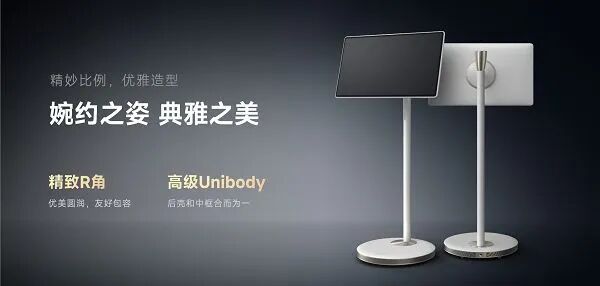
With the evolution of the smart home ecosystem leading to more refined segmentation of home scenarios, and the continuous improvement of consumers' requirements for life quality, the demand for a "second screen" in home scenarios outside the living room dominated by TVs has been rising in recent years. Therefore, over the past few years, a new species in the smart home ecosystem called "bestie screen" has emerged: a mobile display with built-in rollers at the bottom that can move freely, accompany users at all times like a close friend, and enable users to access various services anytime and anywhere.
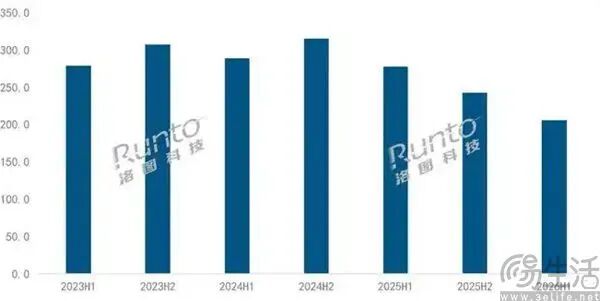
However, entering 2026, the once fast-growing bestie screen track has suddenly lost momentum. According to the August online retail data released by Luotu Technology, the bestie screen market continues to decline: online sales volume hit 12,000 units that month, plummeting 37.7% year on year, while online retail revenue only reached 50 million yuan, down 34.4% year on year.
Against this backdrop, the claim that bestie screens are a marketing-driven "IQ tax" and a pseudo-demand has become increasingly prevalent.
But is this really the case? If bestie screens were a pseudo-demand, they would obviously not have maintained growth for three consecutive years from 2023 to 2025. Although a bestie screen is essentially just a combination of a touch screen, a lifting stand and universal wheels, with core configurations such as the main control chip even weaker than tablets at the same price point, it only features a larger screen and added mobility — yet it is precisely this mobility that endows it with far greater potential for diversified scenarios.
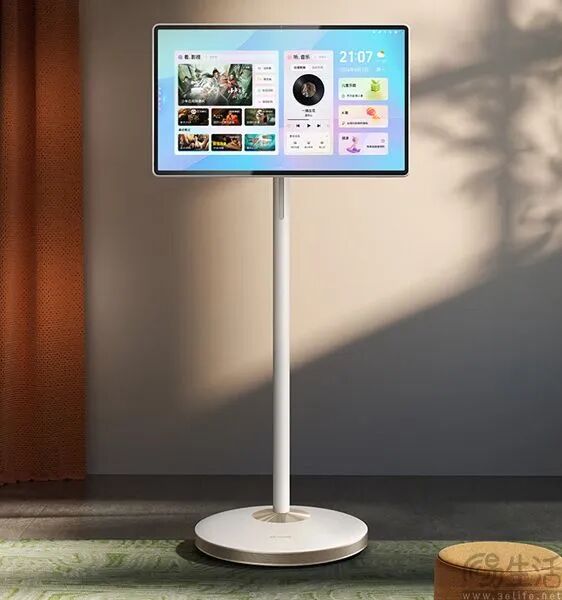
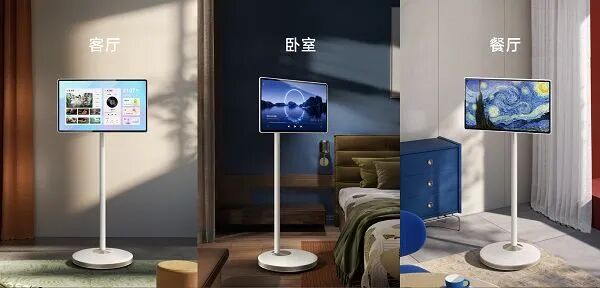
For homeowners, the experience of bestie screens is far inferior to that of TVs, but for young people who rent properties, bestie screens provide a universal solution for composite scenarios. Compared with fixed TVs, bestie screens can be placed in the kitchen, at the dining table, or beside the bed. To this end, some manufacturers have put forward the slogan "one device replaces five", integrating the functions of multiple devices including TVs, fitness mirrors, KTV players and tablets into one movable large touch screen.
From the product perspective, bestie screens have a clear target user group. Regarding the question of whether bestie screens are a pseudo-demand, smart projectors, a related product category, can provide supporting evidence. According to relevant reports from Luotu Technology, in the first half of 2026, total channel sales volume of China's smart projector market (excluding laser TVs) reached 2.056 million units, down 26.0% year on year, with sales revenue hitting 3.34 billion yuan, down 27.0% year on year.
Moreover, smart projectors and bestie screens share common characteristics: both are designed to solve the pain points of "fixed TV placement and too small mobile phone screens", and focus on delivering a free, multi-scenario large-screen experience. While debates over whether bestie screens are an "IQ tax" have never ceased, similar disputes about smart projectors have existed for far longer.
In fact, the current market downturn of both bestie screens and smart projectors is a collateral impact. The root cause behind their sluggish sales is the lack of content supply, which has led to a sudden drop in user demand.
The core selling point of bestie screens and smart projectors is "replacing TVs", providing a more cost-effective viewing solution for renters and families living in small apartments. So what do people buy bestie screens for? In the marketing materials of manufacturers including Xiaodu, Tmall Genie and Hisense, "video viewing" is the top selling point. DCI-P3&sRGB wide color gamut, 4K true-color eye-protective displays and panoramic sound systems are almost standard configurations for bestie screens. More costs are invested in the audio-visual system, which is exactly why the performance of bestie screens is usually inferior to tablets at the same price range.
Without rich film and television content, bestie screens naturally have no use case, just like a PS5 with no games available to play.
Since the start of 2026, the "film and television winter" is no longer an alarmist statement, but a reality that is unfolding. Relevant data shows that in the first half of 2026, Hengdian had an average of 22.75 filming crews per week, down nearly 1/4 year on year, and the decline once approached 40% around the Spring Festival. In mid-August, there were only 16 ongoing long TV series productions, about 1/3 of the peak number in previous summer vacations.
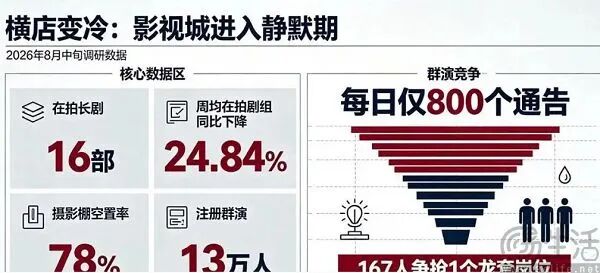
At present, there are about 140,000 registered extras in Hengdian, with only around 800 valid job offers per day, which means an average of 160 people compete for one position. As a result, the daily salary of extras has dropped from over 200 yuan to just over 100 yuan. It is reported that a large number of extras have started to take part-time jobs delivering food. Even the industry downturn has affected well-known actors. At this year's Weibo Movie Night, Dong Zijian said when receiving his award that he has been very free recently, Liu Haoran directly shouted to the audience to ask for job opportunities, and Cheng Xiao also said she has no scheduled work for a long time.
Take this year's summer season as an example. In previous years, the summer TV market was a fierce competition filled with diverse promotions, trending topics and overwhelming advertisements. However, the 2026 summer TV market has taken a completely different turn. "Unpromoted release" has become the norm. First, there is zero promotion: no pre-heating, no pre-release materials, no public appearances of the cast and crew, no trending topics for release scheduling, and no massive promotion on short video platforms, with the series going online quietly without any notice. Second, there is no investment attraction: data shows that over 70% of newly launched long TV series have no ad placements, with no pre-roll ads, no mid-roll ads, and no brand implantation.
After all, view counts can be inflated, but the real money advertisers invest cannot be falsified. At present, the long video market is in an awkward situation: the quality of mass-produced content is worrying, with screenwriters lacking creative ideas, directors not putting in enough effort, and actors delivering poor performances. Even with a luxurious cast, the plots are all stereotyped, and audiences have long been tired of such low-quality content and are unwilling to pay for it.
At the same time, AI-generated short dramas have exploded in popularity. Although the quality of AI short dramas is far lower than that of traditional film and television works, they are usually free of charge and better fit the fragmented entertainment needs of current users. Audiences of short dramas have much higher tolerance for content homogenization than viewers of long TV series, and what they want is just "psychological comfort" and "emotional catharsis". That's why cliches like "overbearing CEO falls in love with me", "vicious supporting character gets humiliated" and "dragon king returns" keep repeating: users watch short dramas simply to seek instant gratification.
On one hand, traditional long TV series continue to slump. Apart from *Chasing Jade*, the average effective view count of other popular series such as *Bright as Stars*, *Love Has No Myth* and *Winter When Autumn Snow Falls* is even less than 1000, far from the glory days of the past. On the other hand, a large number of AI short dramas are continuously eating up users' leisure time.
Indeed, no matter how manufacturers advertise that a bestie screen can "replace five devices", its core use case has always been video viewing. When film and television content is no longer attractive enough to audiences, it is only natural that the sales of bestie screens will decline.
This article is from the WeChat Official Account "Three Easy Life" (ID: IT-3eLife), written by San Yijun, republished with authorization from 36Kr.