Why do more and more world-changing innovations come from enterprises?
Elon Musk, Jensen Huang, Lisa Su, Sergey Brin, Michael Dell, and Satya Nadella, six tech giants, received the highest-level science and technology honor in the United States on the same day, including two awards: the National Medal of Science and the National Medal of Technology and Innovation.
In the past, the National Medal of Science has been awarded to renowned scientists such as Richard Feynman, Claude Shannon, and Barbara McClintock, as well as Herbert Simon, the Nobel Prize laureate in Economics who studied organizational decision-making. Among the recipients of the National Medal of Technology and Innovation, there are both Steve Jobs and Steve Wozniak, and W. Edwards Deming, the master of quality management.
This time, all six recipients come from the technology industry. What exactly did they win the awards for? Why did they receive different medals? What are the technical and commercial achievements they have respectively created that are worth learning from?
And, why are the most influential technological innovations in today's world increasingly driven by entrepreneurs and corporate organizations?
On October 9, 2026, Beijing time, Elon Musk posted on the X platform to congratulate Sergey Brin, Jensen Huang, Lisa Su, Michael Dell and Satya Nadella.
He was congratulating the five tech entrepreneurs who had just received the highest-level science and technology honor in the United States alongside him.
The official announcement released by the White House on October 8 shows that this award ceremony has three special features: First, all six recipients come from the technology industry, rather than traditional university scientists; Second, they actually received two different national-level medals; Third, from search engines, chips, artificial intelligence to cloud computing, personal computing and commercial aerospace, the six people's careers almost form a microcosm of the competitiveness of the contemporary U.S. technology industry.
I. What exactly are these awards? How valuable are they?
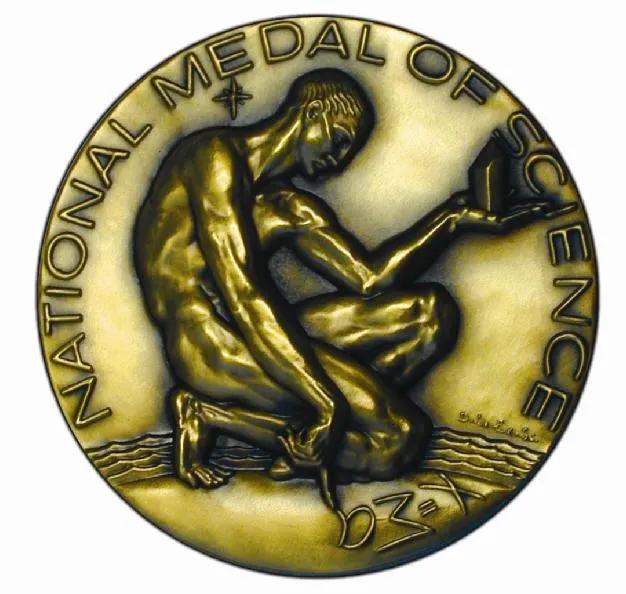
National Medal of Science
The National Medal of Science is one of the highest honors awarded by the U.S. federal government to scientists and engineers. Established by the U.S. Congress in 1959 and first awarded in 1963, it aims to recognize people who have made outstanding contributions to the development of science and engineering.
The first recipient was Theodore von Kármán, an important founder of modern aerospace science. On February 18, 1963, President Kennedy personally awarded him the first National Medal of Science representing the 1962 annual award, in recognition of his pioneering contributions in the fields of aerodynamics and aeronautical engineering.
Since then, the list of recipients has included many figures who have changed the course of scientific development:
• John Bardeen, 1965: One of the co-inventors of the transistor, and the only scientist to date to have won the Nobel Prize in Physics twice.
• Claude Shannon, 1966: The founder of modern information theory, whose research laid the theoretical foundation for digital communication and information processing.
• Barbara McClintock, 1970: A pioneer in genetics, who won the 1983 Nobel Prize in Physiology or Medicine for discovering mobile genetic elements.
• Richard Feynman, 1979: The 1965 Nobel Prize laureate in Physics, one of the important founders of quantum electrodynamics.
• Herbert A. Simon, 1986: The 1978 Nobel Prize laureate in Economics, an important pioneer of the bounded rationality theory and organizational decision-making research, and also one of the important founders of modern management science.
The National Medal of Science is not only awarded to physicists, chemists and biologists. The reason for Simon's award specifically emphasizes his fundamental contributions to human problem-solving behavior and organizational decision-making.
Management research can also receive the highest national scientific honor in the United States. This should be a quite meaningful historical detail for management readers.
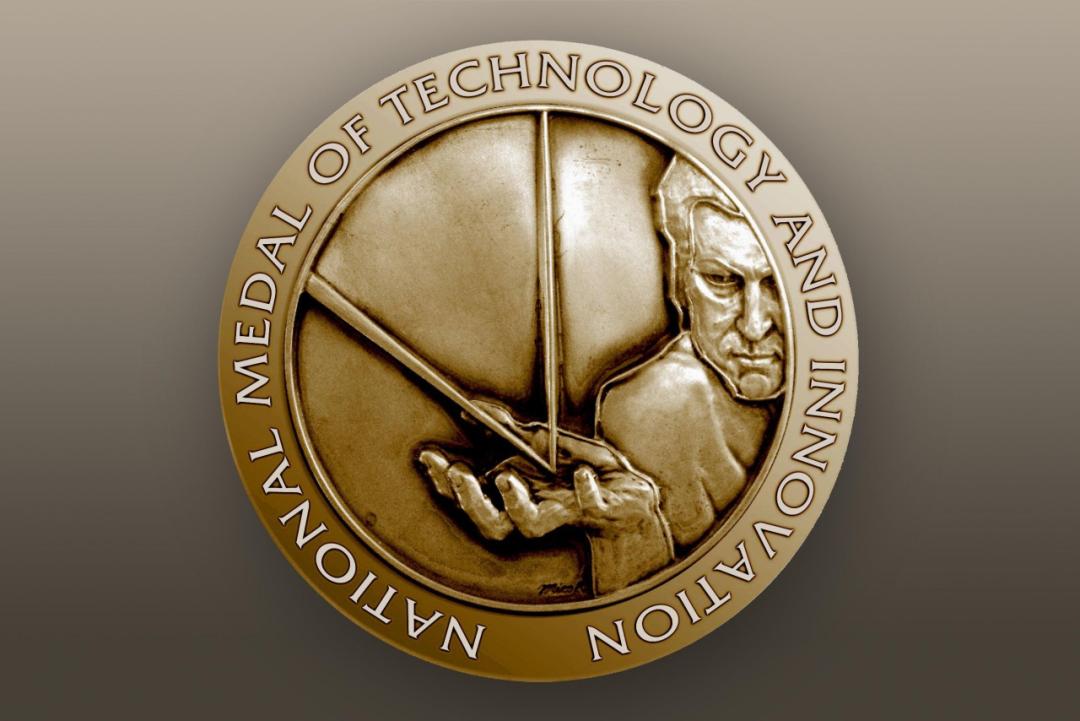
National Medal of Technology and Innovation
The National Medal of Technology and Innovation was established in 1980, originally called the "National Medal of Technology", and was first awarded in 1985. Different from the National Medal of Science, which mainly emphasizes contributions to science and engineering, it pays more attention to how technological innovation improves people's lives, enhances industrial competitiveness, and promotes economic and social development.
Among the first batch of recipients were the two founders of Apple, Steve Jobs and Steve Wozniak.
In 1985, President Reagan awarded them the medals in recognition of their contributions to the development and popularization of the personal computer industry.
The recipients of the same year also included three core R&D personnel of the IBM System/360 computer system — Frederick P. Brooks Jr., Erich Bloch, and Bob O. Evans. The System/360 is regarded as an important milestone in the history of mainframe computer development.
Since then, a number of famous entrepreneurs, inventors and technical experts have received the awards one after another:
• W. Edwards Deming, 1987: A famous master of quality management, who won the award for promoting statistical methods, quality improvement concepts and his contributions to enterprise management practices.
• Robert Noyce, 1987: Co-founder of Intel, one of the important inventors of integrated circuits, who made important contributions to the development of the modern semiconductor industry.
• Grace Hopper, 1991: A pioneer in computer science, who promoted the development of programming languages and made computers easier to be widely used.
• Frances Arnold, 2011: Won the medal for innovations related to directed evolution technology, and later won the Nobel Prize in Chemistry in 2018.
• Jennifer Doudna, 2024: One of the important founders of the CRISPR-Cas9 gene editing technology, the 2020 Nobel Prize laureate in Chemistry.
Both medals are awarded by the President of the United States, but their evaluation focuses are not exactly the same: The former focuses on contributions to the development of scientific knowledge and engineering technology, while the latter pays more attention to the practical application of technological innovation and its socio-economic impact.
An interesting detail is that Simon received the National Medal of Science, while Deming received the National Medal of Technology. The former promoted the development of management science by studying the decision-making behavior of organizations and people, while the latter changed the production and operation practices of enterprises through quality management methods.
Theoretical discoveries, engineering breakthroughs, technology applications, and management innovations that improve production and operation methods may all have far-reaching social impacts.
This award ceremony was held at the "Science: A New Golden Age" Summit in Washington on October 8 local time in the United States. The official White House announcement specially emphasized that the recipients promoted the development of general-purpose parallel computing, semiconductor design, ultra-large-scale computing infrastructure and intelligent systems.
II. Who are the six recipients? Why are they chosen?
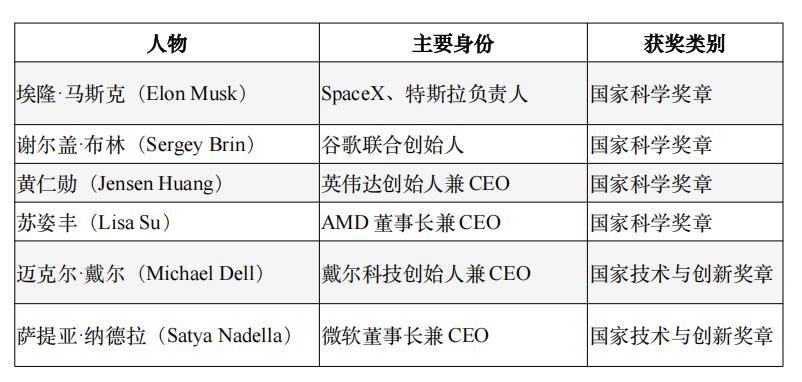
Among the six people, only Michael Dell was born in the United States, and the other five were born in South Africa, the Soviet Union, Taiwan Region of China, Taiwan Region of China and India respectively. Their career experiences also reflect the important role of immigrant talents in the development of the U.S. technology industry.
1. Elon Musk: Redefining manufacturing, aerospace and engineering scale
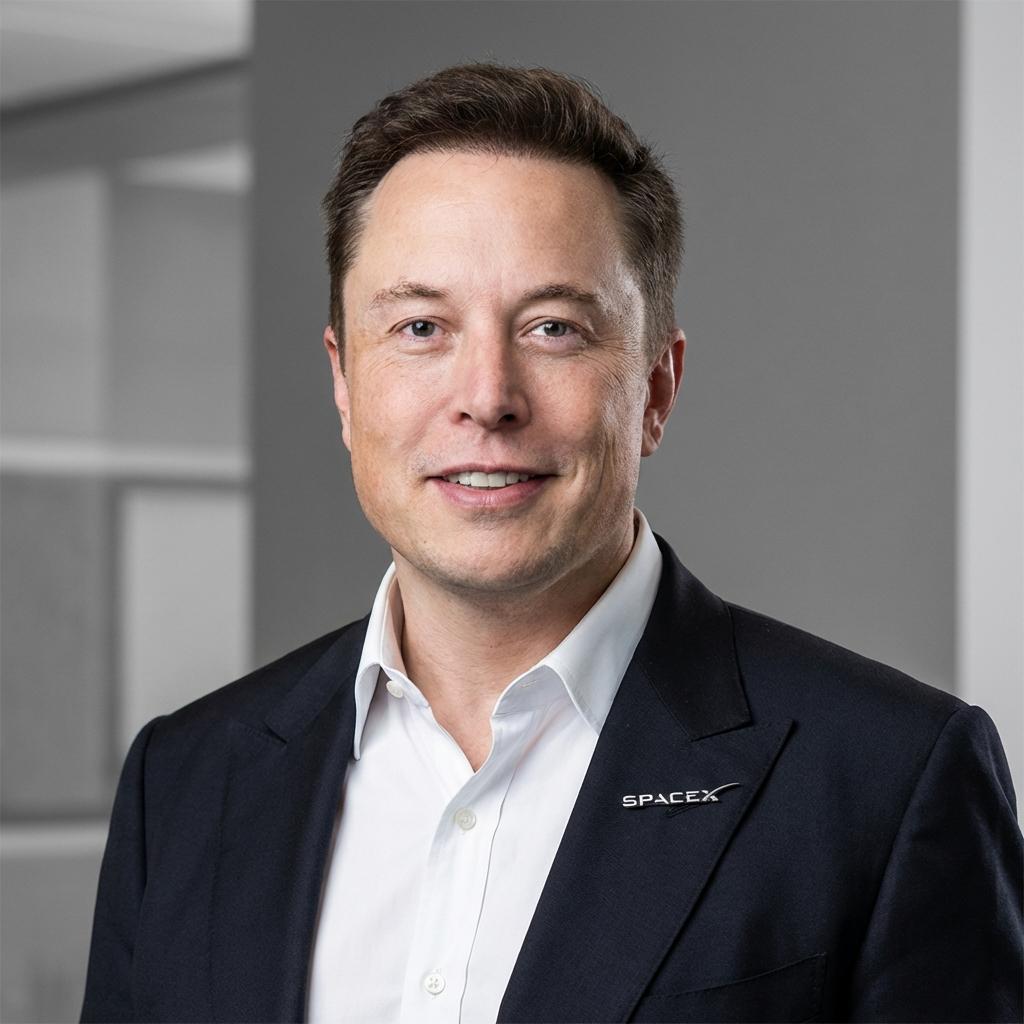
Born in South Africa in 1971, he later went to Canada and the United States for development. He successively participated in founding enterprises such as Zip2 and X.com, then became an important leader of SpaceX and Tesla, and promoted projects such as Neuralink and xAI.
He was awarded the National Medal of Science, with the focus on recognizing his engineering achievements in the fields of space exploration, intelligent systems, communications and advanced manufacturing.
What is his core contribution?
Musk's most important contribution is not inventing a single technology, but turning projects that are considered too costly, too long in cycle or difficult to commercialize into industrial systems that can be continuously iterated.
SpaceX changed the cost structure of space launch through reusable rockets; Tesla promoted the large-scale production of electric vehicles and software-driven automotive architecture; Starlink integrated satellite manufacturing, launch and communication operation into a commercial system.
The White House's award speech emphasized the large-scale breakthroughs he achieved in multiple engineering fields. Trump called him "the contemporary Thomas Edison" at the award ceremony.
Management question: Why when facing the same complex engineering, Musk's enterprises often adopt development speeds and organizational methods different from traditional giants? How much do vertical integration, first principles, and rapid trial and error respectively play their roles? What organizational and operational risks do they bring?
2. Sergey Brin: Making human knowledge searchable
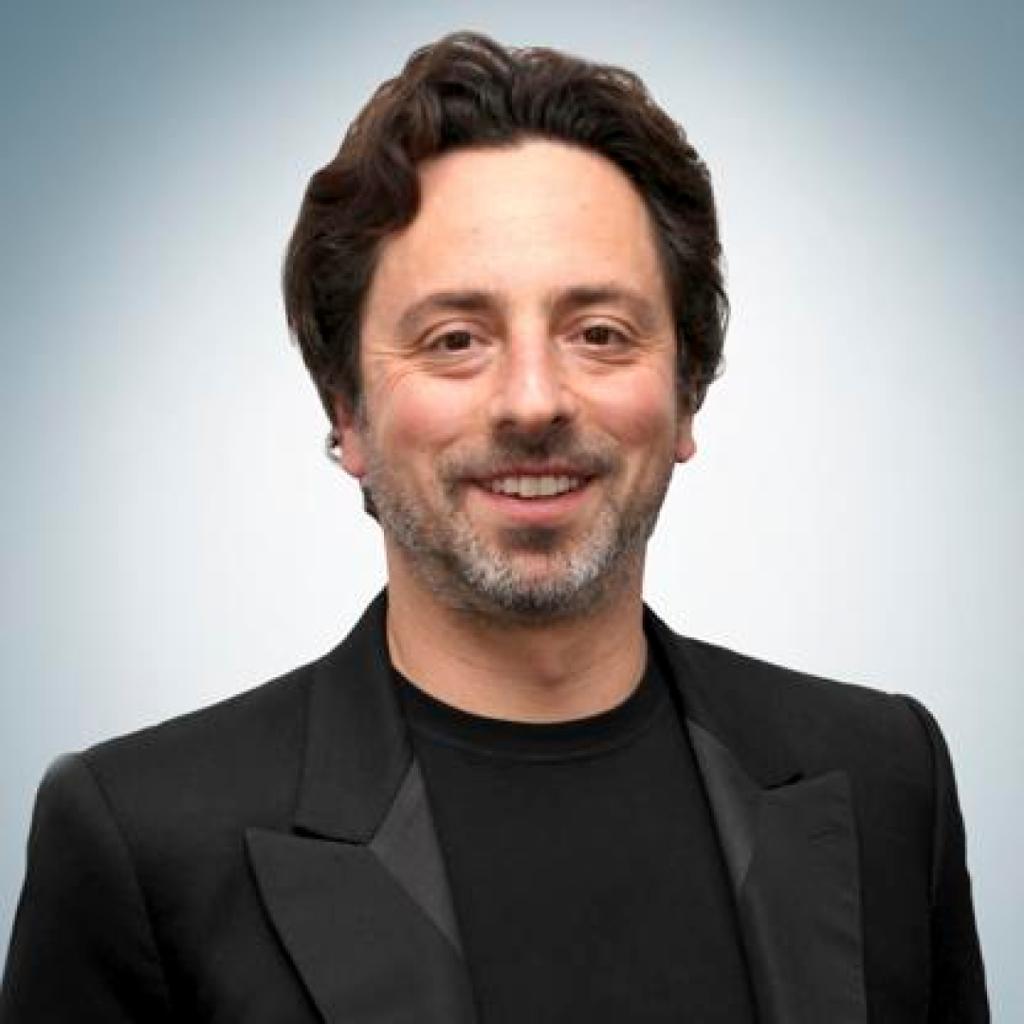
Born in Moscow, Soviet Union in 1973, he immigrated to the United States with his family when he was a child. He studied at the University of Maryland, then entered Stanford University to pursue a graduate program in computer science, met Larry Page, and the two co-founded Google in 1998.
He was awarded the National Medal of Science, with the focus on recognizing his innovations in basic algorithms for information retrieval and data processing.
The most famous technical contribution of Brin and Page is the PageRank-related research. It judges the importance of information by analyzing the link relationships between web pages, helping Internet search move from simple keyword matching to a more useful sorting mechanism.
But Brin's important achievements are not only the algorithm research itself, but also combining the research results with large-scale Internet services. Later, search engines not only became the entry point of the Internet, but also gave birth to search advertising, a far-reaching business model.
In the AI era, Brin re-engaged in Google's AI-related work, which also shows that a new integration is taking place between search and generative artificial intelligence.
Brin is one of the six people who are closest to the background of traditional computer science researchers. The White House's award reason directly focuses on his contribution to basic algorithms, rather than Google's market value or advertising revenue.
Management question: How can an academic research form a competitive advantage that lasts for more than 20 years? When generative AI begins to reconstruct search, will the original technical advantages become the starting point of a new round of innovation or a hindrance?
3. Jensen Huang: Turning graphics cards into the infrastructure of the AI era
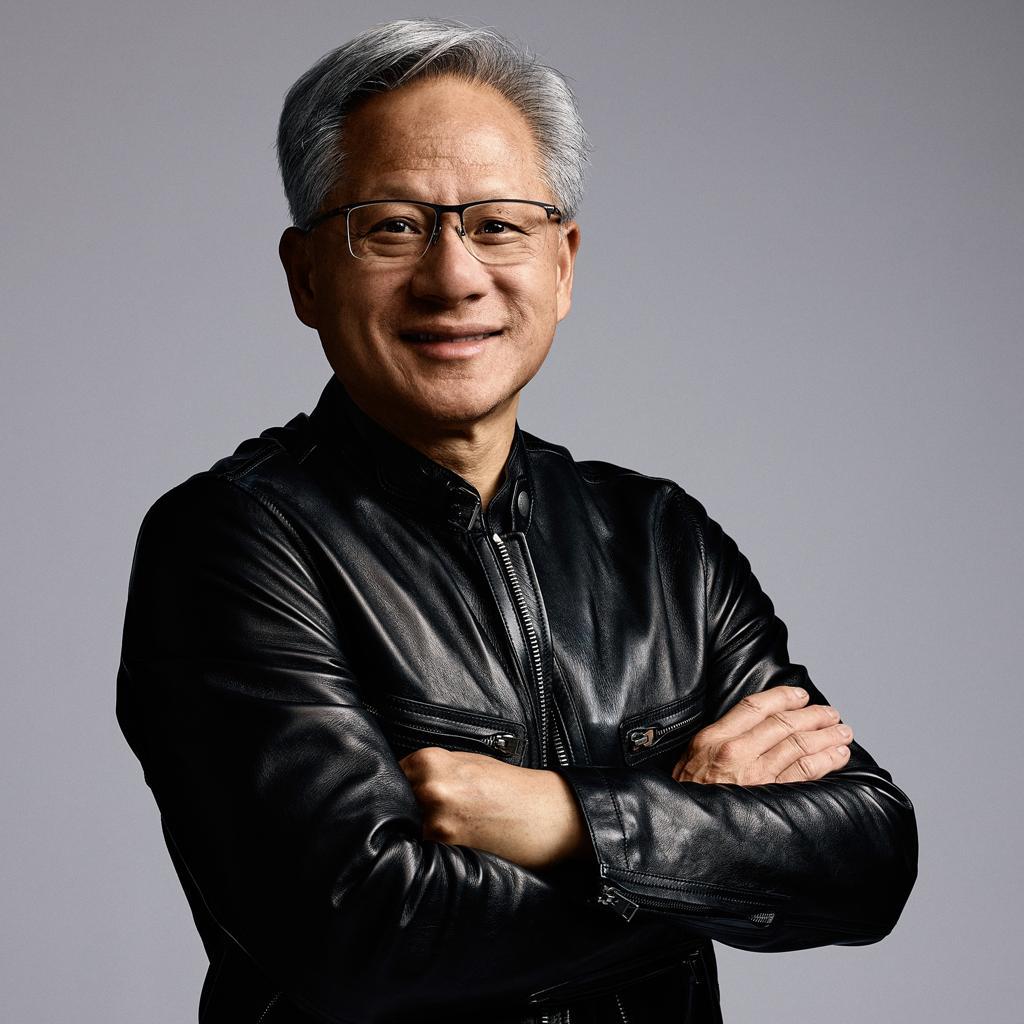
Born in Taiwan Region of China in 1963, he went to live in the United States as a teenager. He holds a bachelor's degree in electrical engineering from Oregon State University and a master's degree in electrical engineering from Stanford University. In 1993, he co-founded NVIDIA with Chris Malachowsky and Curtis Priem, and has served as CEO for a long time.
He was awarded the National Medal of Science, with the focus on recognizing the evolution of GPU into a general-purpose computing architecture, as well as processor design and software innovation.
Jensen Huang's contribution needs to be understood from the launch of the CUDA platform in 2006.
Before that, GPUs were mainly used for graphics rendering. CUDA enables developers to use GPUs for a wider range of parallel computing, gradually laying the foundation for scientific computing, deep learning and large model training.
The key to NVIDIA's success is that what it has built for a long time is not only chips, but also development tools, software libraries, algorithm ecology, interconnection technology and complete machine systems. Even if competitors produce chips with similar performance, it is difficult to replicate its complete ecology in a short time.
The White House's award speech specially emphasized the transformation from GPU to general-purpose computing architecture. This is a very accurate technical positioning: Jensen Huang's contribution is not simply "making AI chips", but promoting a new computing paradigm.
Management question: How can an enterprise insist on investing in a technology platform whose market demand is not clear at that time for more than ten years? Is NVIDIA's moat chip performance, software ecology, or long-term formed organizational strategic capability?
4. Lisa Su: Rescuing AMD through engineering innovation and organizational reconstruction
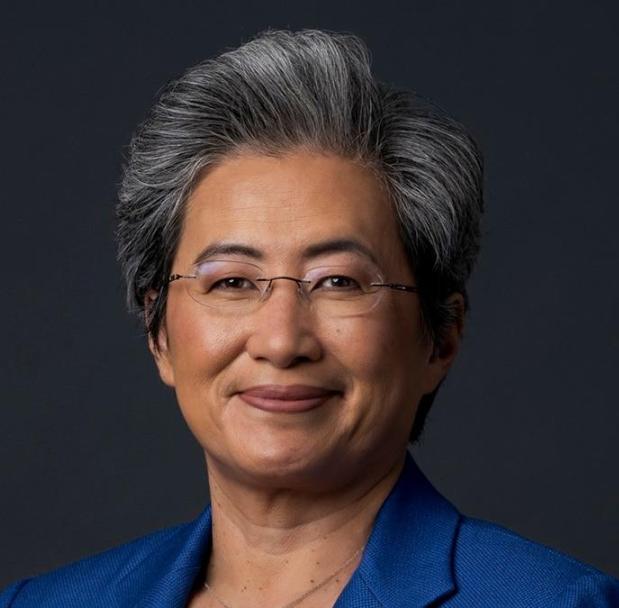
Born in Taiwan Region of China in 1969, she went to the United States with her family when she was young. She graduated from the Massachusetts Institute of Technology, obtaining bachelor's, master's and doctorate degrees in electrical engineering. She once worked at Texas Instruments, IBM and Freescale, joined AMD in 2012, and became CEO in 2014.
She was awarded the National Medal of Science, in recognition of her achievements in semiconductor engineering, high-performance computing, processor architecture and Chiplet integration.
Lisa Su's story is a very representative enterprise transformation case among the six people.
When she took over AMD, the company faced problems such as insufficient product competitiveness, financial pressure and scattered strategic directions. She then concentrated resources to develop high-performance computing, re-participated in the high-end CPU competition through the Zen architecture processor, and promoted the industrial application of technical routes such as Chiplet.
The so-called Chiplet can be popularly understood as no longer trying to integrate all functions on one large chip, but combining multiple relatively independent small chips with advanced packaging and other technologies to improve performance, cost and product design flexibility.
The White House specially mentioned that AMD's technology promoted the realization of the world's first exascale supercomputer. It refers to the Frontier supercomputer at the Oak Ridge National Laboratory in the United States, which uses AMD processors and accelerators, and broke through the performance threshold of 100 quintillion floating-point operations per second