There is a $20 billion discrepancy in the conflicting annualized revenue figures of OpenAI, and NVIDIA's share price fell by nearly 3%.
How did OpenAI's annualized revenue suddenly differ by 20 billion US dollars?
On October 8, the UK's Financial Times revealed that documents provided by OpenAI to investors show:
As of the end of September, the company's annualized revenue was close to 50 billion US dollars.
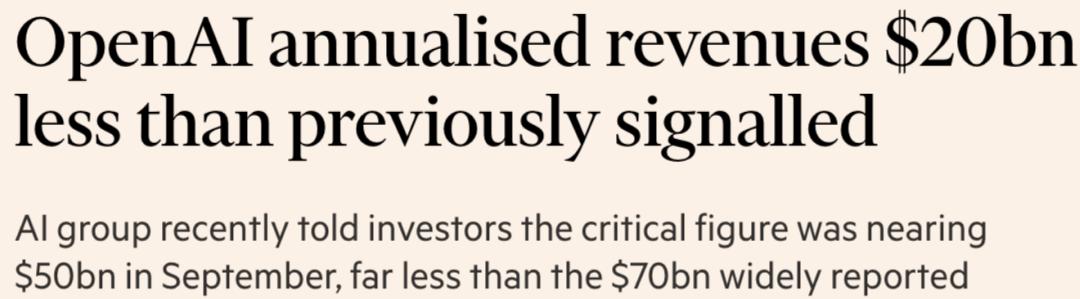
The Financial Times reported that OpenAI's annualized revenue as of the end of September was close to 50 billion US dollars, lower than the previously widely reported 70 billion US dollars.
Back at the end of September, the figure cited by media outlets was still close to 70 billion US dollars.
This report has exacerbated the market's concerns about AI growth.
At the close of trading that day, NVIDIA fell by about 2.9%, Oracle by about 5.5%, and the NASDAQ Composite Index dropped by 1.25%.
Less than a month ago, Anthropic also made progress in profitability.
On September 13, Reuters cited a Financial Times report that Anthropic told its shareholders that it expects adjusted operating profit to be positive for the second consecutive quarter.
Now, the two sets of annualized revenue figures for OpenAI differ by about 20 billion US dollars.
While the market is questioning whether AI can make money, it must first figure out a more fundamental question: how exactly are these revenue figures calculated?
Did OpenAI really earn 20 billion US dollars less than previously estimated?
This is not the correct interpretation.
On September 29, Reuters cited people familiar with the matter as reporting that OpenAI's annualized revenue was close to 70 billion US dollars. Documents disclosed by the FT on October 8 show that this figure is close to 50 billion US dollars.
The discrepancy involves the calculation method of a type of revenue: how should the fees paid by customers when using AI models through cloud platforms be counted?
This type of revenue may involve revenue sharing between cloud platforms and model companies.
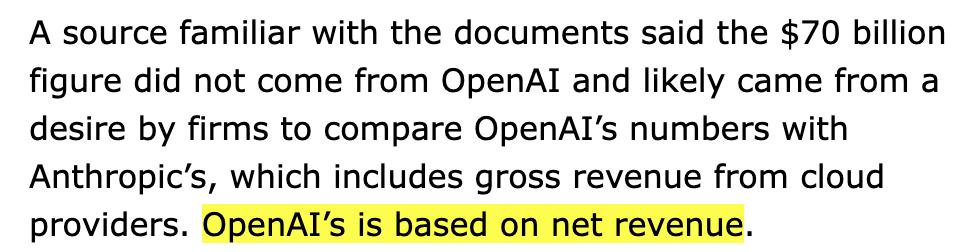
CNN cited people familiar with the matter as saying that the previous 70 billion US dollar figure did not come from OpenAI, and may be the result of external parties adjusting the statistical method for comparison with Anthropic.
According to the explanation of the person, for the relevant sales revenue from cloud platform cooperation, Anthropic uses the gross revenue caliber, while OpenAI uses the net revenue caliber.
Take a hypothetical example: a customer pays 100 units of currency, the cloud platform takes 20 units, and the model company keeps 80 units.
Calculated on a gross basis, the revenue is recorded as 100 units, and the 20 units distributed to the platform are counted as separate costs; calculated on a net basis, the revenue is directly recorded as 80 units.
For the same transaction, the amount paid by the customer remains unchanged, but different calculation calibers may lead to different book revenue figures.
The revenue sharing amounts here are only for illustrative purposes, and do not represent the actual situation of the two companies. The 80 units retained are not profits, and other costs such as service provision still need to be deducted.
Therefore, this 20 billion US dollar discrepancy cannot be directly counted as lost revenue for OpenAI, nor can it be entirely counted as the share taken by cloud platforms. The currently public information is not sufficient to match each item one by one.
But this also means that to compare the revenue scales of OpenAI and Anthropic, the statistical period and calculation caliber must first be aligned.
50 Billion US Dollars Annualized
Does Not Mean Earning 50 Billion US Dollars in One Year
There is another easily overlooked term here: annualization.
Annualized revenue usually converts recent revenue into a full-year revenue scale.
A common calculation method is to multiply the revenue of one month by 12.
Assuming a company has a monthly revenue of 1 billion US dollars, converted at this rate, the annualized revenue is 12 billion US dollars.
But this does not mean that it has generated 12 billion US dollars in revenue in the past year, nor does it guarantee that it will definitely reach this figure in the coming year.
For companies with rapid growth, annualized indicators can show the latest business scale; to see the full-year performance, we still need to look at the actual full-year revenue.
Why Did NVIDIA and Oracle Also Drop
OpenAI is not yet listed, but the market's judgment on its revenue has already affected the stock prices of other companies.
The reason is that its business is already closely linked to these companies.
You pay for AI subscriptions, and enterprises pay for model calls, and the revenue goes into the accounts of model companies.
In order to provide services and develop models, companies need to purchase computing power, which drives demand for upstream cloud services, servers, chips and data centers.
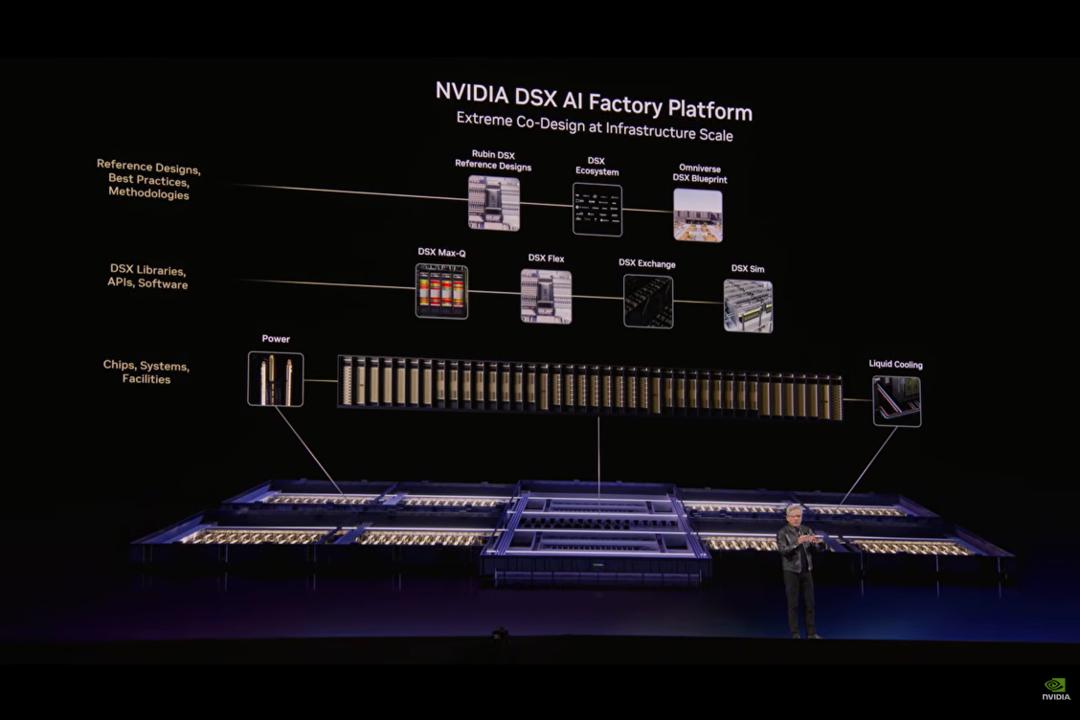
NVIDIA's AI Factory platform covers data center design, computing power management software, as well as infrastructure such as servers, networks, power supply and cooling.
The demand for computing power from model companies will drive investment in these links; whether the costs can be recovered through user payments will affect how far the next round of expansion can go.
Therefore, investors are not only concerned about how high OpenAI's revenue is, but also whether it can rely on business revenue and financing in the future to pay for the continuously expanding computing power bills.
According to CNN reports, the US stock index had already fallen at the opening of the market that day, and the decline further widened after the Financial Times report was released during trading hours.
However, the revenue controversy was only one of the influencing factors that day.
Reuters' closing report also mentioned rising oil prices and the resulting concerns about inflation and interest rate hikes, so the entire decline cannot be attributed to OpenAI.
Similarly, the market's concerns do not mean that AI demand has already weakened.
Whether procurement has decreased and whether contracts can be fulfilled will depend on the subsequently disclosed operating information.
However, the growth of model companies, the expansion of suppliers, and investors' expectations for returns are already closely linked.
The Next Round of Computing Power
Who Will Pay the Bill?
In January this year, OpenAI CFO Sarah Friar wrote in an official article that accessing top-tier computing power requires commitments made years in advance, and business growth is not stable: sometimes computing power is in place before demand, and sometimes demand exceeds existing computing power.
Investment in computing power needs to be arranged in advance, but future revenue still has uncertainties. This is also the reason why the market is closely watching the revenue of AI companies.
But when looking at revenue figures, we also need to clarify the following points in the future:
Which period is counted? Is it the annualized scale, or the actual quarterly revenue? How are sales from cooperative platforms calculated?
Going further, we need to see how much funds are left after deducting costs such as services, R&D and personnel, as well as when the future computing power bills will be paid and what will be used to pay them.
Jensen Huang once summed up the business logic of AI in one sentence: "Computing power is revenue."
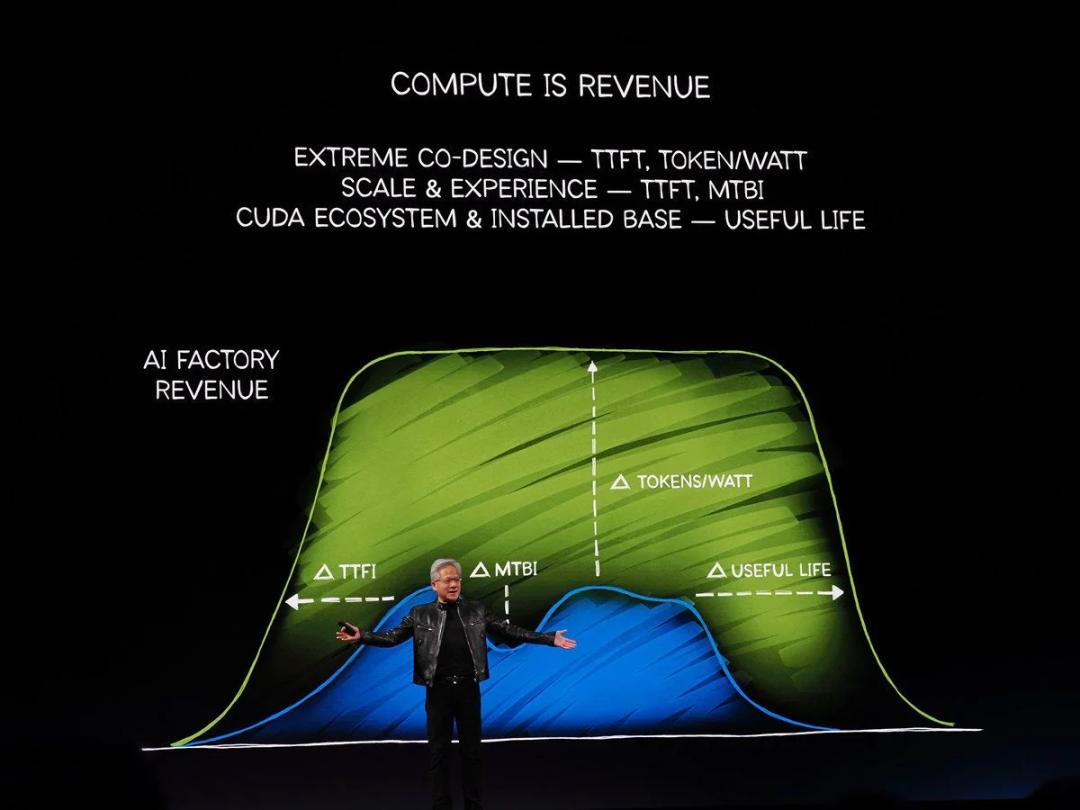
Jensen Huang elaborated on "Computing power is revenue" in his GTC speech: faster put into production, higher output efficiency, fewer operation interruptions and longer service life will all affect the revenue of AI factories.
Computing power supports more powerful models, models attract users to pay, and revenue then supports the next round of R&D and computing power construction.
The key to the sustainability of this cycle lies in whether computing power can be converted into services that are worth users' continuous payment, and generate sufficient funds to support reinvestment.
If more and more computing power is purchased, but the payment demand cannot keep up, or the revenue cannot cover the costs for a long time, expansion still needs to be maintained by external financing.
That is why OpenAI's revenue figures affect the entire industrial chain: the market needs to see that the invested funds can eventually be recovered through user payments, so that the next round of expansion will have more confidence.
For you and me, these huge investments will eventually be reflected in the models we use every day: is the time it saves us and the work it completes worth the subscription fee?
References:
https://www.ft.com/content/b66a9858-f8fb-46cb-b506-44bfe26fca2a?syn-25a6b1a6=1
https://kvia.com/news/business-technology/cnn-business-consumer/2026/10/08/tech-stocks-drop-after-report-that-openais-revenue-is-lower-than-expected/?utm_source=chatgpt.com
This article is from the WeChat official account "AI Era" (ID: AI_era), written by ASI Revelation, edited by Yuan Yu, and authorized for release by 36Kr.