Lynk & Co no longer reserves low-spec configurations for its product lineup: a product adjustment that starts from 20.
Find the differentiation from products.
Two months ago, Fan Junyi, who had just taken office as General Manager of Lynk & Co Sales Co., Ltd., participated in the final round of critical trade-offs before the new car launch.
Back in August this year, led by Fan Junyi and Kang Guowang, Dean of Lynk & Co Complete Vehicle Research Institute, the product plan for the Lynk & Co 20 was re-discussed. At that time, there were two internal proposals: whether the entry-level version should abandon the 800V high-voltage platform and retain the 400V platform of the old Z20, and whether the LiDAR could be removed.
The purpose of both proposals was to keep the starting price as low as possible. Using entry-level low-spec versions to drive traffic and expand sales is a common practice in the industry.
For the Lynk & Co 20, the above proposals were even more appealing. This model faces two sets of competitive logics: the market of premium compact pure electric vehicles is widely recognized as a tough segment with almost no proven success formula in the industry; while the demand for entry-level SUVs is very clear, where one of the key factors to achieve extreme cost-effectiveness is to keep the product price as low as possible.
When Fan Junyi took his new post, turning around the sales performance was particularly critical. At that time, the Lynk & Co 20 had already entered the pre-launch stage, and it was difficult to make major changes to the body and platform plans. The configuration combination and price threshold became the most direct leverage for balancing volume and price.
On September 28, the long-delayed Lynk & Co 20 was finally released. The limited-time price for its five trims ranges from 118,800 yuan to 158,800 yuan, and the low-spec version expected by the public did not appear. The 800V high-voltage platform, 6C fast charging, LiDAR and Qianli Haohan H5 are all standard across the entire lineup.
One hour later, Lynk & Co announced 14,663 firm orders, marking the first set of sales figures after the car went on sale.
Building Cars Without Following the Hit Product Formula
The temptation of the low-spec idea also came from the assets left by the Z20.
The Z20 already features rear-wheel drive, a compact body and a distinctive design, but its 400V platform, range and assisted driving did not gain competitive advantages. Fan Junyi later called these the main pain points that led users to reject the Z20. If the Lynk & Co 20 wanted to expand its user base as soon as possible, a natural approach was to further lower the price.
Retaining the 400V platform and removing the LiDAR would create more room for price cuts for the entry-level version without modifying the body.
The market also encouraged this choice. The A-class pure electric SUV segment has already formed a mature product formula: a large body and spacious interior first meet family needs, then range, power and price are compared in a configuration list. The basic body of the Lynk & Co 20 is about 4.5 meters long, and its interior space and 0-100km/h acceleration performance are not eye-catching among peers in the same segment.
Making premium small cars is also a tough business. This type of vehicle has high requirements for design, driving experience and build quality, while users are very price-sensitive. So far there is no repeatable proven success formula in the market.
The Lynk & Co 20 falls right between the two segments. The Geely system already has the Galaxy E5 to take on the task of mainstream family SUVs, so Lynk & Co needs to find another reason for consumers to choose the Lynk & Co 20.
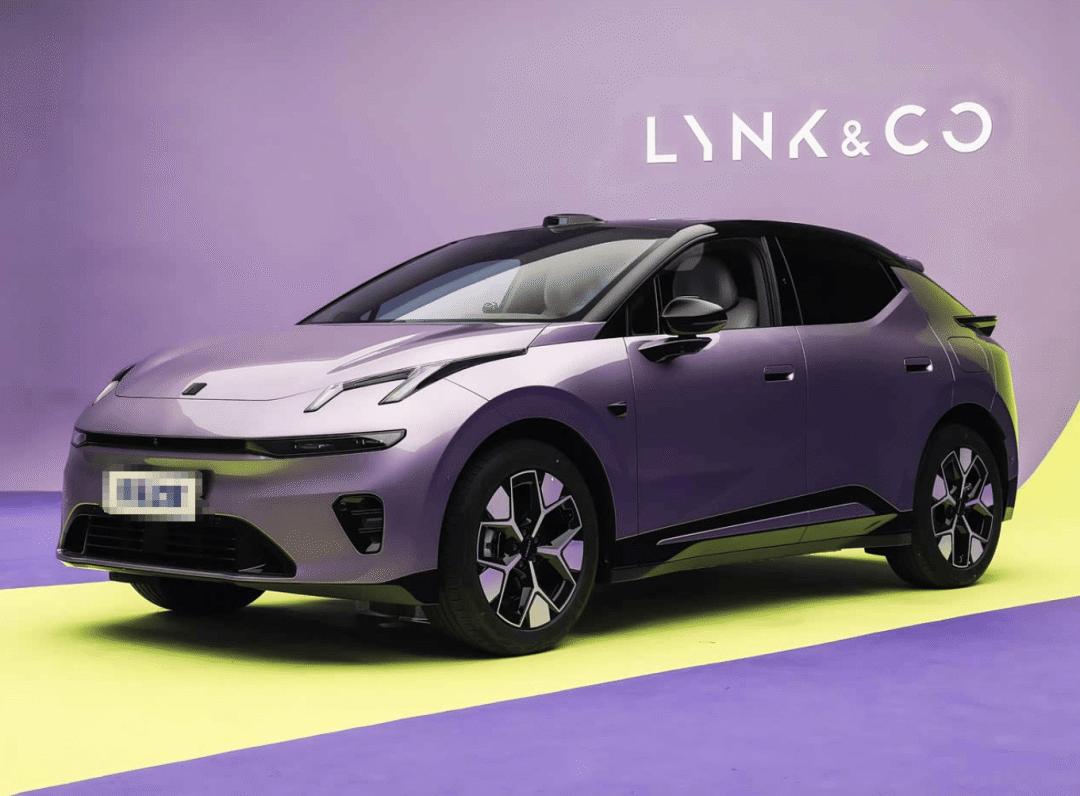
The finally launched Lynk & Co 20 has a maximum range of 630 km, and can charge from 10% to 80% in as fast as 12 minutes. The 800V platform, 6C fast charging, LiDAR and H5 are no longer split across different trims.
This set of configurations reflects the management's judgment on users. Lynk & Co defines its target group as "urban elite professionals", mainly referring to young people living in cities who have high requirements for quality. According to Fan Junyi, this group of users will ask whether the configurations they want are available.
Judging from the final product, Lynk & Co has bet on a user insight: for this group of people, saving charging time and reducing the energy consumption of attention during congestion and parking are more valuable than slightly lowering the entry price. Therefore, the 800V platform and H5 are kept as standard across the entire lineup.
"Urban elite professionals" was initially a broad term, and Kang Guowang shared two product details to illustrate the positioning.
When the team discussed how to use the front trunk, they envisioned a life scenario: a user buys frozen food at Sam's Club and then wants to go to a movie, where should the ingredients be placed? Rear-wheel drive electric vehicles happen to have a relatively large front trunk, so the team modified it into a detachable freezer. The semi-hidden door handles also reserved extra opening space, considering the inconvenience that users with manicured nails might encounter.
Trade-offs were also made in the driving experience, which was raised more directly in the communication meeting. Compared with the 800V version of the all-new Geely Galaxy E5 that shares the powertrain, which can achieve a 0-100km/h acceleration in 5.8 seconds, the Lynk & Co 20 takes 6.4 seconds. Lynk & Co, a brand that has always emphasized sportiness, actually has a slower acceleration figure.
Kang Guowang told us that the group shares core technologies such as three-electric systems and intelligent driving with all its brands, but each model will have different parameters and driving styles due to differences in target users, vehicle weight, wheel hub selection and chassis tuning.
In other words, Lynk & Co pays more attention to the overall performance of handling tuning.
The positioning of the Lynk & Co 20 is pieced together by these non-uniform choices. Interior space and 0-100km/h acceleration are not its most prominent selling points, while the 800V platform and LiDAR are retained even for the entry-level version. The design, driving experience and those urban lifestyle details distinguish it from the Galaxy E5.
The decision made in August secured this set of configurations, and all trims are aligned with the same understanding of target users.
Technologies Are Integrated Into a Shared Pool
Since the internal integration of Geely started, the way to create differentiation between brands has begun to change.
Kang Guowang revealed that Geely's core technologies including three-electric systems and intelligent driving are now open to all brands, and each brand can access the technologies they need according to product requirements.
This idea emerged even before the Lynk & Co 20. Back in July this year, when the 07GT was launched, Lin Jie was still the General Manager of Lynk & Co Automobile Sales Co., Ltd. He explained the product logic of Lynk & Co after it returned to the Geely system in detail in an interview. Lynk & Co can reuse the group's general architecture, powertrain, intelligent cockpit and assisted driving systems, and invest more resources in styling, chassis calibration and product definition. This makes the development logic of the 07GT feasible.
Over the past period of time, the differentiation between Lynk & Co and Zeekr still reflected the gap in technical grades. The Z10 has both 400V and 800V variants, and different technical versions correspond to different price ranges.
Now, the task of differentiating brands is more handed over to product definition.
Personalized models usually do not have the sales volume of mainstream SUVs, so it is economically unviable to independently develop a dedicated platform and intelligent system. After reusing the group's general technologies, the cost of developing such products will be reduced, and Lynk & Co can spend more resources on building product differentiation.
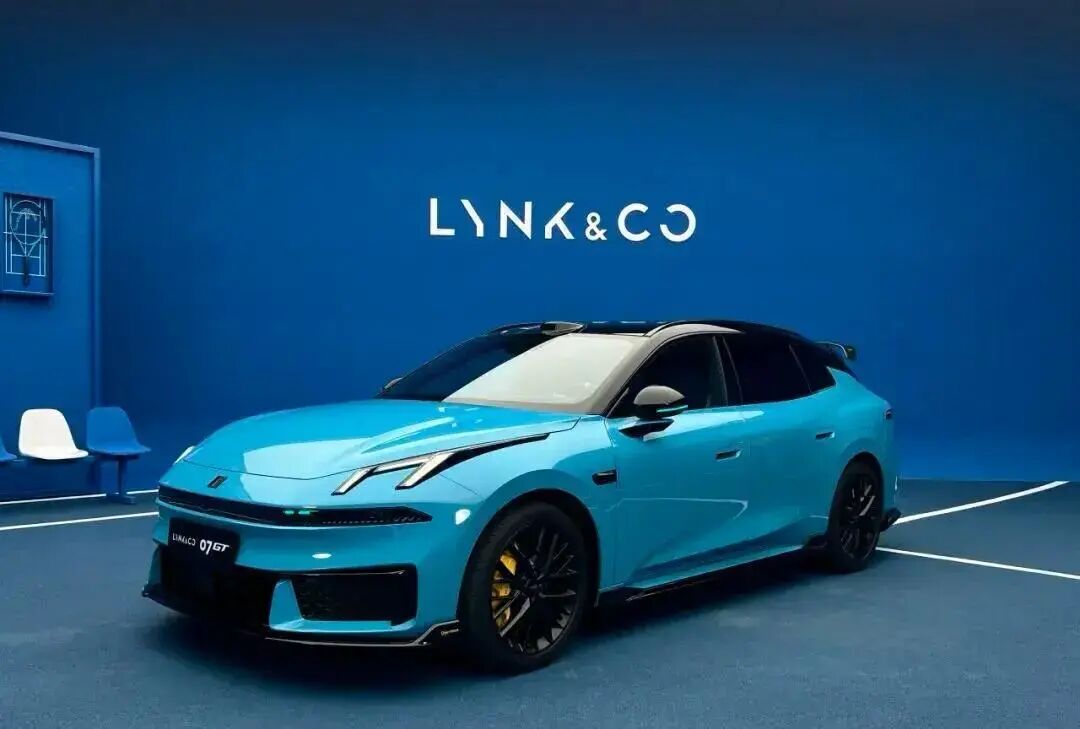
The 07GT entered the 150,000 to 200,000 yuan PHEV station wagon market. It did not compete for the largest market share, but tried to create differentiation in body shape, chassis and driving feel. On September 20, Lynk & Co announced that the 10,000th 07GT had been delivered, 59 days after its launch. This figure does not prove that station wagons have become a mass market segment, but at least it shows that personalized products can find a considerable number of users.
On August 2, ten days after the 07GT was launched, Geely established the Automobile Group General Sales Company. Lin Jie was appointed as General Manager, concurrently serving as General Manager of Zeekr Sales Co., Ltd.; Fan Junyi was appointed as Executive Deputy General Manager, concurrently serving as General Manager of Lynk & Co Sales Co., Ltd. and in charge of Galaxy Sales Co., Ltd.
This adjustment took place in the sales and marketing system. All brands still retain independent front-end teams, while common resources such as channels, services and operations are coordinated by the general sales company. Geely summarizes the new organization as "the front end is closer to users and the market, and the middle and back offices maximize resource sharing". This is the continued implementation of the "One Geely" strategy in the marketing sector.
The changes in the sales organization did not directly determine the configuration of the Lynk & Co 20. They happened almost at the same time, and point to a similar relationship: common resources and technologies are managed by the group, while the front-end brand teams are responsible for staying close to users and making brand differentiation clearer.
The more shared the middle and back offices are, the clearer the positioning of front-end brands needs to be.
In this system, Galaxy covers a larger mainstream market, while Zeekr continues to move towards higher price ranges. Lynk & Co stays between the two, facing the mainstream price range, but must present more distinct personality.
When the 800V platform, intelligent driving and electric drive systems are integrated into the group's shared technology system, hardware grades can no longer be used to rank brands. The 118,800-yuan Lynk & Co 20 can be equipped with 800V platform and LiDAR, and its difference from the Galaxy E5 needs to be re-established through design, driving experience and user scenarios.
The 07GT and the Lynk & Co 20 thus become two consecutive samples. With the help of the group's general technologies, the 07GT entered a personalized segment that was previously difficult to support independently. The Lynk & Co 20 shows that technology sharing does not require Lynk & Co to actively downgrade its basic electric vehicle experience.
The meaning of "expanding breadth" has also begun to change. Lynk & Co can enter the station wagon segment, the A-class pure electric SUV segment, and will cover different price ranges and powertrain forms. The breadth comes from a more diverse product portfolio, and every car must first clarify who it is made for.
Re-understanding "Expanding Breadth"
After technologies are integrated into the same shared pool, making trade-offs becomes critical. In the fuel vehicle era, this problem was not so complicated for Lynk & Co, as the Lynk & Co 03 itself completed most of the work.
The 03 achieved stable sales and had a vivid brand imprint. Its styling, driving experience and racing experience together created a concrete image of sportiness and personality. The more the 03 was sold, the more people accepted the brand image of Lynk & Co.
New energy vehicles have changed this logic. High power has been widely popularized, and 0-100km/h acceleration performance can no longer define a brand. The Lynk & Co 08 EM-P is more like a family-focused PHEV SUV, contributing a large share of sales. The 03 performance version and the 07GT better retain the personality of Lynk & Co, but they naturally face a smaller market. Sales volume and brand identity are gradually undertaken by different products.
The Z10 exposed another problem. It aimed to be a pure electric flagship, but it offered both 400V and 800V variants with a large price gap between versions, which eventually led to poor sales performance.
Zhou Xing mentioned in a review in May this year that the Z10 had good pre-launch popularity and intention orders, but the complex trims and large price gap finally affected market conversion. There was a deviation between product definition and market acceptance.
Putting this review in the context of Lynk & Co's new energy product portfolio, we can see a recurring swing: brand personality is retained in design and driving experience, but the electric vehicle experience is divided into different grades according to cost. When a car tries to cater to more users, more and more contradictory problems will arise.
For a long time, Lynk & Co seemed to be looking for another 03 for the new energy era, looking for a brand anchor in the new energy vehicle age.
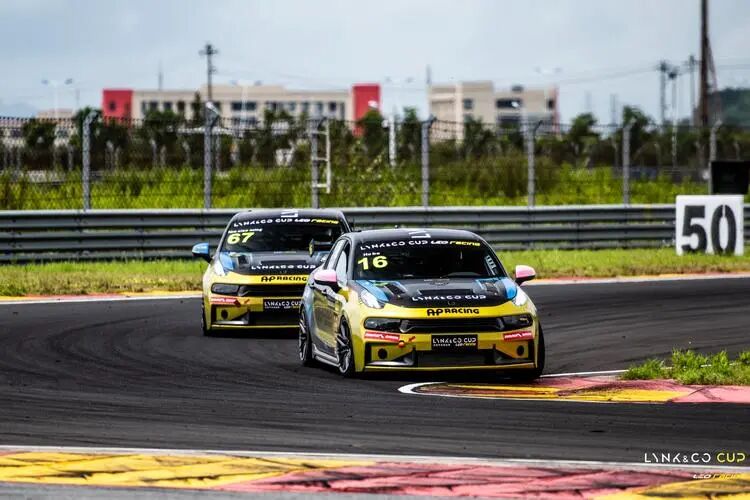
Now it seems that the 03 cannot be copied as is by any single new model. The 07GT will not become the next 03, nor will the Lynk & Co 20. The common point of the two models is achieved through product trade-offs: the team knows exactly who the car is made for, allows it to excel in specific fields and does not require it to outperform all peers in every parameter. What Lynk & Co needs to carry on is the clear product judgment that the 03 had back then.
The first thing Fan Junyi did after taking office was to re-sort out the positioning of Lynk & Co. He categorized the brand's retained values as trendiness, personality and sportiness, while drawing two boundaries: Lynk & Co will not blindly enter the luxury market, nor will it participate in price wars by launching low-spec, low-priced products.
Previously, some external feedback pointed out that Lynk & Co in the new energy era lost the "vitality" and "aspiration" it had in the fuel vehicle era. He accepted this feedback, and admitted that the fuel vehicle imprint left over the past ten years has become a "cognitive burden" in the new energy stage.
These judgments are also reflected in specific product meetings. A few days before the Lynk & Co 20 communication meeting, Fan Junyi and Kang Guowang talked until 2 a.m. They discussed the wheelbase length and configuration selection for future products.
Fan Junyi has worked at Geely for 23 years, but he is a new member at Lynk & Co. In the two months after taking office, he participated in 6 user symposiums, and later joined the Co-Creation User Council.
He once shared a user's experience of buying a large "camper car": this user only went on a "trip to poetry and faraway places" once a year, and spent most of his time commuting alone in the city, so he switched to the 07GT this year. This story made Fan Junyi notice that a group of users are re-evaluating their own demands.
These feedbacks were later brought back to product meetings. Fan Junyi said that he and Kang Guowang talk on the phone almost every day, and hold meetings every two or three days. They also test drive and tune the vehicles together. The sales team is closer to users, while the R&D team is familiar with engineering realities. Kang Guowang summarized the logic as first answering "who is the car made for", and then deciding how to develop it.
This working method has just started to operate. When Fan Junyi took office, the Lynk & Co 20 had already entered the pre-launch stage, and his main participation was in the final round of adjustment of configuration strategy, product value and launch rhythm. How the product