Technology is now applied in the weight loss field, allowing the middle class to rejuvenate with just one injection.
In the State of Chu, King Ling of Chu was fond of slender waists, so the palace maids would even take toxic pills and practice asceticism to move into the so-called "Slender Waist Palace". If they traveled to modern times, they would most likely be attracted by a currently popular "magic weight-loss drug" — Semaglutide.
"Lose 10 jin in a month", "food noise disappears", "life with low appetite is originally so peaceful and happy"...
While you are still "watching your diet and working out more" to lose weight, Hollywood celebrities next door have quietly shrunk several sizes from head to toe. If you look at domestic celebrities and ordinary people around you, there are no few people whose body shapes have changed drastically all of a sudden. The standard answer is "working out and being self-disciplined" when asked, and the real answer is "getting injections" when you press further.
Curvy plus-size beauties have disappeared from the internet. "Getting thin with one injection" has become an open secret, and even spawned many gray channels and reimported parallel drugs.
Under the magical effect of weight-loss injections, middle-aged men go back to their cars during lunch breaks and stick the needle into their beer bellies. Some young people who are not even overweight, tempted by social media content, have embarked on the path of "beauty servitude". Even Ant Aifu AI has ridden on this trend, posting everywhere to teach you how to avoid detours.
Is the injection method that lets you lose weight while lying down really that magical? Is the weight-loss injection business another precise hunt targeting the middle class?
1
Cheating for Weight Loss
"In the first week, my appetite decreased, I lost 2 kg, and I felt stable", Liang Jing, who was just recommended the weight-loss "dark magic" by a friend, shared her check-in records on Xiaohongshu, and the comment section was full of flattering praises.
The weight-loss injection Liang Jing bought, Semaglutide, is a type of GLP-1 receptor agonist, whose full name is glucagon-like peptide-1. It can mimic the human intestinal hormone, send the signal of "I'm full" to the brain, thus suppressing appetite and delaying gastric emptying. Some multi-target drugs can even further increase the body's energy consumption.
GLP-1 receptor agonists were originally developed as hypoglycemic drugs for type 2 diabetes. Since reducing intake and increasing consumption exactly match the goals of weight-loss groups, they were soon used by the medical community in the development of weight-loss drugs.
In 2022, Elon Musk publicly praised its weight-loss effect: "Fasting + Semaglutide (Wegovy) made me lose 20 pounds easily". Since 2023, drugs related to the "peptide" component have been approved for the treatment of obesity in China. According to their action targets, they can be divided into single-target drugs such as Semaglutide, Benaglutide, and Liraglutide, as well as multi-target Tirzepatide with stronger effects.
Clinical data shows that Semaglutide can help people lose an average of about 15% of their body weight, Tirzepatide can reach 20%, and Mazdutide can even exceed 20% in some populations, with each generation more effective than the last.
As soon as the floodgate of the weight-loss shortcut was opened, Europeans and Americans were the first to rejoice. Hollywood celebrities have suddenly lost weight for no apparent reason. Serena Williams, the queen of tennis, even ignored the controversy and publicly demonstrated GLP-1 injection in the Super Bowl ad. Among young people in the US, the popularity of discussions about GLP-1 is almost on a par with ChatGPT.
Most foreign celebrities have not publicly admitted that they have injected GLP-1 drugs, but when the audience sees someone suddenly lose weight, their first reaction is "they got injections".
The whole internet launched a "Semaglutide witch hunt", labeling sunken cheeks as "Semaglutide face". According to Morgan Stanley's estimates, by the end of 2025, the number of people who have used Semaglutide worldwide has exceeded 50 million, nearly 20 million of whom use it for weight loss purposes.
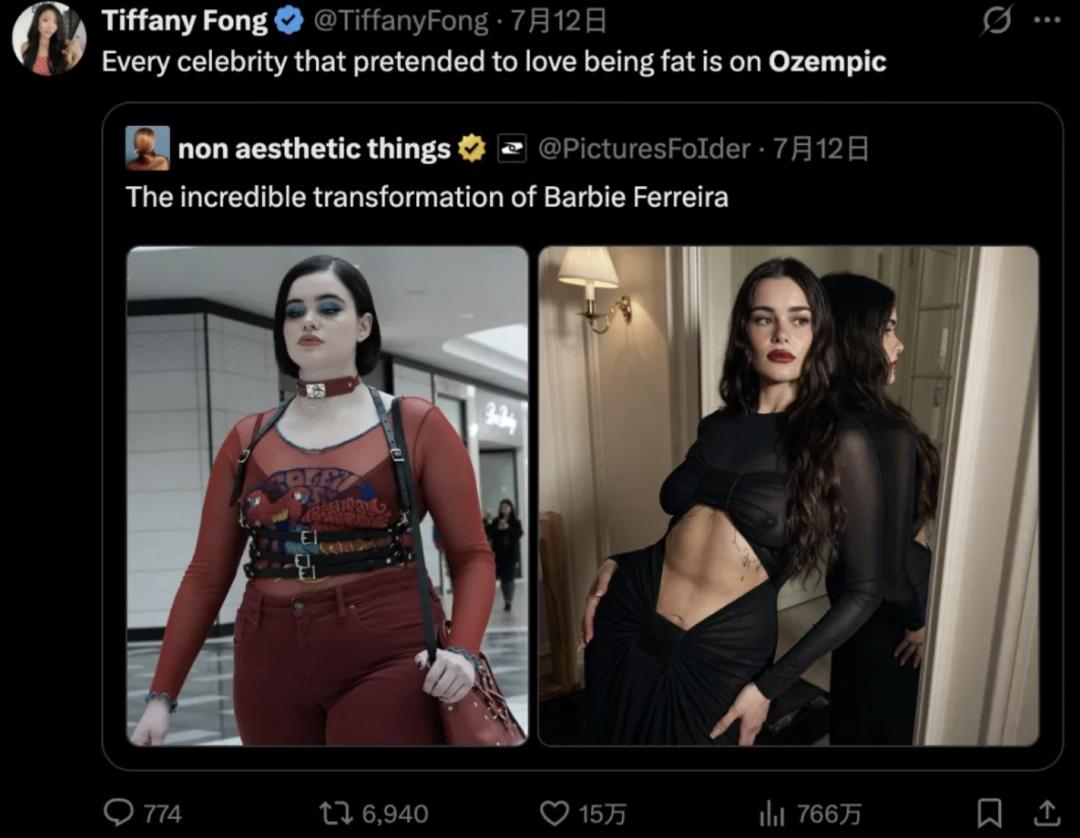
In the past two years, this trend has spread to China, and everyone from celebrities to ordinary people has joined this "injection wave", while onlookers are swinging between "technology" and "self-discipline".
Don't blame people for being unable to resist the "temptation of the injection". For modern office workers who can't live without milk tea and coffee, and keep eating midnight snacks and staying up late, weight loss is almost a lifelong career.
The World Health Organization calls obesity a chronic recurrent disease affecting more than 1 billion people. This year, the China Scientific Conference on Obesity Prevention and Control released a set of data: at present, the overweight rate of adults in China is about 34.3%, and the obesity rate is about 16.4%. Professor Wang Fang from Peking Union Medical College Hospital, Chinese Academy of Medical Sciences, said that if no effective intervention measures are taken, by 2050, half of the adults and one third of children and adolescents around the world will face overweight and obesity problems.
According to the 2025 White Paper on Chinese Adults' Healthy Weight Management and data from Tianyancha, about 70% of Chinese adults have the willingness to lose weight. With available products, huge market demand, people's natural love for beauty and social fission, the explosive popularity and huge profits of weight-loss injections come as a matter of course.
2
Who Is Making Money From Reimported Drugs
At present, the global GLP-1 weight-loss track has basically formed a duopoly pattern of Novo Nordisk and Eli Lilly, and the two together account for more than 90% of the global market share.
In 2025, Novo Nordisk's obesity care business earned 82.347 billion Danish kroner (about 11.8 billion US dollars), a year-on-year increase of 31% at a fixed exchange rate. The obesity business has become the company's fastest-growing sector, while the growth rate of the diabetes care business in the same period was only 6%.
Eli Lilly overtook its competitors with Tirzepatide. In 2025, the total revenue of Eli Lilly's Tirzepatide reached 36.5 billion US dollars, surpassing Novo Nordisk's Semaglutide to become the new global "king of drugs". Among them, the revenue of Zepbound (the weight-loss version) was 13.542 billion US dollars, a year-on-year increase of 175%.
In the second quarter of 2026, Novo Nordisk's adjusted sales were 78.49 billion Danish kroner, a year-on-year increase of 7% at a fixed exchange rate. Eli Lilly's revenue in the same quarter was 22.97 billion US dollars, a year-on-year increase of 48%. Among them, the sales of Mounjaro (the hypoglycemic version) was 9.94 billion US dollars, a year-on-year increase of 91%; the sales of Zepbound (the weight-loss version) was 4.93 billion US dollars, a year-on-year increase of 46%.
Behind the high growth are changes in the GLP-1 business model and channels.
A survey by KFF, a non-profit US health policy organization, shows that users get access to GLP-1 not only in traditional hospitals and clinics: 17% of users obtain the drugs through online medical institutions or websites, and 9% of them get them from medical aesthetic institutions or medical SPAs.
In the Chinese market, GLP-1 is a prescription drug with a price ranging from several hundred to more than a thousand yuan per vial. Patients need to go to the hospital with their medical insurance card to get a prescription from a doctor. Moreover, only the hypoglycemic version is covered by medical insurance, and the weight-loss version is not reimbursed by medical insurance.
However, many netizens have bought low-cost drugs at 100 yuan per vial through certain channels. Where does this 100-yuan price come from?
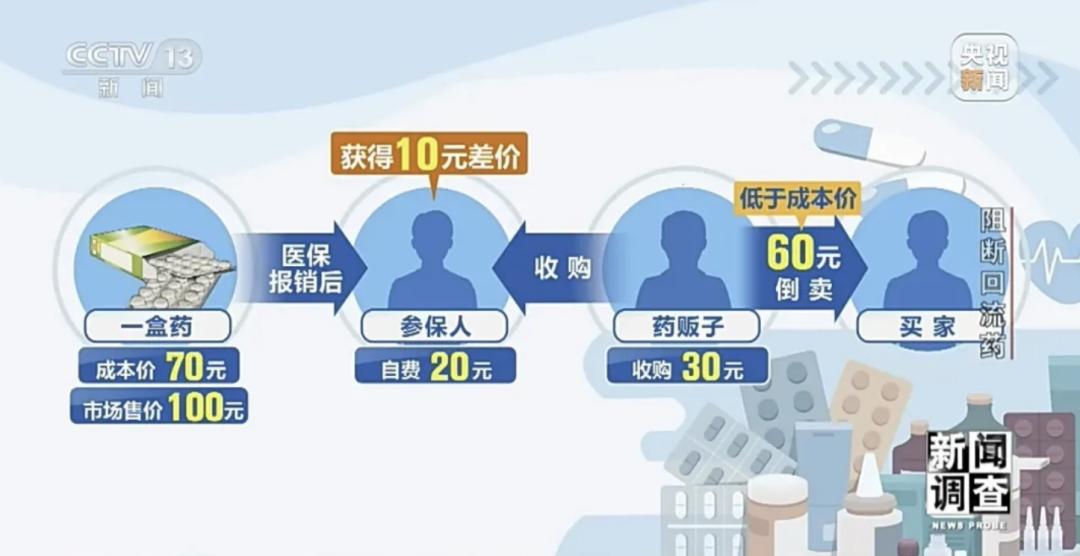
According to calculations from CCTV investigation programs and the National Healthcare Security Administration: if the market price of a box of drugs is 100 yuan, and it is reimbursed by medical insurance, the insured person pays 20 yuan, the drug reseller buys it for 30 yuan, and then resells it for 60 yuan. Pharmacies or online platforms get the drugs and then sell them at a low price to buyers, which is the so-called "reimported parallel drug". In this cycle, no one loses, because everyone is sharing the 80 yuan subsidized by the medical insurance fund.
Semaglutide and similar drugs are no exception. Some time ago, the Guangzhou medical insurance department and the police cracked down a gang that resold medical insurance reimbursed drugs, seized more than 8000 boxes of drugs, among which Semaglutide was the drug with the largest involved amount.
Tablets and capsules can be passed around several times without much problem, but drugs like Semaglutide need to be kept refrigerated all the time before use. When Guangzhou law enforcement officers seized this batch of drugs, they were casually placed in the corner of a warehouse in urban villages, with the medicine boxes deformed by damp and dust.
Such injections may look fine on the outside, but the active polypeptide ingredients inside may be inactivated and denatured. If you get an injection that has no effect, that's not the worst part — if an accident happens, you can only take the consequences by yourself, which is not worth the loss.
A 19-year-old girl in Changsha, Hunan, developed arrhythmia after self-injecting a "weight-loss injection" bought online. 18-year-old girl Xiao Yao in Wuhan bought and injected an increased dose of a certain "weight-loss injection", which caused severe abdominal pain, frequent vomiting, even palpitation and syncope, and was rushed to hospital by her family for rescue. More and more such cases are appearing in news reports.
3
The Cost of Rejuvenation
The risks of reimported parallel drugs are obvious, and the side effects of GLP-1 drugs themselves cannot be underestimated.
As a prescription metabolic treatment drug, GLP-1 receptor agonists have controllable overall safety on the premise of strictly following the indications and gradually titrating the dosage as instructed by the doctor. However, individual costs in the real world have appeared frequently.
61-year-old Tony Shediak in Sydney used Semaglutide to control his diabetes. After 10 weeks of gradually increasing the dosage, he developed severe anxiety, paranoia and depression, and eventually took his own life.
Chen Xingxing, who is 160cm tall and weighs 50kg, got help from a relative working in a hospital to inject the weight-loss injection. She first suffered from hair loss and endocrine disorders, and became tired, drowsy and irritable. She stopped taking the drug after several consecutive vomiting episodes, and her weight rebounded a few months later.
Middle-aged Wang Chen, looking at his increasingly round beer belly, also made up his mind to secretly get injections, comforting himself that this is called "weight management". In two months, both fat and muscle were lost. After he developed dry eyes and blurred vision, he went back to working out and dieting, and posted a line on his WeChat Moments: "The longest road I've taken is the shortcut."
These scattered cases are not isolated incidents. Global regulators are also continuously tracking and confirming potential risk signals of GLP-1 drugs. In June 2025, European regulators completed the assessment of the risk of non-arteritic anterior ischemic optic neuropathy (NAION) related to Semaglutide, and confirmed that NAION is a "very rare" side effect of Semaglutide.
In September this year, dozens of patients in the US collectively sued Novo Nordisk, accusing the company's Semaglutide drugs of causing severe vision damage. The related cases have entered the centralized hearing of the US federal court, once again bringing the safety controversy of such drugs into the public view.
What is more hidden and more common than physical risks is the dissolution of the medical properties of drugs by consumerist narratives.
When being slender is labeled as healthy and self-disciplined, XXS-sized clothes and tight faces are equated with delicacy and the wealthy class, GLP-1 drugs are stripped of their core attribute as "drugs", packaged as a middle-class lifestyle, and trap men and women with aesthetic anxiety.
"No exercise, no diet control, lose weight while lying down" sounds very easy, but behind it, it deliberately ignores the indication boundary of prescription drugs, the risk of adverse reactions, and the metabolic law that weight will most likely rebound after drug withdrawal.
Medical technology is innocent. It's not shameful to use new technologies, but you must never use the wrong technology or misuse technology.
Finally, here is a question for you: do you believe in a syringe, or return to the traditional path of diet and exercise?
References
[1] "Young People Who Lose Weight the Traditional Way Lost to a Syringe" by Nage NG
[2] "After Weight-loss Injections, Can't You See Clearly?" by Salt Finance
This article is from WeChat Official Account "Benyuan Finance", author: Zhang Yexing, published with authorization from 36Kr.