The Time Difference of Hard Technology — How Zhou Yahui Incubated Aijie Core and Riemann Power?
Zhou Yahui, founder of Kunlun Wanwei, has stayed out of the public eye for nearly three years, a state of silence defined specifically for his identity as a star investor. Back in the mobile internet era, Zhou Yahui has invested in companies including Musical.ly, Pony.ai, Qudian, Dada, Inke and Grindr, but he barely made any new investments in the nearly three years from 2023 to 2026.
It was not until recent consecutive updates from two startups that the outside world realized this "unicorn hunter" had never really faded out, but just switched to a brand new strategy.
The two startups are respectively Aijie Core, an AI semiconductor company that Zhou Yahui began incubating in 2023, which recently completed a financing of 550 million yuan, with new shareholders including Changxin Technology (the investment institution under Changxin Technology) and Gaorong Ventures; the other one is Riemann Dynamics, which was incubated internally from Kunlun Wanwei at the end of 2025 and started independent operation later.
The market never lacks industry booms, and what is truly scarce is people who can identify the value clearly before the boom arrives. When talking about why he bets on computing power chips, he said: "This undertaking is too huge and too valuable. I must build a successful chip company in my life. If I was full of fear, I might not do it, but I was never born to be a coward — the harder the road is, the more determined I am to go all the way to the end."
For the industry booms that most people chase but avoid discussing openly, Zhou Yahui's explanation is very straightforward: a boom does not mean pure speculation. Most people who chase the boom will end up failing, and a boom essentially represents a red ocean; but if entrepreneurs only blindly pursue the blue ocean, it is sometimes a misleading judgment for themselves. Real opportunities never come from avoiding competition, but from breaking through the tight encirclement in the red ocean.
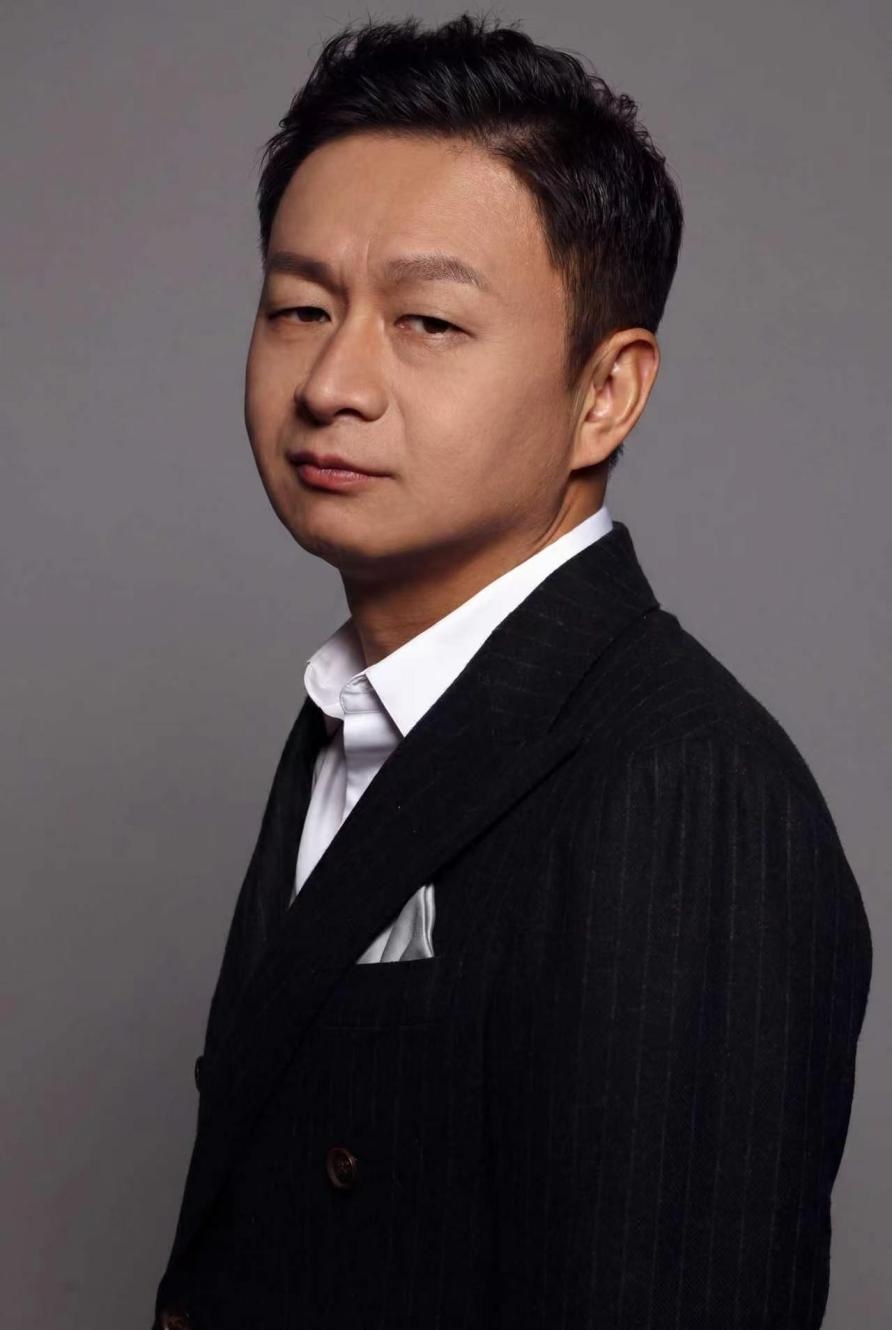
Recently, Zhou Yahui accepted an exclusive interview with China Entrepreneur. With sharp words and broad vision, he often has insights that ordinary people cannot reach, and keeps bringing out brilliant remarks and profound views. Many entrepreneurs still remember a speech Zhou Yahui gave at the IDG Capital private board meeting more than ten years ago: his 90-minute speech was interrupted by applause for more than 20 times, and he left two famous quotes on that occasion:
1. What determines a person's progress the most? It depends on the quantity and quality of the information you absorb, which is the most important factor.
2. When starting a business, you should aim to finish the battle within four years. Unless it is an extremely high-quality project worth full All-in, the world is changing too fast. If you cannot complete the battle within four years, I think fast failure is not a bad thing, as the saying goes, an early failure paves the way for an early comeback.
Compared with the decisive financial investment style he adopted more than ten years ago, Zhou Yahui has become more patient and more determined in recent years: he makes investments in the same way as operating a business, and incubates projects from scratch. Looking back on the incubation process of Aijie Core and Riemann Dynamics, he believes that incubating enterprises is the highest state of investment. The best entrepreneurs must be the best investors, but the reverse is not necessarily true.
Zhou Yahui abstracted investment into an "impossible triangle": time, price and quality. The three factors cannot be optimal at the same time. What investors need to practice repeatedly is to dare to make a move even when they cannot have all three advantages, and be clear about what they really want.
Zhou Yahui said that the economic cycle is similar to a sine function, with peaks and troughs; a company may fall as fast as it once rose. The exact same company will be given completely different valuations in different cycles.
Regarding the "impossible triangle", Zhou Yahui believes that at the initial stage, it is an open-ended question: what are the key factors for each impossible triangle, what policy changes have taken place recently, and what changes are part of the cycle. But in the end, it will all become a multiple-choice question — do you want to pursue high returns and high multiples, or pursue low risks to go through the long time, or stick to your own ideals.
1. They have no intention of making another ordinary AI chip
In 2023, Zhou Yahui planned to incubate a cloud AI computing power chip company. He first found Jiang Yimin, and gave him a topic: federated computing chips.
Jiang Yimin did a full round of research, and came back to tell him that this direction was not very promising, and the market size was too small.
Zhou Yahui shared what he saw in Silicon Valley with Jiang Yimin. In 2023, large models had just pushed computing power to the new center of the industry. The hardest part for NVIDIA to be challenged is no longer just the peak performance of a single GPU, but also the software ecosystem built by CUDA over more than ten years. Zhou Yahui noticed Triton in Silicon Valley — this set of GPU programming language and compiler open sourced by OpenAI is re-abstracting a new layer between developers and underlying hardware: developers describe computing in a higher-level way, and leave more underlying scheduling and optimization work to the compiler.
If this programming method continues to develop, will a new AI chip company not need to copy the entire long history of CUDA from day one, but find a new entry point through the collaborative design of new programming models, compilers and hardware?
Jiang Yimin is more suitable for thinking about this issue than most people.
After graduating from the Department of Electronic Engineering of Tsinghua University in 1996, Jiang Yimin obtained his master's and doctor's degrees in electrical engineering from the University of Maryland in the United States, and once served as a senior researcher at Hughes Electronics in the United States. After returning to China in 2005, he co-founded ZTE and served as CTO, and this company later became an important domestic digital TV and communication chip enterprise; later he joined CITIC Capital to take charge of semiconductor investment, and invested in a number of chip companies including Anlu Technology, Shengke Communications and Clouding. He has not only developed chips by himself, but also witnessed the growth and failure of many chip companies, making him the best partner for this project.
But many people have a doubt: at that time Jiang Yimin was already in his early 50s, was his age still suitable for starting a business?
The answer is yes. Zhou Yahui said: "Chip design is extremely difficult and requires a very long cycle. Young people are aggressive and have enough momentum in the first half of the journey, but they may not be able to persist to the end in the long run. When the industry enters a gentle period, the growth rate slows down and the market size stops expanding, their ambition will gradually fade away."
Zhou Yahui told China Entrepreneur, "He is exactly the kind of talent that China's hard technology sector is most lacking. Such people should not be limited by their age."
Jiang Yimin has a habit — running marathons. Zhou Yahui has known Jiang Yimin for more than ten years, and Jiang Yimin often tells him a truth: the most important thing in running a marathon is not how fast you run at the beginning, nor your short-term sprint ability, but your ability to maintain high-efficiency exercise for a long time. "If you compare a human to a machine, only when the power remains stable can the efficiency reach the highest."
The two quickly reached a consensus: it makes little sense to just copy the existing GPU architecture. The company does not plan to make a DSA targeting a specific fixed task, nor does it plan to do graphics processing, but hopes to make a programmable high-performance NPU that covers both large model training and inference scenarios.
After confirming the direction, Zhou Yahui quickly placed a big bet on this target: taking Kunlun Wanwei as the main body, he invested 100 million US dollars, instead of investing a few million as an angel investment.
Zhou Yahui told China Entrepreneur that incubating an enterprise is the closest thing in investment to operating a business, and also the closest thing in business to investment. "Incubating enterprises is the highest state of investment". Angel investment pursues probability, while incubating enterprises pursues an extremely high success rate.
Strong resources bring amazing results. Zhou Yahui agrees with the belief of Zhang Yiming from ByteDance: "If a company has 100 million US dollars in its account on the first day of its establishment, its success rate will increase by more than 30%."
More importantly, the team is very clear: for generative AI chips, the importance of the software ecosystem is no less than the chip itself.
This actually determined the first route that Aijie Core followed later.
For a new AI chip to truly enter the data center, what needs to be solved is not just how fast the matrix multiplication can run. The model starts from PyTorch (the deep learning framework developed by Meta in 2016), and goes through operators, compilers, runtime, and communication frameworks, before finally being converted into instructions that the hardware can actually execute. The power of CUDA lies in the fact that it has built this entire link into a mature ecosystem. For latecomers, if they require developers to rewrite the underlying code for their own hardware, even the best chips will be difficult to be widely used.
The inspiration brought by Triton is that there may be a new layering method for this link.
The later appeared TileLang further advances along a similar direction: developers use Tile as a higher-level computing unit to express operators, and leave more details such as thread-level scheduling, data layout and pipeline to the compiler. For new hardware, this kind of programming and compilation system will not automatically eliminate the ecological barrier of CUDA, but at least it provides a new possibility — first make the interface between the model and the hardware more open, and then adapt to different computing architectures through the compiler.
Therefore, Aijie Core did not only develop hardware. The team began to dig deeper into data flow, operators, compilers and distributed computing, hoping to participate in defining how a large model chip should be used from the software layer.
This route looked very alternative at that time, and most other companies chose the CUDA-like route. In 2023, the market consensus was the "Four Little Dragons of GPU" — Moore Threads, MetaX, Biren Technology and Enflame Technology. They were in the late financing stage at that time, and only three years away from listing in 2025 and 2026, so the window left by market capital for other chip enterprises was almost closed.
Zhou Yahui does not deny this point. He recalled that time was not favorable for Jiang Yimin, and everyone thought there were not many opportunities left. "But I think its quality is very good." Zhou Yahui believes that it is extremely valuable to find something that will be correct in the future in a non-consensus field.
There was almost no market and time window left, and the company's technical route also encountered challenges. Zhou Yahui and Jiang Yimin soon found that solving software problems alone was not enough.
Another major barrier for large model computing power lies in storage.
When Jiang Yimin talked about Zhou Yahui with China Entrepreneur, he mentioned: "Yahui will not change the direction just because of short-term fluctuations, nor will he shake his judgment because of the noise from the outside world. In the more than two years of our cooperation, he gave me full trust. This trust allows the team to focus all energy on technology and products, and he is one of the most respected investors I have ever cooperated with."
2. Software competition depends on the team, 3D competition depends on the supply chain
Large models have a counter-intuitive problem: chips are getting better at "calculating", but the system may spend more and more time "waiting".
Model parameters and intermediate results need to be continuously moved between the storage and computing units. The faster the computing power grows, the more prominent this waiting problem will be when the memory bandwidth cannot keep up. When Jiang Yimin was interviewed in the early days of Aijie Core, he summarized the challenges of generative AI chips into three core points: computing, storage and interconnection. He specifically mentioned that the huge amount of data of large models makes memory bandwidth the core bottleneck.
Zhou Yahui and Jiang Yimin began to discuss whether they could go one step further.
According to Zhou Yahui's recollection, they found a group of domestic chip design and process experts to discuss repeatedly at that time. At the same time, Aijie Core began to lay out around advanced storage, advanced packaging and high-performance computing system integration from the early days of its establishment.
The difficulty of these two routes is completely different.
The core of software is people. To truly connect new chips into the large model ecosystem, people who understand compilers, operator optimization, distributed systems and hardware architecture need to work together.
3D integration is not just a design problem, but also a manufacturing problem. For the new 3D-based architecture, where the DRAM comes from, how the wafers are processed, how to package them, and whether the yield rate can be improved, none of these can be completed behind closed doors by a single Fabless chip company. At that time, the team gradually brought in industrial chain partners such as Changxin, which is responsible for the storage part.
Zhou Yahui later summed it up very simply: software competition depends on the team, 3D competition depends on the supply chain.
This sentence later became a sentence that was repeatedly cited inside Aijie Core. It is not only a summary of the technical path, but also a portrayal of Zhou Yahui's way of doing things — he knows which things need to be done by "gathering people together", and which things need to be done by "connecting the supply chain".
For team building, Jiang Yimin did not expand the team rapidly. He and Zhou Yahui carefully selected the best talents, picked the most excellent people in China to form the first 30 employees of Aijie Core, resulting in an extremely high talent density.
In terms of decision-making for the entrepreneurial team, Kunlun Wanwei is the major shareholder. As the actual controller of Kunlun Wanwei, Zhou Yahui fully trusts Jiang Yimin and the team, adheres to the principle of only providing help without causing trouble, does not interfere with business decisions, and does not participate in daily management; the team will only contact Zhou Yahui when major issues need to be submitted to the board of directors, and such situations are very rare.
The route selection of Aijie Core is based on a basic judgment: in the era of large models, chips are no longer isolated hardware, but a system engineering deeply coupled with model architecture and software ecosystem. Therefore, the company has adhered to the principle of "software first, hardware later" from the very beginning — first make the interface between the model and the hardware open enough, and then participate in defining how a large model chip should be used from the software layer; on this basis, carry out joint design, joint definition and joint optimization for the chip. Every evolution of the model architecture will bring new possibilities for technical routes, which is exactly the entry point for latecomers to cut in.
Although the team ran in smoothly, the biggest problem they encountered was time. Back in 2023, the development of both software and hardware was still in the very early stage.
The software ecosystem represented by Triton had just started, and the new generation of operators and compilation systems around large models were still changing rapidly; the more aggressive 3D storage integration was still a long way from large-scale industrialization. For a newly established chip company, this meant a very long R&D cycle with few short-term results.
At this time, Zhou Yahui did not wait for the capital market to form a consensus, but followed his consistent intuition, invested 100 million US dollars of incubation funds through Kunlun Wanwei, and the team began to explore both routes at the same time.
Zhou Yahui told China Entrepreneur: "In the later stage of investment, you are serving your own ideals. If you want to pursue doing something really amazing, you probably won't care too much about time, nor too much about price."
Back to the original vision of incubating Aijie Core, Zhou Yahui did not want to run a GPU enterprise, nor did he want to build a cloud business, but to verify a technical route that very few people knew about. But he and Jiang Yimin firmly believe