The junk ads you see are not intended for human audiences at all.
This was an advertisement shot by BBK Music Phone at the end of 2007.
On the coast of Melbourne, Song Hye-kyo in white clothes wore headphones to listen to music. The whole advertisement only had a female voice humming, but you would remember it after watching: BBK allows you to enjoy music.
A dozen years later, it was uploaded to video platforms, and the comment section was flooded with "full of good memories".

In that era, advertisements that people could remember for more than ten years were not rare.
Around 2000, Coco Lee's line "Haodi is really good, everyone being good is the real goodness" was broadcast on CCTV for several years along with the song "Di Da Di". When I mention it like this, you probably have already started humming "Di Da Di".

Later, Dove's line "Enjoy the silky smoothness" sold a piece of chocolate with the texture of silk.
In 2008, Extra shot a supermarket-themed advertisement. The line "Your Extra" made Guo Biting remembered by the public for the first time, and this line has been remembered by netizens to this day.
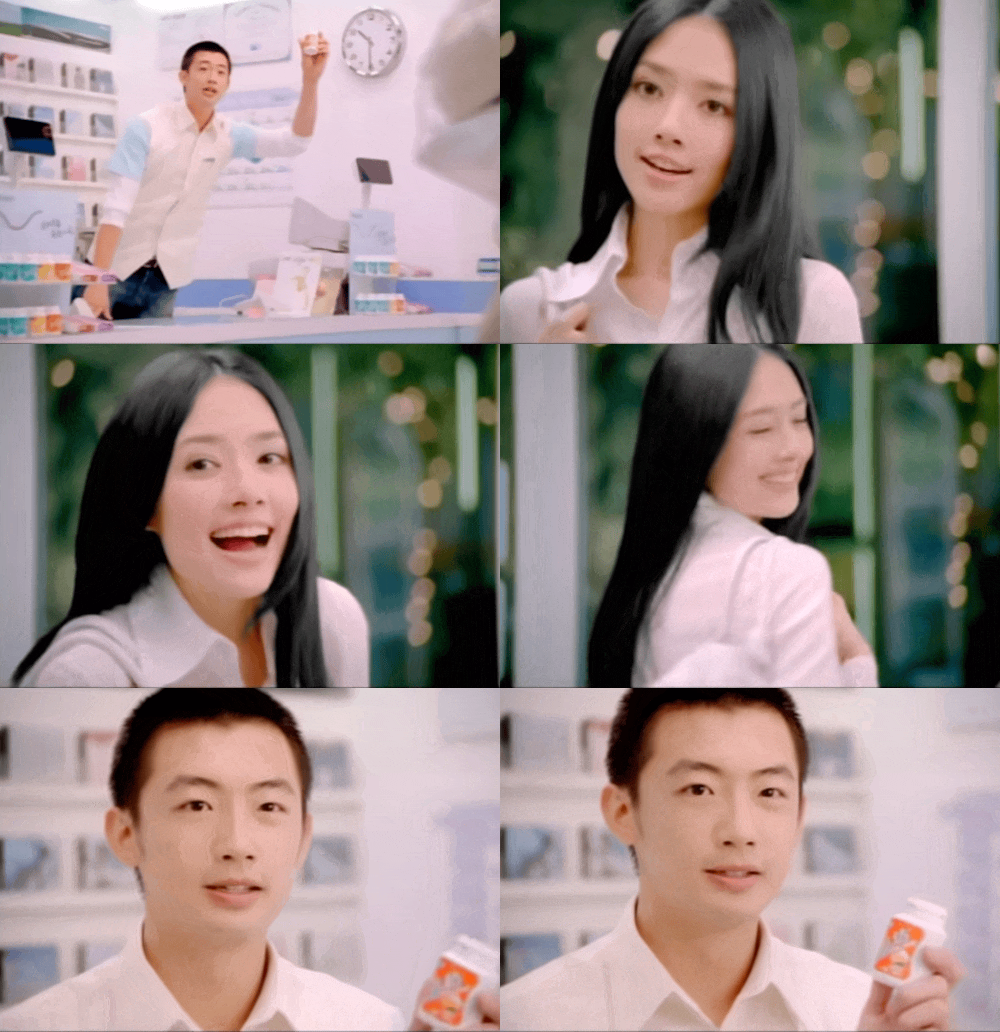
At that time, the advertisements that could be broadcast on TV were not all masterpieces, but at least they were proper works: after watching, the audience remembered the brand, and also remembered what the tonality of this brand was.
But now when you open your phone, the advertisements you scroll through are completely different.
You may have scrolled across such a video: the picture looks like the surveillance footage of a farm, a lightning strikes, and more than a dozen pigs fall to the ground on the spot. Before you can figure out where this news is from, the scene cuts and turns into an advertisement for a game.
You can tell at a glance that this surveillance footage is made by AI, and it has nothing to do with the game. Its only purpose is to make you not swipe away within 2 seconds.
Cloud drive promotions also love to do this: the dubbing and text talk about product promotions, but the picture plays completely unrelated plot.
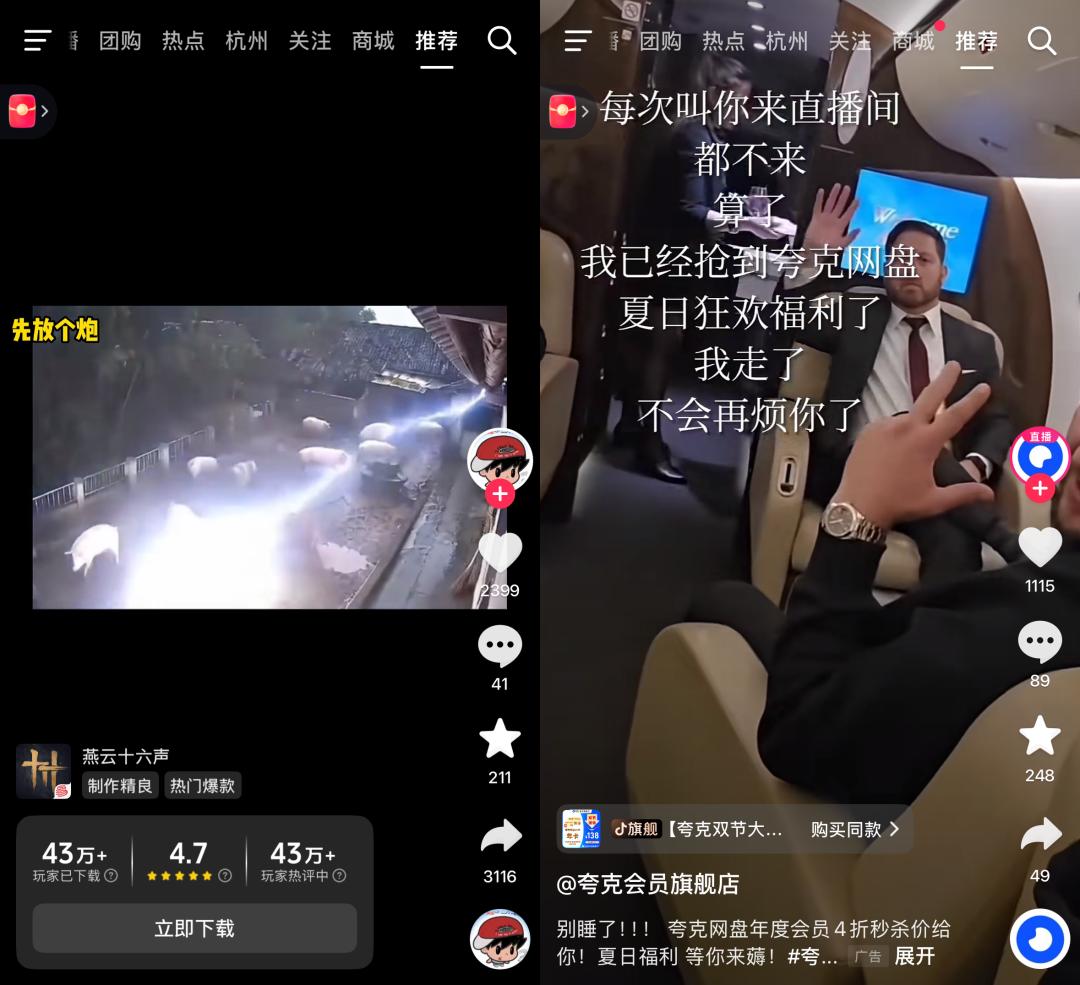
These advertisements that trick you into not swiping away are still the mild ones.
You have probably scrolled across the advertisement of "Mad Water World" a lot in the past six months.
The plot follows the exact same pattern over and over: the protagonist is bullied everywhere, finally gets a seawater filter, moves into a high-end shelter, then complains that it is too small, goes to get an electric eel generator, and finally says "Mad Water World is launched" before cutting into the "game footage".
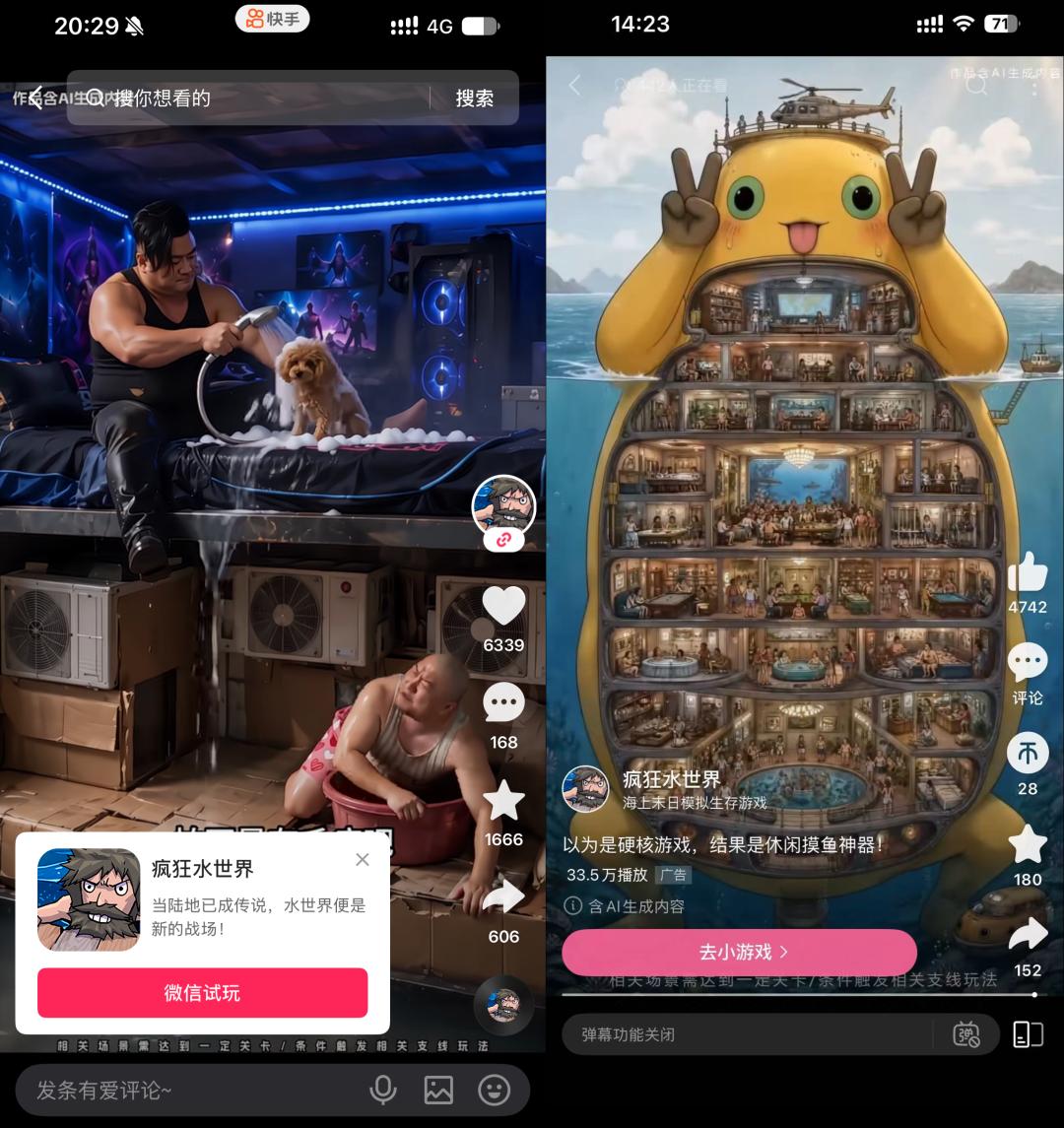
The advertisement was so popular that netizens edited their own compilations and made memes out of it, but when you actually open the game, you will find that the gameplay is miles away from what was shown in the advertisement.

Some brands even directly use AI to produce suggestive plot videos to keep you hooked until the product appears:
Scenes like a girl is taking a shower, and a male bath scrubber pushes the door in; two men are in the bathroom, a woman suddenly breaks in, and holds up a steam cleaner to start a demonstration.

These videos, even reviewers from X.PIN don't really want to call them advertisements. They don't care if you like the brand or not, they only care if you click in. It's the same logic as people shouting "Pass by don't miss it" at the entrance of a market, at most it's just yelling to attract passersby.
So what happened that made the advertisements that could be remembered by the public for more than ten years degenerate into this?
Let's look back at the era when TV was the dominant medium.
At that time, TV advertisements could be described in two words: precious.
In November 1994, CCTV held its first public bidding for prime time advertisement slots. Shandong Confucian Mansion Banquet Wine spent 30.79 million yuan to win the first "king of bids", and its sales reached 918 million yuan the next year, ranking top 4 among all liquor brands in China.
By 2009, the State Administration of Radio and Television stipulated that the commercial advertisements for each channel should not exceed 12 minutes per hour, and two years later, it banned inserting advertisements in the middle of TV series.

Think about it, these advertisement slots which are as precious as school district housing, only big brands can afford them, who would be willing to fill them with low-quality content?
It's normal for a TV advertisement to take months from conception to broadcast, and it's not rare for it to take years. Many classic advertisements were polished this way.
But times are always changing.
After the mobile internet exploded, the place where people read news and have fun moved from the living room to the mobile phone, and advertisements also moved there.
In 2025, internet advertisements accounted for 66% of the total advertising revenue.
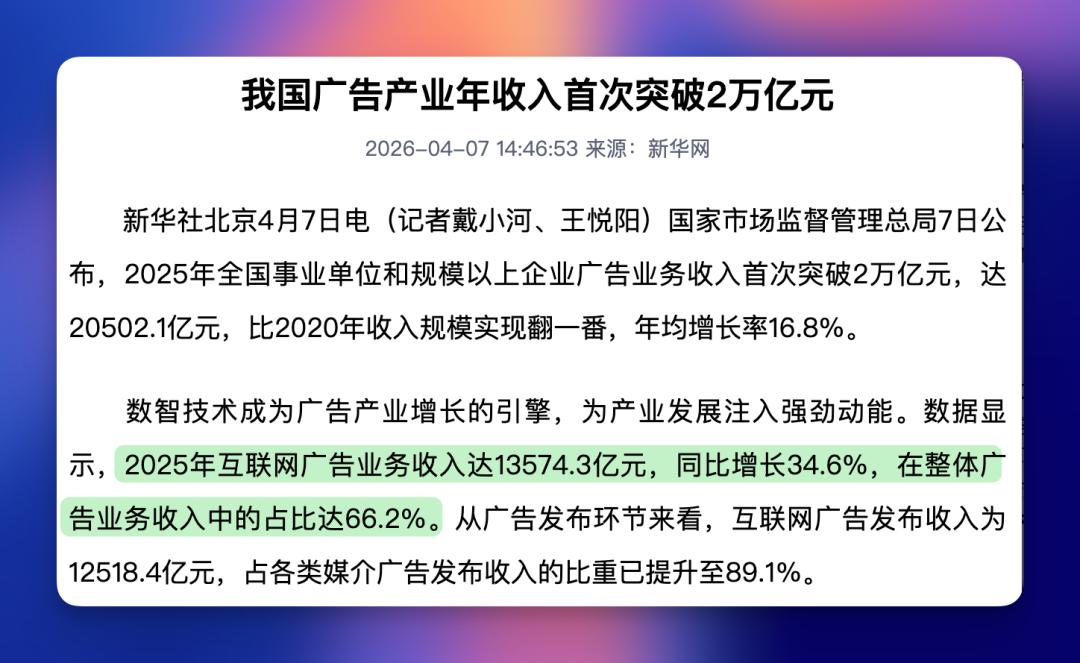
The internet era has a feature: the effect brought by each advertisement can be calculated clearly.
In the early days, people didn't take these numbers that seriously.
In May 2017, Pechoin released a long picture advertisement in the style of Republican-era spy war, which went viral on WeChat Moments, with about 30 million views on WeChat alone.
Some people calculated against Tmall's sales data and found that the conversion rate was less than 0.00008%, but the planning team responded: any brand promotion that forcibly talks about conversion is hooliganism, we just want to show that Pechoin is very creative.
They dared to say that at that time, because brands at that time paid more attention to long-term reputation, hoped to accumulate brand assets, and believed in long-termism.
If you really want conversion, you just wait for a good idea to ferment.

Unfortunately, this patience didn't last for several years in the industry. Because we entered the algorithm era.
When people's time is occupied by short video feeds, the threshold for advertising has dropped to the floor.
Those who can advertise to the public are no longer only big brands with abundant capital, but also driving schools, dental clinics, small game studios, short drama companies, and loan apps.
When all brands are crowded in the tiny feed stream, if they want their products to be seen by more people, there will inevitably be a trend:
Everyone is naturally trying to please the algorithm.
In fact, this logic is similar to that of the TV era.
At that time, if you wanted your advertisement to be seen by more people, you had to get a good advertisement slot. In the feed stream era, you have to please the algorithm.
The rule of the algorithm is very simple: if a video makes people stop to watch, finish watching, and leave a comment, it will continue to push it to more people; if no one watches it, it will suppress it.
In a word, it can make you get huge profits with small investment, and also make you lose all your money, depending on whether you know how to please it.
The advertisements that appear in this ecosystem are essentially not made for people to watch, but for the "algorithm master".
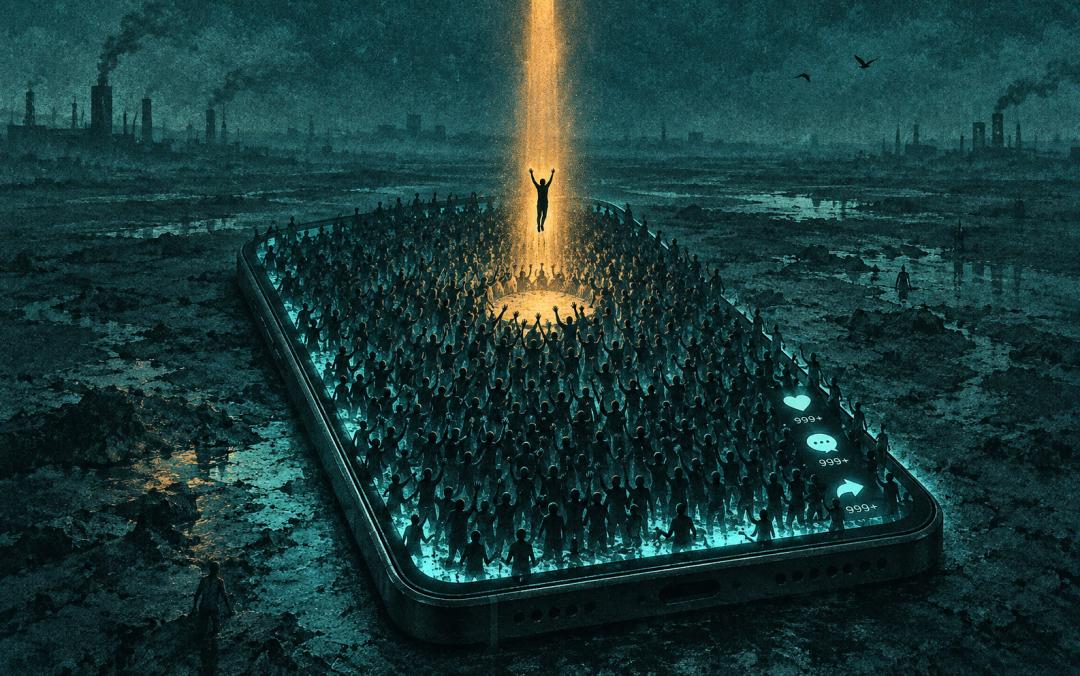
Okay, here comes the question, how can brands please the algorithm?
The backstage of video platforms specifically tracks two data at the beginning of the video: 2-second bounce rate and 5-second completion rate.
If these two data are not good, it means that netizens are not interested in your topic, and the algorithm will not recommend it.
So in the first few seconds of the advertisement, you must use every means to hold the audience's attention, no matter it's a lightning striking pigs, or clips of popular dramas, even if it has nothing to do with your product.
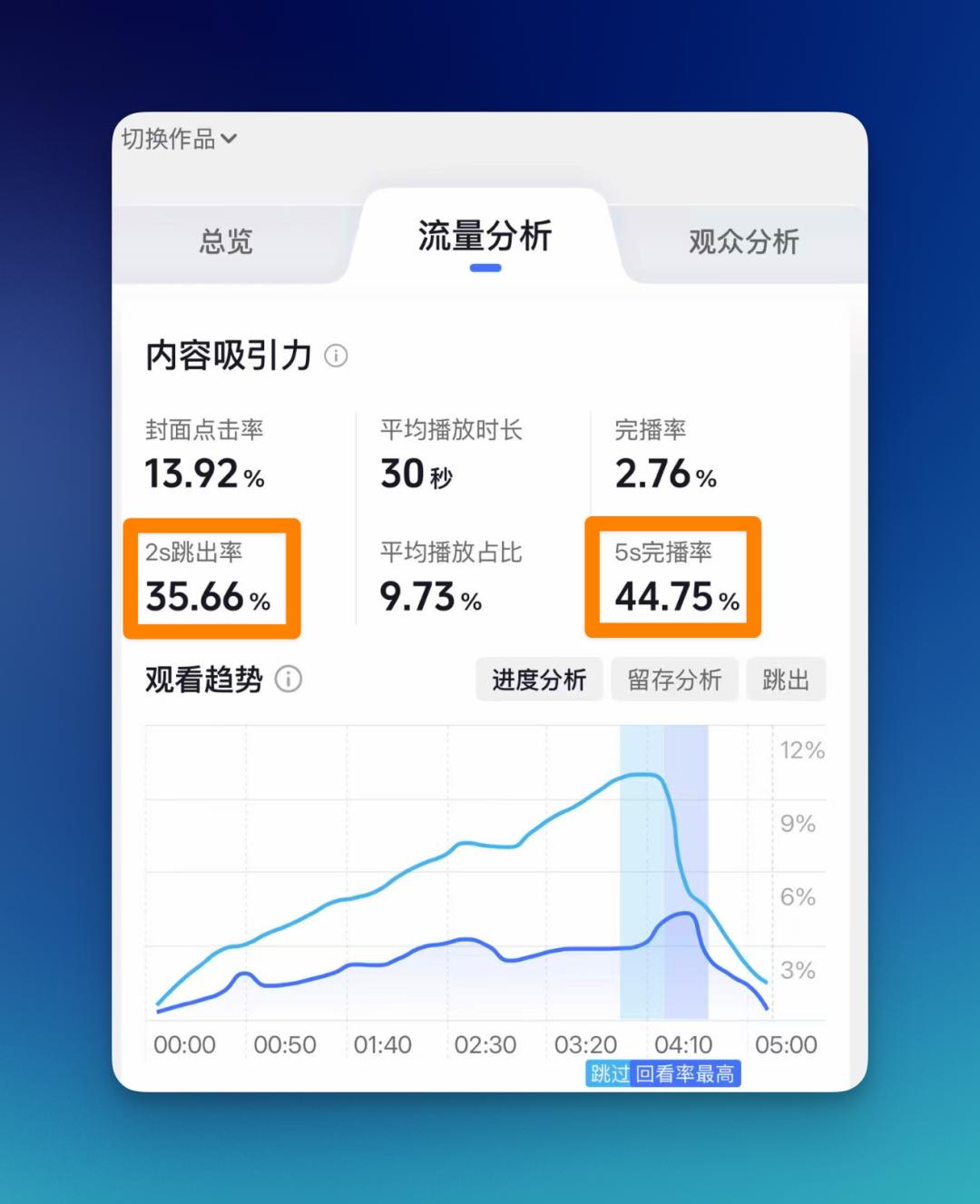
What if you hold their attention? You still need to make them finish watching, because the completion rate also affects the algorithm, so you create some plots to hook them: the male bath scrubber pushes the door into the women's bathroom, you always want to see what happens next, right?
After they finish watching, you'd better make them leave a comment, after all, interaction also affects the algorithm. So you create some controversial topics, the more fiercely people argue in the comment section, the better.
After several years of such cutthroat competition, the whole industry is competing for one thing:
Who can get the most algorithm recommendations with the least money.
You say your advertisement is creative and can build brand value, the leader slaps the table and asks: so what, our competitor's product is selling extremely well, how many orders have you got? How do you write your weekly report?
You have no choice.
At this point, ROI (Return on Investment) has become the only number hanging over the heads of advertisers.
In front of this number, creativity is worthless.
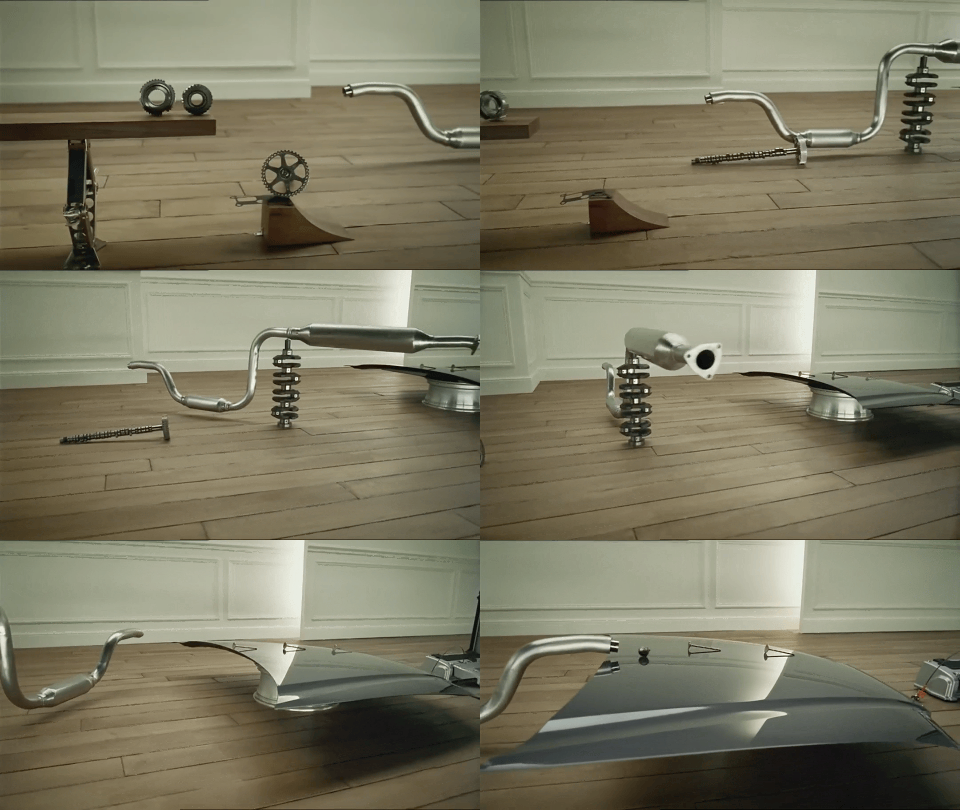
Let's make an assumption: the boss asks you to shoot a 2-minute advertisement for a new car, would you spend half a year and 1 million pounds, shoot hundreds of test shots, completely disassemble the new car, and let the parts collide with each other, starting from a bearing all the way to the whole car?
You definitely won't.
In the first two seconds, there is only a bearing rolling there, people will swipe away long ago. The next day when you check the conversion data in the backstage, you're done, you get fired, even getting N+1 compensation is a luxury for you.
But this is exactly one of the most awarded TV advertisements in history, Honda's 2003 "Cog".
The emergence of feed streams has brought advertising into an era of "cost-effectiveness", an era that only focuses on immediate conversion.
Since we only focus on conversion, the most convenient way is to turn effective tricks into a formula: a hook at the beginning, a dramatic plot in the middle, a controversial point at the end, and a link attached at last.
For brands, instead of putting all their hopes on one carefully polished video, it's better to