Breaking: Claude Seizes the "Holy Grail" of Probability Theory, AI Crosses the Finish Line of the Fields Medal
On August 30, 2026, Hugo Duminil-Copin, a master of probability theory and 2022 Fields Medal laureate, wrote with a tinge of sadness:
In our field, it is probably only a matter of time before the most famous conjecture falls under the roar of bulldozers (AI).
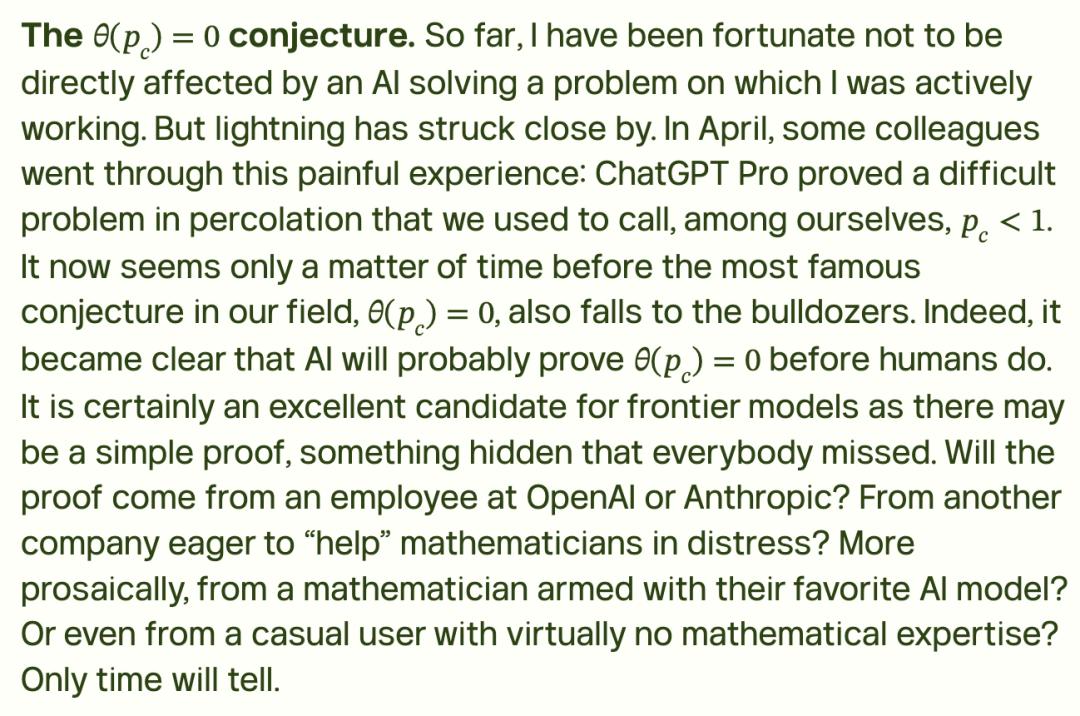
He was referring to the "holy grail" level problem in probability theory that has stumped the global mathematics community for more than half a century — the continuous phase transition conjecture in percolation theory (
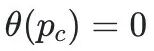
the conjecture).
To solve this problem, this Fields Medal winner has poured years of effort into it, fighting repeatedly despite repeated failures.
But no one expected that: the reality is far more surreal than the prediction.
Almost at the same time his article was released, peers suddenly found a code repository newly submitted by Anthropic engineers on GitHub
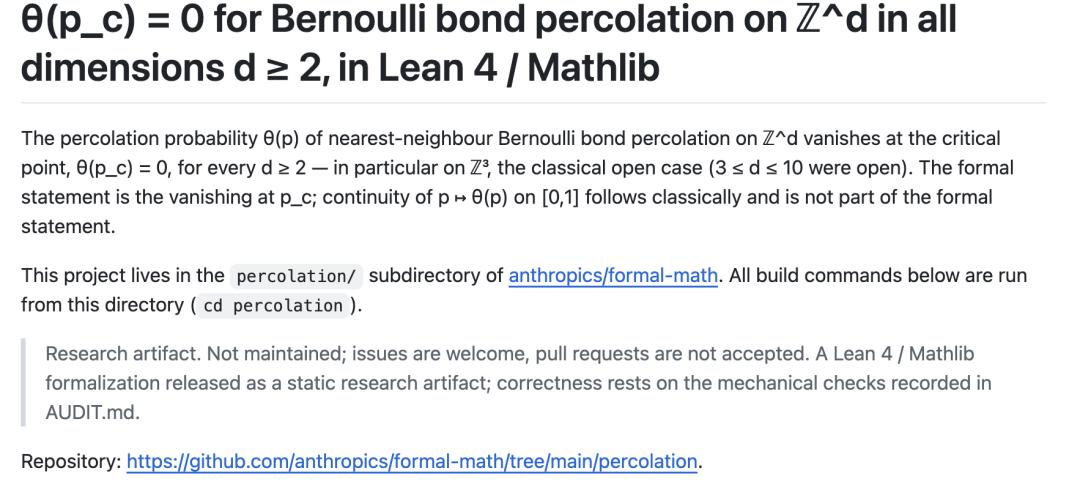
There was no press conference, no massive full-network promotion, not even a single post on the official blog.
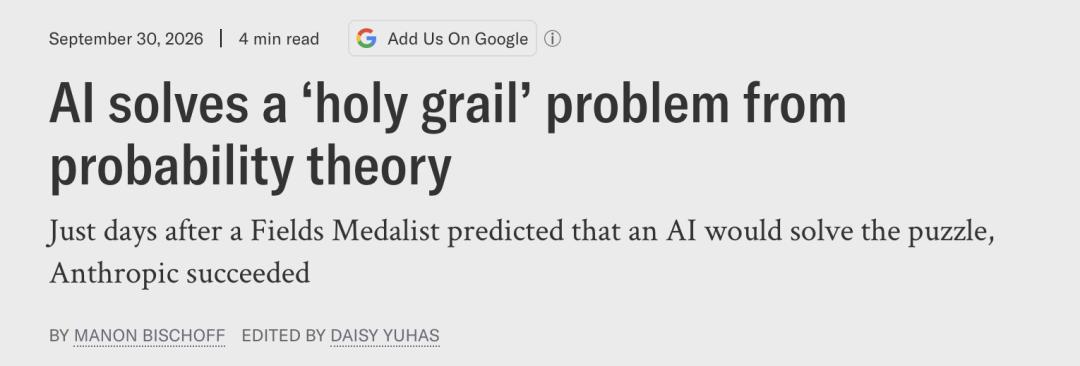
Inside it lay a complete code automatically generated by the large language model Claude and strictly verified by Lean, the mathematical formal proof language — the percolation conjecture that the Fields Medal winner had failed to conquer for years had been proven by AI.
The news spread, and the global mathematics community was instantly in an uproar.
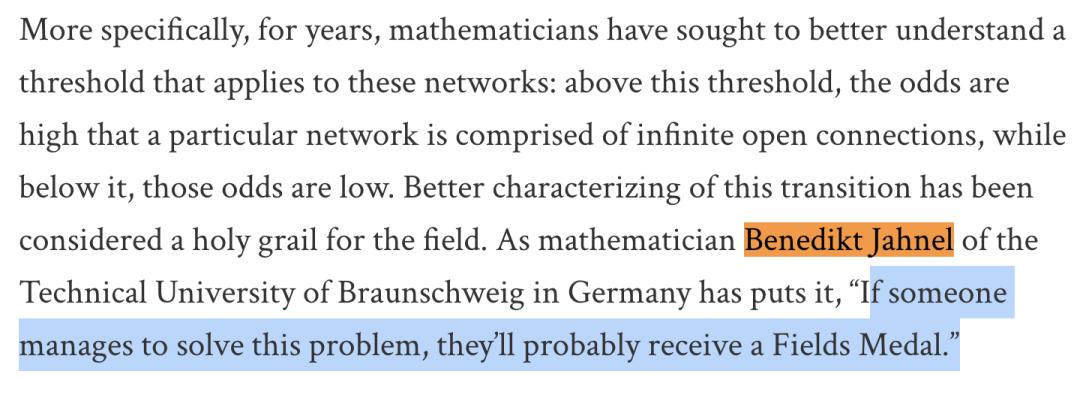
Mathematician Benedikt Jahnel from Technische Universität Braunschweig, Germany, said bluntly in an interview:
If a human had proven this conjecture, he would most likely win the Fields Medal. But now, it is AI that crosses the finish line.
AI has placed the machine proof right on the table.
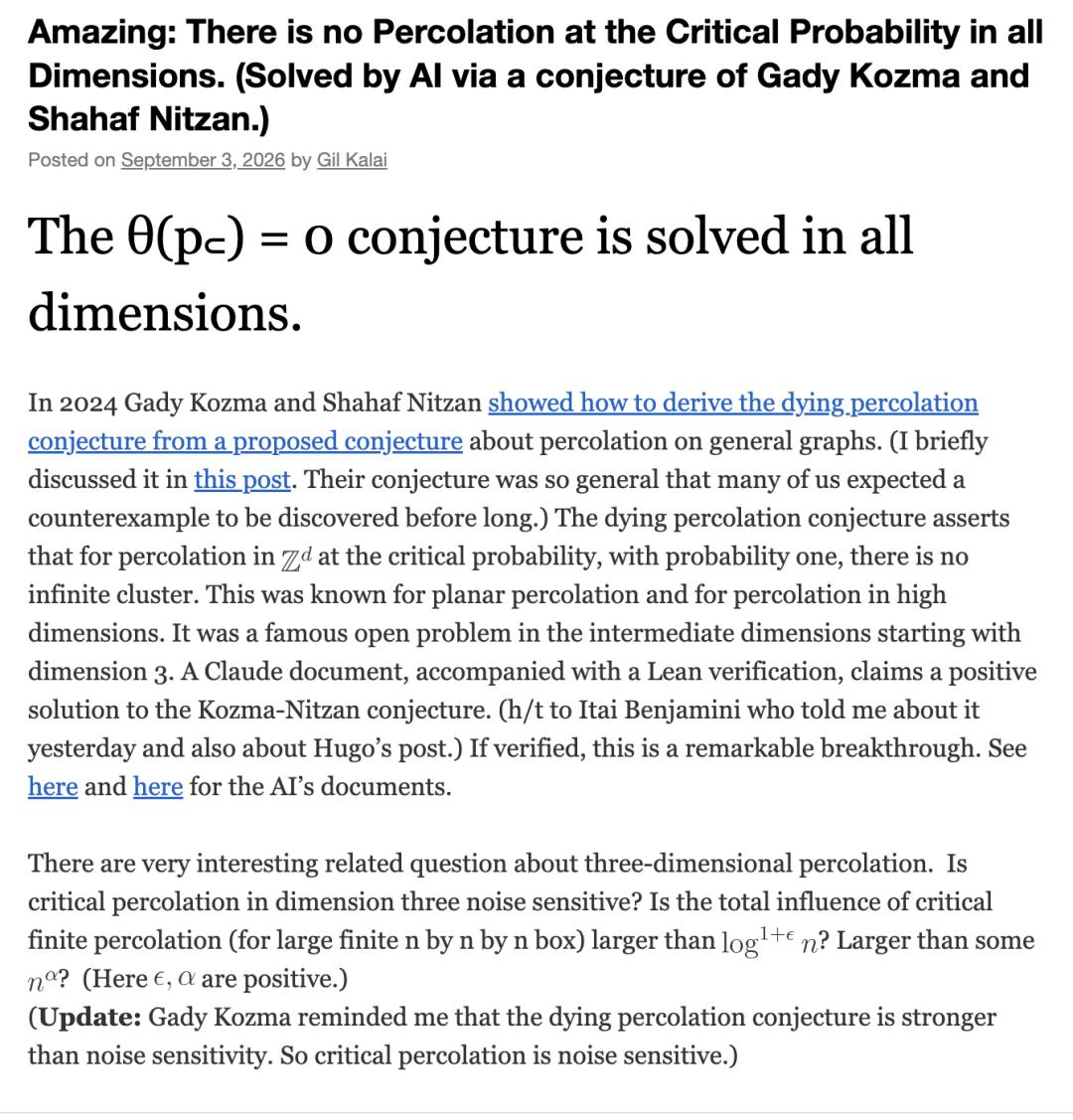
Mathematician Gil Kalai said bluntly: "If verified, this will be an extraordinary breakthrough."
What exactly is the "holy grail of probability theory" that has plagued humanity for nearly 70 years?
The continuous phase transition conjecture in percolation theory is known as the "holy grail" of probability theory.
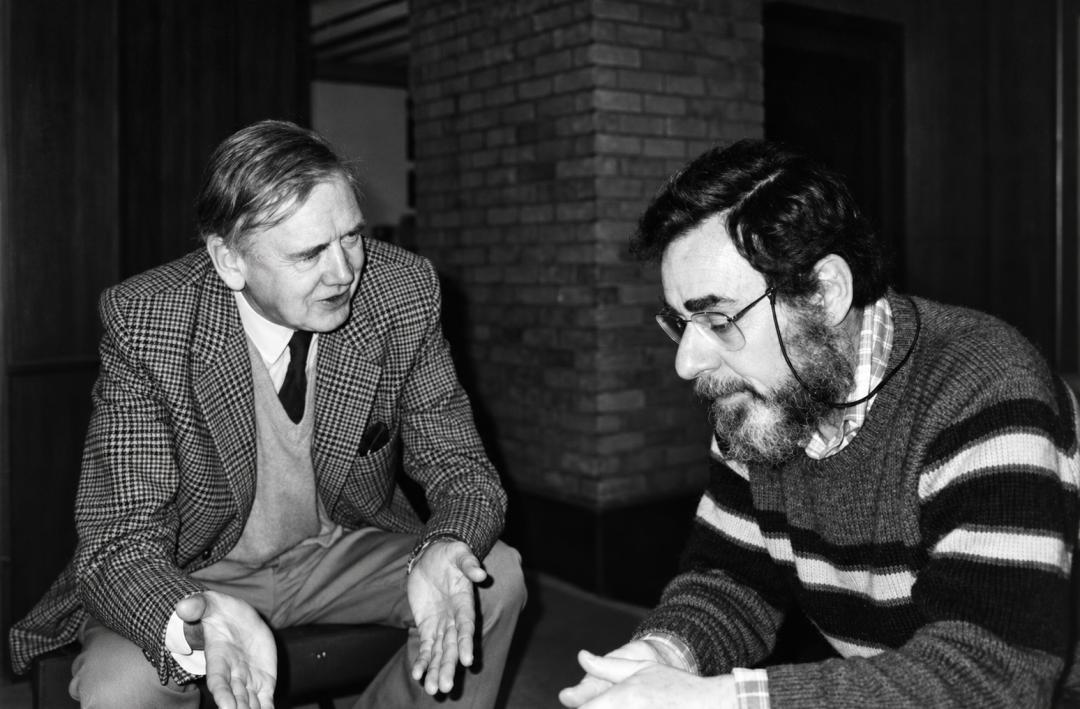
In 1957, mathematicians Simon Broadbent and John Hammersley were thinking about a very down-to-earth yet extremely profound physical phenomenon: How exactly does liquid pass through a porous sponge?
You can imagine this as brewing coffee, or oil seeping through the gaps in the Earth's crust:
Suppose there is a huge spatial grid with thin pipes connecting each intersection. Each pipe has a certain probability p of being unobstructed, and a probability of 1-p of being blocked.
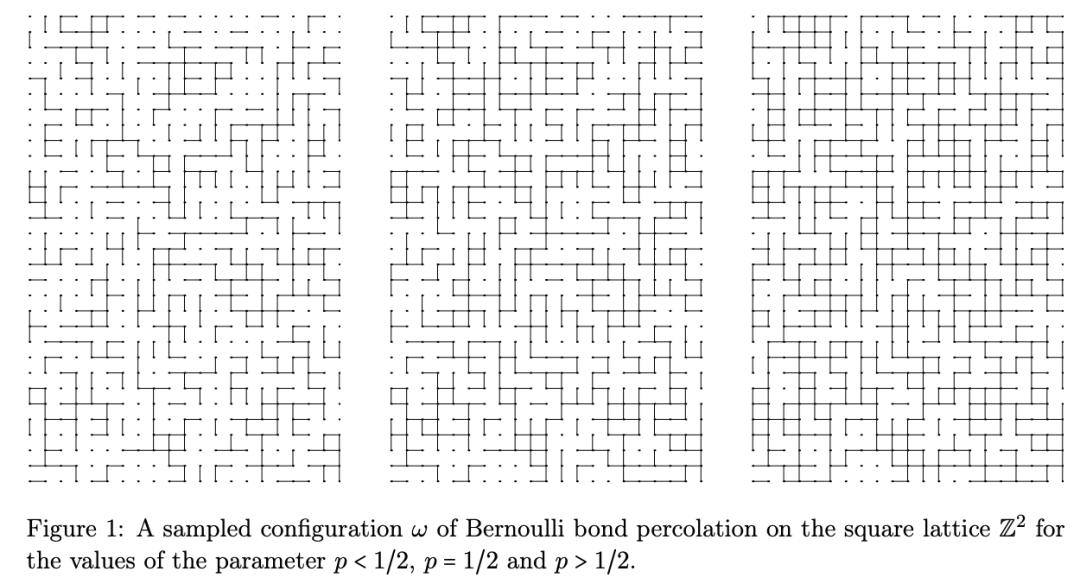
If p is very small, for example only 0.1, most of the pipes are blocked, and the water droplets will stop not far after seeping in, and will never penetrate the whole sponge; if p is very large, for example up to 0.9, the pipes extend in all directions, and the water flow will advance irresistibly, forming a connected expanse in the infinitely extended network.
Mathematically, the magical dividing line that jumps from "local water droplets" to "infinitely connected network" is called the critical probability.
This is a phase transition, just like water freezes when the temperature drops to 0 degrees Celsius at standard atmospheric pressure.
Below the critical point, the probability of forming an infinitely connected water flow

is absolutely 0; above the critical point,

it is greater than 0.
Then, a "century question" that haunts all probabilists was born:
At the exact moment when it is equal to the critical point, can an infinitely large connected network be formed inside the system? In other words,

is it exactly equal to 0?
If

=0, it means that this phase transition is extremely smooth and continuous, just like morning fog gradually turning into drizzle; if it is greater than 0, it means that the system will suddenly mutate at the critical point, and an infinite water flow that runs through the universe will appear out of thin air.
This seemingly simple conjecture is the "holy grail" in probability theory —

=0 conjecture.
To solve this puzzle, mathematicians have come forward in succession for more than half a century.
In 1980, mathematician Harry Kesten proved that the critical probability in the two-dimensional square grid network is exactly 1/2, and

=0.
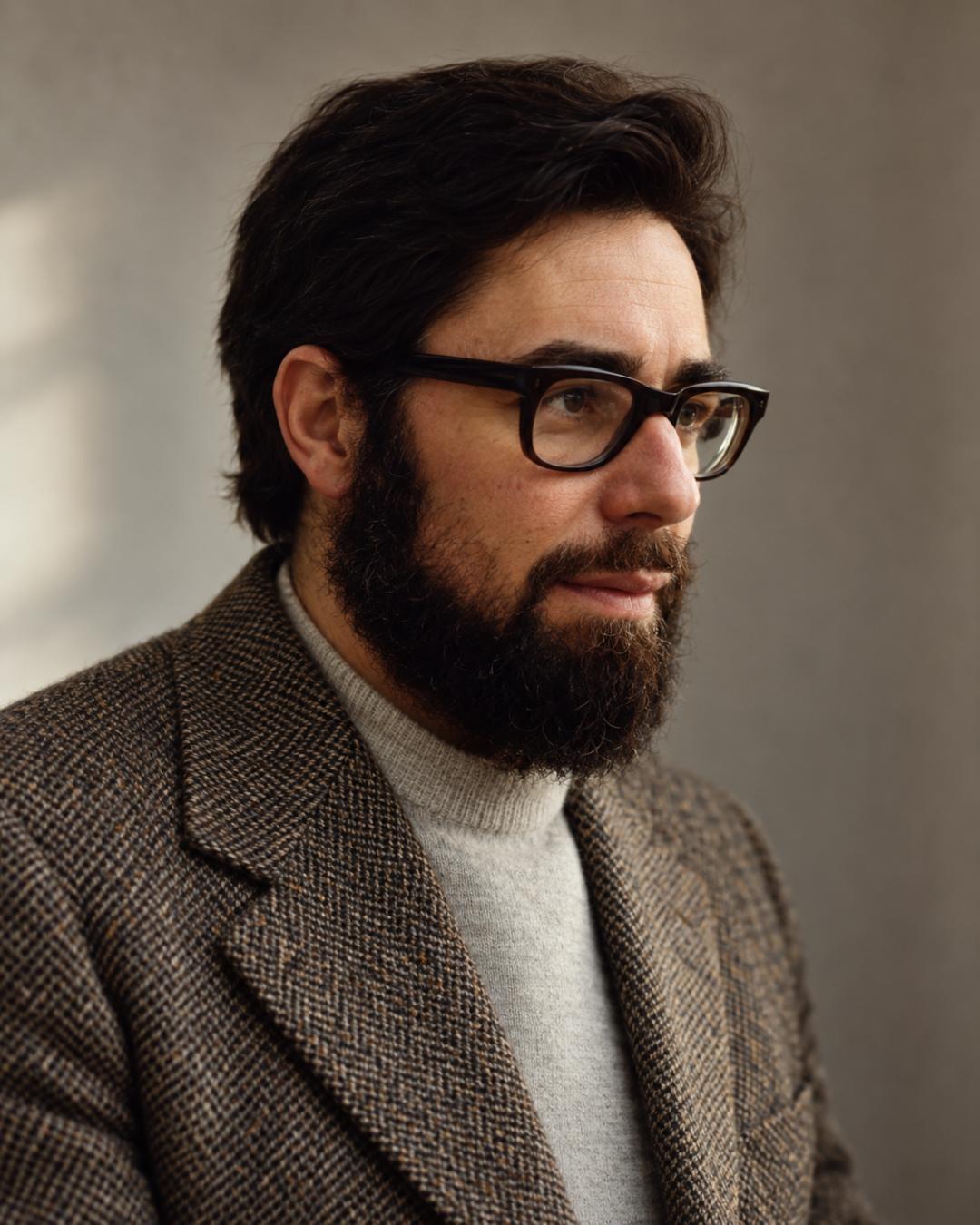
This directly established his master status in the history of mathematics.
In ultra-high dimensions (11 dimensions and above), each node has a huge number of neighbors, and mathematicians can use tools such as statistical averaging and "mean field theory" to forcibly simplify the problem.
As early as many years ago, scholars proved that in spaces of 11 dimensions and above, the phase transition is also continuous.
However, the real nightmare remains in the middle — spatial grids from 3 dimensions to 10 dimensions.
There is neither the special geometric symmetry of the two-dimensional plane, nor the statistical smoothing tools of high dimensions. The topological entanglement between dimensions is extremely complex and chaotic.
Three dimensions are the real universe we live in, four dimensions are the space-time of relativity, and these most core dimensions have become the "wall of sighs" that human mathematicians cannot cross for decades.
For decades, countless top scholars have exhausted their youth, and in the end they can only leave a sigh on the draft paper.
The poetic wanderer meets the cold bulldozer
Hugo Duminil-Copin, the Fields Medal winner, is the most famous of these "wall crashers".
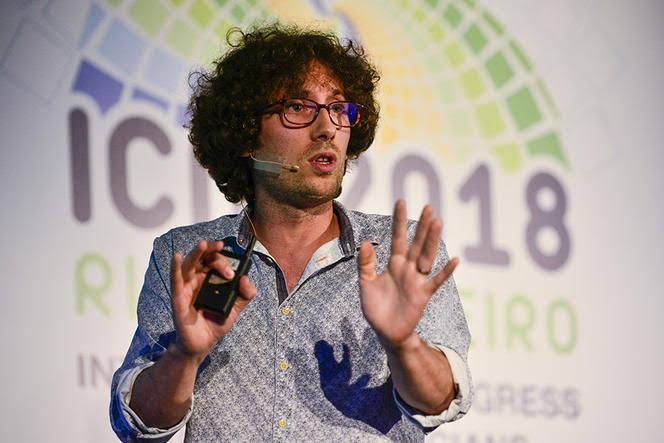
In 2022, Duminil-Copin won the Fields Medal, the highest honor in the mathematics world, for his disruptive work in the field of statistical physical phase transition, and his academic career is almost a history of entanglement with percolation theory.
He loves this conjecture so much that he is almost obsessed with it.
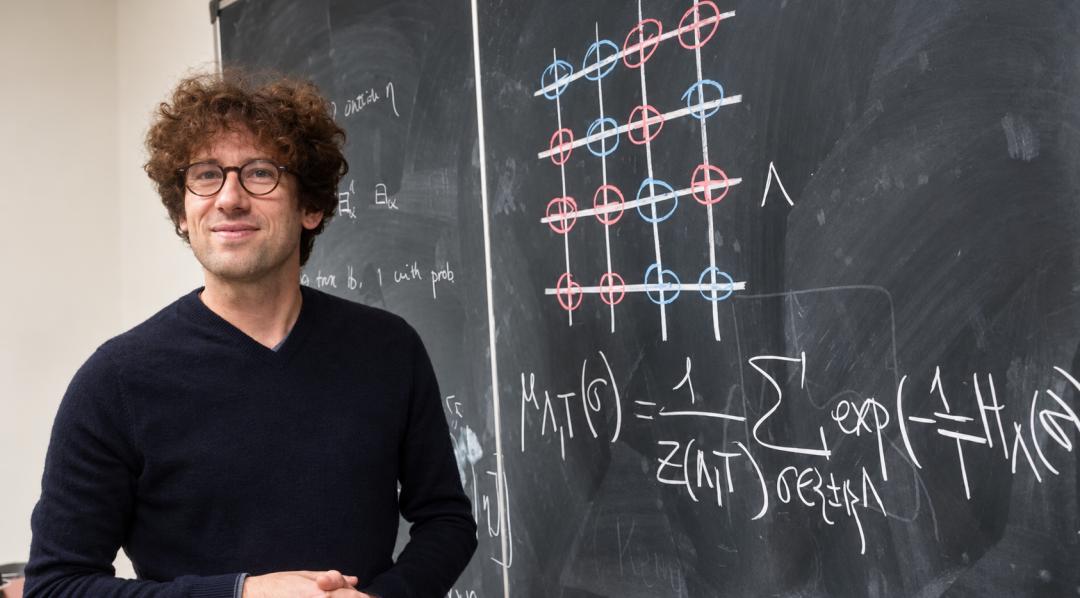
In that blog post on August 30, Duminil-Copin wrote with extremely beautiful prose strokes:
A mathematical problem is never just a theorem waiting to be proven. It is not only a lighthouse in the night, but also a mentor of the soul.
Solving it may not immediately open up a brand new field of mathematics, but the depth and beauty it possesses are enough to captivate generations of people.
Duminil-Copin shared emotionally that although he had tried many times to conquer the continuous phase transition problem in 3 to 10 dimensions and failed, in the long struggle and climbing, those seemingly abandoned failed drafts gave birth to dozens of unexpected sparks of inspiration.
Many of the works for which he won the Fields Medal later turned out to be "by-products" that came out after the failure of this main quest.
In the traditional narrative of human mathematicians, the process is far more sacred than the result. On the way to the peak, there are epiphanies that stop you from falling off a cliff, despair when you reach the end of your tether, and aesthetic precipitation that comes with working day and night. This struggle with the unknown is regarded as the highest symbol of the dignity of human reason.
However, Anthropic's entry completely tore up this romantic filter.
Justin Leder, who submitted the proof, is not a giant in the mathematics department, and is even completely unknown in the percolation theory community. He relied on the advanced generation Claude model that Anthropic has not yet released to the public.
AI does not experience confusion, nor does it understand what aesthetics is.
Faced with this natural moat that has plagued humanity for 70 years, AI is like a bulldozer, using rigorous to almost suffocating symbolic logic and