Mathematics is about to "graduate", and the co-founder of xAI has pronounced that its 2000-year heroic history has come to a complete end.
For over 2,000 years, the brightest human minds have been climbing the same mountain range, which is mathematics.
From Euclid, Gauss to Hilbert, Wiles, every conquest of a peak requires a lifetime of dedication.
But now, this heroic era belonging to mathematics has come to an end.
A long essay titled Where Is Mathematics Going? by Christian Szegedy, co-founder of xAI, went viral on X.


In his writing, mathematicians are explorers who climb rocks with bare hands in the primeval jungle, while AI is an airplane that has already planted its flag on the top of a peak no human has ever climbed.
The era of lone climbers is coming to an end, and the era of mapping the entire continent is dawning.
Mathematics is about to graduate. It will step out of the ivory tower and become the foundation of all scientific and technological progress.
He bet on this day for a decade
Let's turn the clock back to Szegedy's teenage years. Back then, he studied in the math specialty class at the best school in Hungary, had 8 hours of math classes per week, and spent most of his youth on competition problems.
Later, he obtained his doctorate in applied mathematics at the University of Bonn, joined Google and worked there for more than ten years.
Several indispensable cornerstones in the history of deep learning bear his name. He was the first author of the paper for Inception, the classic image recognition network; he was also the first author of the groundbreaking paper that revealed that neural networks can be easily fooled by "adversarial examples"; the batch normalization that must be taught in textbooks was proposed by him together with his colleagues.
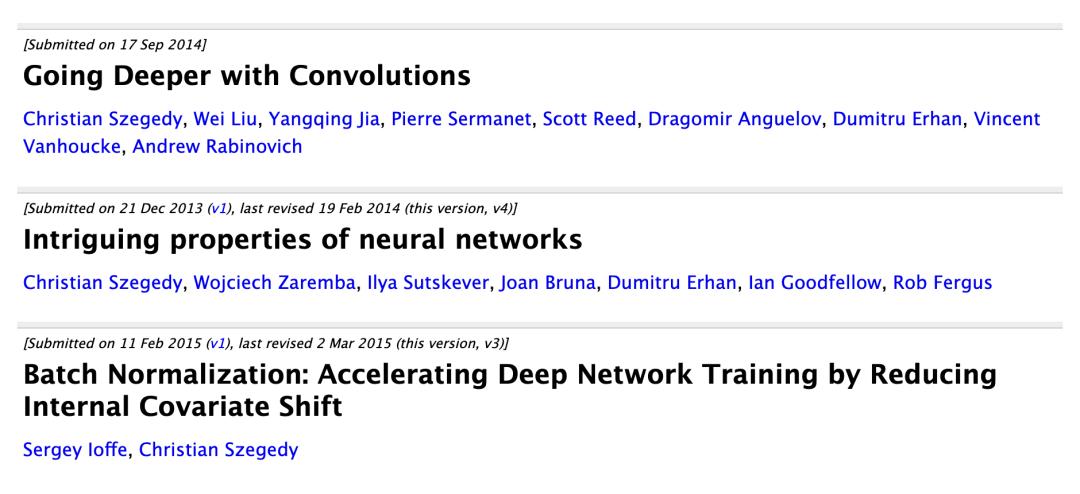
In 2023, he became one of the 12 founding members of Elon Musk's xAI.

But what runs through his entire career is always mathematics.
In 2019, he published a position paper advocating the path of automated formalization, to create a superhuman mathematician.
The so-called automated formalization means that AI automatically translates the mathematics written by humans into proofs that machines can verify line by line.

The goal he set at that time was 2029.
In 2024, he moved the timeline forward by three years. AI skeptic Gary Marcus replied to him below, saying he was not as optimistic as he was.

In February of the same year, he discussed and made a bet on X with François Chollet, the father of Keras, and others, betting that "before June 2026, a superhuman AI mathematician will emerge".

Then, 2026 really arrived.
In May, OpenAI overturned the unit distance conjecture that had been pending for 80 years. In July, Anthropic researchers used Claude Fable 5 to falsify the Jacobian conjecture proposed in 1939.
By September, everything began to accelerate.
On September 4, Anthropic's internal model spent only 11 days writing the complete proof of Fermat's Last Theorem in the theorem prover Lean.
On September 8, OpenAI announced that 10,000 Agents ran for 88 hours and conquered the Millennium Prize Problem, the Navier-Stokes equations.
On September 21, OpenAI also stated that its internal model has solved more than 100 long-standing unsolved mathematical problems.

All of this happened before 2029, the year he originally predicted.
Two thousand years, a heroic climb
The long essay starts with his own high school graduation.
The first two hours after the final graduation exam were the most free moments in his life. Then, emptiness came.
There were no more competitions, no one taught him anymore, and no one cared. He wrote, "For the first time, I didn't know who I was without it."
He wants to tell mathematicians all over the world that what you will experience next is exactly this feeling.
In Szegedy's writing, doing pure mathematics is like exploring in a wilderness without a map. It is more difficult to walk through than the impassable Darién Gap between Panama and Colombia, where novices will get lost, get malaria, or be eaten by wild beasts in a few days.

Explorers do three things: draw maps, find mineral deposits, and make tools.
The most respected are those who have gone through all kinds of hardships to climb a high mountain and draw a sketch at the top of the peak.
Anyone who climbs a mountain that all predecessors have failed to conquer will be worshipped as a god. The Langlands Program is such an achievement.
People who make tools will also become famous, but they cannot get that kind of aura. Most number theorists don't care much about finding "minerals" that are useful to ordinary people, such as discovering that elliptic curves can be used for cryptography, they will only write it into funding applications.
Those stones that everyone wants to conquer are conjectures. They themselves are often not that interesting, but they are test fields for testing rock climbing tools.
But what the explorers stay in the jungle for is something else.
At the end of the day, this is the reason why people stay. Not for the map, not for the money, but for that rare moment when a stone no one cares about turns into a huge mountain, and the entire terrain unfolds under your feet.

In the words of Stephen Wolfram, the father of Mathematica, pure mathematics is the largest intellectual edifice built by human civilization.
This edifice was built by countless lone climbers over more than 2,000 years, piled up one stone and one peak at a time.
An airplane planted its flag on the top of the mountain
Then, the airplane came.
The Wright brothers' first flight lasted only 12 seconds, and the distance they flew was not as long as the wingspan of a large airliner. Szegedy said, This is roughly the position of AI in mathematics today.
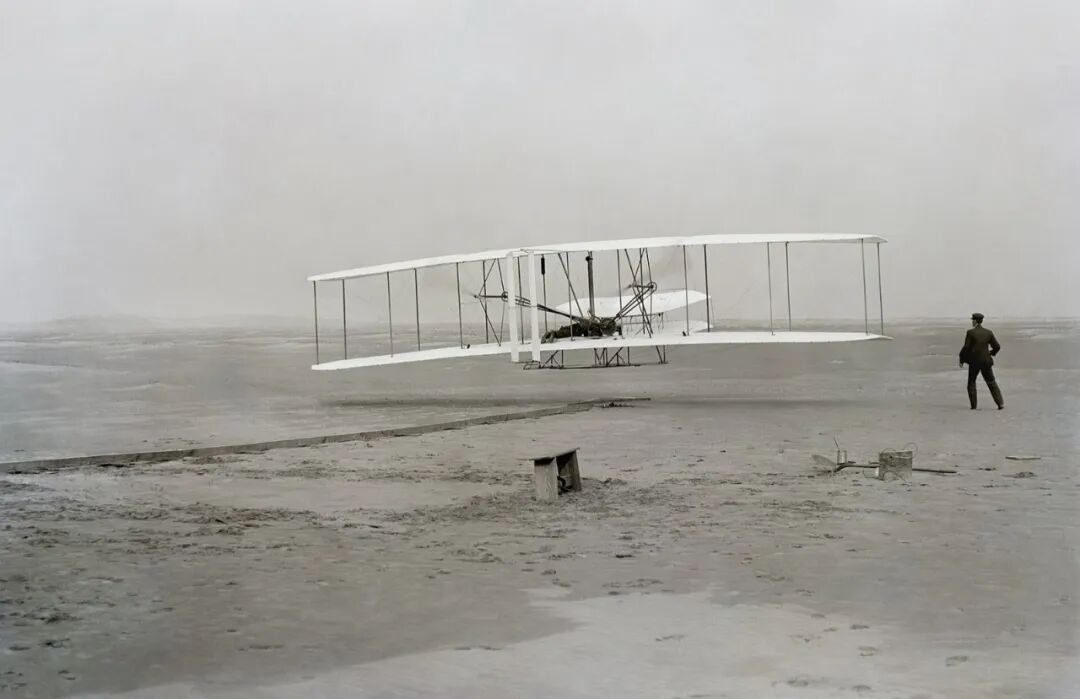
Until this year, these airplanes are still very primitive, they can only fly a few hundred meters, a few meters off the ground, are ridiculously expensive, and can only be used in a few occasions.
But in the past few months, they have been able to fly into the Darién Gap without crashing, "We have even landed on several stones that no one has ever climbed before", which means we have solved several conjectures.
Next, he wrote a fable.
To be honest, these stones are not that interesting. We climb them to sharpen tools for the real huge mountains, and your airplanes can't fly that high.

Szegedy's judgment is that the statement that "airplanes can't reach the real mountain tops and can't draw large maps" is a fallacy of static thinking. Today's airplanes are very primitive compared to those in a few months, let alone in a few years.
Mathematics has graduated
Once airplanes become cheap, the entire jungle will change.
Szegedy predicts that private airplanes will be everywhere, anyone who can afford the money can charter one to land on any stone, humans will invent satellites to map the mineral resources of the entire jungle and then exploit them.
The scene will be dirty and chaotic. Today's explorers will be terrified, miss the good old days, and scold big companies for spoiling the jungle they love.
He wrote, "They are right, but this won't change anything. Big companies will find unimaginable wealth there."
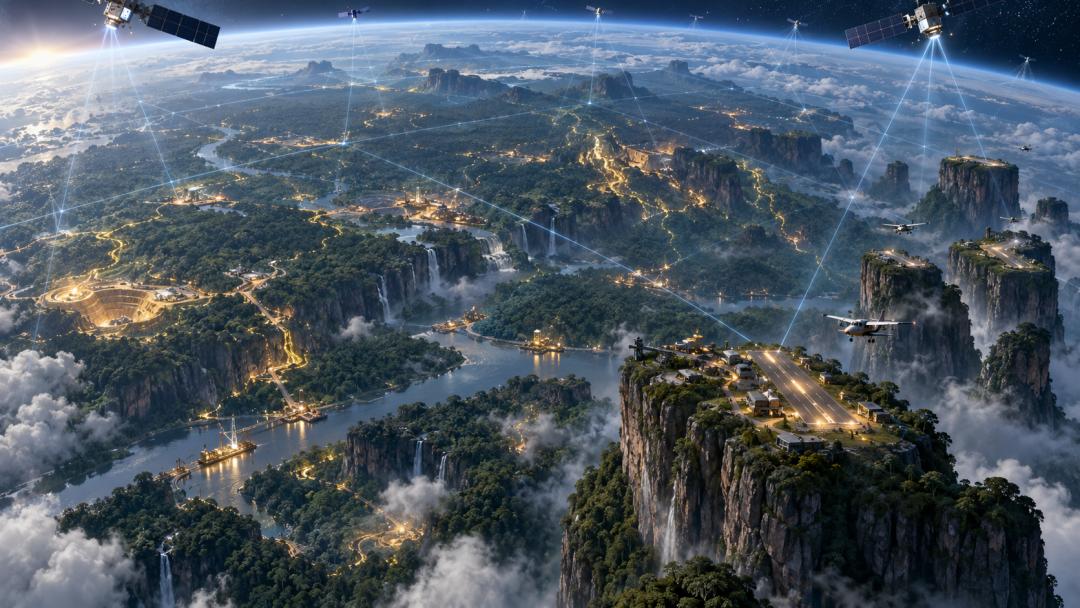
The sport of rock climbing will not disappear. More amateur explorers will charter flights to fly to their favorite stones, buy ready-made equipment at tool stores, and climb together with friends.
People with slightly poorer physical strength will fly in airplanes to look for more majestic mountains, or overlook the entire mountain range from a place higher than any peak.
"The old atmosphere and excitement will disappear forever. Mathematics will be more brilliant, more useful, and more mundane than the old era of heroic exploration."
The first sentence of the last section of the long essay is, "Don't bet against airplanes."
Those who say that AI can't raise conjectures, can't build theories, and can't explain are describing the models from last spring. Within a few months, these descriptions will no longer hold. Anyone who stakes their identity on "AI can't do X" is building a house on sand.
Universities, journals, and tenure committees will look more or less the same in a few years, but what they reward will undergo fundamental changes.
The heroism of climbing a mountain that others can't climb will become less important. Instead, three other abilities will matter: choosing which terrain is worth exploring, commanding fleets of airplanes, and telling the discoveries to the whole world.
He also admitted, "For many people in the system, this will feel like a demotion, and some people will fight against it."
The last paragraph of the long essay is written as follows.
"Mathematics is about to graduate. It will grow into a complete industry, become the