Blending Monopoly gameplay with Roguelike elements, the new product has achieved a monthly revenue of over 10 million.
After "MONOPOLY GO" disrupted the original landscape of the social competition game track, more and more products of this type have emerged, including many top-tier IPs. For example, Tetris has launched "Tetris Block Party", allowing players to play block elimination while "dismantling" each other's bases with friends; in China, a number of large game manufacturers including Lilith are also testing the waters to seek opportunities.
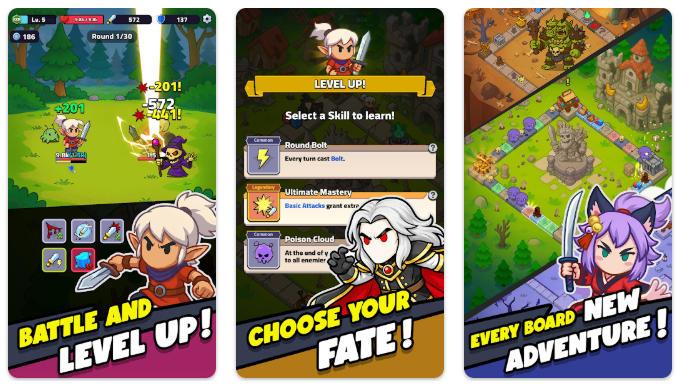
「Rogue Legend」| Image source: Google Play
At the same time, some other sub-categories are also drawing on the experience of "MONOPOLY GO", introducing the operation of board game boards and the satisfying experience of rolling dice with one click into their games.
Among these, the latest breakout new title is a Roguelike game called "Rogue Legend". AppMagic data shows that its post-revenue share revenue in September has exceeded 3 million US dollars (approximately 20.11 million RMB).
Commonalities in Gameplay and Focus on Core Experience
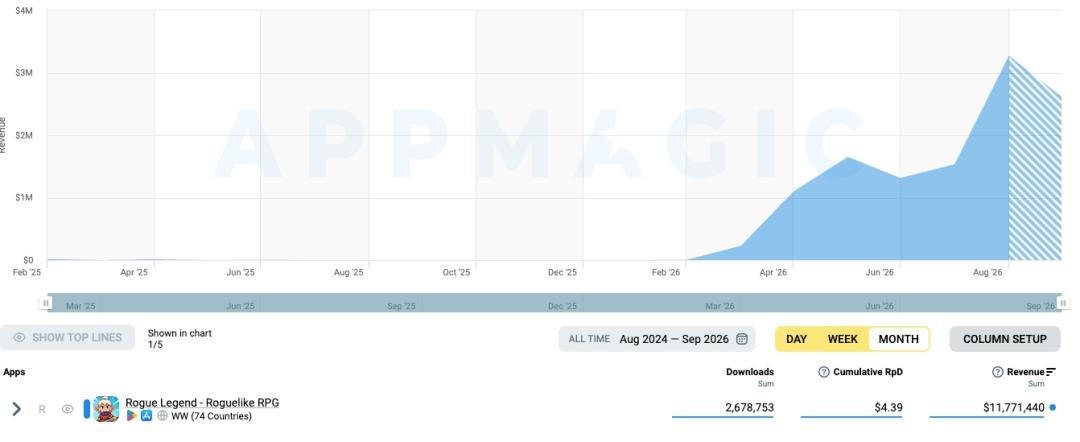
Monthly revenue change of 「Rogue Legend」 | Data source: AppMagic
According to AppMagic data, "Rogue Legend" was first detected on November 20, 2025, and its monthly revenue began to grow rapidly from March 2026. After checking its publishing account, we found that it belongs to PocketHaven, an Israeli team established not long ago. The company was founded around 2024, and previously launched competing products of popular multiplayer games such as Rocket League and Stumble Guys, but none of them achieved remarkable results. "Rogue Legend" is the only product that has exceeded 1 million US dollars in monthly revenue so far.
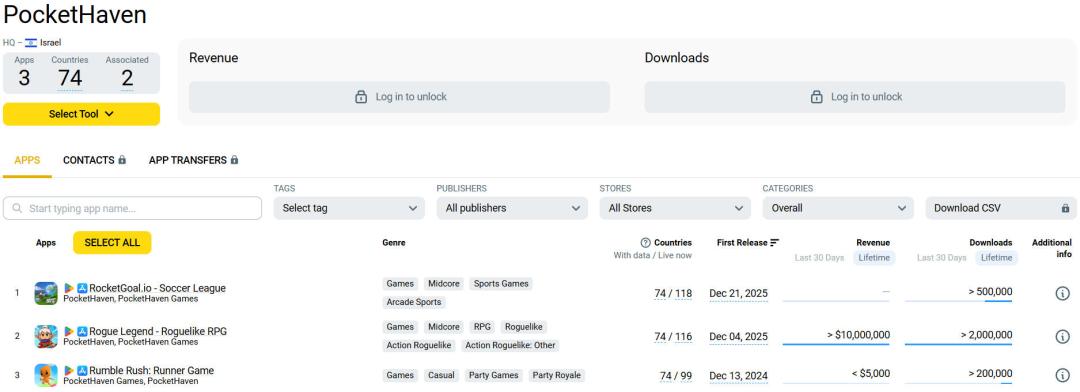
Recently launched products of PocketHaven | Data source: AppMagic
Further investigation shows that the company's co-founder and CEO previously led game projects at JustPlay, another Israeli game manufacturer focusing on multiplayer games.
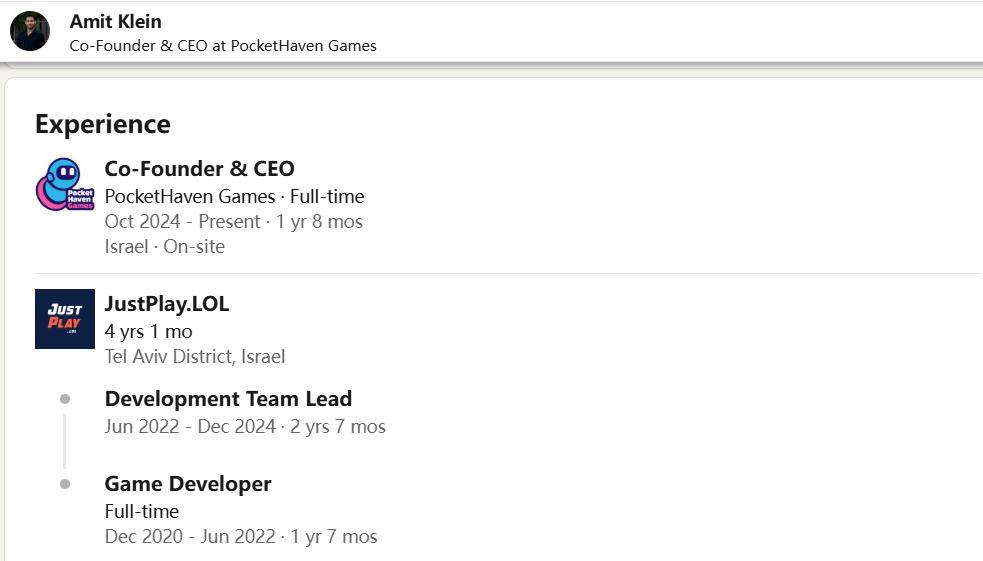
Work resume of PocketHaven CEO | Image source: LinkedIn
How come a small studio established for less than 2 years that launched a new title very different from its previous main track suddenly became a smash hit? We believe the reason is that "Rogue Legend" has found the common ground in settings and operations between Roguelike RPG and "MONOPOLY GO", enabling the two gameplay modes to integrate seamlessly, while retaining the maximum advantages of both types of products.
Simply put, the gameplay of "Rogue Legend" is equivalent to "playing Roguelike RPG on the "MONOPOLY GO" board". Players are still facing the Monopoly board, and the main operation is still rolling dice, but what moves on the board is not the Monopoly token, but the player themselves. In the process of moving according to the number of points rolled on the dice, players will encounter enemies and engage in battles. After winning, they will start the iconic "3 choose 1" random upgrade of Roguelike to enhance their skills.
In addition to Roguelike battles, the board is also equipped with various Buffs and Debuffs commonly seen in RPGs, as well as side gameplay similar to Blackjack and Slot. The long-term goal of each level is to allow players to complete enhancements within the specified number of dice rolls and defeat the final Boss.
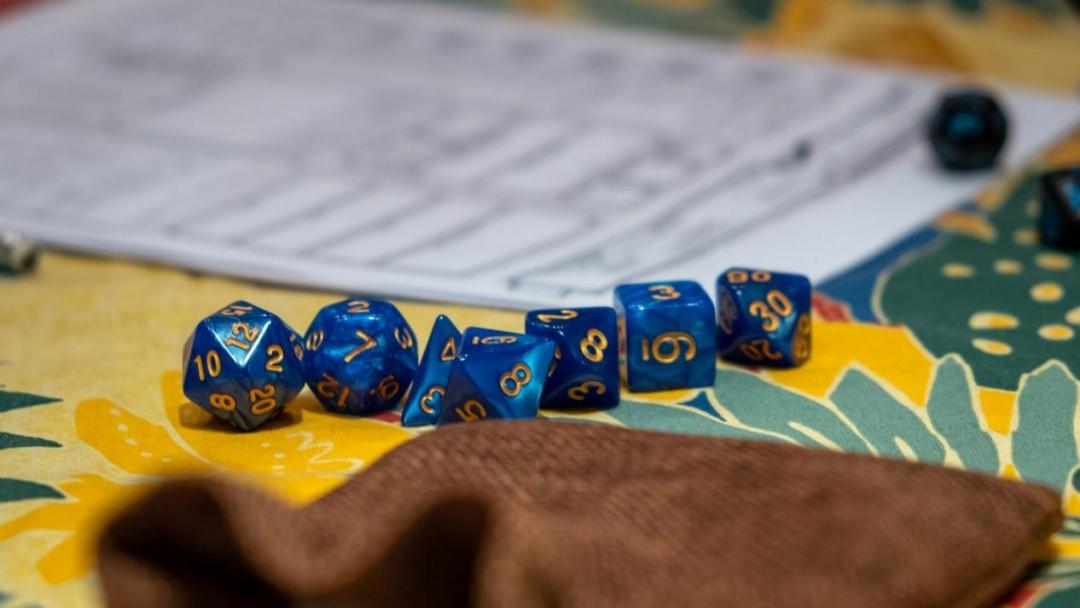
Board game RPG dice | Image source: Medium
The commonality in operations stems from the fact that RPGs, just like Monopoly, were originally board games before gradually expanding to PC and console platforms; and rolling dice to determine the next plot and enemy you encounter is exactly the most frequent operation in board game RPGs. Leveraging the huge board game player base in European and American markets, it lays a solid foundation for adopting the Monopoly format.
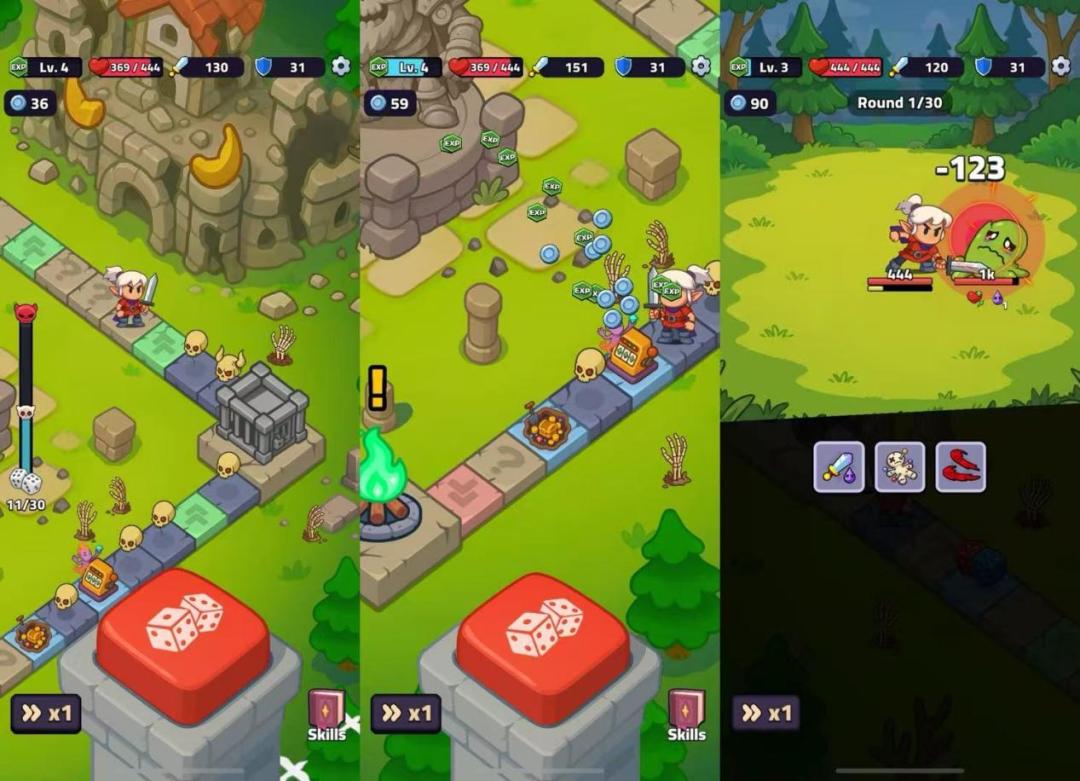
Dice rolling and battle interface of 「Rogue Legend」 | Image source: Rogue Legend
However, existing RPGs focus more on numerical values. The charm of Roguelike lies in introducing randomness through the 3-choice mechanism combined with the "no-rollback" design of the game to enhance its attractiveness. The dice rolling button is essentially equivalent to pulling the lever of a Slot machine, doubling the randomness. The smooth animation effects also bring a highly satisfying experience at the same time.
At the same time, "Rogue Legend", which is essentially a Roguelike game, is making every effort to shorten the interval between "rolling dice" and winning rewards, to strengthen the stimulation that social competition games can bring to players. This is specifically reflected in the accelerated battle segments in the game; the game adopts a 2D Q-version art style, and through the idle mechanism, players hardly need to perform extra operations, focusing on a simple and brisk experience. On this basis, the game is also equipped with a 2x speed-up function, and even has a 4x speed-up in-game purchase option.
Commercialization also focuses on social competition, amplifying revenue in a short period of time
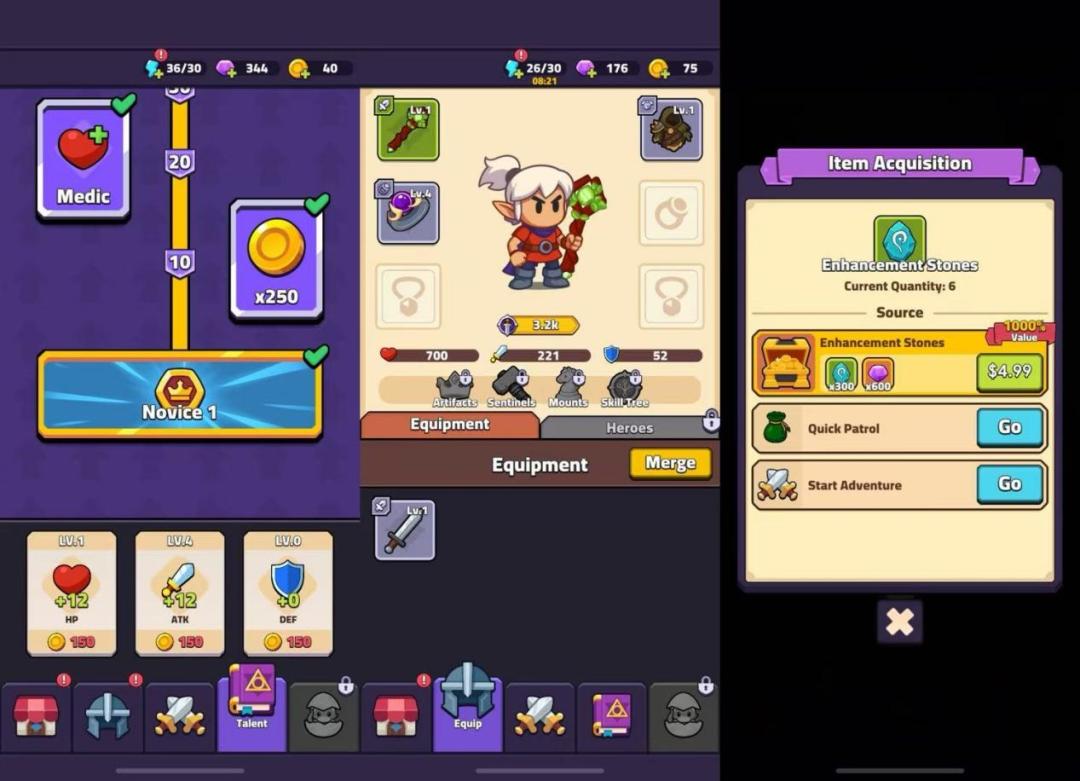
Main uses of in-game purchases in 「Rogue Legend」 | Image: Rogue Legend
The game provides one in-game purchase resource, "Gems", which are all used for Roguelike gameplay: one use is to replenish the stamina for playing Roguelike, and the other is to make permanent upgrades to the protagonist outside the Roguelike levels. Gems can not only be directly exchanged for stamina, but also for "Gold Coins" to upgrade initial attributes such as the character's health value. In addition, after each round of Roguelike game, equipment that can efficiently complete battles will drop, and upgrading and merging equipment also requires gems.
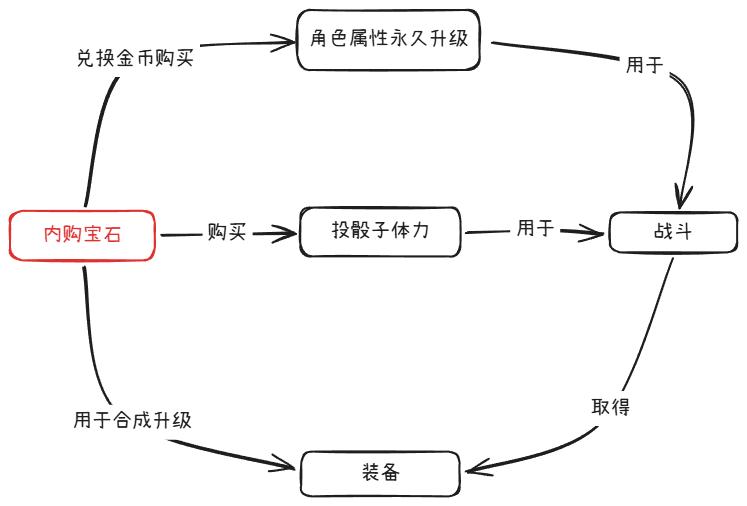
Main commercial design of 「Rogue Legends」 | Illustrated by Baijing Chuhai
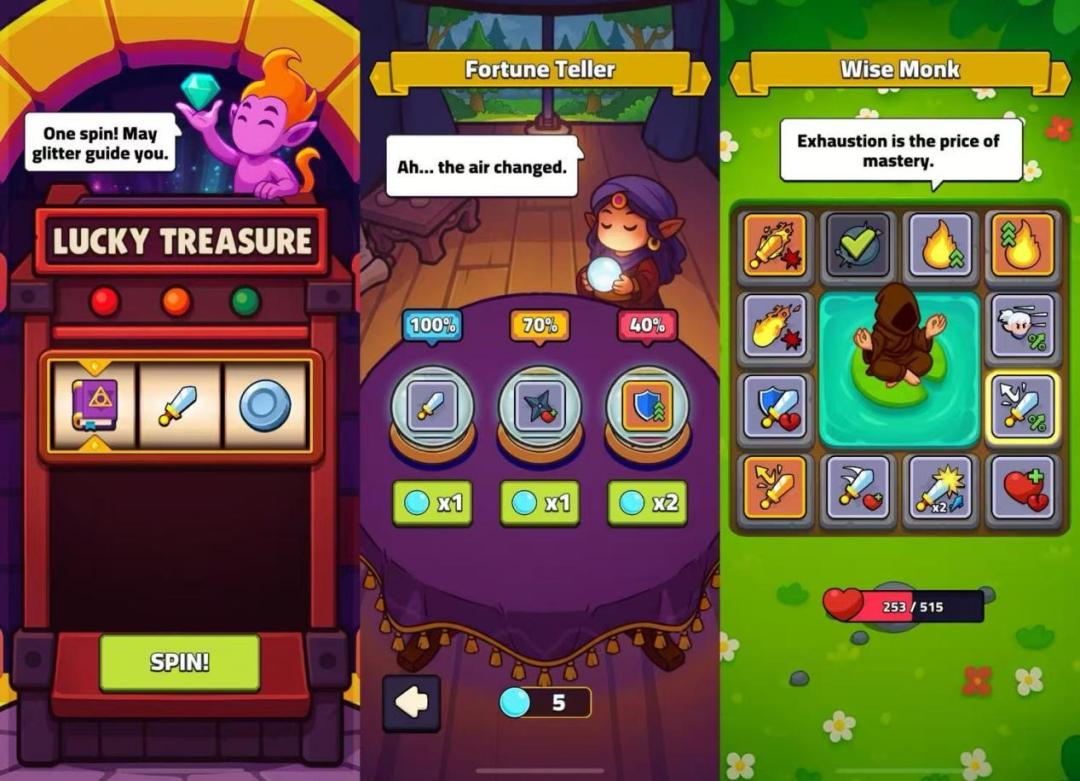
Each round of Roguelike game also adds multiple side gameplay including Slot | Image source: Rogue Legend
Beyond the basic IAP system, "Rogue Legend" is also amplifying the monetization space of social competition in its commercial design.
The game is filled with a large number of side gameplay such as lucky draws on the board, and there is even an exclusive store for the Roguelike mode. All these activities and content point to the same goal: to make players quickly consume their basic character attributes. For example, the lucky draw activity "The Wise Monk" can provide players with more Buffs, but the price of getting these Buffs is that players have to sacrifice their health value. To avoid being instantly killed by ordinary enemies due to insufficient health after getting the Buff, players can only spend money to buy gems to exchange for gold coins and upgrade their character's health value. There are many more similar activities on the Roguelike board, which still follow the core of social competition, motivating users' willingness to make in-game purchases through potential rewards with certain risks.
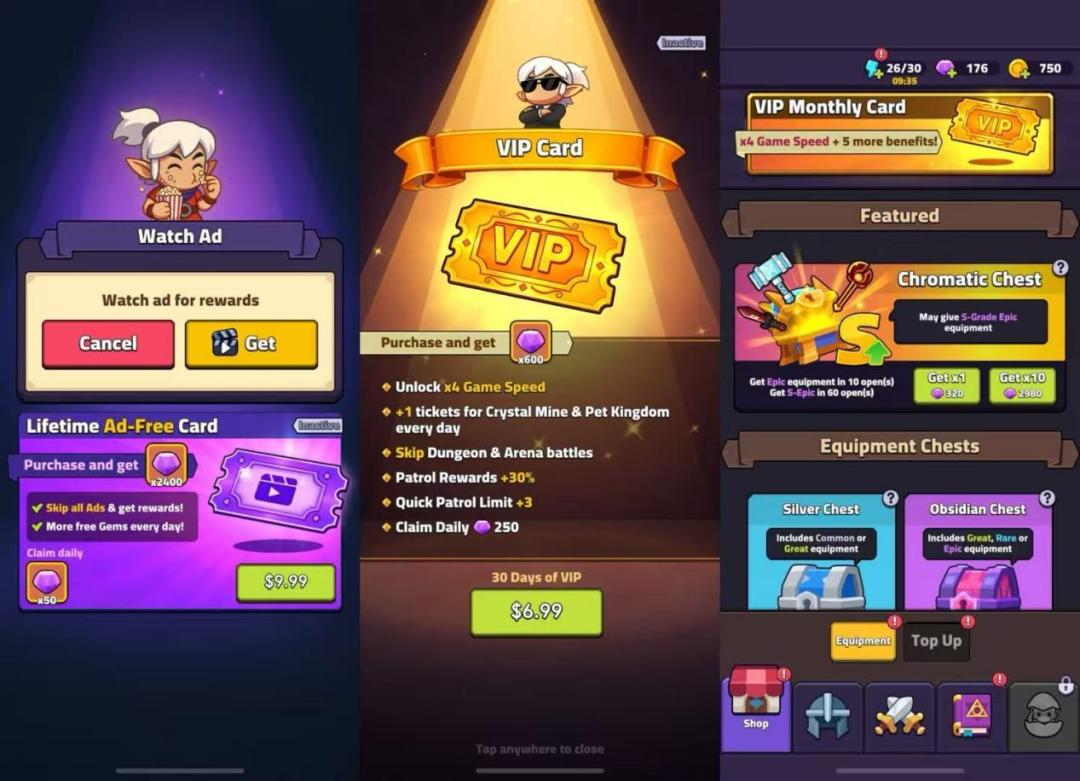
Many in-game purchases also come with subscription service packages that provide a certain amount of gems every day | Image source: Rogue Legend
In addition, "Rogue Legend" has its own unique design for in-game purchase packages, offering subscription packages similar to VIP monthly cards. These packages are usually deeply bound to the core experience pain points of the game. For example, the monthly card not only provides a certain amount of gems every day, but also directly unlocks the aforementioned "4x game speed" function that greatly enhances the sense of satisfaction, and also comes with privileges such as higher stamina cap.
For casual users who are not willing to make heavy in-game purchases, the game also provides a "Lifetime Ad-Free Card" priced at 9.99 US dollars. After purchasing it, players can permanently skip the incentive ad links in in-game purchases, and directly get free gems and daily rewards. On the basis of light monetization, it also locks in a group of casual users, leaving room for further commercial exploration in the future.
Final Notes
From the active testing of the social competition track by domestic large manufacturers such as Lilith, to the sudden rise of Israeli small studio PocketHaven with "Rogue Legend", the influence brought by the success of "MONOPOLY GO" is getting bigger and bigger.
The popularity of "Rogue Legend" provides the industry with a brand new idea: the charm of the board and dice in social competition is not limited to the "MONOPOLY GO"-style highly social "aggressive dismantling" gameplay. Combining it with RPG gameplay which is also derived from board games can also create wonderful results, returning to the origin of gameplay, and letting the dice rolling action run through both gameplay modes.
This article is from the WeChat Official Account "Baijing Chuhai" (ID: baijingapp), written by Editor of Baijing Chuhai, authorized for release by 36Kr.