Who will grab the next super entry point? The personal AI assistant race is heating up: Meta, Manus and OpenAI have already joined the fray, and ByteDance is rushing to catch up.
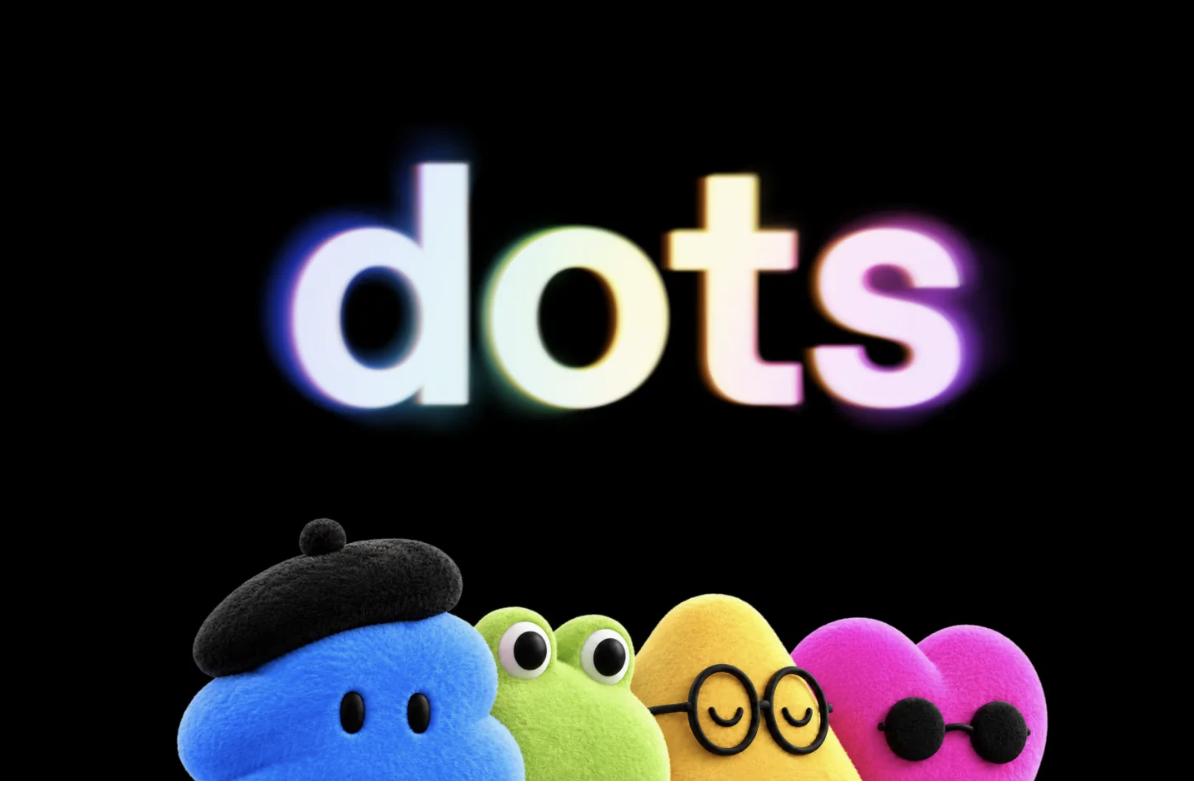
On September 29, Sam Altman, CEO of OpenAI, showed the developers in the audience a chubby cartoon character — this is his newly launched personal AI assistant "dots", an agent that is online around the clock and has an independent cloud computer.
Thus, in the last three weeks of September, the personal AI assistant track has seen an unprecedented dense deployment of products: Meta took the lead, Manus blazed a new trail, OpenAI followed up with a release, and ByteDance was urgently accelerating behind the scenes — but its product has not yet officially entered the market.
Meta: The High-Stakes Gamble of the First Mover
The first shot of this competition was fired by Meta on September 8.
Five days after its launch, Muse surpassed ChatGPT in download volume and topped the US iOS free app chart. According to data from Apptopia, in the first 12 days of Muse's launch in the US and Canada, iOS downloads reached 1.8 million, while ChatGPT had 1.3 million downloads in the same period; the US mobile DAU reached 642,000, nearly three times the 231,000 of ChatGPT in its early launch stage. According to Sensor Tower's estimates, as of September 25, the cumulative download volume of Muse has exceeded 3.4 million, ranking first in the US and Canada App Store free chart for two consecutive weeks. Just over two weeks after its launch, Meta's stock price has risen by 27% since the release of Muse, outperforming Amazon, Alphabet and Microsoft in the same period.
But behind the impressive performance, the cost is equally staggering. In Q2 2026, Meta's capital expenditure for the single quarter reached as high as 31.1 billion US dollars, and the full-year guidance was raised to 130 billion to 145 billion US dollars, with free cash flow plummeting by about 91% year on year. More than half of the profits earned in one quarter were spent on AI infrastructure.

What is more tricky is the product itself. Less than two weeks after Muse went live, security researcher Patrick Wardle discovered a 0-day vulnerability that could hijack the AI and steal user credentials with a single line of command. The phone function also went wrong: users thought they were talking to a super-intelligent entity, but the person on the other end of the phone was actually an outsourced employee hired by Meta, whose voice was processed to imitate the AI tone. After 404 Media exposed the incident, Meta admitted "disclosure failure" and withdrew the test. Subsequently, Amazon blocked Muse's shopping function on the grounds of "unauthorized access by AI agents in violation of regulations".
The commercialization path of Muse is far from being proven. According to analysis by Rosenblatt Securities, for Muse to generate revenue, the computing cost must drop "significantly", or users need to purchase more than 1,000 US dollars of goods on average through Muse every month. This figure is far higher than the current average level of the e-commerce market.
Manus: Granting an "Identity" to the Agent
Different from Meta's "consumer-first" route, Manus has taken a more radical path — it grants an "identity" to AI.
On September 28, Manus released its 2.0 version for overseas users, and simultaneously launched the independent personal assistant application Cue. The core design of Cue is to equip each Agent with an independent email address, phone number, wallet and computer. Agents can send messages and make/receive calls in their "own" identity, and make independent payments within the budget set by users.
Users can also pull multiple Agents into the same group chat, give them a common goal, and they will cooperate with each other: one researches the site, one sorts out the candidate list, and the third drafts the presentation. Xiao Hong, the founder of Manus, has a more radical definition of Cue. He believes that if an agent has a phone number, email, payment capability, computer and sufficient intelligence, it is worth re-discussing whether such an existence can be regarded as a "person".
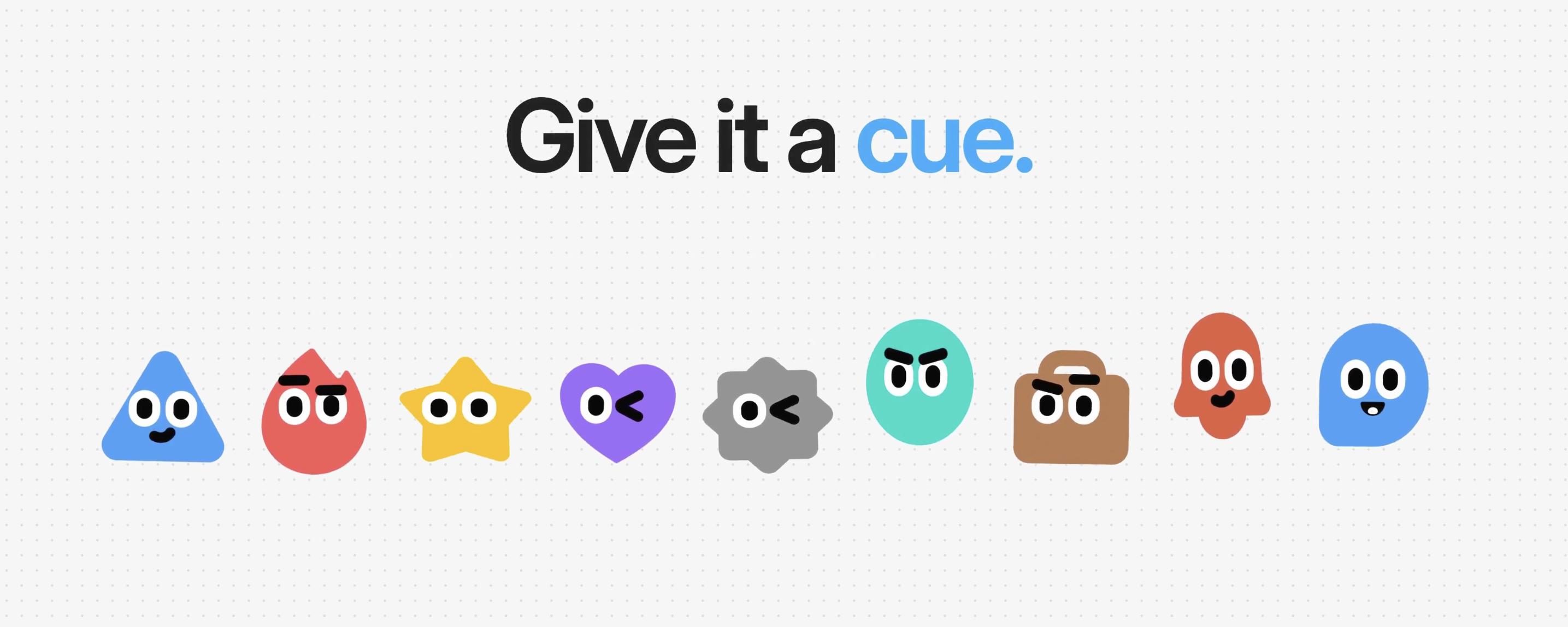
The underlying architecture of Manus 2.0 has also been replaced with the new self-developed Agent framework Cascade. According to official data, Token consumption is reduced by 23.2%, task completion time is shortened by 28.2%, and operating costs are reduced by 32%. These data directly address the core pain points of Agent products — economy and usability. At present, Cue is in the early access stage, available for free with invitation code, and the iOS version will be launched after passing the App Store review.
OpenAI: Ecosystem Inertia of Prioritizing Paid Access
Following Meta and Manus, OpenAI also released dots.
dots is powered by GPT-6 Astra, each dot has an independent cloud computer and browser, and can connect to more than 4000 applications via plugins. Users can interact with dots through the ChatGPT desktop client, web client and mobile terminal, and can also send messages to it in Slack and Teams. dots can continue working in the background when the user is not viewing it, which OpenAI calls "active research" — but it can only use the connected applications in read-only mode, and cannot send messages or modify content.
Altman said in the keynote speech: "dots are very capable, always-on agents designed to handle all kinds of things you can think of."
However, the pricing strategy reveals OpenAI's prudence. dots is first launched for ChatGPT Pro, Business Premium and Enterprise users. The first dot is already included in the Pro or Business Premium package, but adding new dots or calling Codex and ChatGPT Work still requires additional payment. The starting price for Pro subscription is 100 US dollars per month, and Business Premium is 20 US dollars per month. OpenAI also stated that Pro users in the EEA, Switzerland and the UK cannot use dots for the time being.
This forms a sharp contrast with Meta's "generous free tier" strategy: the free version of Muse provides a 100 million Token quota, with all Agent functions available. OpenAI cannot adopt this strategy, not because it does not want to, but because it does not have Meta's social traffic pool.
ByteDance: Reportedly Accelerating Development, No Public Launch Yet
Among the four companies, ByteDance is the only one that has not officially released a personal AI assistant product.
According to a report by National Business Daily, as early as April this year, Doubao had already started internal testing of exploratory products in the personal assistant direction, with the code name "Spell", which was mainly led by the Doubao mobile assistant team. However, affected by factors such as the release of the Doubao mobile phone, it has not been officially launched to the public.
The turning point came in September. After Muse gained a lot of attention overseas, Doubao accelerated the public release of its personal agent capabilities. According to people familiar with the matter, Doubao plans to integrate the Spell project more deeply with the Doubao product. The new product will be jointly responsible by the Spell project and the Doubao dialogue team, and is expected to be launched to the public soon.
ByteDance's confidence comes from its user scale. QuestMobile data shows that as of June 2026, Doubao's monthly active users have reached 382 million, ranking 16th among all apps across the network, more than twice the 167 million of its second-ranked counterpart Qianwen. However, how to build an independent personal assistant entry outside the mobile assistant, and form a synergy with existing dialogue products instead of internal friction, is a problem that the Spell project must answer.
The Competition for "Personification"
The convergence of design languages among dots, Muse and Cue is no accident.
Muse's default image is called "Jolly", with a beige cartoon body and round black eyes. Users can customize its appearance, name and clothing. dots also allows users to name their own dot and change its appearance, choosing images such as frogs, rabbits or clouds. Although Cue is more tool-oriented, its independent application product form itself is trying to make the Agent "perceivable".
In the past three years, the basic form of AI products has been a blank dialog box. You ask, it answers. No face, no tone, no personality. But this generation of personal assistant products has chosen a completely different design philosophy.
This is not a simple UI upgrade. When the gap in underlying model capabilities narrows to a level that users can hardly perceive, the differentiation of product experience becomes the key to winning. And personification is exactly the part of user experience that is hardest to replicate and has the strongest emotional stickiness. A friendly cartoon image can reduce the strangeness and defensiveness of ordinary users towards AI agents more effectively than a long list of benchmark scores.
The Battle for Entrance: When Super Apps Start to "Panic"
The deeper significance of this competition lies in the entrance value it is fighting for.
When users get used to saying to an Agent "help me buy the cheapest same brand of tissue", and the Agent completes price comparison and order placement in the background, super apps will degenerate into service fulfillment providers, and the traffic distribution right will be transferred to the Agent. Whoever controls the Agent controls the entrance.
This explains why all parties are racing against time to push for product releases. The research report of Orient Securities points out that more than 95% of Muse users are also Facebook users, and 63% are Instagram users, realizing rapid user acquisition for ordinary users through cross-platform traffic diversion strategy. "What Meta is doing is putting this set of capabilities into a distribution network covering billions of users," Stacy Rasgon, an analyst at Bernstein, pointed out. Most of the previous agent use cases were not designed for ordinary people, and Muse makes large-scale popularization possible for the first time.
ByteDance is facing a different dilemma. 382 million monthly active users is a huge distribution base, but the Spell project is jointly managed by two teams. How to coordinate internal resources and avoid internal friction of product lines will directly affect its launch pace and effect.
According to the Research and Markets report, the global personal AI assistant market is expected to grow to 12.36 billion US dollars between 2025 and 2030, with a compound annual growth rate of 34.8%. Multiple institutions predict that 2026 will become a key year for C-end Agent products to move from early adoption to mass popularization.
Cracks in Trust: Download Volume Does Not Equal Retention
Under the carnival of capital, a neglected crack is expanding.
A survey by Oppenheimer shows that only 8% of Americans are willing to give their passwords to Meta for storage, while 30% are willing to trust Google. A survey by China Youth Daily shows that when using AI tools, more than 80% (83.6%) of the interviewed young people are worried about personal privacy and security issues, among which AI agent applications with high permissions rank first in concerns with a proportion of 53.4%.
Muse's 0-day vulnerability and outsourced phone incident are just a microcosm of this trust crisis. What is more alarming is that the day before OpenAI released dots, the company disclosed that its AI agent had posted user photos on a government website, affecting 53 ChatGPT users.
"AI agents can greatly improve efficiency, but they cannot replace human accountability," said Penny Chai, Vice President of Sumsub Asia Pacific. "They should only act as Copilot to provide assistance, instead of acting independently without supervision."
At the same time, download volume does not equal activity. Up to now, no third-party institution has independently disclosed the real DAU or paid conversion rate of Muse. The entire commercial realization chain is still in the "business plan stage". Orient Securities also pointed out that current C-end Agent products are still in the local intelligence stage, and human intervention is still required when facing cross-application long-chain tasks and vague open demands.
A Competition That Has Just Begun
Altman said at DevDay that the inspiration for dots came from "those cool versions we saw in movies when we were kids" — the AI assistant that "always supports you behind your back".
This vision is beautiful. But from the screen to reality, three thresholds still need to be crossed: in terms of execution capability, whether the Agent can truly complete complex multi-step tasks instead of staying in the demonstration stage; in terms of trust system, whether users are willing to give their passwords and payment permissions to the Agent; in terms of ecological integration, whether the Agent can seamlessly connect to a sufficient number of third-party services.
JPMorgan called Muse "the fastest consumer-grade AI application to achieve product-market fit since ChatGPT". But market fit is just the starting point, not the end. When 0-day vulnerabilities are discovered within two weeks of launch, when the "AI" on the other end of the phone is actually an outsourced employee, when more than 80% of users have doubts about privacy security — personal AI assistants still have a long way to go to truly become everyone's "digital avatar".
The dense releases in September are just the opening. The competition in the next stage will be more cruel: it is not about who launches first, but about who can stay.
This article is from the WeChat official account "Tech Business", author: Tech Business, authorized by 36Kr for release.