After Wang Chuqin suffered a defeat at the Asian Games, he quickly launched the warm-up for new commercial collaborations. What exactly are the brands paying for?
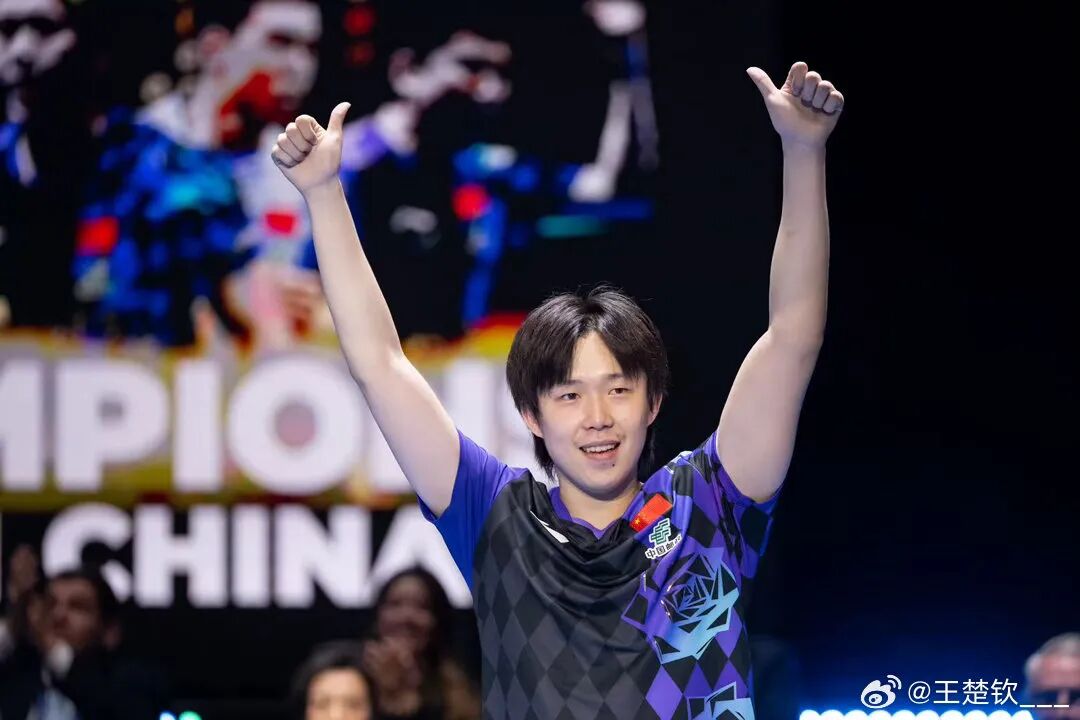
After winning silver in the men's team, mixed doubles and men's singles events, Wang Chuqin stood in the mixed interview zone after the match and said softly: I can't find my feeling of playing table tennis anymore.
Social media was in an uproar, with sarcasm, disappointment and conspiracy theories emerging one after another.
However, on the night after the men's singles final, Peacebird Men, Wang Chuqin's new business partner, officially announced the pre-launch of the cooperation. The official line "Every grip is a starting point for the next journey. Every moment accumulates the strength to move forward" was regarded as proof of support for Wang Chuqin.
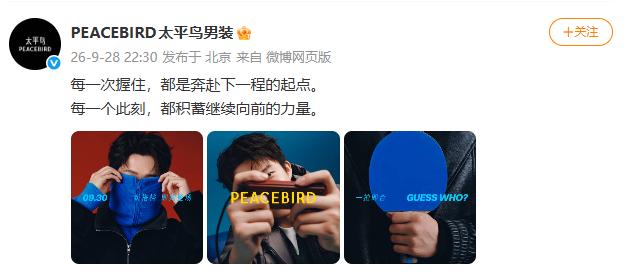
By choosing an athlete who is at the center of public controversy, what exactly is Peacebird buying?
What Brands Buy Is Not Victory, But Stability
When brands select brand ambassadors, it has always been a calculation problem, but the calculation formula has been quietly changed.
Wang Chuqin's current commercial portfolio is top-tier in the sports industry. As the ambassador for four luxury brands including LV, Mercedes-Benz, Qeelin Jewelry and Atelier Cologne, he has become the first athlete in mainland China to cover the four top luxury sectors of ready-to-wear, jewelry, luxury cars and fragrance. At the same time, mass market brands such as Safeguard, McDonald's, Snickers and JBL are also in his endorsement matrix.
According to statistics from SocialBeta, as of April 2025, Wang Chuqin held 12 endorsement deals, with an estimated annual income exceeding 50 million yuan.
In the first half of 2026, the number of endorsements further expanded to 15. Even after his disappointing performance at the Asian Games, he still secured a commercial cooperation with domestic apparel brand Peacebird.
It is obvious that the correlation between Wang Chuqin's commercial value curve and his competitive performance curve is getting weaker and weaker.
This is precisely the logical starting point for Peacebird to choose to enter the market at this time. The brand is not betting on whether an athlete will win the next match, but confirming whether an IP will still be on the hot search list next week.
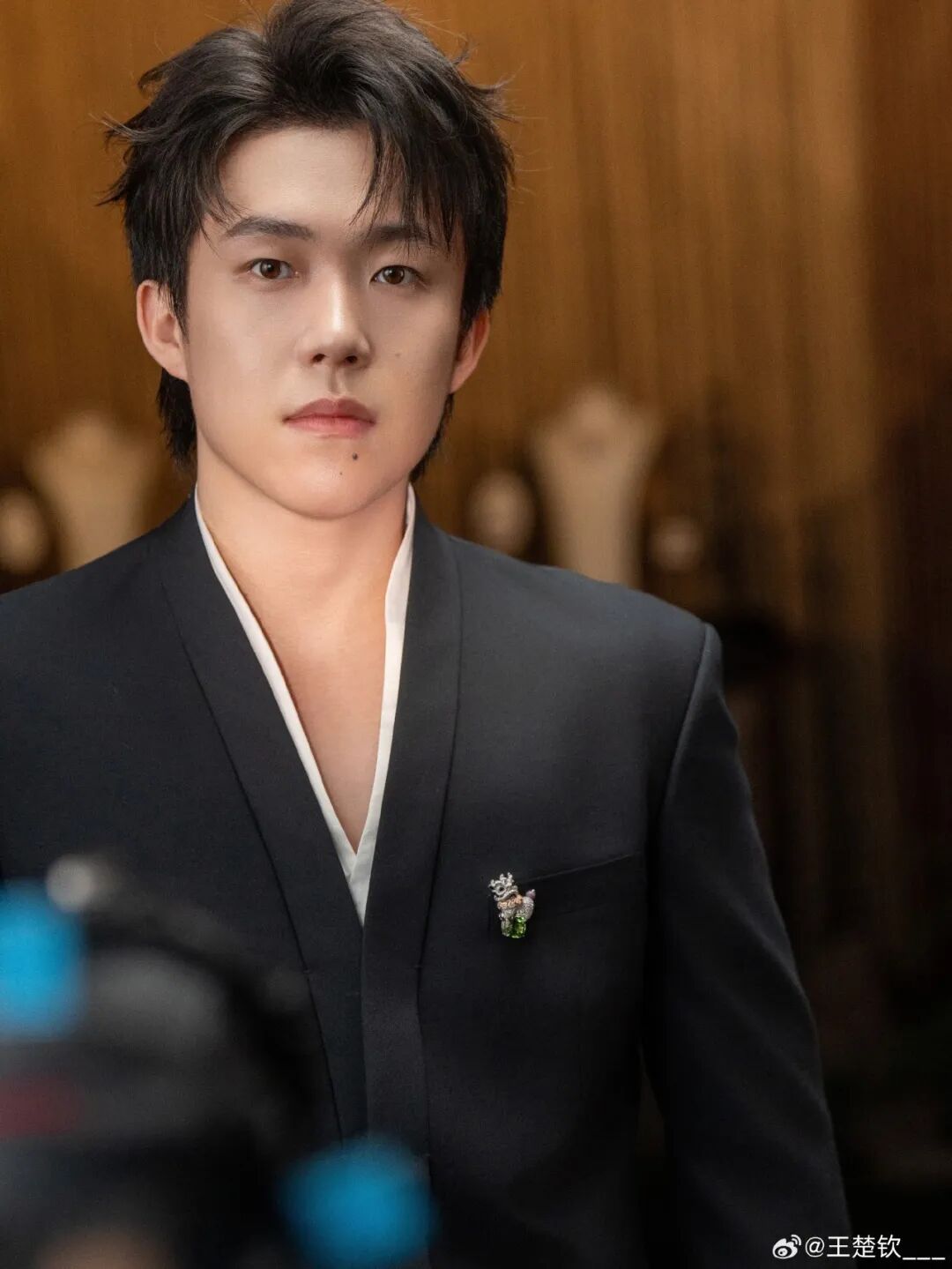
Wang Chuqin had an extremely high competition density in 2025, with 17 tournaments and 129 matches, including 49 matches in the fourth quarter alone, almost one match every three days. His commercial value never depends on the outcome of a single match, but on the fact that he is always on the court. What brands buy is not victory or defeat, but appearance rate.
This logical shift is not a unique case for Wang Chuqin, but a migration of the entire industry's cooperation framework.
2025 is a non-Olympic year. According to the traditional iron law of sports marketing, this should have been a year for brands to lie low collectively.
However, the actual situation is the opposite. The brand cooperation logic has shifted from event node orientation to long-term value mining. The commercial endorsements of core athletes of the Chinese national table tennis team have exploded. Brands have begun to break out of the "Olympic-only" cooperation framework and focus on the long-term value development of athletes. The fit between athletes' personal traits and brand concepts has outweighed the weight of short-term event performance.
Gold medals are of course still a plus, but they are no longer a ticket to the game. Brands are not afraid of athletes losing, they are afraid of athletes having no topics. The commercial pricing power of athletes is shifting from competitive results to traffic certainty.
Fandomization Makes Sports IP "Event-Detached"
So the question arises, where does Wang Chuqin's traffic come from?
If the answer is only "a core member of the Chinese national table tennis team", it cannot explain why Wang Chuqin, who won no gold medals at the Nagoya Asian Games, has more hot searches than the champions.
The answer points to a more fundamental change: his fan ecosystem has long been highly fandomized, and this fandomization is liberating sports IP from the event cycle.
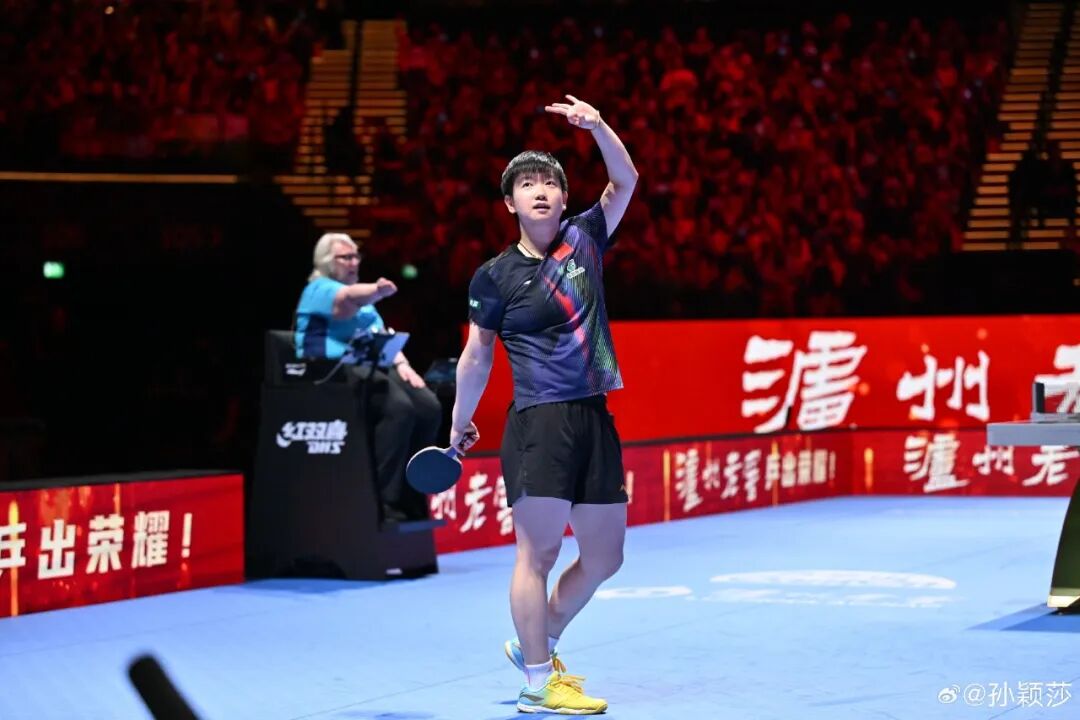
According to the *2025 Weibo Hot Search Trend Report* released by Weibo, Wang Chuqin ranked first among the top 10 most searched athletes with 2653 annual hot search entries. Table tennis has undoubtedly become the hottest sport of the year, with Wang Chuqin, Sun Yingsha and Fan Zhendong taking the top three spots in athlete popularity.
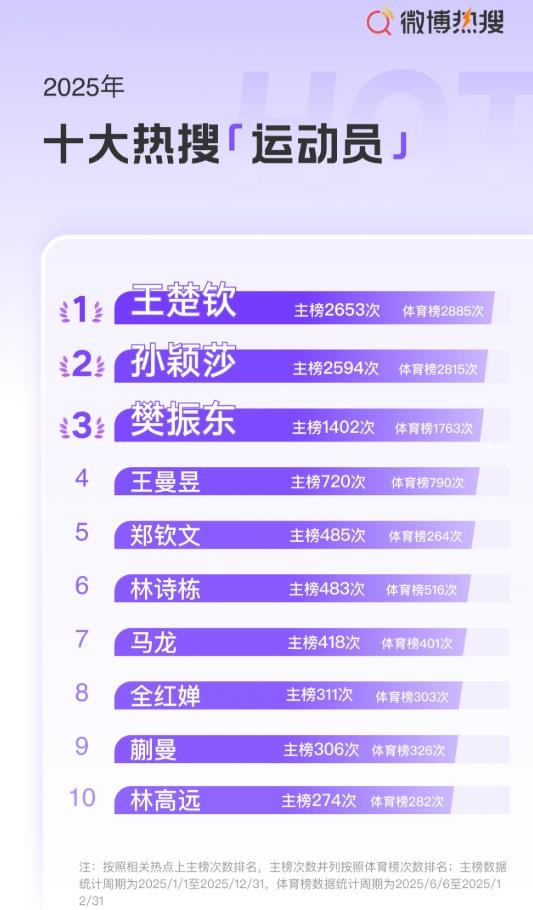
During the Asian Games, some netizens observed that 20 of the top 60 hot search entries directly featured his name, while the number of hot searches for champion Lin Shidong was only one third of his. The attention lost on the field has been made up for in another way off the field.
This ability to make up for lost attention comes from the high level of organization of his fan group. Wang Chuqin's fan group is highly organized. His Weibo followers are huge, and the interaction volume of his daily posts often reaches millions. His fans also have extremely strong consumption conversion ability: 51,100 sets of limited-edition kits launched by Safeguard in collaboration with the spokesperson sold out in 13 minutes, Atelier Cologne fragrance pendants were sold out instantly, Snickers co-branded gift boxes were cleared in 15 minutes, and Oakley same-style glasses were sold out in 10 minutes. This conversion efficiency is close to or even higher than that of top entertainment stars.
Interestingly, the athlete himself is actually wary of fandomization.
In July 2025, Wang Chuqin clearly stated in an exclusive interview with People's Daily: "I hope everyone can be sports fans instead of star fans, watch our playing videos and feel the sports spirit. That is the greatest respect and support for athletes."
On the eve of his birthday in May 2026, he even publicly posted a statement to resist all forms of birthday support activities. The General Administration of Sport of China also followed up to state that it does not encourage or support celebrating athletes' birthdays through outdoor billboard placement in shopping malls, fan gatherings and other forms.
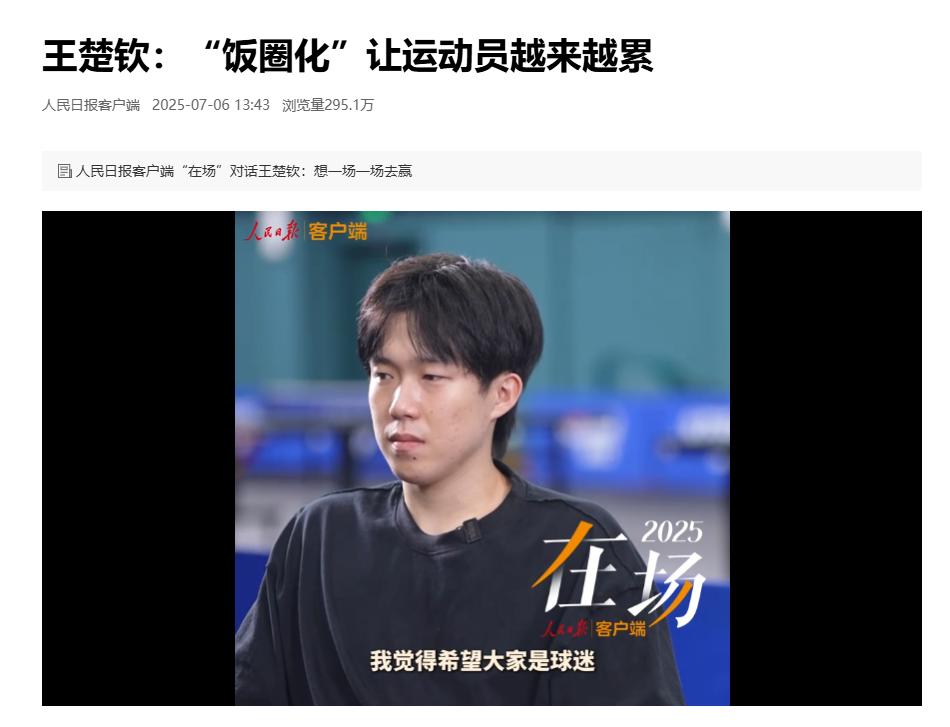
Athletes want to get rid of fandomization, but what brands want is exactly the traffic conversion power brought by fandomization. This tension itself is the most authentic portrayal of current sports business.
Therefore, in fact, current brands no longer fully bet on the event cycle, but on the personality cycle.
Wang Chuqin became a LV brand ambassador in 2025, and later successively secured endorsement contracts with Qeelin Jewelry and Mercedes-Benz. These cooperations value far more than his performance on the field. Labels such as youthful vibe, laid-back temperament and fashion plasticity are established off the field, and remain valid even after he loses a match. As long as his public persona does not collapse, his commercial value will remain stable.
Data from EntGroup provides industry-level evidence: the number of sports endorsements in non-Olympic years decreased by 31% year-on-year, but the number of brands endorsing top sports stars increased by 100% year-on-year. The social media interaction volume of top sports stars such as Sun Yingsha and Wang Chuqin exceeds 10 million. Brands are cutting their lists, but the way they do that is to concentrate resources on a small number of "most certain" individuals. This is not the ebb of sports marketing, but the oligopolization of sports marketing.
Shifting from leveraging events to operating personal personas, the logic of sports marketing has changed, and Wang Chuqin is the most representative sample in this transformation.
Opportunities Go Hand in Hand with Hidden Risks
Looking at a broader perspective, the story between Wang Chuqin and Peacebird is just a slice of a larger narrative.
In 2025, the total size of China's sports industry exceeded 5.12 trillion yuan. In the sub-track of athlete commercial endorsement, non-sports industry brands are pouring in at a speed far exceeding the industry average. What exactly are these brands buying when they enter the sports track?
In fact, what brands need is not the abstract concept of sports spirit, but the public opinion security brought by the in-system management of athletes. Entertainment stars frequently have public scandals, while athletes are at least constrained by the system, with low error probability and low trust cost. In the current era when consumer brands are generally facing a trust deficit, the public credibility of athletes has become a scarce resource.
However, risks also exist. Brands use the model for signing entertainment stars to sign athletes, but the underlying operating logic of the two groups is completely different.
The traffic of entertainment stars is inherently personality-driven, fans pay for the persona, and the persona is the product. In the past, the traffic of athletes was performance-driven, but now brands operate athletes as entertainment stars, enjoying the personality-driven traffic dividend while ignoring that athletes have far less public exposure space than entertainment stars.
Entertainment stars can continuously supply persona materials through works, variety shows and daily vlogs, while athletes' material pool only includes competitions and extremely limited off-field exposures. Once they lose a match, the competition material supply is cut off, and the persona supply will fall into a gap period, while fandomized fans are exactly the group of people who are the most impatient.
What is more tricky is that there is an inherent contradiction between the in-system security of athletes and fandomized operation.
The in-system management logic is convergent, restrained and de-personalized, while fandomized operation requires continuous exposure, emotional interaction and constant topic creation. Wang Chuqin himself publicly posted to resist birthday support activities and called for "being sports fans instead of star fans", which itself shows that athletes have felt this kind of contradiction.
Brands want the traffic conversion power of fandomization, while athletes want the peace of being free from fandomization. When the demands of the two sides go in opposite directions, the stability of the cooperation relationship is built on a very subtle basis. Athletes who are highly dependent on fandom operations enjoy the traffic dividend, but also bear the risk of backfire from traffic.
Fandom is an amplifier that amplifies both advantages and disadvantages. When the public persona is coerced by fans' emotions, brands become beneficiaries sitting on a powder keg.
Sports IP is being "consumerized", brands sign athletes with the logic of signing consumer goods, and consumers support athletes with the logic of purchasing individual products.
Peacebird achieved a revenue of 6.334 billion yuan in 2025, down 6.88% year-on-year, and its attributable net profit was 174 million yuan, down 32.57% year-on-year, with revenue declining for four consecutive years. Under such a background, betting on an athlete IP with inherent traffic certainty is both an offensive and defensive move.
Brands are not buying a champion, but the duration of a public persona, and persona is the hardest yet the most fragile asset in this era.
This article is from the WeChat official account "Mou Yu", author: Mou Yu, authorized for release by 36Kr.