U.S. lawmakers are attempting to permanently ban Chinese vehicles, "otherwise 1.9 million units would be sold every year"
No ban can ever do more than shut the door, it can never truly block the path. Once Chinese vehicles flood into the US market, can you guess which existing models will suffer the most? Hint: Model Y and Camry.
The US auto industry is doing something it barely believes it can pull off: using a single piece of legislation to block Chinese vehicles from entering the country forever.
In early September, John Bozzella, CEO of the Alliance for Automotive Innovation that represents Detroit's traditional forces, sent a letter to members of Congress, urging a "permanent ban" on Chinese vehicles entering the US market.
From legislation to administration, from tariffs to technology blockades, the US is weaving an unprecedented containment net.
But while Washington is gearing up for confrontation, MarketCheck released a forecast that makes Detroit even more uneasy: If Chinese vehicles enter the US without restrictions, annual sales will reach 1.9 million units within five years, taking up roughly 14% of the market share.
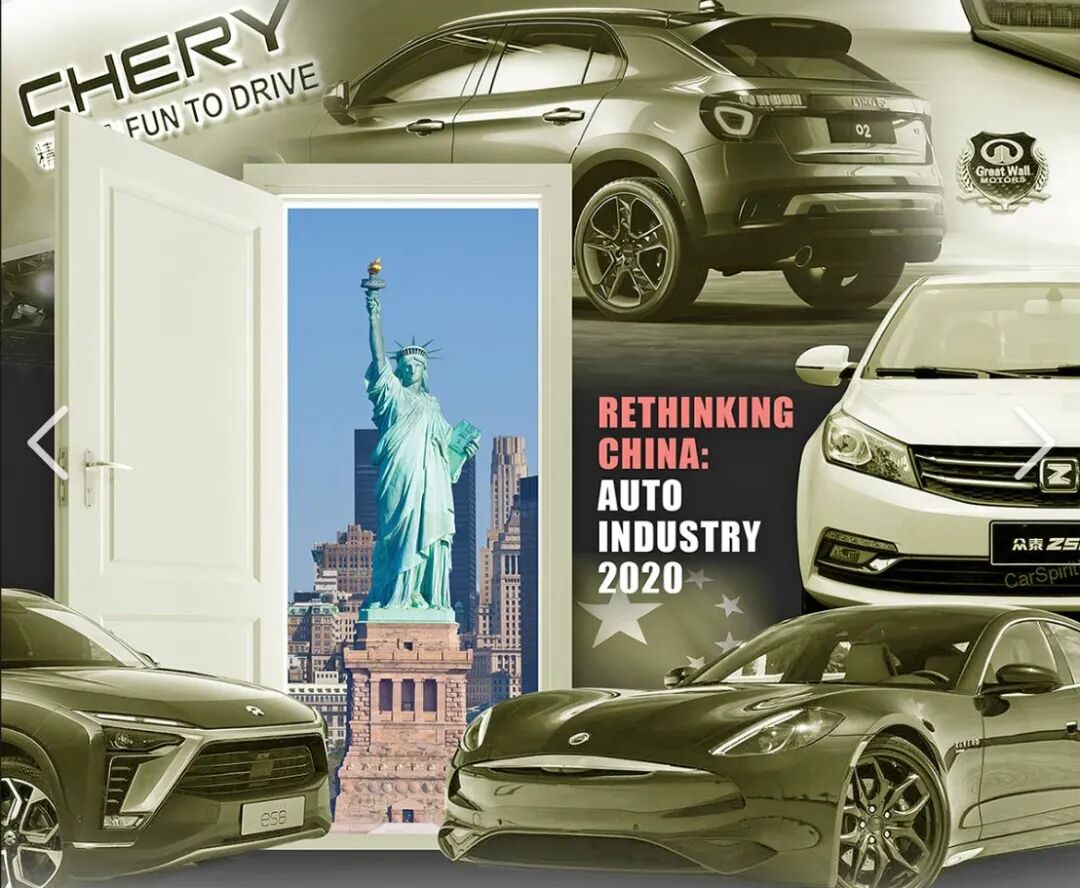
This figure exceeds the retail share that Korean brands took nearly 40 years of hard work to achieve in the US. More ironically, this forecast is not based on unfounded speculation, but on data from the UK and Canada, two markets that have already opened up to Chinese vehicles.
In the UK market, Chinese brands started with a share of less than 1%, and approached 14% within four years. This year, Canada changed the 100% surtax to a 6.1% tariff plus a quota, but analysis shows that demand will soon far outstrip the quota.
Thus, a sharp contradiction emerges: the harder the US cracks down, the more it shows its fear; the greater its fear, the more it proves that the impact of Chinese vehicles is real.
Crackdown or breakout, which will come first? How long can the door to the US market stay closed? If it cannot be shut tight, who will suffer the most?
The attempt to permanently ban Chinese vehicles
John Bozzella has clamored for a "permanent ban on Chinese vehicles entering the US market", what is the current progress?
The Senate version of the *Connected Vehicle Safety Act* already has 51 co-sponsors, and the House version has more than 100. The Biden administration has implemented regulations in early 2025 that effectively ban connected vehicle technologies linked to China from being used in US passenger cars. Washington also maintains tariffs of over 100% on Chinese electric vehicles.
On September 24, Republican Senator Bernie Moreno and Democratic Senator Elissa Slotkin originally planned to use the "unanimous consent" procedure to push the bill through quickly, but postponed the procedural vote temporarily.
The reason is simple: Republican Senator Rand Paul stood in the way all by himself.
Under the Senate's "unanimous consent" procedure, any single senator can block the advancement of a bill. Slotkin said all Democrats support moving the bill forward, and only one Republican opposes it. "As I understand it, it's 99 to 1." But that single vote temporarily stalled the fast track for the bill.
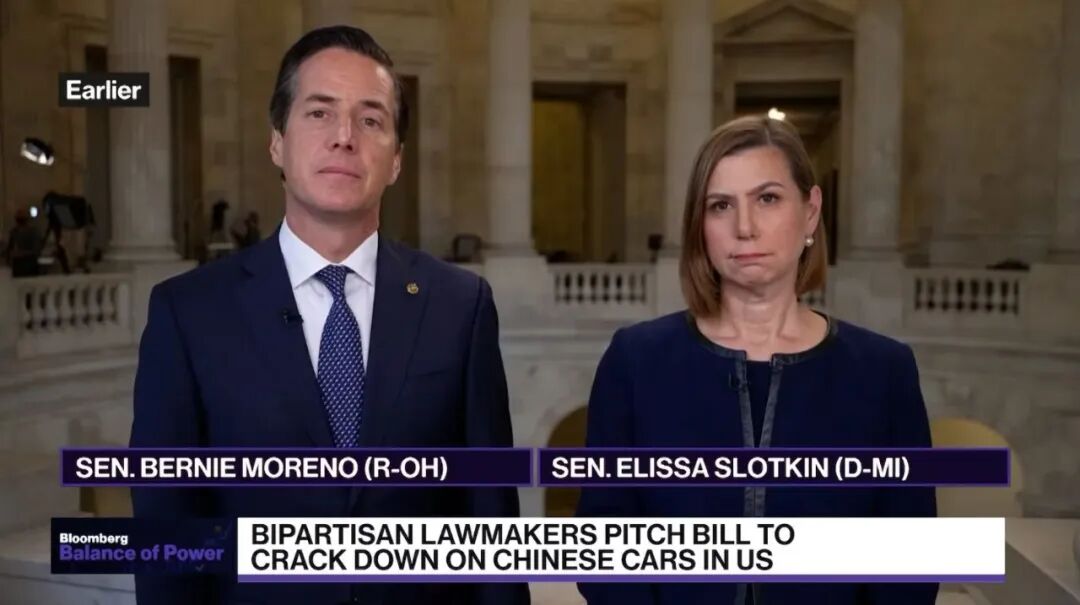
Moreno said he hopes the bill will be approved next week, and push the House to pass the same legislation after it reconvenes in November. The problem is that time is not on their side.
What makes automakers more nervous is Trump's attitude. Earlier this month, Trump told Fox News that he would accept Chinese automakers building vehicles in the US. This remark raised alarms in Detroit.
Last week, automakers, suppliers and dealers jointly urged Trump to "uphold the policy, keep the door firmly closed to Chinese automakers, and prevent them from selling, importing or manufacturing vehicles in the US".
Slotkin's remarks were even more fierce: "I think if President Trump allows these Chinese companies to enter, that will be the beginning of the end of the US auto industry." Hailing from Michigan, she is clearly feeling the pressure from her constituency and the industry.
The coverage of the bill is also expanding. Senator Ted Cruz proposed that the bill would ban companies with more than 15% of their shares held by Chinese entities from selling vehicles in the US. This threshold may affect Mercedes-Benz — Chinese investors hold nearly 20% of its shares.
Moreno said Mercedes-Benz will have a compliance deadline of 2030, and can still get an exemption if needed. Slotkin said discussions on how Mercedes-Benz can comply are underway. This means that the permanent ban is not only targeting Chinese brands, but may also reshape the equity and compliance structure of global automakers.
The bill, which has 51 supporters in the Senate, will make the ban permanent and prevent the White House from issuing exemptions to Chinese manufacturers to sell vehicles in the US. Judging from the current situation, the US is only a few steps away from permanently cracking down on Chinese vehicles.
But these steps are not easy to take. China has strongly opposed this. When Trump met Xi Jinping, trade issues are naturally one of the core topics.
Moreno said China produces nearly four times as many vehicles as the US, and Congress needs to ensure that hundreds of thousands of US auto jobs are not at risk of being "completely dominated" by Chinese auto companies. This sounds like industrial protection, but behind it is naked fear.
1.9 million annual sales of Chinese vehicles in the US?
Fear does not come out of nowhere. To understand what will happen if Chinese vehicles enter the US, the UK is the best reference.
According to vehicle registration statistics from the UK Department for Transport, in 2021, the combined market share of five Chinese brands in the UK was only 0.97%. By 2024, this figure rose steadily to 2.94%.
The real breakout happened in 2025: 14 Chinese brands led by MG, BYD, Jaecoo and Omoda tripled their sales, taking a 9.29% market share in one go. In 2026, they are expected to occupy a share of nearly 14%.
From less than 1% to nearly 10%, Chinese brands only took four years.
The sales director of Geely UK told *Car Dealer* magazine in August that he expects Chinese brands to take half of the UK market soon. This sounds exaggerated, but looking at the speed of development, no one dares to easily dismiss it.
Canada is another test ground. This March, the Canadian government changed the 100% surtax imposed on Chinese-made vehicles to a 6.1% tariff, and set a quota of 49,000 units, with the quota growing by 6.5% every year.
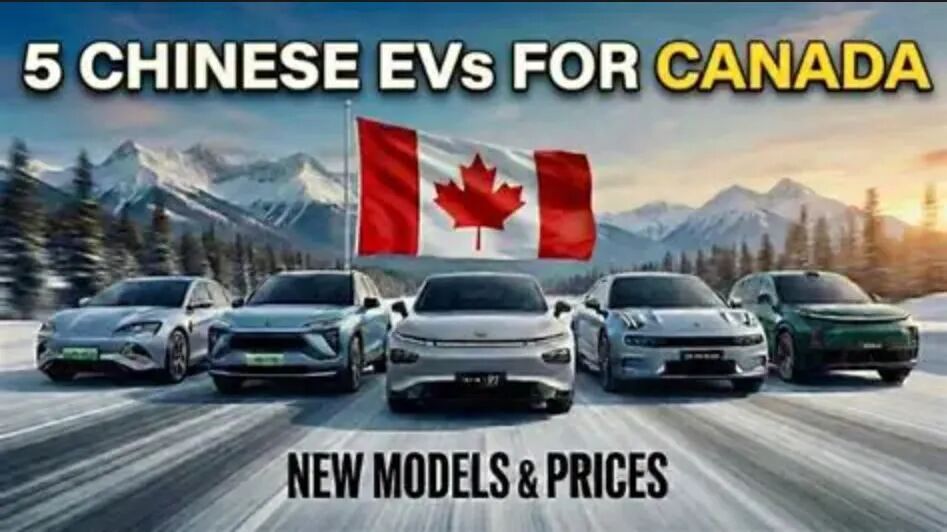
The size of the Canadian market is roughly equivalent to that of the UK, and these figures are also strikingly similar to the situation in the UK market. Based on MarketCheck's new car sales data for Canada and taking the UK's experience as a reference, Chinese vehicle sales may hit the upper limit of the quota by 2029.
By 2030, demand for Chinese vehicles is expected to reach 178,400 units, three times the quota. By 2031, this figure may rise to 265,900 units. Quotas can limit the number of imports, but they cannot limit demand.
When price, configuration and product strength form an overwhelming advantage, consumers will vote with their wallets.
Applying the UK-style blitz of rapid market entry to the US auto market, the prospect is truly alarming. MarketCheck's forecast shows that after Chinese automakers enter the US, they will sell about 217,000 units, 346,600 units and 401,200 units respectively in the first three years.
In the fourth and fifth breakout years, sales will rise to 1.28 million units and 1.9 million units respectively, equivalent to 9.3% and 13.9% of the market share.
What does 1.9 million units mean? This exceeds the 11.4% combined retail share that Korean brands currently occupy, and Korean brands have been working hard in the US market since 1986. Hyundai, Kia and Genesis took nearly 40 years to reach this position, but Chinese brands may approach or even surpass it within five years.
Of course, the premise is "unrestricted". If the *Connected Vehicle Safety Act* is passed, if the 100% tariff is maintained, and if the 15% shareholding threshold takes effect, these figures will only be theoretical calculations on paper.
But the point of this analysis is: it tells the US auto industry how big the impact will be once the door is opened.
The strategy of Chinese automakers is no secret: ultra-low prices, rapid expansion of dealer networks, and value positioning with rich configurations. Leaving aside national security issues, this unconstrained ability to enter the market quickly is the biggest threat brought by the "invasion" of Chinese vehicles.
There are no high walls in the UK market, and Chinese brands have proven themselves in four years. Canada has set a quota, but demand is expected to be three times the quota.
Camry and Model Y will suffer the most?
In the simulation, although part of the sales of Chinese vehicles in the US market is incremental, most of it will be snatched from established models.
MarketCheck's demand and elasticity model based on US retail sales data shows that 57% to 62% of Chinese car purchases will come at the expense of sales of existing brands in the US market. Models priced between $25,000 and $45,000 are the most impacted, which is exactly the core price range for mainstream American families to buy cars.
Calculated by lost sales, the five most affected models are Toyota Camry, Tesla Model Y, Tesla Model 3, Toyota RAV4 and Honda CR-V, each of which will lose 10% to 16% of its current sales.
Other notable models in the top 25 include: the Japanese brand's pure electric model ranked 12th, and the Korean brand's pure electric vehicle ranked 14th; the entry cost of this segment is already very high, and 11% of the share of both has been snatched by Chinese vehicles.
By 2030 and 2031, the alternative sales transferred from other brands will be about 721,000 units and 1.07 million retail units respectively. This means that within less than five years, 6 to 9 percentage points of market share will be transferred from existing models to the new entrant, Chinese vehicles.
Why is the US market so fragile?
Cars are already expensive, and inflation since 2020 has pushed prices even higher. According to MarketCheck's new car sales data, the average sticker price of new cars in the US in August 2026 was $50,835, higher than $40,898 in January 2020.
At the same time, entry-level brands have moved upmarket, leaving the low-end market vacant. This is a natural product and market cycle: Japanese brands did this before, and Korean brands took over the entry position; now Korean brands are also moving upmarket, and the entry-level market is vacant again.
What about the Big Three US automakers? Ford and General Motors have long abandoned sedans, focusing on pickups and SUVs, leaving more space for low-priced new entrants than ever before.
Worse still, external conditions are accelerating changes. Americans' love for fuel-efficient Japanese cars was further intensified by the 1973 oil crisis. Now, the war in Iran has led to rising gasoline prices, which is expected to accelerate the popularization of electric vehicles, and this is exactly in China's favor to give full play to its advantages.
High interest rates and weakening consumer confidence will also bring challenges to the US market, as car buyers will turn to lower-priced models. In other words, the US market is pushing consumers into the arms of Chinese vehicles on its own.
Unblockable Chinese Vehicles and Manufacturing
So, can the crackdown block Chinese vehicles?
From the legislative level, the US is approaching a permanent ban. The Senate bill has 51 supporters, the House version has strong momentum, and although Trump has a wavering attitude, the lobbying pressure from automakers and dealers is huge.
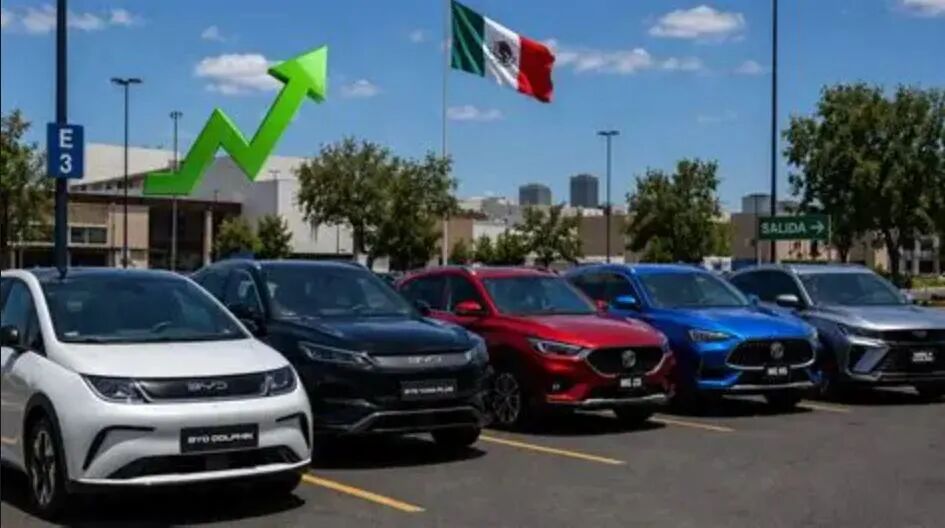
However, globalized supply chains and trade routes can hardly be completely blocked by a single wall. Dealers in Mexico are already selling Chinese vehicles, Canada has set a quota but demand is expected to be three times the quota, and Chinese brands in the UK market are approaching 14%.
Chinese automakers have fully expanded in Europe, Southeast Asia, Latin America and the Middle East, and the US is just one piece of the puzzle. Even if the bill is passed, Chinese vehicles can enter through detours such as third-country assembly, technology licensing and joint ventures.
More importantly, the cost advantage and technology iteration speed of Chinese automakers cannot be eliminated by a single ban.
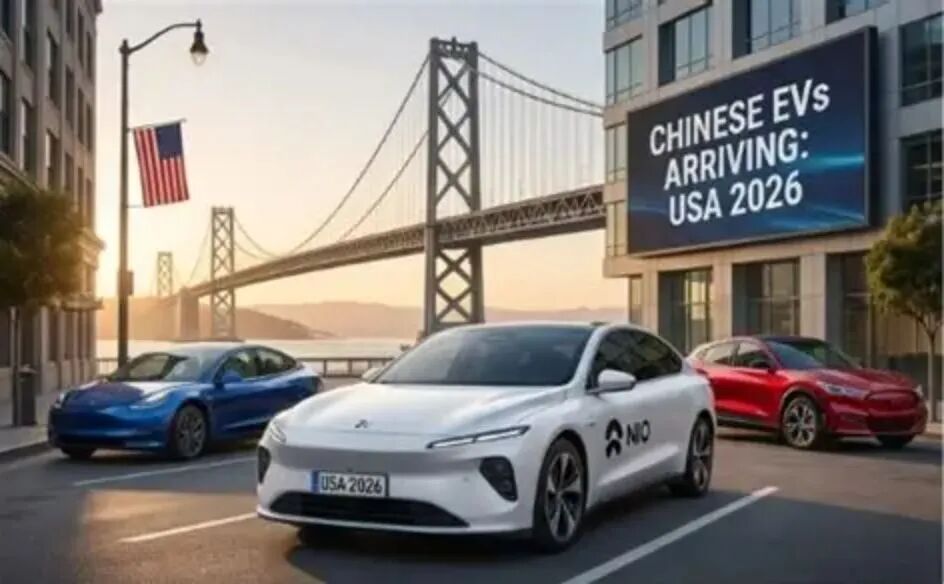
The US auto industry has reason to worry. Chinese automakers are ready to enter the market on a large scale, relying on price, speed and product strength. If the legislature does not take action, the market is likely to experience major turmoil. But even if the legislature takes action, the turmoil will only be delayed, not eliminated.
The real question is not "whether to crack down", but "is the US auto industry ready to compete?"
From the UK to Canada, from Mexico to the Middle East, the offensive of Chinese vehicles has already begun. How long the door to the US market can stay closed does not depend on the will of Washington, but on the speed of the restructuring of the global automotive industry pattern.
The forecast of 1.9 million units and 14% market share may not be a question of whether it will happen, but a question of when it will happen.
The anxiety of Detroit and Washington has only just begun.