How can shopping malls plan their National Day activities with a budget of only 100,000?
This National Day, Li Hongqiang, a planning specialist working at a Wanda Plaza in a third-tier city, arranged several "competitions" for the mall: pomegranate peeling, sunflower seed cracking, and screw tightening. A few years ago, when he drafted National Day event plans, the key terms in his proposals were still celebrities, music festivals, circuses, markets and IP exhibitions.
The screw-tightening competition is scheduled for October 6 and 7 — when the holiday draws to a close and consumers start preparing to return to work. Li Hongqiang set the theme for this activity as "Office Workers' Decompression Session". The event is not complicated with low cost, but it precisely captures consumers' emotional demands.
National Day is one of the most critical marketing nodes for shopping malls across the year, but this time, a large number of malls have abandoned the old "large-scale grand event" strategy they used to rely on.
Since the beginning of this year, various "quirky competitions" have been frequently held in the atriums of shopping malls: a mall in Ningbo transported 40 tons of soil to set up a rice transplanting contest indoors; Wuhan launched a "sunflower seed cracking without eating" competition, Zhengzhou held a "homework catching-up contest", and Dongying ran a "flip-flop flicking contest". Earlier, a "snack stealing contest" that simulates classroom scenarios has been replicated by more than 100 shopping malls nationwide, with related views on Douyin exceeding 1.4 billion times.
The common features of these events are low cost, high public participation, and inherent communication power. The material cost of a "snack stealing contest" may only be 30,000 to 40,000 yuan, but it can generate hundreds of millions of exposures and attract thousands of sign-ups.
Behind this trend lies the shift in shopping mall marketing logic. In the past, passenger flow was driven by celebrities, top-tier IPs and music festivals, but now marketing budgets are shrinking, and consumers' attention is increasingly scattered. Large-scale events are no longer affordable, and even if held, they may not bring expected results. As a result, planning specialists begin to find breakthroughs in "small-scale" and "unconventional" activities.
However, no matter the size of the events, the essence remains the same: shopping malls need a reason to attract consumers to come in. But now, such a reason is getting harder to find, the cost is getting higher, and the competition is becoming increasingly fierce.
Budget Cut, No Reduction in Event Quantity
Li Hongqiang started preparing for this year's National Day event plan in August.
Having worked in event planning at a Wanda Plaza in a third-tier city for six or seven years, he is fully aware of the value of this holiday window. The National Day and Spring Festival are the two most important annual nodes for shopping malls, apart from their anniversary celebrations. In the past, the marketing budget for a single National Day holiday was about 300,000 yuan, enough for him to invite a band, set up a circus, and run a market to fill the entire holiday period.
But this year, the budget he received is only 100,000 yuan, which has to cover both the Mid-Autumn Festival and National Day holiday periods.
He first reviewed all the large-scale events he had held before. For a band, even a little-known local one, the basic costs including stage, lighting and sound would be at least 8,000 yuan per show. The quotation for a circus was even higher. A market seems cheap, but the sum of booth construction, materials and promotion would also cost a lot of money.
After calculating, he found none of these large events was feasible.
This is not a situation unique to him. In the past few years, the marketing budgets of shopping centers have generally been shrinking.
The industry observation released by Winshang at the beginning of 2026 shows that China's shopping center industry is in the stock adjustment stage, with the average vacancy rate exceeding 15%, and the annual rent in weak second-tier cities dropping by 5%-8% year on year. Data from the China Chain Store & Franchise Association shows that in the first half of 2026, the weighted average passenger flow of sample shopping centers increased by 5.7%, while sales only increased by 3.6%. The unit customer price is the only indicator that "declines more than grows" — 41.5% of the enterprises saw their unit customer price drop, and only 26.4% recorded growth.
Consumers come, but spend less. For shopping malls that rely on rent and sales commission, this is the direct source of revenue pressure. In a stock market, events have become one of the most direct means for shopping malls to compete for customers. But the money that can be spent on events is getting less and less.
Eventually, Li Hongqiang adjusted his direction. The Mid-Autumn Festival and National Day holiday periods are connected, so he arranged two events for Mid-Autumn Festival, only one "fashion show" during National Day, and filled the rest of the time with "small competitions", each of which cost only 300 to 500 yuan.
Three years ago, to hold a "fashion show", he first needed to build a special stage, invite about 10 professional models per show with a daily appearance fee of 1500-2000 yuan per person, hire a professional host, and cooperate with local KOLs and media accounts for promotion. This year, the models are replaced by college students paid 200 yuan per day, he himself took on the role of host, and the entire media promotion budget was cut off.
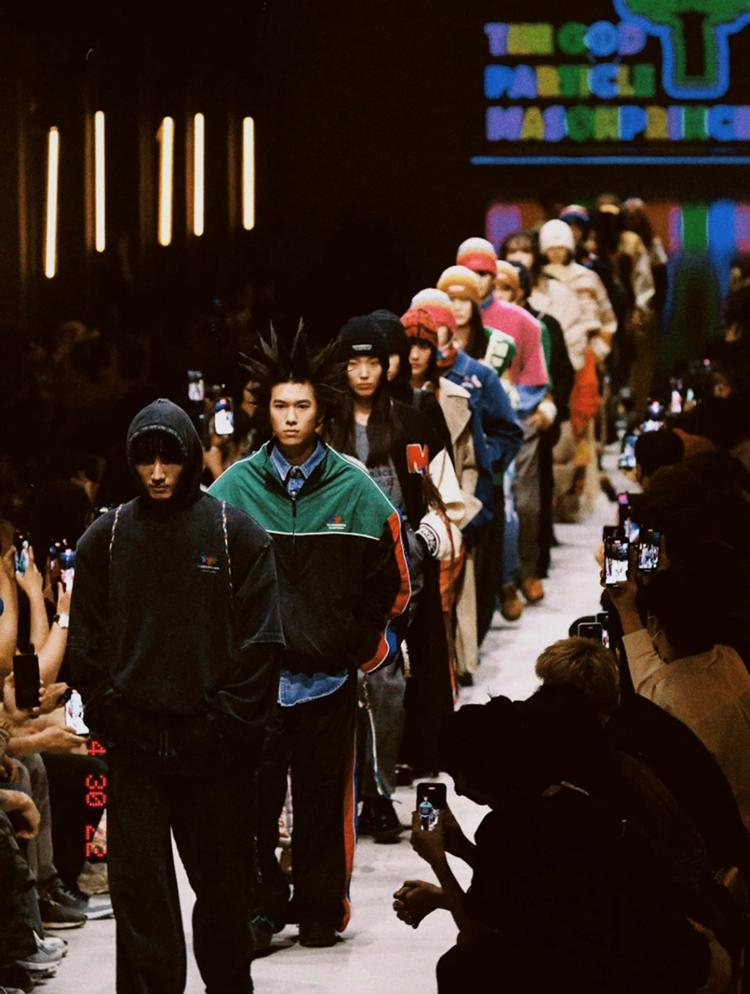
● The fashion show organized by Li Hongqiang's Wanda Plaza in May 2023. Source: Official WeChat account of the mall
The unaffordability of large-scale events is not only a problem of insufficient funds. Shopping malls have also begun to re-examine the quality of passenger flow brought by these events. Large-scale events can quickly gather crowds, but in the past it was difficult to measure who these people are, whether they have consumption demands, and whether they will enter the stores. As consumers become more cautious, the sales conversion of passenger flow attracted purely by "bustling atmosphere" is facing higher and higher uncertainty.
Xiao Xiao, who works as a mall planning specialist in a third-tier city in Inner Mongolia, ran an agricultural product market event in 2023, bringing local characteristic agricultural products such as corn and potatoes into the mall, and all 50 booths were fully booked within a week.
But the next year, when he tried to replicate this project, many merchants chose to quit. "Instead of spending time moving goods and setting up booths, it is better to spend a few hundred yuan to invite two KOCs (Key Opinion Consumers) to shoot store exploration videos, and the effect may be more direct." Some merchants told him so. For businesses, the costs of labor and stock replenishment are all rising. If participating in the event only brings exposure without clear sales growth, it is not worth the loss.
Not only merchants are recalculating the input-output ratio, consumers are also changing, and most of them have already had aesthetic fatigue towards large-scale events.
When robot performances became popular last year, Xiao Xiao also wanted to catch up with the trend. He contacted third-party service providers and only found one available, whose quotation made him hesitate — including all third-party service items, the cost of one robot reached 100,000 yuan per day. But two months ago, a robot performance team took the initiative to contact him, offering 10,000 yuan for one robot for three days, with the cost dropping by 30 times. When something is scarce it becomes a gimmick, and when it is popularized, it turns into a conventional activity.
There is a saying in the commercial sector that "Golden September and Silver October", and the National Day is right in the middle of this prime sales window. But now, for shopping malls, the National Day is no longer just a competition of who holds a larger event, but a test of operational capability. Since large-scale events are no longer affordable, planning specialists have to find lighter alternative solutions.
Small Budget, Full Effort on Creativity
Xiao Xiao first discovered that small events can also bring good results by accident. That day, he and his team were discussing event plans, with a stack of discarded printed drafts on the table. A colleague, feeling bored while listening to the discussion, picked up a sheet of A4 paper and folded it into a paper plane. Xiao Xiao suddenly had an epiphany: "Why not turn paper plane folding into a marketing activity?"
The rules are very simple: consumers fold a paper plane on site, and as long as the plane flies to the designated area, they can participate in a lucky draw. The team did not set high expectations for this activity, they only sought merchants to sponsor prizes, and used A4 paper printed with store advertisements as the "material" for folding planes. There was no host and no warm-up arrangement, and Xiao Xiao did not even go to the scene to check the situation.
When the event started, Xiao Xiao was still upstairs writing the plan, when a colleague suddenly ran up and shouted to him: "Come down quickly, there are a lot of people on the first floor." The central area of the mall was surrounded by crowds, so he had to go on stage to host and maintain order.
According to his statistics, more than 800 people came on the day of the event. To participate in the lucky draw, consumers needed to scan the code to register as members, and this single event added four to five hundred new members.
After that, paper plane folding became a regular event of the mall. For consumers, it provides a simple and direct sense of participation; for merchants, it also changes the traditional promotion method. In the past, when merchants handed out flyers, consumers might take them and throw them away casually; but when the flyers become the raw material of paper planes, consumers can naturally access and read the information printed on them during the folding process, and the brand content thus achieves better communication effect.
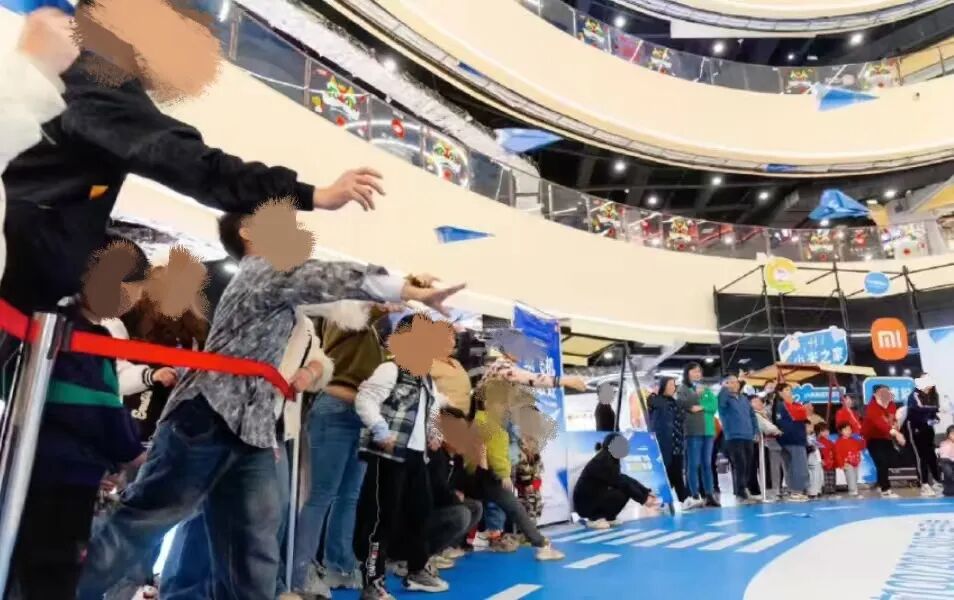
● Paper plane folding competition. Source: Official WeChat account of the mall
The paper plane event is not an isolated case. Since the beginning of this year, various low-cost, highly visual events have been frequently held in shopping malls across the country.
A mall in Ningbo transported 40 tons of soil to the first-floor atrium, and laid a 1:1 simulated paddy field between the beauty counters and the trendy toy store. With straw hats, farmer costumes and muddy water, hundreds of urban residents queued up to go to the paddy field to transplant rice seedlings.
The operation team of this event only has a few people, and the investment is not large — the rice seedlings are cultivated by the local agricultural research institute and sponsored by cooperative farms. But this event spread wildly on social platforms and even became a trending search.
The same logic is being replicated across different regions. Li Hongqiang observed that the proportion of small competition events in mall marketing has increased significantly now. According to the current activity structure of his mall, small competitions may have accounted for about 60% of all events.
But once a creative idea is proven effective, it will be quickly copied. Li Hongqiang found that once an event is launched, the surrounding malls will follow up in less than a week. When the paper plane event became popular, paper plane events soon appeared everywhere; when the snack stealing contest proved feasible, people launched rice noodle slurping contests and watermelon eating contests. The same gameplay with a new name becomes a brand new event.
The fast replication shows the low cost and low threshold of these events. For shopping malls, this is both a good thing and a trouble. The good side is that holding events no longer requires a large budget; the troublesome side is that any gameplay may soon lose its effect, and they have to keep launching new ideas.
Shan Yun is preparing to hold the Beijing debut of a "squeeze toy market" at Wukesong Wanda, because "almost every Wanda has held market events now", but most of them are coffee, milk tea and dessert markets, which are largely identical with minor differences.
But constantly changing patterns does not mean the events are effective. Li Hongqiang has held the "snack stealing contest" five or six times, where participants eat snacks such as instant noodles and crispy noodles secretly under the inspection of a staff member playing the role of a "teacher", and the winner is the one who finishes eating quickly without being caught. He asked his team to post recruitment notices on short video platforms, and the next day his colleague told him that three 500-person full event groups had been created.
Although there were many participants, Li Hongqiang also found problems after the event was held: consumers took the snacks and finished them quickly, the whole competition ended in less than 20 minutes, and then they all left immediately.
What does a truly valuable small event look like?
Joyce, who works as a planning specialist in a commercial complex in Shenzhen, has been thinking about this question in recent years. She believes that shopping malls need to have their own "personality" in the future. "If you hold a completely different event every year, consumers will have no fixed memory of the mall." Compared with constantly chasing new hot topics, she prefers to precipitate some events as long-term features.
Joyce once held a "slow cycling" competition. She originally planned to hold a cycling race, but the outer square of the mall is only about 100 square meters. According to conventional ideas, a larger route, more professional venues would be needed, and safety issues would also be involved. The realistic constraints forced them to find a different approach — instead of competing for who rides faster, they compete for who rides slower.
The team designed a figure-8 track, and the contestants rode small folding bikes. They needed to keep cycling without touching the ground with their feet, and the final ranking was based on the completion time, the slowest rider is the champion. The event finally attracted 200 sign-ups, and more than 180 people actually showed up.
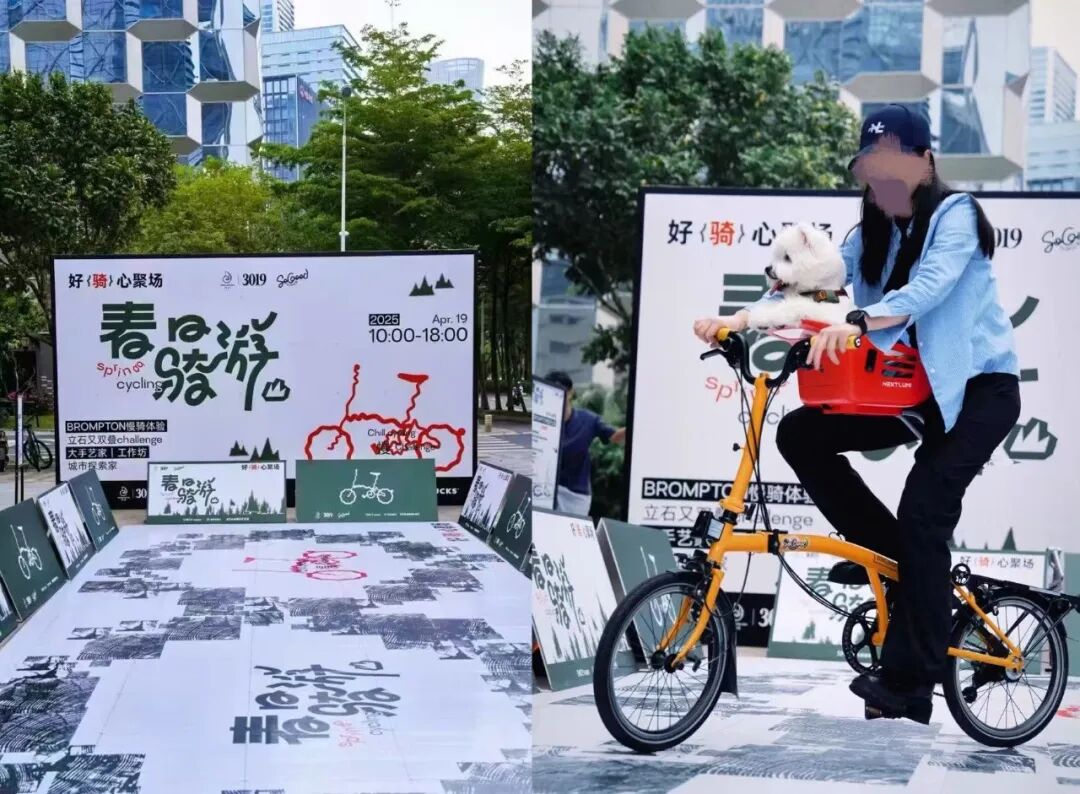
● "Slow cycling" competition. Source: Official WeChat account of the mall
This number is not very large, but more importantly, these participants did not disappear after the event ended. When the mall held other sports events such as running races and cycling activities later, they still took the initiative to participate, and would bring their friends along.
The snack stealing contest and the slow cycling competition are both small events. One got three full 500-person groups in one day, but the event ended in less than 20 minutes and all participants left; the other attracted 180 people and precipitated a group of members who continued to participate in subsequent activities. The difference is that the former only gathered people temporarily, while the latter retained people after the event ended.
But retaining people is only the first step. For shopping malls, the ultimate question an event needs to answer is not "how many people came", but "whether these people walked into the stores and generated consumption". If an event only makes people have fun at the activity site and then leave separately, its value for merchants is limited. What merchants need is real passenger flow and sales, not just the bustling atmosphere at the event site.
This is also why more and more shopping malls begin to tie events closely with merchant operations.
Once, Li Hongqiang got the event resources of 361°, and cooperated with the jump rope training institution and basketball hall on the outer street to hold a jump rope competition. On that day, the sales performance of the 361° store reached one of the highest levels since its opening. The brand provided event resources, the training institution provided its members, the mall provided venues and traffic, and all three parties achieved win-win results.
In the past, planning specialists only needed to use sufficient budget to find large-scale resources; now, they have to use limited budget to find a sufficiently good gameplay — which can not only attract people to come, but also retain them, and ideally help merchants sell more products.