German netizens: With such an excellent Chinese-made Audi, why wasn't it imported earlier?
A few days ago, a very bizarre incident took place in the European automotive industry.
Audi, the four-ring brand that is widely known to all, has filed a lawsuit in Germany against an auto importer named Auto China.
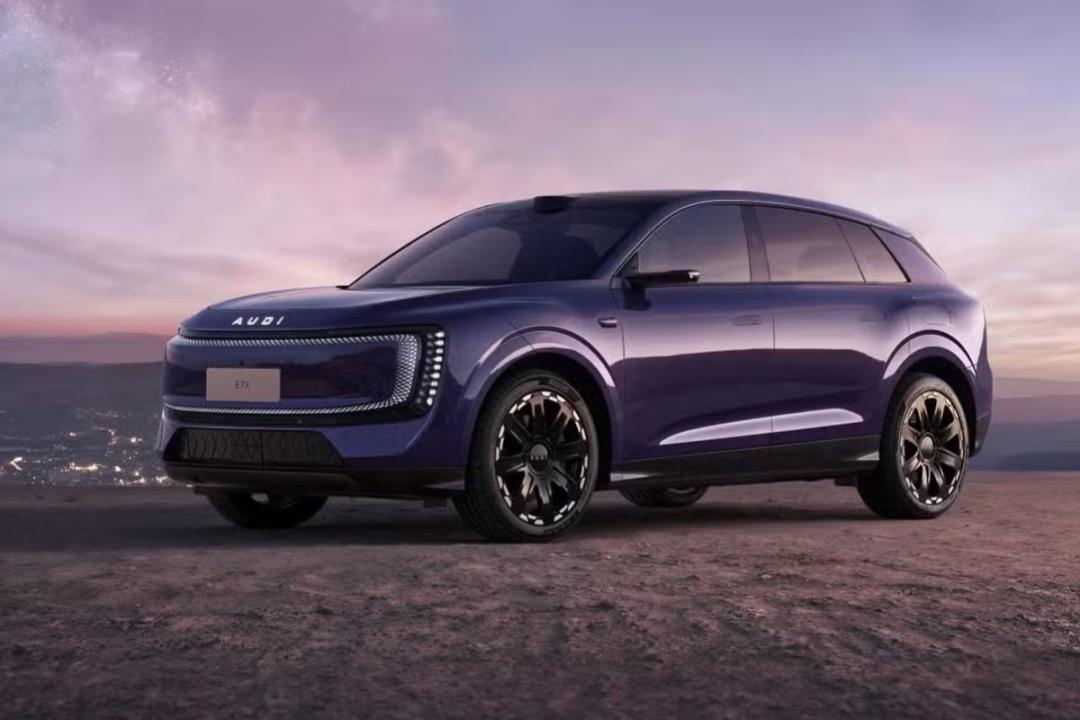
The reason given is that the latter has recently been parallel-importing China-exclusive models to Europe — the letter-badged AUDI E5 and E7X — which has harmed Audi's legitimate interests, and the importer is required to stop selling these models immediately.
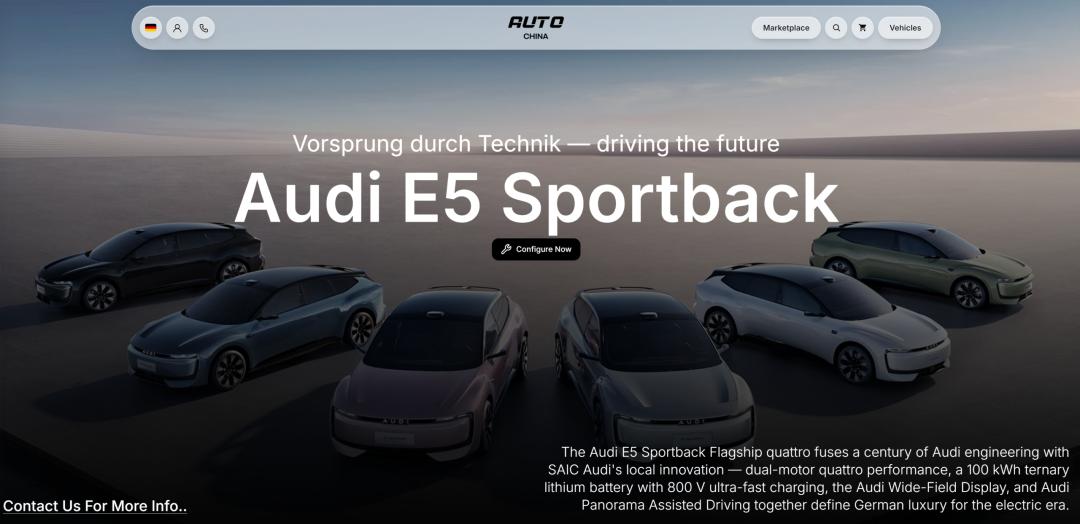
The hidden E5 ordering page on AutoChina's official website
Although Auto China has not issued a public response, it has already removed the ordering links for these two models from its official website, which seems to be quite cooperative at least on the surface.
Sounds like this is just an incident where a brand sanctions an unofficial sales channel. But when I read this news, I found it more and more odd and unreasonable.
First of all, the sued importer Auto China is not a small unlicensed workshop on the roadside, but a professional Chinese electric vehicle importer that has been operating for a long time across regions including Europe, the Middle East and Asia-Pacific, with sufficient scale and professionalism.
When you open its homepage, you can find that it can get the main models of mainstream new car-making forces in China, such as the 8-series and 9-series of Zeekr, the Zhijie and Shangjie models of Harmony Intelligent Mobility, the SU7 and SU7 Ultra of Xiaomi, and even the newly launched Pengcheng model in China.
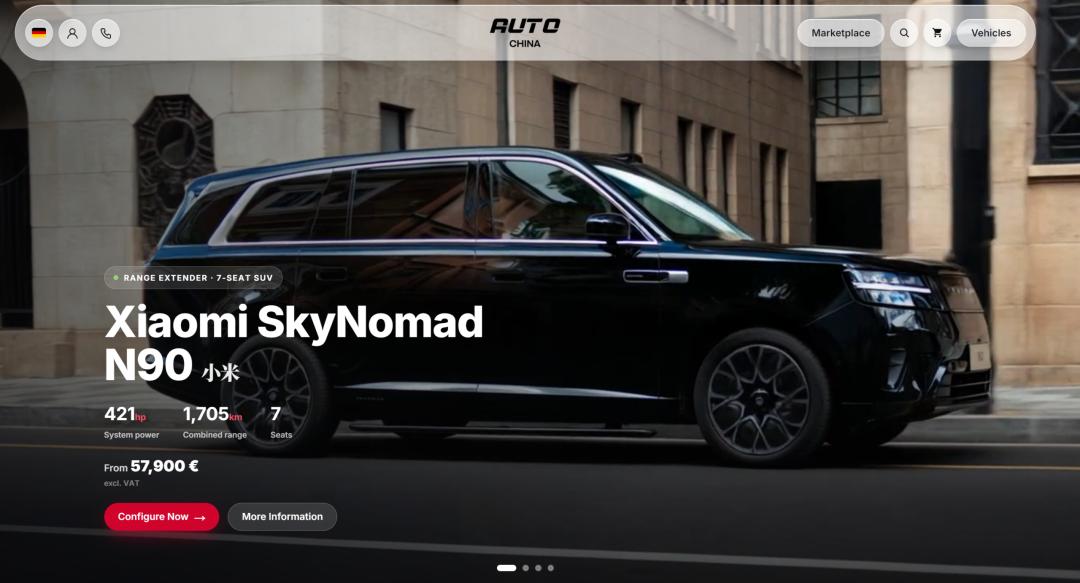
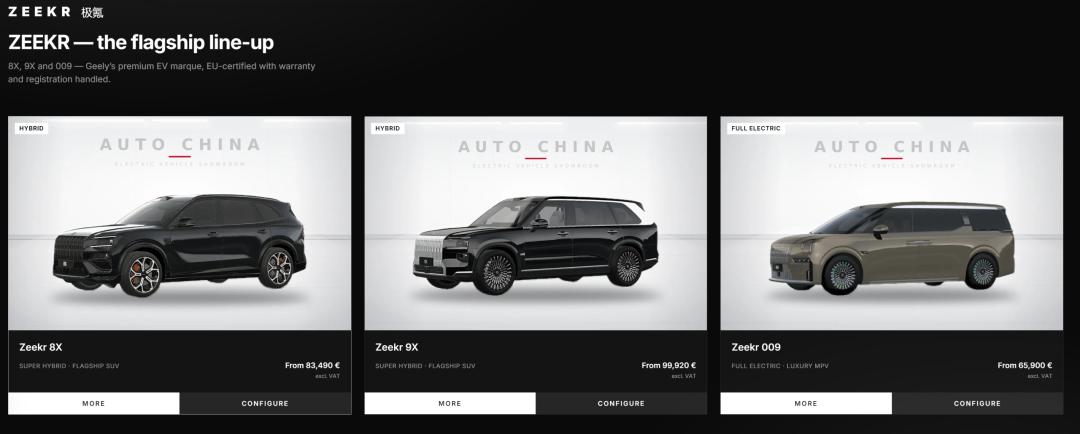
Moreover, what it does is not shady smuggling business, but legitimate import business with complete formalities.
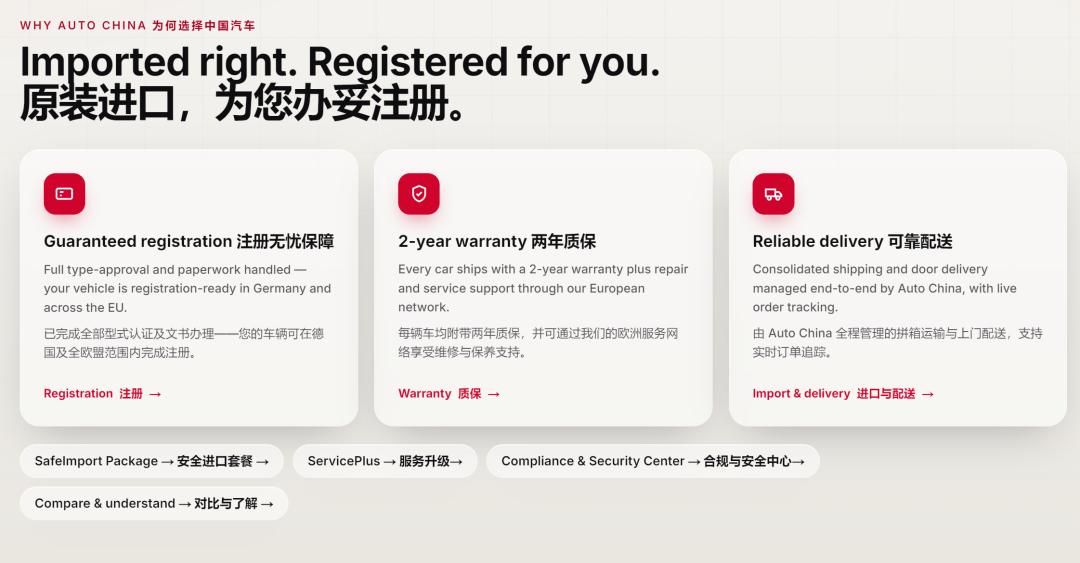
It can handle all the certifications and documents required for vehicles to be imported into the EU, ensuring that users can normally license and drive the cars on roads in Europe.
Even if brands like Zeekr and Xiaomi do not have official after-sales channels in Europe, Auto China will provide full-vehicle and three-electric system warranties similar to the original manufacturer's warranty, as well as specially partnered maintenance outlets.
For spare parts that are not available in Germany, they will also directly procure and ship them from China, and purchase extra vulnerable and general spare parts to store in local warehouses.
This is actually very similar to some parallel-import car dealers in China, with compliant procedures and legal business, leaving almost no flaws to be found from a legal perspective.
Most of the overseas user reviews of Auto China are positive, and some users even specifically praised the E5 as a great car.
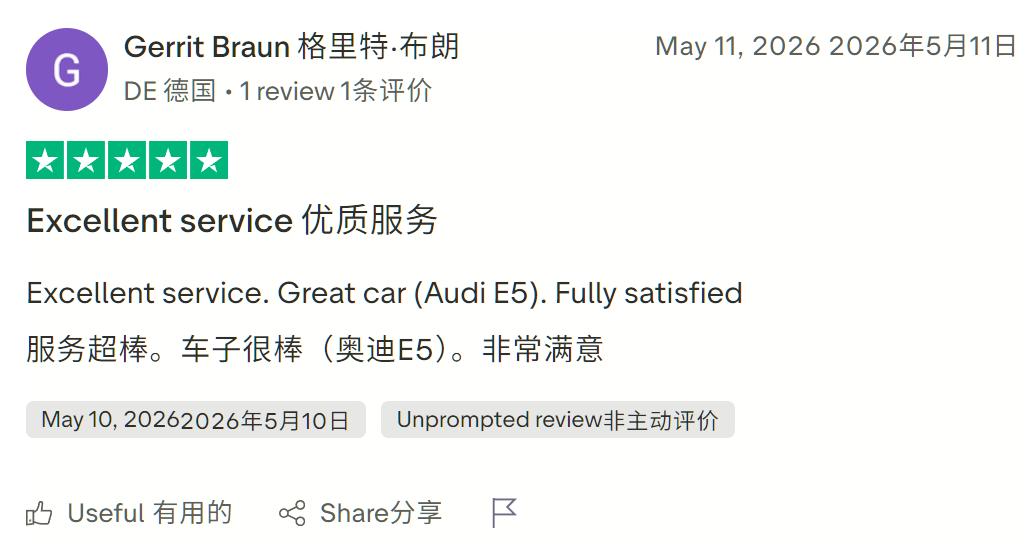
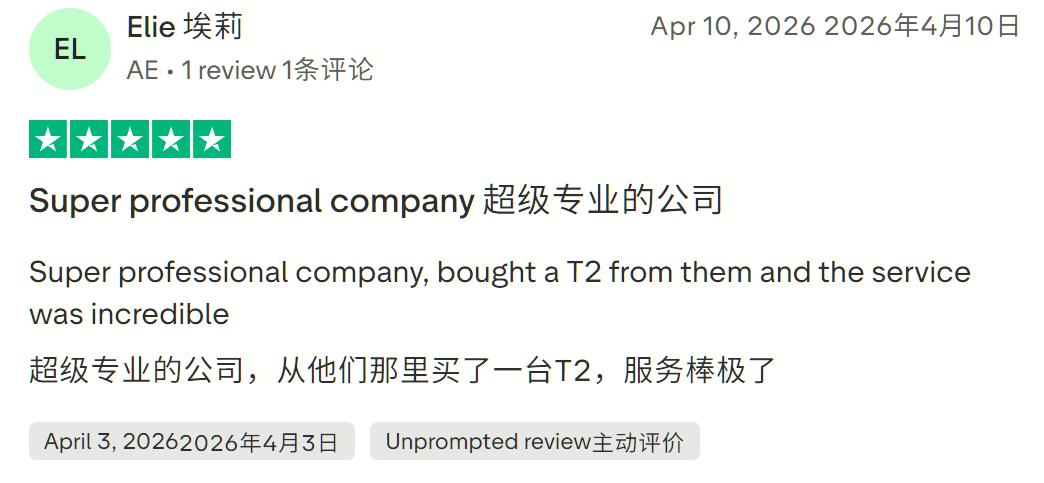
Audi suddenly decided to file a lawsuit and claim rights at this point in time, what is it aiming for?
Shortly afterwards, Audi issued a response. But the response did not come from Audi Germany, but from SAIC Audi, which produces the letter-badged Audi models, and Audi China.
In the statement, the two parties stated that Audi Germany's move is not because it does not recognize the brand, nor does it think that the letter-badged Audi lacks the characteristics of the four-ring Audi. Instead, it is because European car buyers cannot enjoy Audi's original manufacturer warranty service and their rights and interests cannot be guaranteed after purchasing parallel-imported models, that the restriction was made.
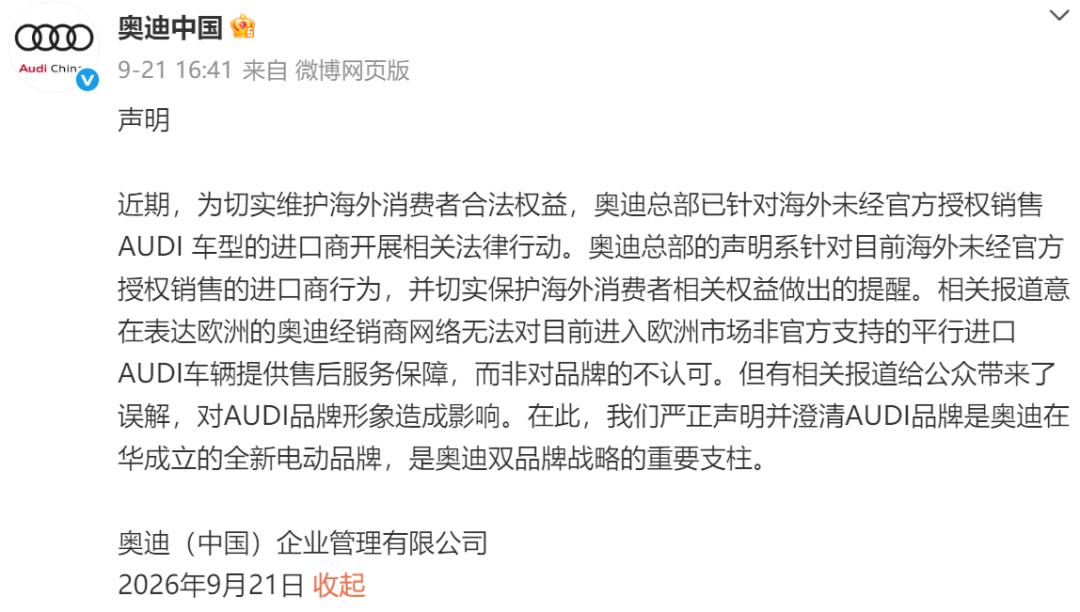
Is this reasonable? Quite reasonable. After all, third-party warranty is definitely not as reassuring as the original manufacturer's warranty. If something really goes wrong, it will indeed damage the reputation of Audi Germany.
But after careful research, I think apart from the concerns at the after-sales level, another possible reason why Audi Germany banned the letter-badged models is that the originally segmented market has been broken, and the brand cannot accept the huge cost-performance gap between products at the same price point.
That's right, the E5 and E7X, two models that do not have a high profile in China, are truly dimensionality-reducing products when placed in the German market.
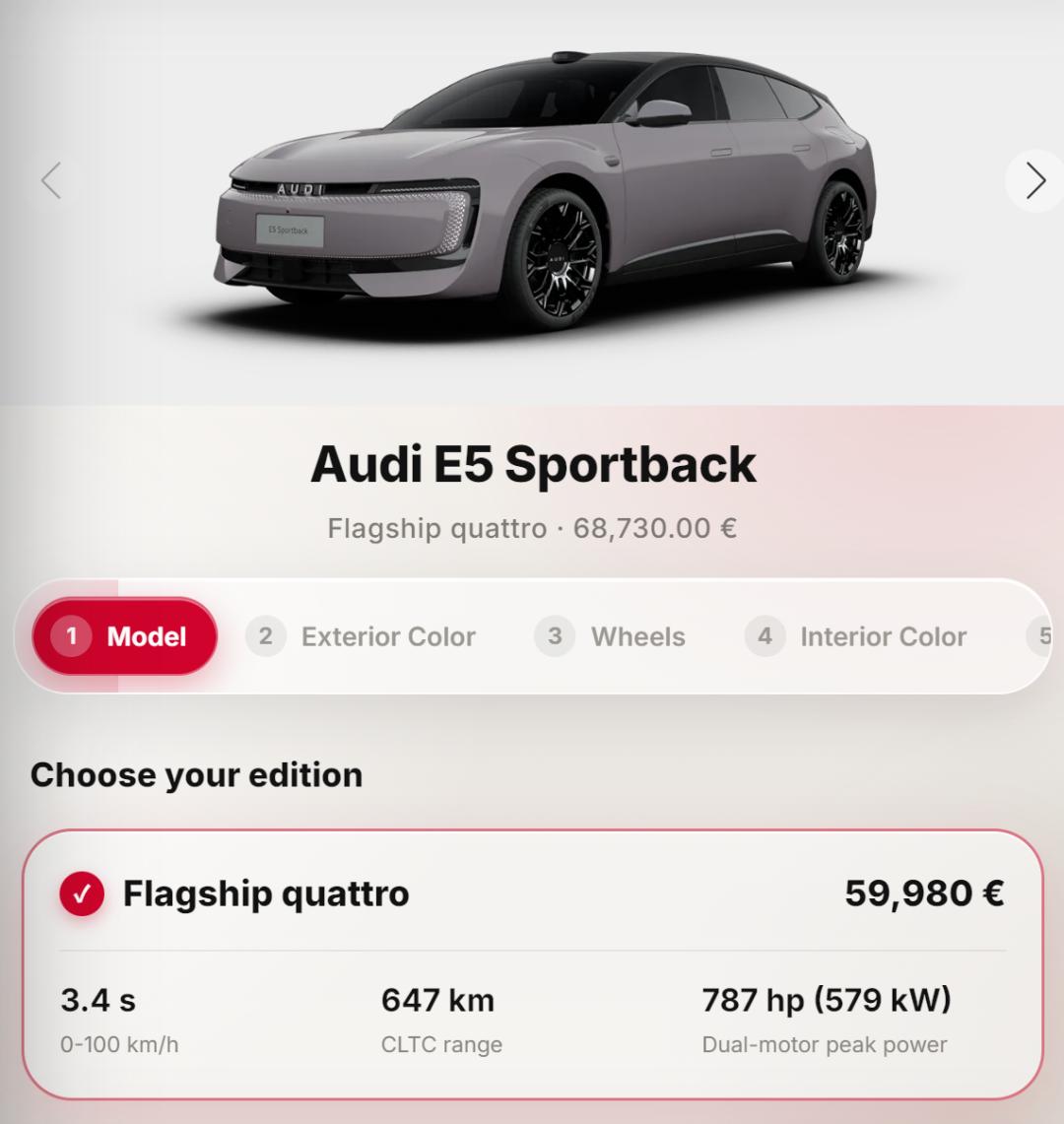
The most intuitive comparison is the price. The starting price of the AUDI E5 Sportback, this pure electric sedan, is around 240,000 RMB in China, and the top trim level is about 320,000 RMB.
After being handled by Auto China, with all formalities completed and all required taxes paid, the top trim version of this car has a bare car price of 59,980 Euros in Germany, which is roughly equivalent to 460,000 RMB.
The Audi model in Germany with the same price and positioning as it is the entry-level front-wheel drive A6 Avant.
Its engine power is only up to 150 kW, and it has none of the comfort configurations you can think of, including seat ventilation and heating. It is almost the most basic form of a car.
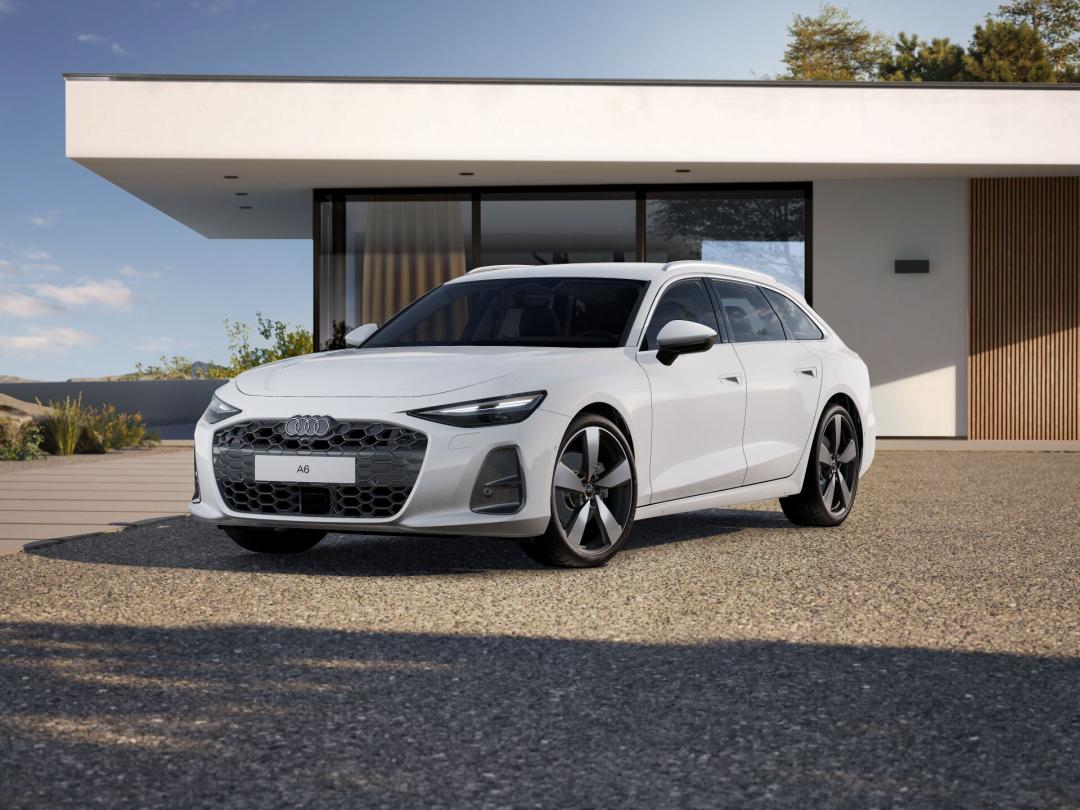
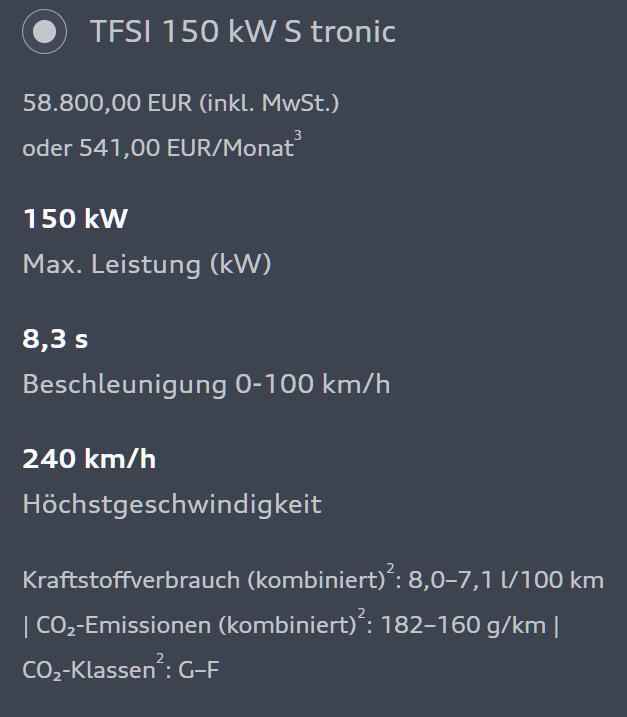
In contrast, the configurations of the letter-badged AUDI E5 Sportback can be described as epic-level luxury.
It has almost all configurations related to comfort, the car itself has exquisite design and high-quality materials. More importantly, its front and rear dual-motor four-wheel drive has a total terrifying power of 579kW, which completely outperforms local German models by a huge margin.
The E7X is even more impressive. Some European media did a comparative test between it and the European-spec Q8, and were shocked by the rear seats that are close to zero-gravity design and the remote control it is equipped with.
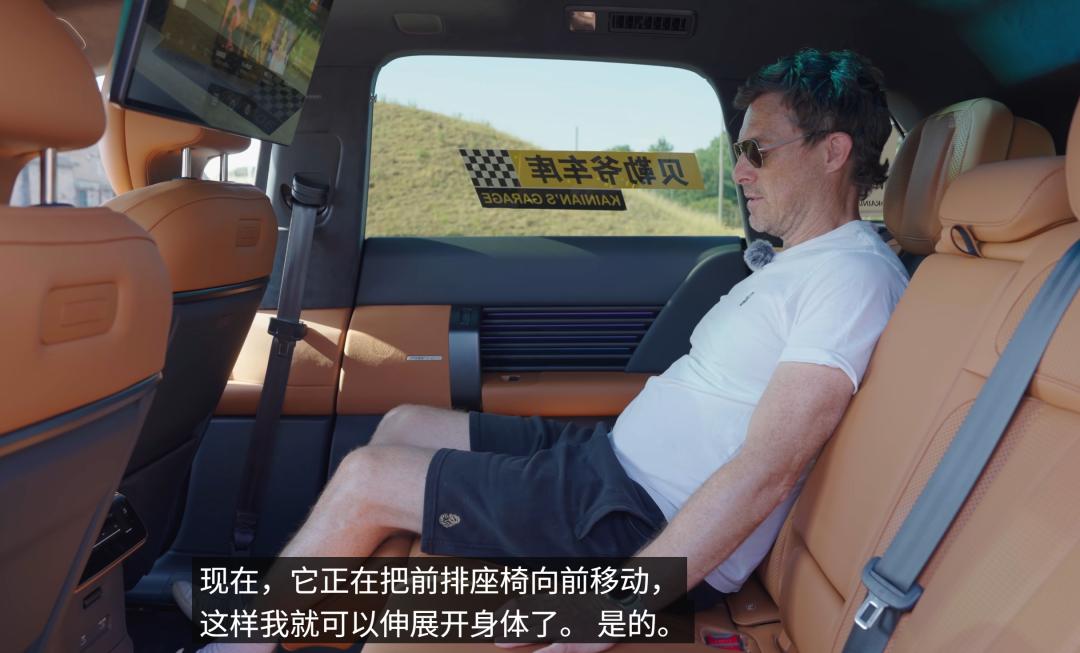
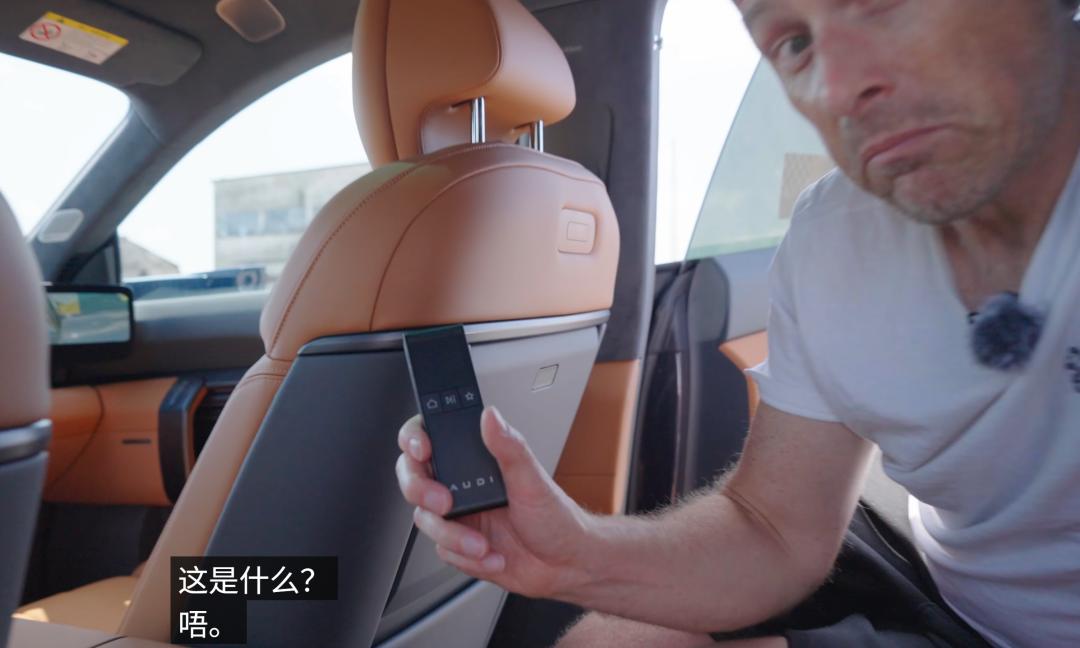
The European netizens in its comment section almost all share the same opinion.
"It turns out you are not incapable of making good cars, you just don't want to sell good cars to your own people!"
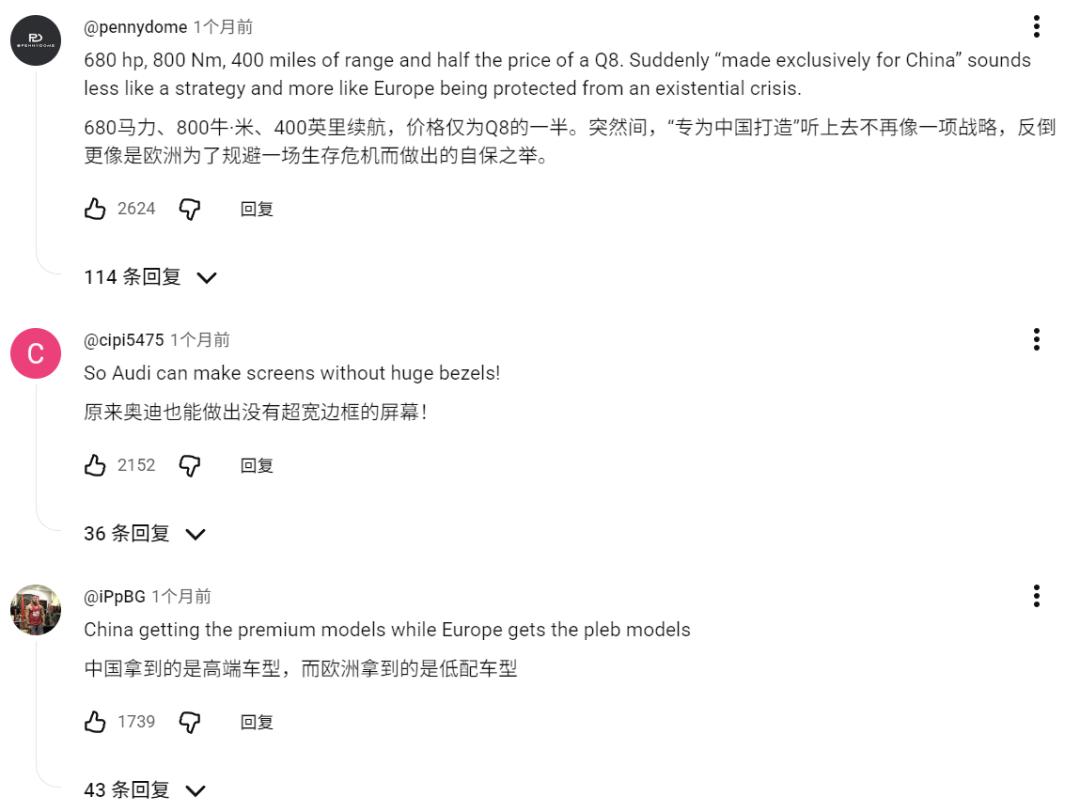
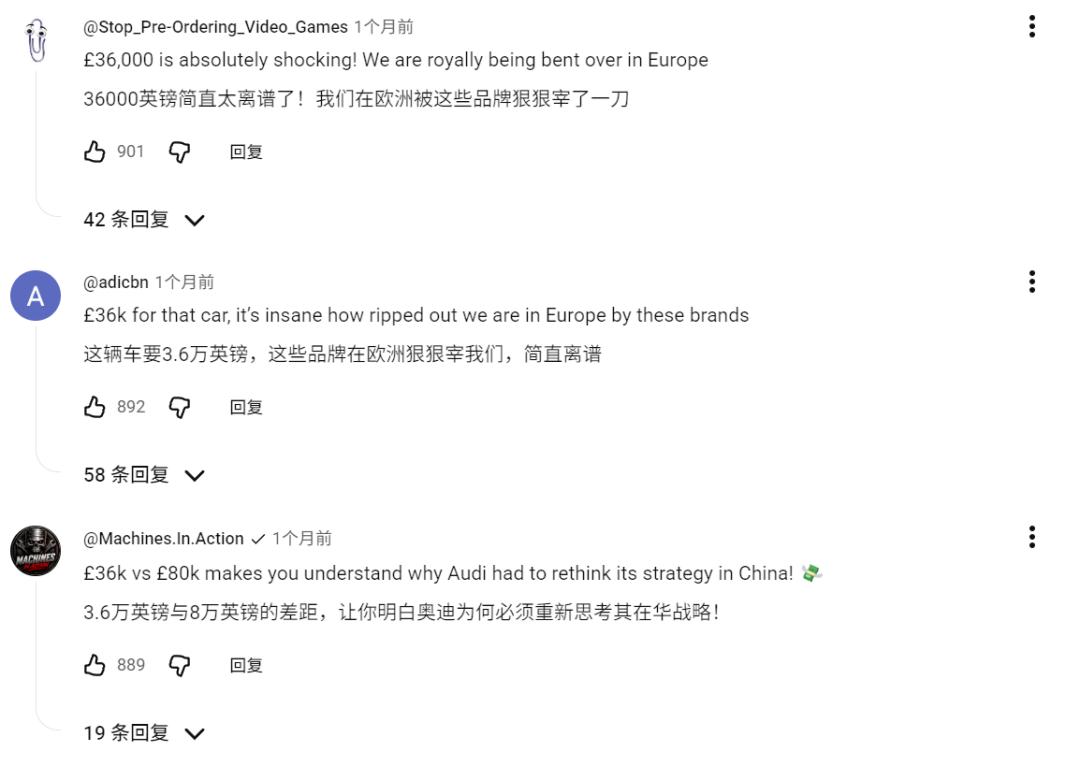
Faced with such foreign models that make local models look very inferior, if you were Audi, you might also choose to ban them. If you don't stop it, today Auto China dares to import 10 units, and later it will dare to import 100 units, even 1000 units.
This is not acceptable, after all, the brand needs to maintain its dignity.
Of course, you may think that Audi Germany stopping normal business activities for this reason is a bit too selfish.
But in fact, this kind of practice targeting its own products is supported by the law named EU Trade Mark Regulation in the EEA, the European Economic Area.
In short, Article 15 of Regulation (EU) 2017/1001 stipulates that global enterprises have the right to decide whether their products can be sold within the EEA.
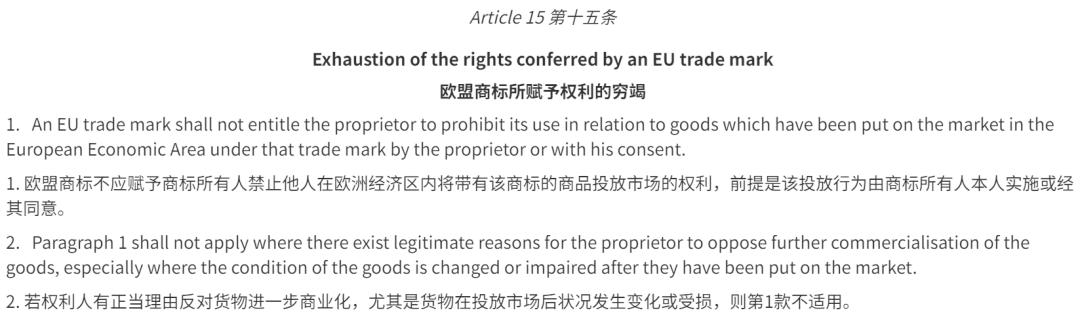
This is essentially to prevent brand sales from being affected by unauthorized unofficial channels. Therefore, Audi has launched a legal and compliant litigation process to maintain its different product and pricing strategies in different countries, and this move has no problem from a legal perspective.
But this does not mean Audi's decision is reasonable.
Because looking at other global car brands, such as Toyota, Tesla, and even Audi's parent company Volkswagen, there are rarely cases where merchants resell the same brand's models across different countries due to huge product capability gaps.
Even if there is such a case, it is the carmaker itself that does it (for example, the Polestar 5 and SEAT Cupra models that are produced in China but only for export).
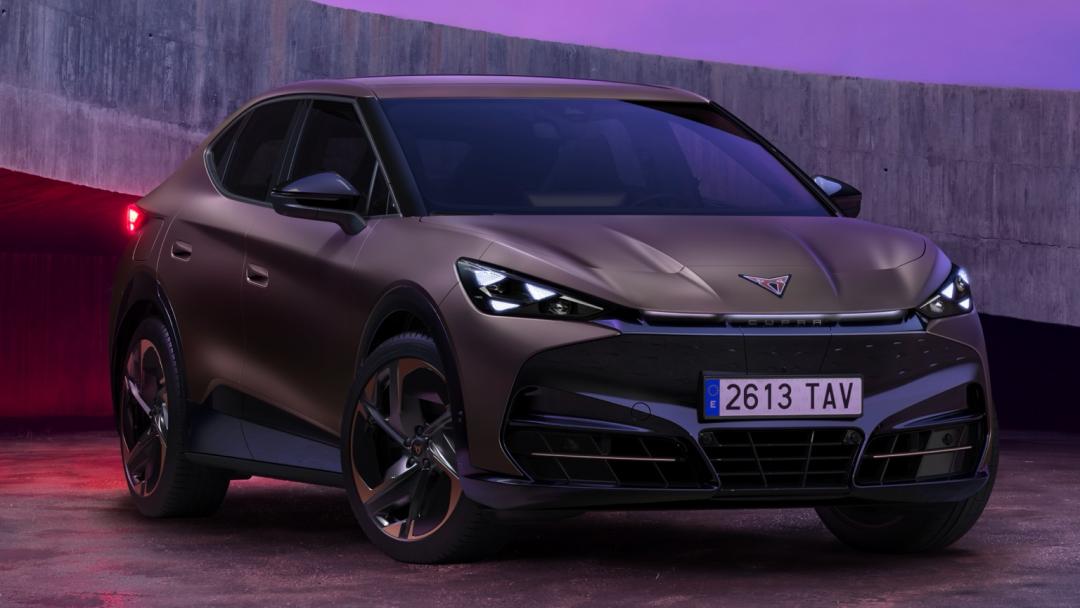
From Audi's perspective, the letter-badged AUDI, as a China-exclusive model, caters to the needs of the Chinese market, and will be incompatible with the market environment in other countries.
But the fact is that the small number of letter-badged models that have been parallel-exported to Europe on a small scale are not only widely praised, but European netizens' love and expectation for these letter-badged models are incredibly high.
In contrast, in the Chinese market, among a large number of new car-making force models, the product capability of the letter-badged models is not outstanding at all, their sales are very average, and there is even huge interpretation and promotion cost between them and the four-ring badged Audi models.
This kind of strategy that seems to segment the market but actually has misplaced understanding may be the key point that Audi needs to change next.
Besides, Audi already has a ready-made