Is Xiaohongshu Stealing Xianyu's Market? Xiaohongshu Quietly Enters the Second-hand Business.
Open Xiaohongshu and search for "sell idle items", you will find a hidden trading market that has grown naturally for many years. A large number of users discover products, inquire about prices and negotiate deals here, then open Xianyu to complete the payment.
However, this awkward cycle that has lasted for many years is being broken by Xiaohongshu itself.
Recently, 「Klout」found that the "Personal Selling" function has quietly appeared on the Xiaohongshu homepage.
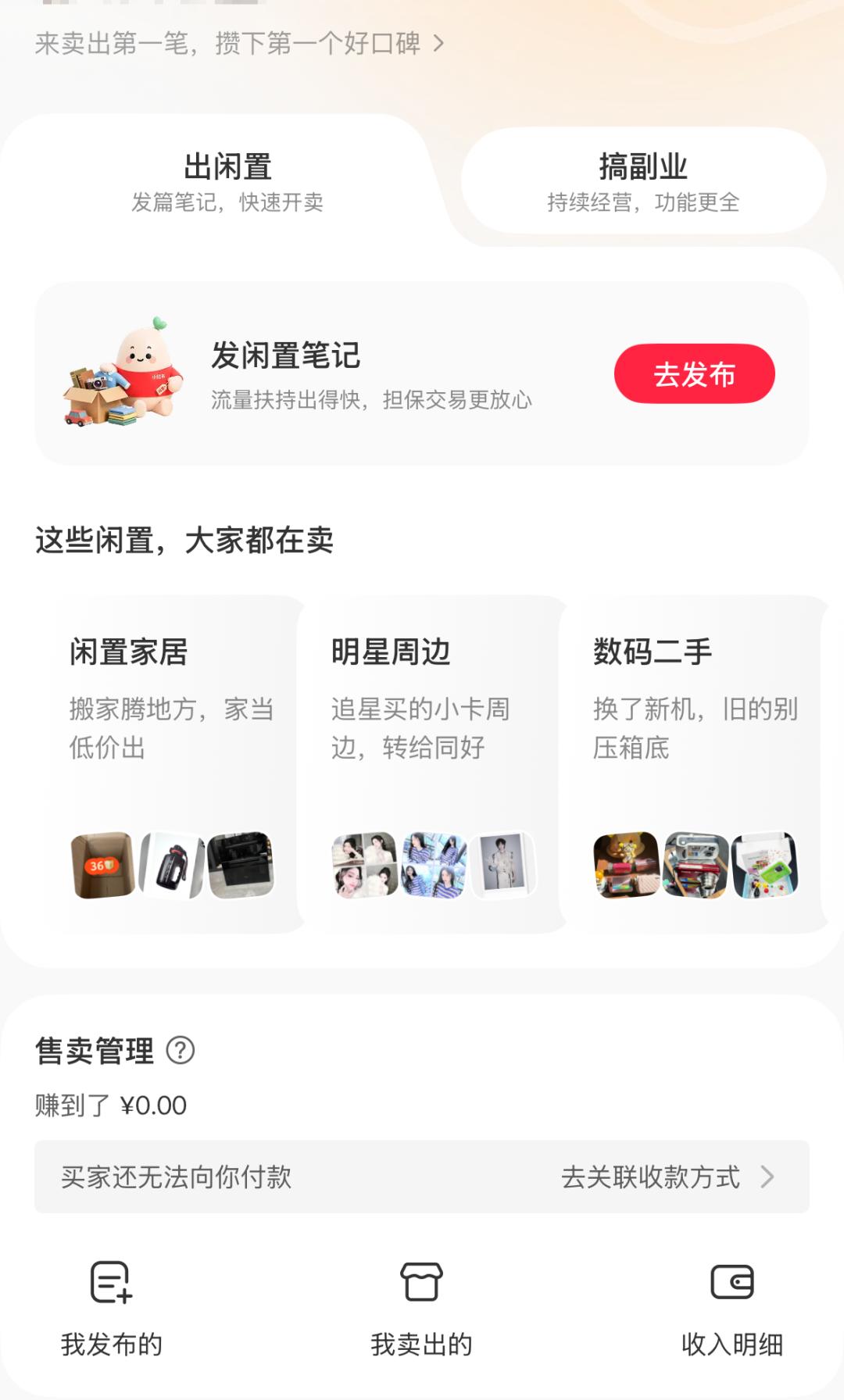
Image source from Xiaohongshu
Different from the previous cross-platform mode of "chat on Xiaohongshu, place order on Xianyu", this time Xiaohongshu tries to keep the "last mile" of transactions within its platform. Up to now, there are 20,000 idle items listed on Xiaohongshu.

Image source from Xiaohongshu
Where there is traffic, there is demand. But can a community that has developed strong transaction demand keep transactions truly within its own ecosystem? Today, let's take a look at whether this hidden second-hand experiment of Xiaohongshu can succeed~
The demand has long existed: Xiaohongshu's "hidden second-hand market"
For loyal users of Xiaohongshu, "selling idle items" is not a new thing.
For a long time, a large number of user notes about "second-hand idle items" and "sell items for cash" have gathered on the platform, forming a strong transaction atmosphere especially in vertical categories such as anime peripherals, luxury goods and niche clothing.
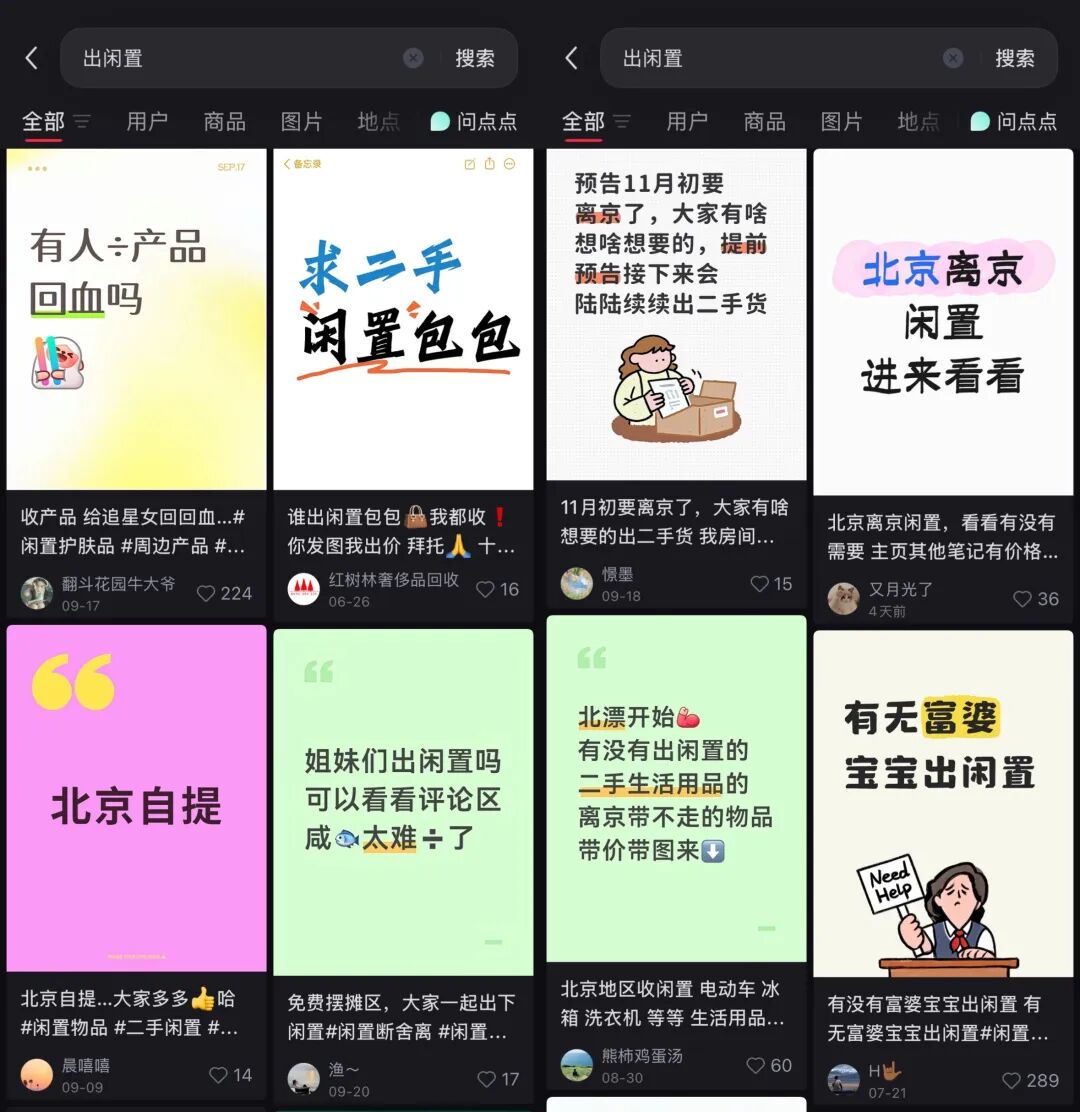
Image source from Xiaohongshu
Since there was no official transaction channel before, Xiaohongshu users usually complete subsequent transactions through Xianyu or WeChat.
"Browse on Xiaohongshu, buy on Xianyu" accurately summarizes the awkward role that Xiaohongshu has long played in the second-hand transaction chain.
The platform undertakes the role of content-driven product discovery and demand matching, but limited by the lack of transaction tools, a large number of users jump to Xianyu to complete orders and transactions after reading notes, and the transaction closed loop finally falls on external platforms.
Massive traffic is output for nothing, and transaction service fee revenue is taken away by competitors. Obviously, Xiaohongshu has no intention of continuing this situation of "working for others".
It is more noteworthy that the demand is not only exploding in the field of physical second-hand goods.
「Klout」observed the personal selling function of Xiaohongshu and found that the platform has developed a rich "service-based transaction" ecosystem. Individual skill service providers such as photographers and photo retouchers show their portfolios, accumulate reviews and complete transactions through the "Services" page.
One photographer has completed transactions with 1556 people, with zero disputes in the past six months; one photo retoucher has completed transactions with 609 people, with zero disputes in the past six months...
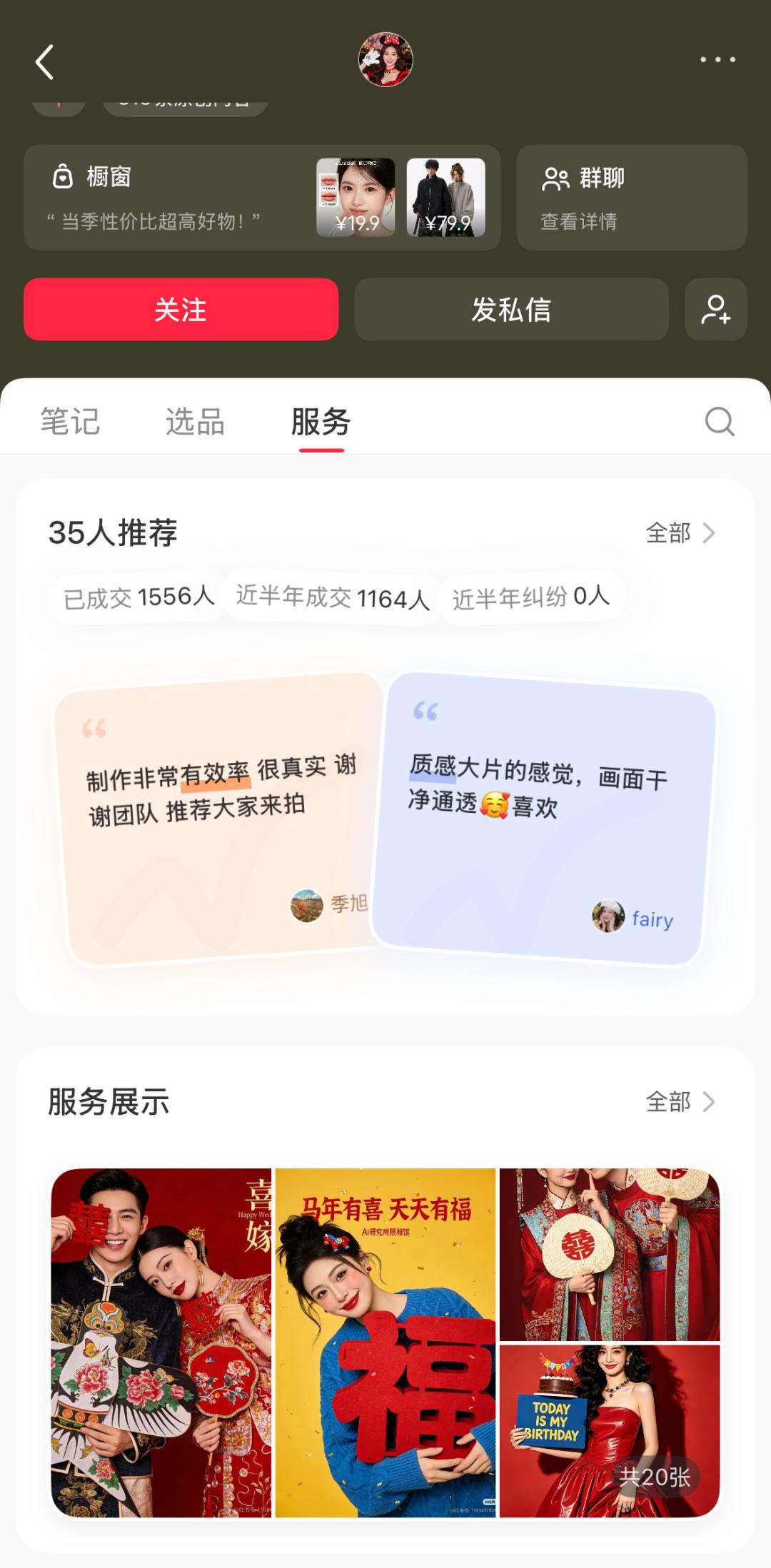
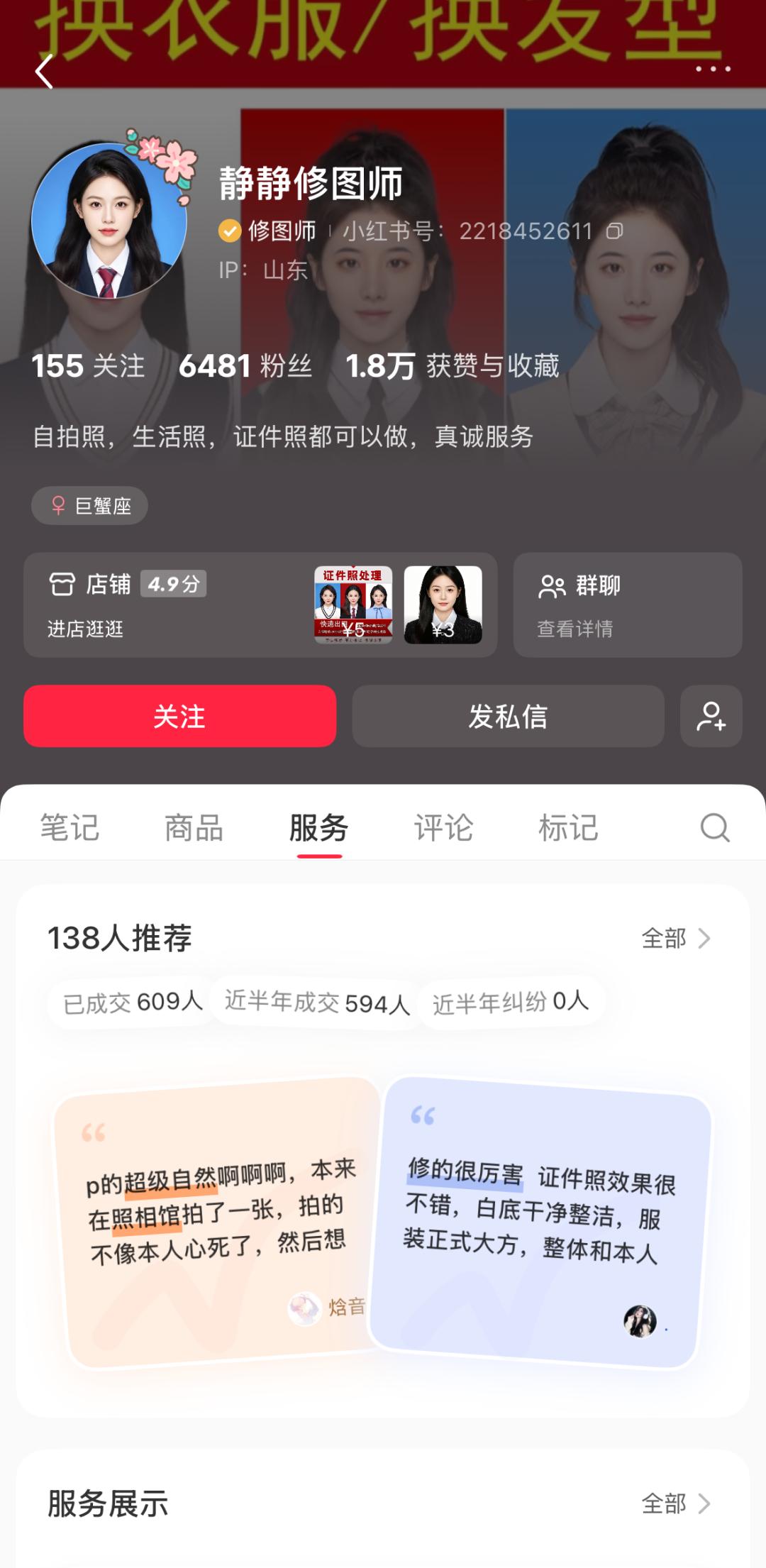
Image source from Xiaohongshu
These cases and data show that Xiaohongshu is naturally growing a market for "personal skills and service transactions", which is exactly the field that traditional second-hand platforms rarely get involved in or operate very roughly.
Looking for travel photographers, looking for photographers, and photographers publishing works to attract customers is an ecosystem and consensus that has long existed on Xiaohongshu. Now, the "idle item" function is just used to keep the already existing transactions within the platform.
External impetus on the supply side is also emerging. In the first half of 2026, Xianyu raised the service fee rate for Yuxiaopu sellers from 0.6% to 1.6%, and canceled the previous cap of 60 yuan per transaction. For a 20,000-yuan luxury bag, the handling fee was capped at 60 yuan before the adjustment, and 320 yuan is required after the adjustment. Many Yuxiaopu sellers have chosen to close their store rights and return to the ordinary seller mode. In contrast, Xiaohongshu's 0.6% fee rate just provides a low-cost migration option.
In the view of 「Klout」, Xiaohongshu's entry into second-hand transactions is not "another platform coming to grab Xianyu's business", but a community that has developed strong transaction demand has finally decided to keep transactions within its own ecosystem.
From notes to transactions, Xiaohongshu takes the shortest path
"Where there is traffic, there is demand." This sentence is particularly appropriate for Xiaohongshu.
Its underlying logic is not complicated: users' demands are stimulated while browsing notes, the demands naturally point to transactions, which were previously completed on other platforms. As one of the current gathering places for netizens to share product discoveries and communicate with like-minded people, Xiaohongshu has gathered a large number of users who love sharing and posting unboxing experiences, so demands naturally arise here.
Among them, service-based transactions particularly rely on pre-established trust, which is exactly what Xiaohongshu is good at.
Its previous content gene has already won users' recognition at the step before "product discovery to sales". From the perspective of 「Klout」, Xiaohongshu's advantage does not lie in how well its transaction tools are made, but in that the distance from content to transaction is the shortest in the industry, and the trust friction is extremely low.
Xiaohongshu notes themselves are product detail pages. Real customer photos, detailed usage experiences and real shot pictures form a more intuitive and warm trust carrier than credit scores.
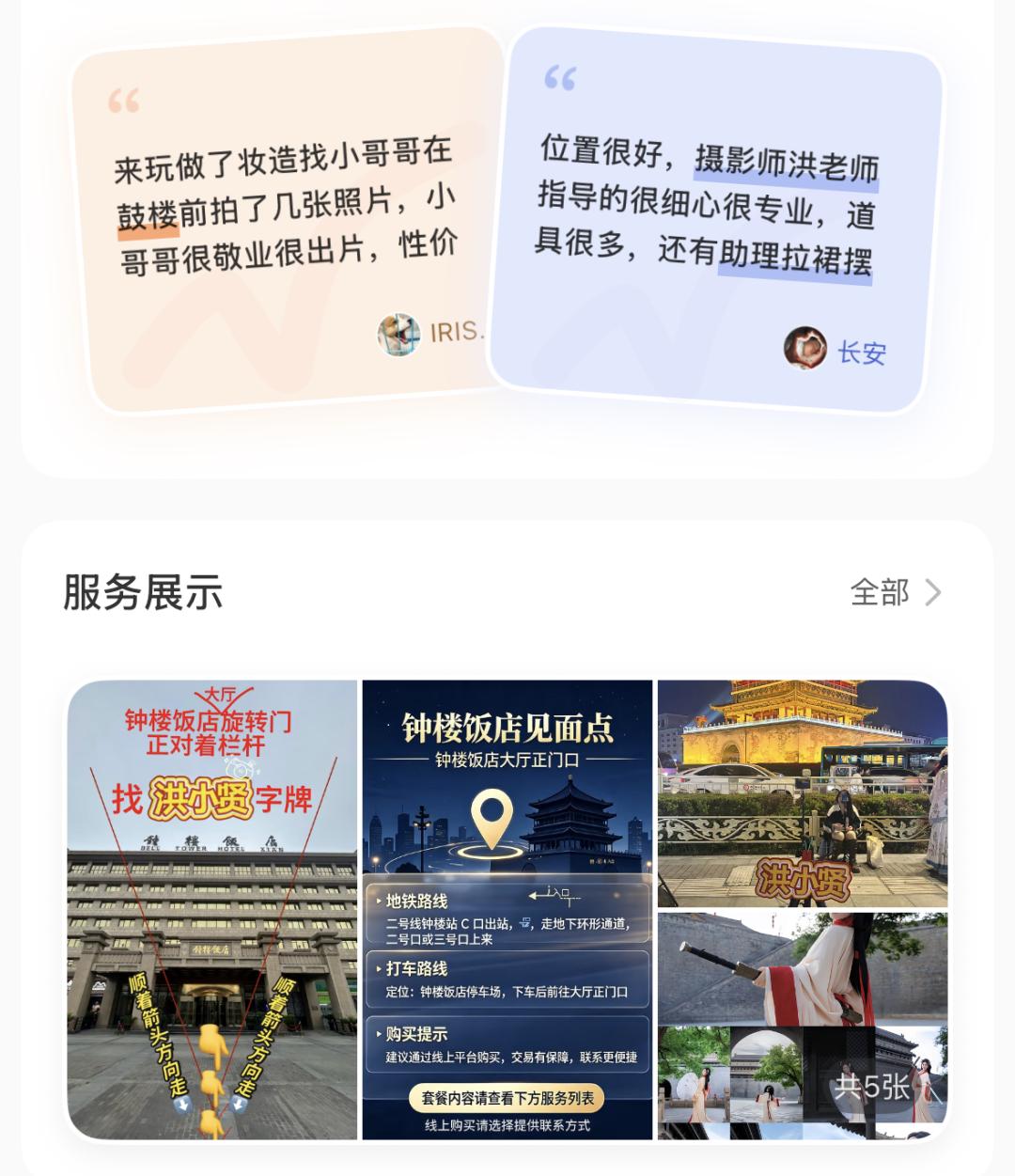
Image source from Xiaohongshu
The second-hand transaction has a market size of hundreds of billions of yuan. Even if it only takes over a part of the market, it still has considerable market value. What Xiaohongshu cuts into is exactly the part with the highest trust requirement and the highest content concentration.
Affected by various factors, the logical sequence of idle transactions on Xiaohongshu is also different from that on Xianyu.
Xianyu follows the mode of "people looking for goods": users go to search for products with clear demands, and transactions happen after the search; Xiaohongshu follows the mode of "goods looking for people": users' demands are stimulated by content while browsing notes, and then they place orders conveniently.
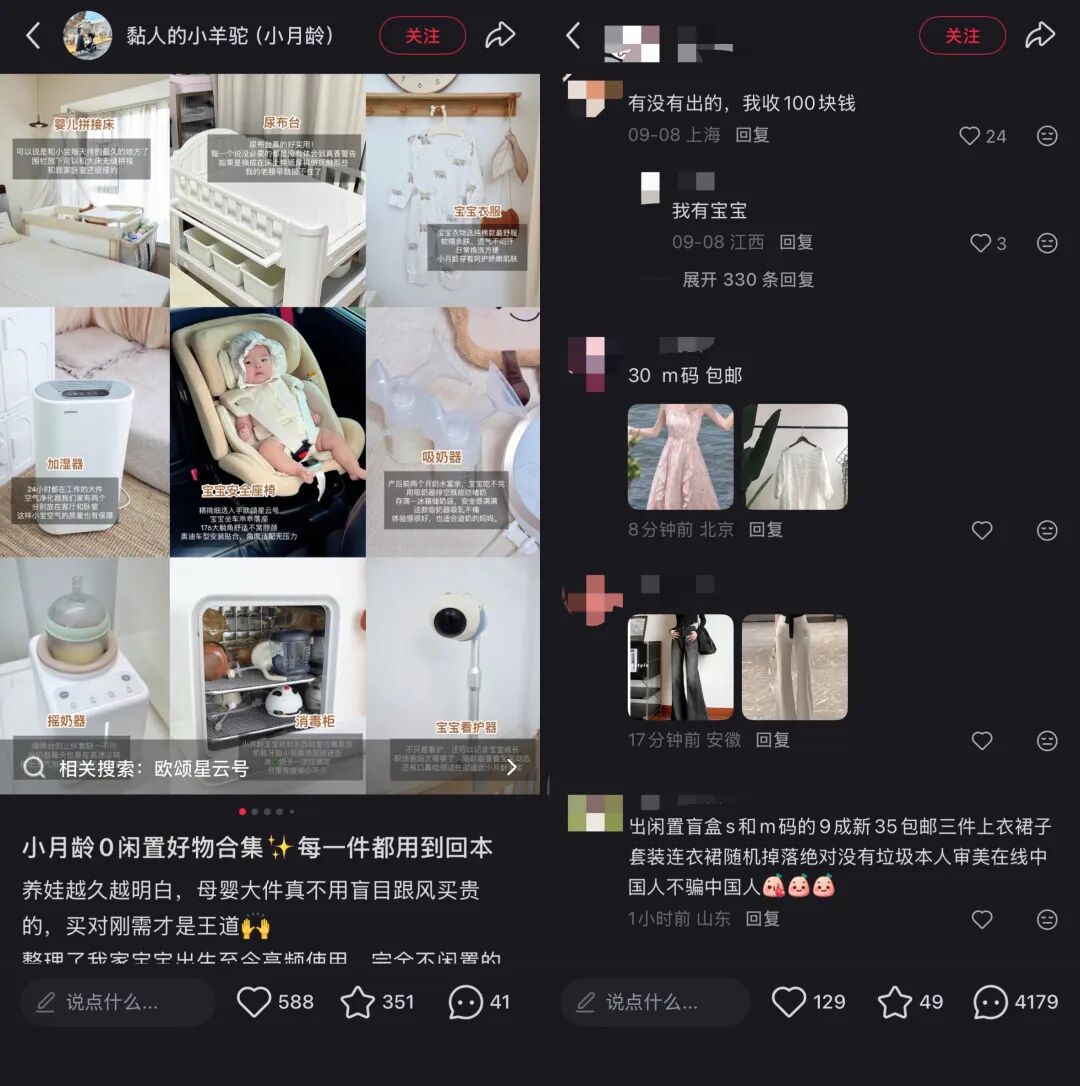
Image source from Xiaohongshu
Users do not need to switch to another app, do not need to re-search for products, and do not need to make judgments in a strange store review system, because trust has been established during the reading process.
Now, with the complement of this function, Xiaohongshu's product infrastructure has been basically completed, and according to current observations, the access threshold is extremely low.
The product is divided into two tracks: "sell idle items" (post a note and start selling quickly) and "side business" (sustainable operation with more complete functions), covering vertical categories such as "idle home appliances", "celebrity peripherals" and "digital second-hand products". Users can directly attach links to notes and send product cards in private messages.
The real opponent to face is not Xianyu
Despite its strong momentum, Xiaohongshu still faces many controversies and challenges in developing second-hand transactions.
The biggest doubt from the market is: can a community that started with the label of "a better life" accommodate the common "bargaining" and "mutual wrangling" in second-hand transactions?
The reason why Xianyu has grown into a huge platform today is not only supported by the e-commerce infrastructure of the Alibaba ecosystem, but also inseparable from its strong "marketplace atmosphere".
Buyers enjoy the pleasure of "getting a bargain", and sellers are good at "outwitting each other". But this atmosphere has also given rise to market chaos such as trust crises and rampant counterfeits. On the "Heima Complaint" platform, there are more than 200,000 complaints under the entry of "Xianyu", involving high-frequency problems such as product quality defects, online fraud and refund difficulties.
In contrast, the core asset of Xiaohongshu is its unique community atmosphere and sense of trust. When users buy second-hand products, they are often based on their recognition of the blogger's note content.
But this kind of trust is also fragile. Once open C2C transactions are introduced, professional sellers will definitely flood in. Will the community ecosystem be "polluted"? If a large number of transaction disputes arise, will the hard-won trust in product discovery be consumed?
The tug-of-war between community ecology and commercialization has always been an internal tension that Xiaohongshu is difficult to fundamentally adjust. Will this kind of pull and swing repeat itself in the "Personal Selling" business?
In any case, in the view of 「Klout」, Xiaohongshu's entry into second-hand transactions is an inevitable layout when the ecosystem and commercialization develop to a certain stage. But Xiaohongshu cannot replace Xianyu. Instead, it can rely on its differentiated advantages to seize the share of the high-end second-hand market and form a pattern of coexistence of the two platforms.
The core challenges are also very obvious: the transaction infrastructure and after-sales arbitration system are not perfect to support large-scale transactions; the community attribute restricts the settlement of professional merchants, which limits the scale of business; the category coverage is single, making it difficult to match Xianyu's full-category rigid demand transaction capability.
Conclusion
Looking back, Xiaohongshu's development of second-hand transactions is more like a belated "following the trend". Those "how to sell" and "is it still available" scattered in the comment areas of notes are real transaction willingness. In the past, these demands were ignited on Xiaohongshu, but had to be completed elsewhere. Now the platform has finally decided to straighten out this path that has been winding for many years.
If Xiaohongshu can maintain its own rhythm between trust and scale, it is enough to prove that in the ancient business of second-hand transactions, the warmth of the community can also be a kind of competitiveness.
As for the final result, we might as well leave it to time.
This article is from WeChat official account "TopKlout" (ID: TopKlout), written by 77, published with authorization from 36Kr.