Where do the unsold mooncakes go?
On one side, mooncake gift boxes on supermarket shelves are being discounted, on the other side, the topic "mooncakes are not selling well" has hit the hot search list.
Monitoring data from the Fast-Moving Consumer Goods Network shows that on the eve of this year's Mid-Autumn Festival (from August 14 to September 13), the mooncake sales revenue of major stores dropped by 45.17% year-on-year, sales volume fell by 40.67%, and gift box sales volume decreased by 49.04% year-on-year, almost halved.
The Mid-Autumn Festival has not yet ended, but promotions have already arrived, and the chill of the industry has set in.
Consumers are not suddenly stopping eating mooncakes, but are no longer willing to pay for the outer boxes, social connections and face value of the pastries.
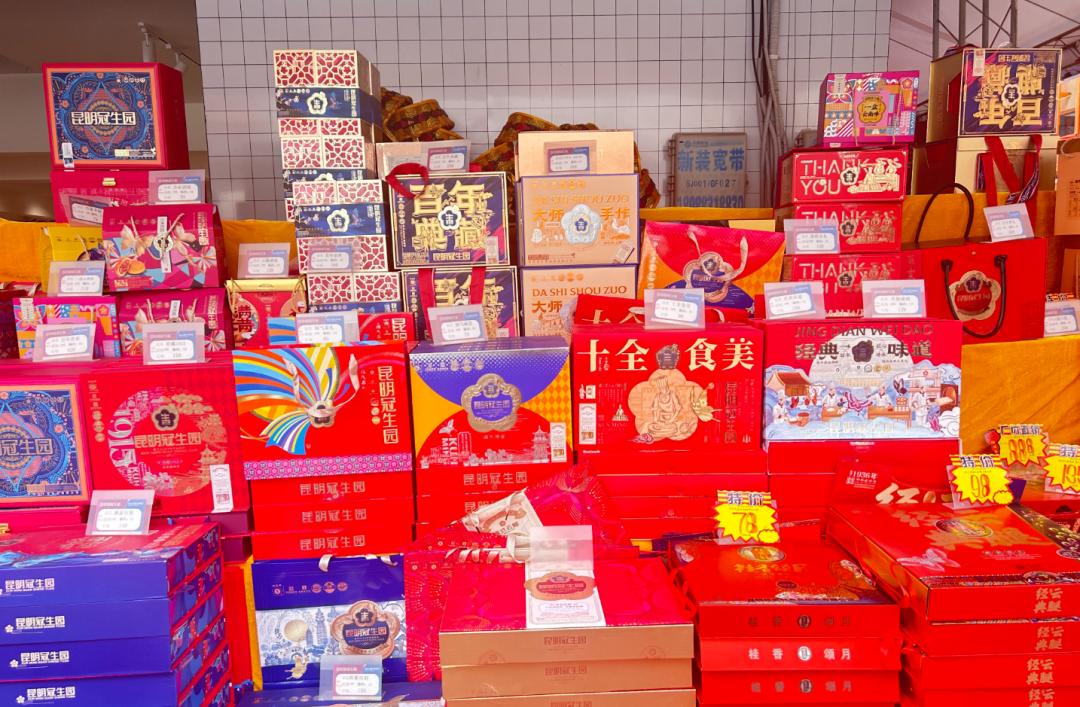
From "Selling Gifts" to "Selling Pastries"
The Market Is Shifting Gears
The 2026 Mid-Autumn Festival holiday falls on September 25 to 27. In the month before the festival, the mooncake sales revenue of traditional offline retail channels dropped by 36.4% year-on-year, converted to shipments fell by 23.98%, and the average price per 100 grams dropped from 5.84 yuan to 4.89 yuan.
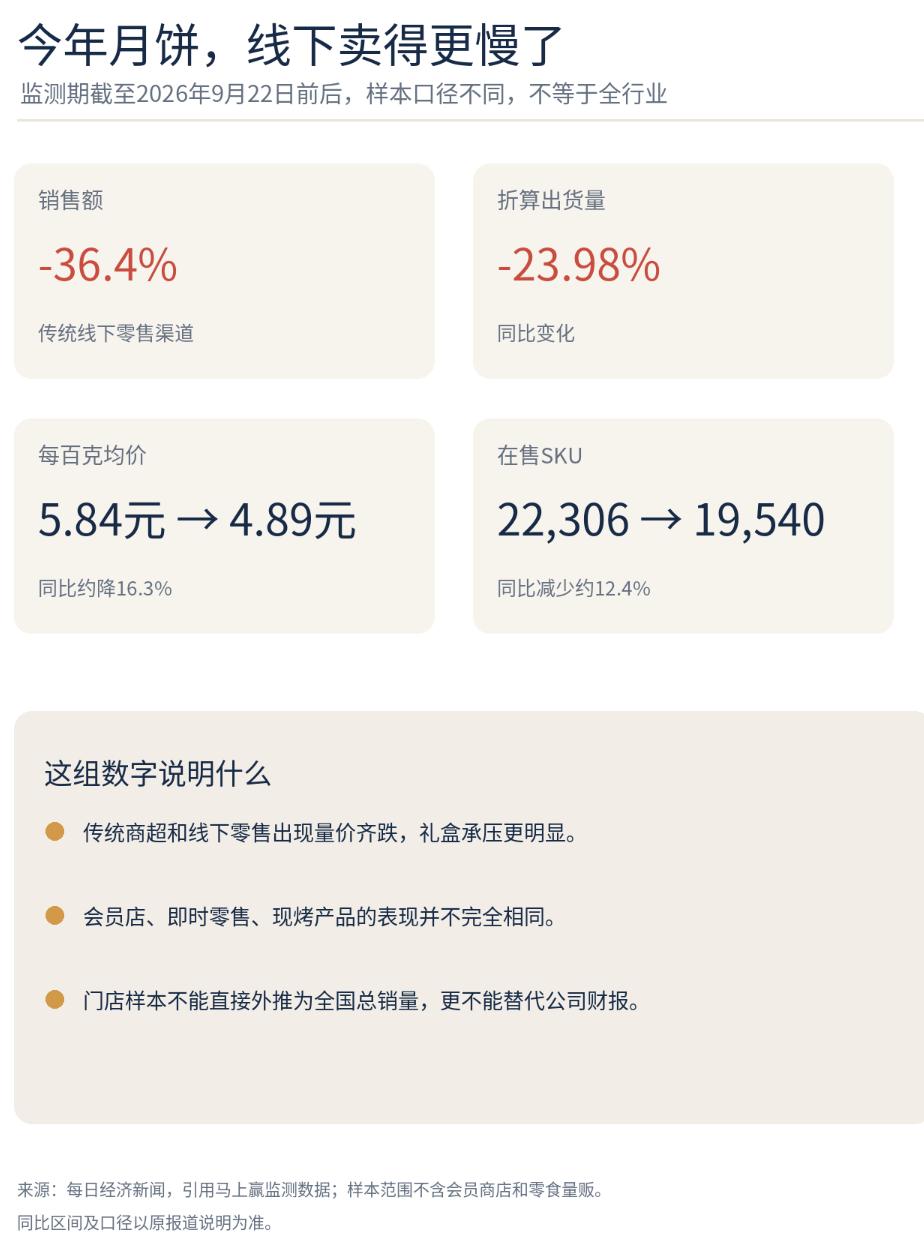
Another set of monitoring data from the Fast-Moving Consumer Goods Network also shows that from August 14 to September 13, the sales revenue of major stores decreased by 45.17%, and the sales volume of gift boxes dropped by 49.04%.
The time periods and sample scopes of the two sets of data are not exactly the same, so they cannot be directly combined to calculate the total national sales volume, but both point to the same fact: traditional physical stores and gift box channels are facing much greater sales pressure.
There are different calibers for estimating the industry scale.
According to the estimate by iiMedia Research, the national mooncake market size in 2025 was about 28.24 billion yuan, down 5.9% year-on-year; the annual summary of China National Baking Industry Association predicts that the cumulative sales revenue of the industry in 2025 will drop by about 15%.
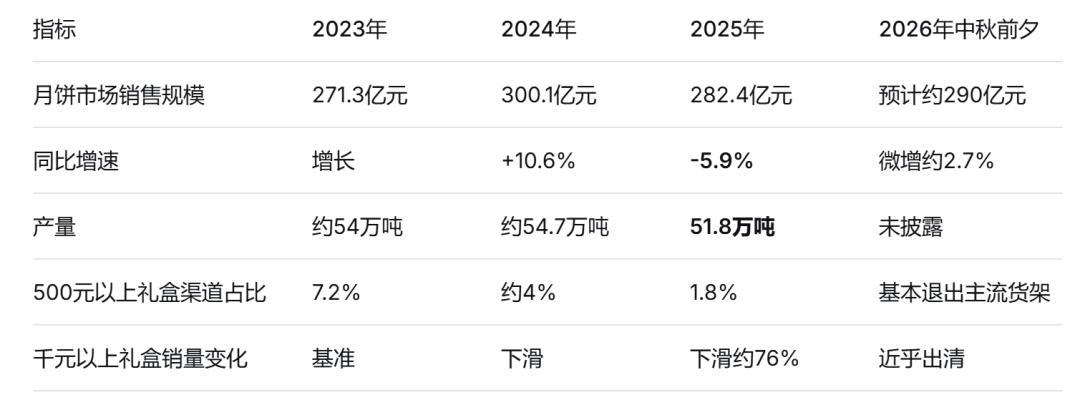
The gap between these two figures is quite large, and they cannot be confused.
What can be confirmed is that the old engine of festival gifts and group purchasing is decelerating, while home consumption and more affordable products are taking over.
Data from Lixunce Consumer Research shows that this year 50.4% of consumers choose to buy mooncakes for their own consumption, higher than the 42.5% who buy them as gifts.
Mooncake business itself is not a low-gross-margin business.
The 2025 annual report of Guangzhou Restaurant shows that its mooncake series generated revenue of 1.652 billion yuan, with a gross margin of 53.31%. The "Chinese and Western Pastry Gift Boxes" of Ganso Co., Ltd. have a gross margin of 54.81%, but this revenue includes gift boxes of mooncakes, rice dumplings and other products; Wufangzhai's mooncakes have a gross margin of 21.29%, and Toly Bread's mooncakes have a gross margin of 29.98%.
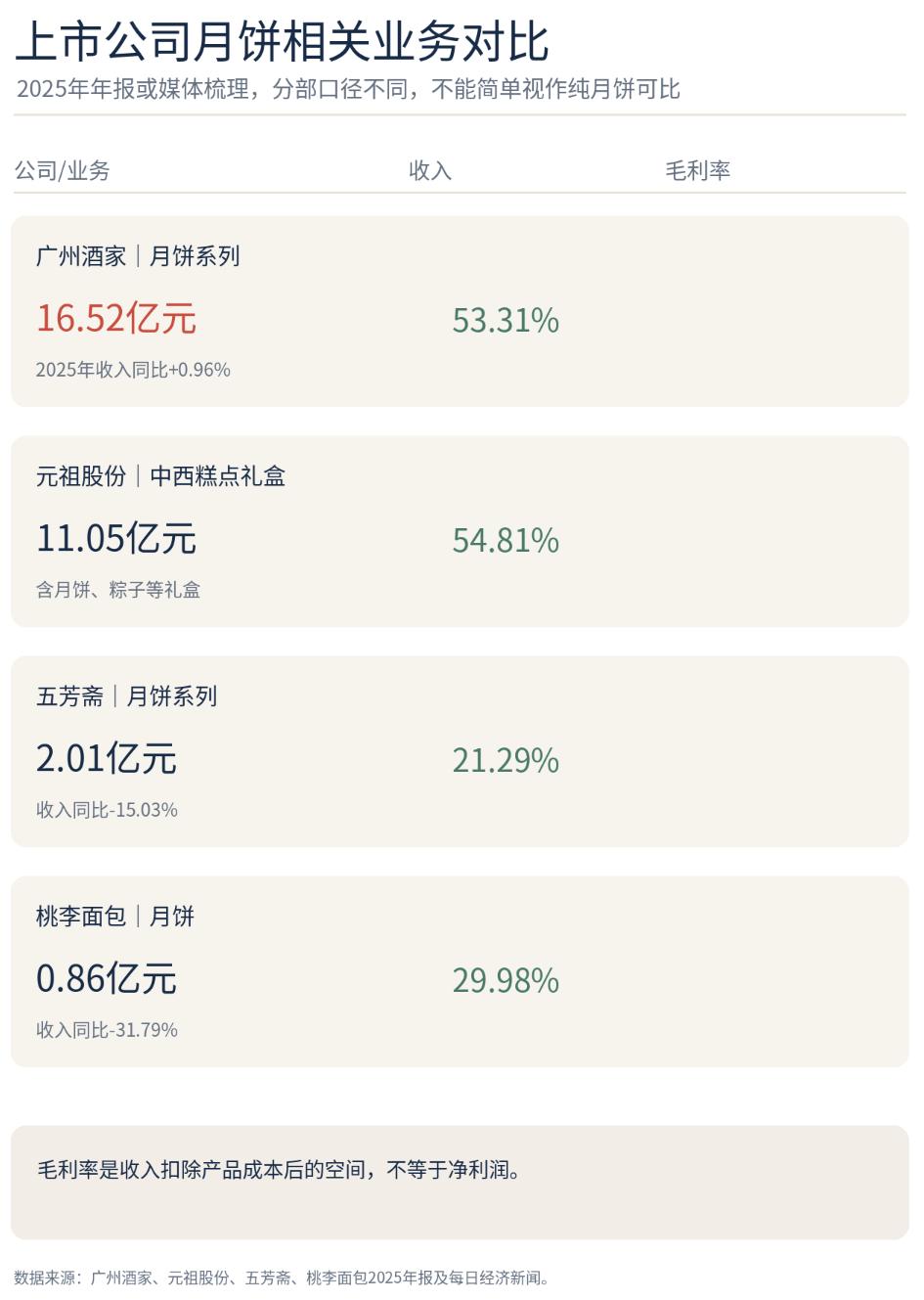
With different raw materials, production processes, channels and product structures, the gross margins naturally vary.
It is more important to note that gross profit is not net profit, and sales expenses, channel rebates and inventory losses have not been deducted yet.
Consumers Start to "Avoid Gift Boxes"
First, the number of gifting scenarios has decreased. In the past, mooncakes were sold not only for their taste, but also as workplace welfare, for business interactions and personal social exchanges.
Group purchasing procurement is becoming more standardized, and consumers are more cautious, so the demand for gift boxes naturally shrinks.
After the implementation of the national standard restricting excessive packaging, multi-layered packaging can no longer support high premiums, and consumers are increasingly cost-conscious.
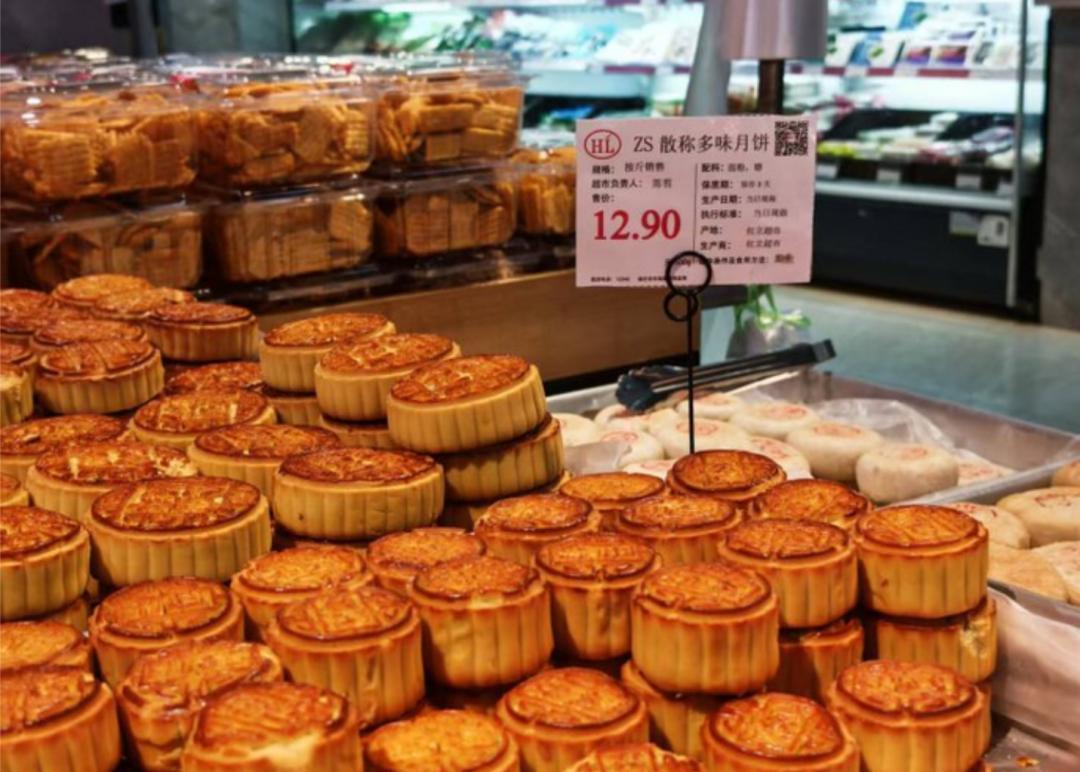
Second, products fail to keep up with modern lifestyles. Traditional mooncakes are usually too sweet, too greasy, and too large in portion. A box of eight mooncakes is enough to make people feel greasy after eating just two at home.
For many young people, mooncakes are a festival symbol rather than a daily necessity. The growing popularity of small-portion, low-sugar, freshly baked and regional flavored mooncakes shows that consumers have not left the market, but just want to eat more easily and make more informed purchases.
Third, sales are still overly concentrated in a short period. The mooncake sales window is very short, but production plans have to be determined several months in advance. Enterprises fear stockouts, and channels fear missing the peak season, so it is easy to overstock.
When the festival is approaching, inventory pressure turns into discount pressure. High gross margin combined with short sales cycle seems like a good business on paper, but in operation it is an exam for demand forecasting and channel management.
Industry participants are not limited to time-honored brands. Listed companies such as Guangzhou Restaurant, Ganso, Wufangzhai and Toly Bread have food manufacturing capabilities and retail networks; local pastry shops, catering brands, hotels, supermarket private labels and new e-commerce consumer brands are all competing for the seasonal consumption market.
Head enterprises have advantages in brand, production and channels, regional brands better understand local tastes, while freshly baked stores and membership stores look for new growth points through freshness and customization.
The market size is still tens of billions of yuan, but with a large number of participants and strong seasonality, the large market size does not mean everyone can make money.
Unsold Mooncakes
Where Do They End Up?
After the Mid-Autumn Festival, mooncakes usually lose their "festival gift" attribute first.
People who were willing to pay for the festival atmosphere and decent gifts may no longer be willing to buy them at the original price after the festival. Distributors and supermarkets usually first try to carry out discount promotions, transfer products to discount channels, or negotiate with brands for goods adjustment, return and exchange.
The specific treatment method depends on contractual agreements, product status and remaining shelf life.
Price cuts can recover part of the cash, but the deeper the discount, the thinner the profit; if inventory occupies the warehouse for a long time, it will also increase warehousing and capital pressure.
Some products will be transferred to group purchasing, employee welfare or public welfare donation, on the premise that the packaging is intact, the storage conditions are compliant, the products are still within the shelf life, and the source can be traced.
Donation does not mean that food safety responsibilities are also transferred. Whether the recipient has proper storage conditions and whether the products are properly preserved during transportation must not be ignored.
Therefore, there are more than two outcomes for post-festival mooncakes: those that still meet relevant conditions can be digested at a discount; those suitable for donation must have proper storage and traceability; those that do not meet food safety requirements must be disposed of in a standardized manner.
What really deserves attention is the flow of expired mooncakes.
Food safety regulations require that deteriorated, expired or recycled food products shall be marked prominently or stored separately, and timely measures such as harmless treatment and destruction shall be taken, with records kept truthfully.
Expired food cannot be re-sold with repackaged or altered production dates, nor can it be arbitrarily reprocessed.
According to a report by China News Network, a staff member of a feed factory in Hebei told reporters that they recycle near-expired and expired leftover food inventory all year round, including biscuits, mooncakes, etc., to be used as feed raw materials, and promise that these products will not flow back to the market for the second time.
The recycling price varies according to the fillings. Mooncakes with five-kernel fillings are about 1000 yuan per ton, while those with fruit fillings and red bean paste fillings are about 800 yuan per ton. The reason why five-kernel mooncakes have a higher price is that they contain a large amount of nuts such as melon seeds and peanuts, with high nutritional content and dry fillings.
The recycling price is 1000 yuan per ton. Compared with the selling price of a box of mooncakes that often costs hundreds of yuan in the terminal market, this figure is particularly striking.
It means that the moment mooncakes fall from "cultural consumer goods" back to "raw materials", their value has shrunk by more than 99%.
But don't rush to mock it. Compared with the chaos of "reprocessing recycled mooncakes" and "renovating old fillings" exposed in past years, the current treatment process has formed a relatively mature closed loop.
The whole industry has realized production based on sales, post-festival diversion and feed-based utilization, which is much more standardized than the past at least at the compliance level.
Problems Facing the Mooncake Industry
Mooncake sales are highly concentrated, so enterprises easily mistake pre-festival distribution for actual demand, and distributors' stock-in for consumers' purchases.
But the goods in the channels do not mean they have entered consumers' homes; full of gift boxes in distributors' warehouses do not mean strong market sales.
This year, some supermarkets reduce overstock by controlling the first batch of distribution, replenishing goods in batches and dynamically adjusting prices, which reflects that the business logic is changing: from pursuing full distribution before the festival to carefully observing the actual sales speed.
This is a practical test for both brands and distributors.
Brands need to make production plans more aligned with terminal demand, instead of relying only on high-end gift boxes to boost scale; distributors need to focus on real sales and inventory turnover, and not mistake "factory shipment" for "consumer purchase"; supermarkets and platforms also need to arrange procurement carefully to avoid overstocking for the sake of display and promotion before the festival.
Mooncakes will not disappear from Mid-Autumn Festival just because a few fewer boxes are sold, but the industry really needs to recalculate the logic of this business. Consumers still need the taste of the festival, but they do not necessarily need larger boxes, higher prices, and portions that are too big to finish.
Only those who can rebalance taste, price, packaging and stock preparation can save distributors from worrying about full warehouses of unsold gift boxes after the festival.
Mooncakes Are Not Outdated
What Is Outdated Is the Old Business Model
After presenting so much data, let me share some heartfelt thoughts.
The fact that mooncakes are not selling well does not mean people no longer celebrate the Mid-Autumn Festival.
The report of China National Baking Industry Association clearly points out that as the core carrier of Mid-Autumn Festival culture and an indispensable festival symbol, mooncakes' rigid consumer demand has not changed.
What has changed? It is the logic of this business.
In the past two decades, the core business model of the mooncake industry has been: high-priced gift boxes, corporate group purchasing, channel distribution, and multi-layer price markup.
People who buy them do not eat them, and people who eat them do not buy them.
A box of mooncakes passes through general agents, provincial agents and distributors from the factory to consumers, and each layer adds a markup. Finally, the mooncakes that consumers buy for 300 yuan may only have an ex-factory price of 60 yuan.
This model can work when group purchasing orders support half of the revenue, but once group purchasing shrinks, the inventory on the whole chain will all be pressed on the channels.
This year's promotion wave on the eve of Mid-Autumn Festival started at least one week earlier than previous years, with discounts ranging from 40% off to 10% off.
Some wholesalers said that the profit margin of mooncake gift boxes has dropped to about 10%, but they have to sell them at a discount even at a loss, "otherwise they will be unsold and wasted after the 15th day of the 8th lunar month".
This is the end of the old model.
But signals of a new model have also emerged.
The custom mooncakes at Sam's Club are sold out with long queues. Low-GI and low-sugar mooncake sales have risen against the trend. Suzhou Daoxiangcun has launched new products focusing on low-GI, clean labels and food-medicine homology, while time-honored brands such as Guangzhou Restaurant and Luxianglou are also following up (this article does not constitute any consumption suggestion, so letters are used in the brand names).
The share of sales on online e-commerce channels continues to rise, and Wufangzhai's online channel sales share has reached about 50%.
What does this mean? Consumers are not stopping buying mooncakes, they are just not buying the mooncakes that are "expensive, greasy, sweet, and whose packaging is worth more than the pastry itself".
Mooncakes are returning from a kind of "social currency" back to the essence of "food".
This return process will be painful, because it requires squeezing out the channel bubbles and brand premiums accumulated over the past two decades. But for the industry, this is a good thing.
When the value of a box of mooncakes no longer depends on how exquisite the box is or how famous the brand is, but on how good the filling is, how much sugar is added, and whether the price is reasonable, those who truly focus on making good products will win.
The 28.2-billion-yuan market will not disappear, it is just changing its way of operation.
What is your opinion on the topic of this year's cold mooncake sales? We look forward to your civilized and rational insightful comments in the message area.
Disclaimer: This article is only an analysis of