When AI short dramas meet games, comic drama mini-games are fast emerging as a new industry hotspot.
Few internet tracks fit the phrase "born fast, die fast" better than AI-generated short dramas. In the first half of this year, the China Netcasting Services Association released two versions of the *Micro-Drama Creation Guidelines*, showing that about 128,000 micro-dramas were launched across the industry in the first quarter, of which 122,000 were AI-generated, accounting for over 95%. However, in the second quarter, the total number of micro-dramas reached 239,000, while the number of AI-generated ones was 153,000, with its proportion dropping to 63.96%.
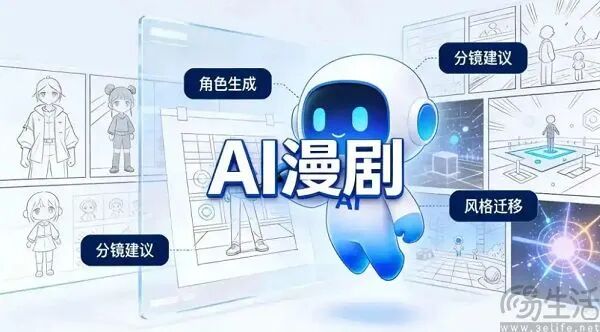
Comments like "empty facial expressions, lack of realism" and "sometimes they look too much like real people, but they are not real people" indicate that AI short dramas have begun to show signs of failing to retain audiences. After all, under the call of "a 3-person team, 3,000 yuan of startup capital, and a monthly income of 300,000 yuan", a large number of inexperienced creators have poured into the track, leading to a rapid decline in the content quality of AI short dramas, with homogenization and low quality becoming the norm.
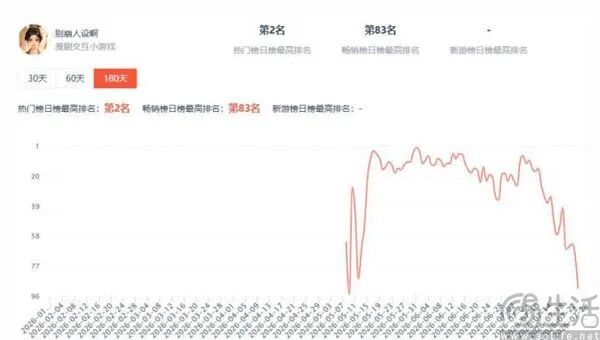
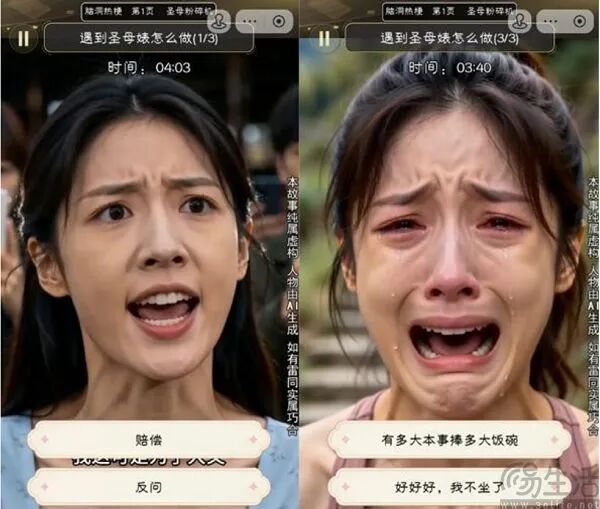
To pursue innovation and change, some creators draw inspiration from live-action interactive film and games, and a type of comic mini-game that integrates "game + comic drama" is quietly rising. A few days ago, a comic mini-game named *Don't Break Your Character Setting* once rushed to the TOP 2 of the Douyin Mini-Game Hot List. It is reported that this comic mini-game takes "choice-driven plot" as the core, where players make choices at key plot nodes to influence the direction of the story, realizing the integration of drama watching, plot guessing and level breaking.
Why do people say comic mini-games will become the next blue ocean? The reason is that supported by AI video tools, the AI short drama track has fallen into overcapacity at an extremely fast speed. Since Seedance 2.0 and Keling 3.0 have overcome problems such as multi-lens coherent narration, original audio and video synchronization, and character consistency, AI video has got rid of the previous dilemma of relying on "random card drawing", which lays a practical foundation for the development of AI short dramas.
Although the short drama category has shown the trait of "makeshift team" since its birth, its roughness is only relative to traditional movies and TV dramas. Links such as costumes, makeup and props, art scene setting, performance and shooting can be simplified, but cannot be completely absent, and actors, behind-the-scenes workers and shooting sites are all indispensable. In contrast, AI short drama belongs to the typical "super individual" mode, where two or three people can produce a whole drama in just one week.
While the technical threshold has dropped sharply, major online literature platforms have opened their IP copyright libraries one after another, making the production capacity of AI short dramas surge from "flood irrigation" to "torrential flood". However, it is a pity that although the production capacity of AI short dramas has increased, the content quality has not improved synchronously, and high-quality content is even submerged in a large amount of homogeneous content. Nowadays, when you open various short drama apps, you will see standardized facial features generated by assembly lines, templated character modeling, and narratives that follow the same pattern no matter how they change. There is no reason for audiences not to get bored.
In a sense, the tolerance of audiences for AI short dramas in their initial stage has become the reason for the mixed quality of content in this track. In addition, most of the creations are centered on "pleasing sensory experience", and the narrative templates are inseparable from "dominant president falls in love with me", "vicious supporting actress gets slapped in the face", "dragon king returns". The core of the rapid rise of AI short dramas is that they can realize close-up fighting scenes, fantastic and magnificent worlds, and weird and eerie atmospheres at low cost, and AI rendering can complete the imaginative plots that cannot be realized by real-person performance.

For themes such as Xianxia world, cosmic war, and post-apocalyptic wasteland, the cost of real-person shooting often starts at tens of millions of yuan, which is almost unaffordable for short drama crews with limited budget, while AI video generation only costs thousands of yuan in tokens. For the imaginative and rich content, users used to be willing to tolerate the problems of AI short dramas such as plot loopholes, stiff expressions, and single character settings.
However, the extremely low threshold of AI short dramas has made this track quickly fall into structural overcapacity. When users' aesthetic fatigue is inevitable, they will naturally put forward higher requirements for picture quality clarity, character recognition, plot logic and picture smoothness. After all, AI can only complete the basic creation from "0 to 1", and the optimization process from "1 to excellent" relies on human creators. But in the fanatical market environment, most creators pursue rapid production and immediate monetization, and have no time, no budget, and no intention to polish the content.
In fact, there is no lack of high-quality content in AI short dramas, but users have no time to find the good ones from the massive content.
Then the question arises: since they are both created by AI, why can comic mini-games become a new lucrative field? This is because when AI comic dramas are wrapped in the shell of interactive film and games, they provide users with rare interactivity and sense of participation. Through independent selection at key plot nodes, audiences are no longer mere information receivers, but become variables that affect the narrative process, and different choices will lead to different endings of the story.
As a product between games and film and television works, traditional interactive film and games have much higher production costs than film and television content of the same scale. Moreover, the "gamified narrative" feature of interactive videos easily leads creators to fall into the trap of excessive gamification during production. Once too much emphasis is placed on interaction while ignoring the depth of content, the problem of "form over content" will appear.
AI short dramas perfectly solve the pain points of interactive film and games. AI video tools are responsible for character design, scene pictures and storyboards, and the audience of AI short dramas is not too picky about content quality. As long as the plot has strong imagination, high conflict and unexpected twists, they will be satisfied.
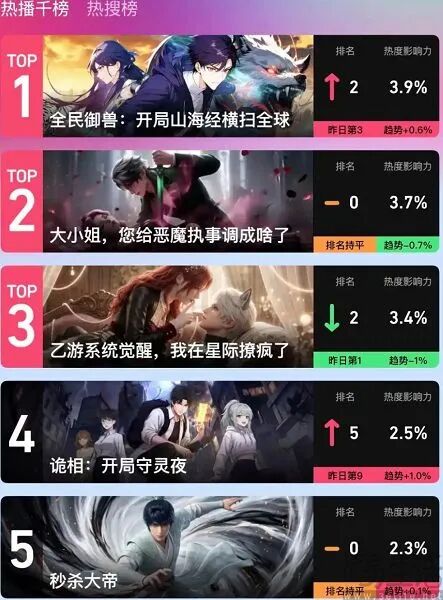
Compared with traditional AI short dramas, the interactive content of comic mini-games enhances users' sense of responsibility for decision-making, making them invest psychological expectations in the development of the plot. This deep participation will be transformed into sunk costs, prompting them to instinctively push the plot forward and reveal the ending.
Moreover, the monetization ability of comic mini-games is even better. After all, as a close relative of mini-games, comic mini-games are naturally adapted to IAA (in-app advertising monetization). For example, the demand for passing levels and watching extra content will drive users to watch advertisements, and the completion rate can easily exceed the excellent industry level of 60%.
In short, with the same low cost and short cycle, the strong interactivity of comic mini-games creates a differentiated selling point different from traditional AI short dramas. For audiences who have been aesthetically fatigued by AI short dramas, the freshness of comic mini-games is the killer feature for them to stand out from the competition.
All images in this article are from the Internet.
This article is from the WeChat Official Account "SanYi Life" (ID: IT-3eLife), author: SanYi Jun, published with authorization from 36Kr.