The new energy vehicle industry is facing a scale-related "dilemma", and Wan Gang and Zhu Huarong have put forward the targeted solutions to deal with this challenge.
The scale of the new energy vehicle (NEV) sector continues to expand, yet the marginal value brought by such expansion is diminishing.
In the past, all industry players were scrambling for market share, as in the early stage of the market, sales volume determined which enterprises could survive. However, going forward, the core theme of China's NEV industry development will definitely be "quantitative change leading to qualitative change".
Since the start of this year, the entire automotive market has been under pressure, and the overall base of fuel vehicle sales has continued to shrink. Data shows that from January to August 2026, cumulative retail sales of passenger vehicles nationwide reached approximately 11.716 million units, down 20.8% year on year.
Among them, retail sales of conventional fuel passenger vehicles in August amounted to only 540,000 units, a 40% year-on-year drop, while NEV retail sales hit 1.005 million units, nearly double that of fuel vehicles. It is also noteworthy that the structure of the NEV market is changing at an accelerated pace:
In August, wholesale sales of new energy passenger vehicles reached 1.51 million units, up 16.4% year on year, of which pure electric vehicles hit 1.032 million units, representing a 25.9% year-on-year increase. The domestic retail penetration rate of NEVs has reached 65.2%, 9.9 percentage points higher than the same period last year.
On the surface, these are all "positive" figures. But the reason why this is defined as the "scale dilemma" lies in the fact that the growth in volume cannot be translated into real profits.
It is undeniable that China's NEV market continues to expand in scale, and electrification and intelligent technologies are also making continuous breakthroughs. On the other hand, however, the industry is facing cutthroat internal competition, price wars, squeezed profit margins, and technological bottlenecks...
As the NEV sector transitions from the market popularization stage to the stage of systemic competition, simply expanding sales volume can no longer support the sustained growth of enterprises. The industry must translate scale into technological efficiency, global operational capabilities, and sufficiently high commercial value.
Against this industry backdrop, the 2026 World New Energy Vehicle Congress was officially held in Hainan.
The Automotive Industry Is in Urgent Need of a New Growth Paradigm
The scale dilemma of the NEV industry does not mean that the market has lost growth potential. Instead, the old model that relied on sales volume growth to drive enterprise development is no longer effective. Sales scale can help enterprises dilute some costs, but without simultaneous improvements in R&D efficiency, supply chain management and product competitiveness, scale can only translate into inventory pressure, price cuts and operational risks.
Therefore, the core topic discussed by industry leaders at this global NEV congress has shifted from "how to expand the NEV market size" to "how to translate scale into higher-quality growth".
In the view of Wan Gang, the NEV industry has now entered a new stage of development. In the first half of 2026, global NEV sales reached 11.234 million units, with a market penetration rate of 24%. China's NEV sales hit as high as 7.446 million units, accounting for nearly 70% of the global total. The question is, as the industry scale keeps growing, where will the next growth momentum come from?
Wan Gang's answer is "making breakthroughs in electrification, expanding applications of hydrogen energy, and advancing intelligent upgrading".
He pointed out that it is necessary to "promote the popularization and application of pure electric, plug-in/extended-range hybrid, and fuel cell vehicles in accordance with local conditions", while continuously advancing the evolution of power battery technologies, and further exploring new vehicle-energy integration modes such as V2G. Commercial vehicles have become a key scenario for hydrogen energy application expansion.
Intelligent technologies also need further iteration. Wan Gang proposed to build a three-layer structure consisting of "a new type of chassis, a central computing platform, and a cloud computing platform", to form a continuous data closed loop among vehicles, roads and the cloud. As the penetration rate of new vehicles equipped with L2-level assisted driving exceeds 70%, competition in the automotive industry has evolved from competition over individual vehicle technologies to competition over the systemic capability of vehicle-road-cloud coordination.
Of course, what deserves more attention is that Wan Gang listed "open growth" alongside "innovative growth" and "green growth", emphasizing enhancing the resilience of industrial development through open cooperation. Up to now, "going global" has become a mandatory task for Chinese automakers, yet the path of overseas expansion has also changed: from simply selling products to overseas markets, it has gradually extended to the global layout of technologies, supply chains, data, services and even localized operation systems.
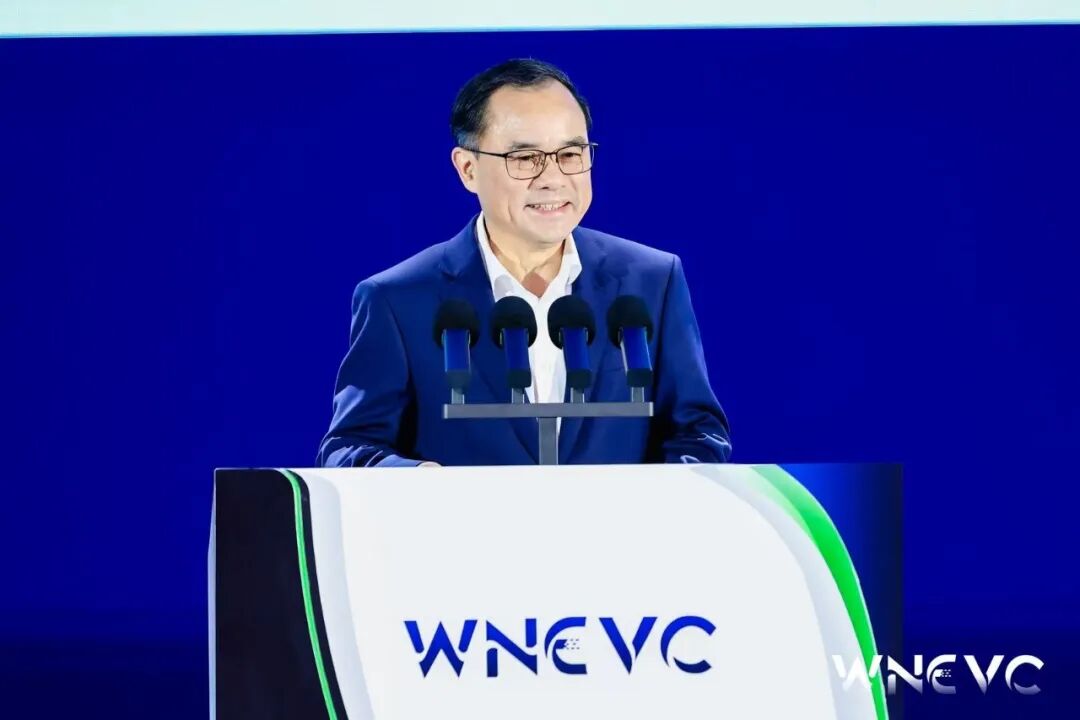
From energy pathways to intelligent technologies, and then to globalization, what Wan Gang put forward is essentially the "roadmap" for the next stage of the NEV industry. But for automakers at the forefront of competition, clarifying the direction is only the first step.
Zhu Huarong has a very straightforward judgment on the current automotive industry. He stated bluntly: "The NEV industry has entered a new development pattern where 'slow progress means regression'."
In his view, new energy and intelligent technologies are evolving from "quantitative change" to "qualitative change", and competition in the automotive industry has moved beyond product competition to all-round competition over technologies, scale and ecological systems. Under such circumstances, enterprises must strive to cross the chasm in one go, otherwise they can only watch the market fall back into the quagmire.
Another notable change lies in overseas expansion: "In the next 10 to 15 years, no single technical pathway will dominate the global market."
Zhu Huarong pointed out that different markets vary greatly in energy structure, consumption habits and infrastructure. Europe is dominated by pure electric vehicles, Southeast Asia sees parallel development of hybrid and pure electric vehicles, the Middle East still relies mainly on internal combustion engines, and the Latin American market is in a stage of rapid development of multiple new energy pathways.
Therefore, for Chinese automakers that are accelerating their globalization process, it is particularly important to learn to adapt measures to local conditions.
In addition, Zhu Huarong also predicted that in the next 3 to 5 years, the annual sales threshold for global automakers will rise significantly: 3.5 million units per year may only be enough to "survive", 5 to 7 million units per year can allow enterprises to "get by", and only 8 to 10 million units per year can support "sound development".
Nevertheless, it is worth noting that scale remains important, but what matters more is whether enterprises can build capabilities to withstand cyclical fluctuations after expanding their scale.
Multinational Automakers Are Re-recognizing China
While domestic automakers are seeking breakthroughs to balance scale and profitability, multinational automakers are doing the same. The wave of new energy vehicles and intelligent technologies has prompted these global automotive giants to rethink the position of the Chinese market in their global business layouts.
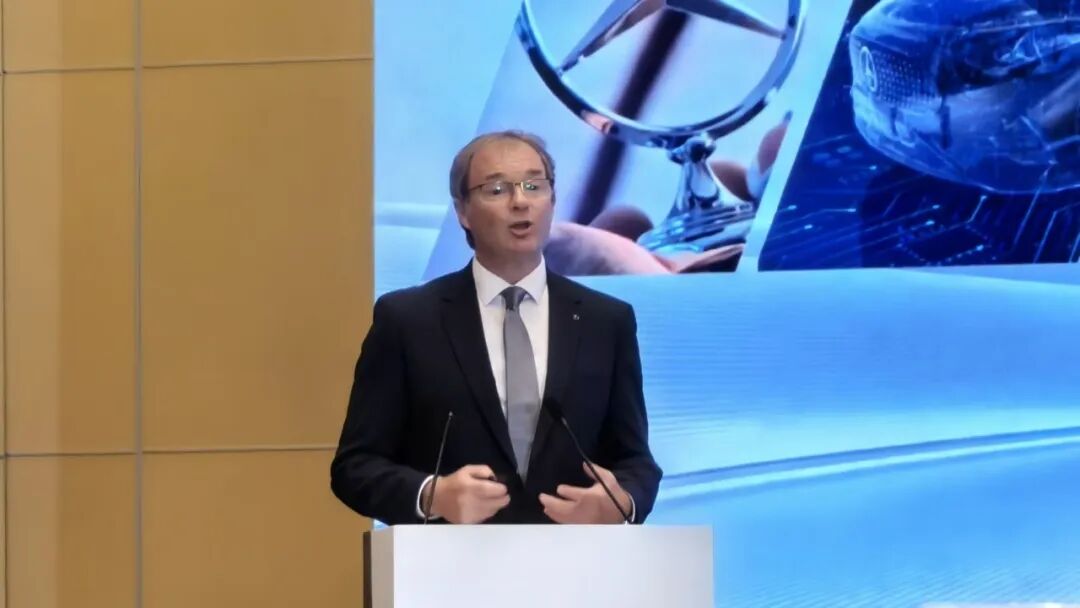
At the Sino-German Automotive Industry Cooperation and Development Forum, Markus Schäfer, Head of R&D and Procurement for Mercedes-Benz China, stated that Sino-German automotive cooperation has extended from the previous stages of joint venture production, market expansion and supplier network construction to areas including intelligent cockpits, assisted driving, software, batteries, charging ecosystems and user experience.
As technologies such as intelligent cockpits, assisted driving and large models are rapidly being applied in mass-produced vehicles, local users are adopting new functions at an increasingly fast pace. The previous model of introducing products based on a unified global R&D system can hardly keep up with the rhythm of the Chinese market.
As a result, the role of Mercedes-Benz's Chinese R&D team has begun to change. It is now positioned closer to users and the supply chain, with deeper participation in product decision-making and technology verification, and the experience accumulated in the Chinese market will eventually be integrated into the global product system. "In China, for the world" has become Mercedes-Benz's new development philosophy.
At the same time, Volkswagen is also undergoing a "strategic shift".
Bernd Pischetsrieder, Member of the Management Board of Volkswagen Group, stated that the trend of local R&D and technological coordination in the automotive industry is further strengthening. Core capabilities such as vehicle platforms, electrical and electronic architectures, software and intelligent driving are accelerating integration, and industrial efficiency is continuously improved through large-scale application.
However, Bernd Pischetsrieder also pointed out the corresponding drawbacks. As technologies including new energy vehicles, intelligent driving and artificial intelligence are being popularized at an accelerated pace, the speed of industry innovation keeps rising, and enterprises are facing challenges such as shortened payback period for R&D investment and squeezed profitability.
Therefore, future industrial competition does not simply pursue faster innovation speed, but requires balancing technological innovation with commercial value, quality safety and long-term investment capabilities.
This view coincides with the opinion of Nicolas Peter, Member of the Board of Management of BMW Group.
Nicolas Peter pointed out that changes in the economic environment, intensified market competition, supply chain restructuring, as well as requirements for safety, carbon emission reduction and data governance, are all testing the long-term operational capabilities of automotive enterprises. In the future, it is necessary to take into account quality, safety, efficiency and long-term value at the same time, and enhance the stability of the industrial and supply chains through open cooperation.
Although the three multinational automakers have different focuses in their statements, their views do not contradict each other. The Chinese market is developing fast enough, and its industrial chain is sufficiently complete. These conditions have gradually made China a key market for global automakers to observe industry trends, verify products and develop new capabilities.
However, there is a new problem at present: Chinese automakers are going global, and multinational automakers are also accelerating the absorption of Chinese technologies and innovations. In the future global competition, who will be able to export their core capabilities, and who will be able to integrate global resources back to their home markets?
The Role of Suppliers Has Also Changed
If complete vehicle manufacturers focus on how to achieve growth in scale and profit, and multinational automakers are thinking about how to leverage China's innovative technologies and supply chain resources, component suppliers such as Horizon and NavInfo are seeing the shifting direction of value in the automotive industry.
In the era of intelligent vehicles, chips, algorithms, maps, data and software have been deeply involved in product definition. As vehicles are increasingly evolving into intelligent terminals integrating software and hardware, suppliers no longer only provide single components as required by automakers, but gradually participate in the architecture design, function development, system verification and global service layout of complete vehicles.
Chen Liming, Vice Chairman of Horizon, believes that automotive intelligence is gradually returning to product experience and user value. As intelligent driving moves from concept to mass production, safety, reliability and actual user experience will become the real evaluation criteria.
At the same time, intelligent driving is evolving from simple competition over individual functions to systemic competition driven by data, algorithms and computing power. Automotive electrical and electronic architectures are also gradually shifting from distributed to centralized structures. Behind these technological changes is the reconstruction of the overall system capability of intelligent vehicles, moving beyond "individual function optimization".
In the past, adding one intelligent function to a vehicle could often become a selling point; but when intelligent driving gradually becomes a basic capability of new vehicles, chip computing power, algorithm capability, data closed loop, electrical and electronic architecture, and the overall vehicle coordination capability will all ultimately be reflected in the actual user experience.
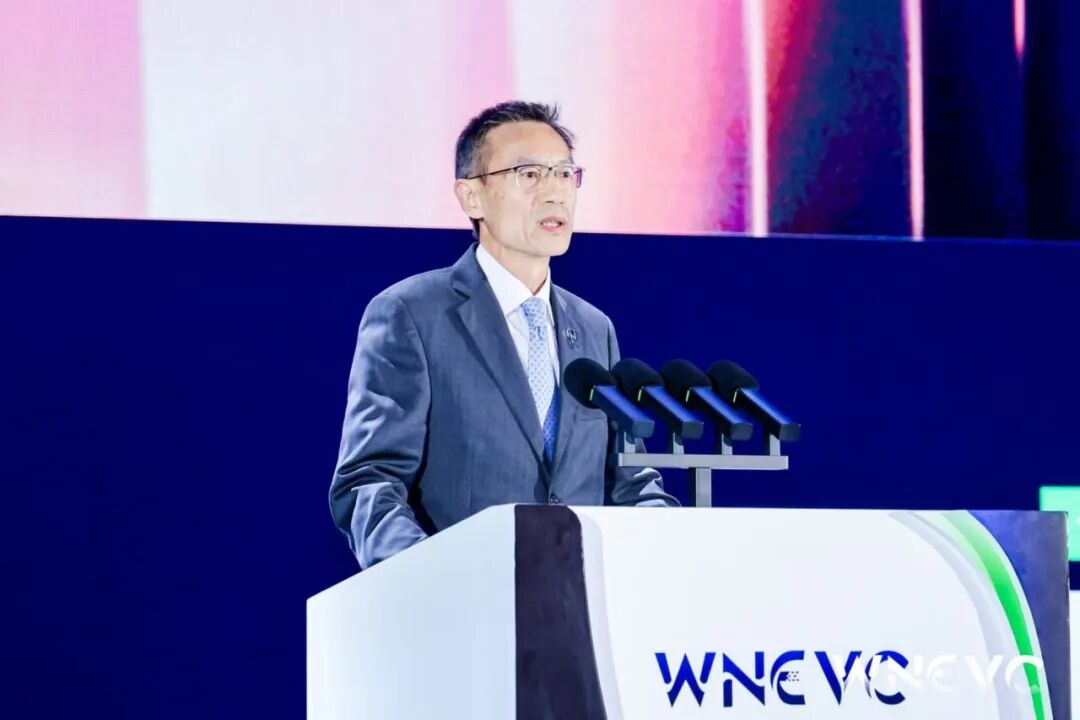
Cheng Peng, CEO of NavInfo, further extended this change to the data dimension. He proposed that "China's NEV industry won the first decade by relying on batteries, and the outcome of the next decade will depend on data", arguing that data is becoming the "second fuel" for intelligent vehicles.
Especially for the globalizing Chinese automotive industry, overseas expansion has moved beyond simply selling vehicles to foreign markets, and is gradually extending to the export of data governance systems, technical standards and localized operation capabilities.
Indeed, from this perspective, the value focus of the automotive industry has indeed shifted from pure hardware capabilities to the integration of software and hardware, as well as data and software capabilities.
In the electrification era, batteries, electric drives and supply chain efficiency determine the basic competitiveness of products; after entering the intelligent stage, chips, algorithms, data and electrical and electronic architectures have become new underlying capabilities. Automakers need to integrate these capabilities into complete vehicles, while suppliers need to further participate in the development of software, data and system capabilities.
Based on the NEV market, an indisputable fact is that the simple competition over sales volume is a thing of the past. Shifting from "quantity-focused" to "quality-focused", and from scale expansion to capability accumulation, is the core proposition of the entire industry.
In the future, the core competitiveness of China's NEV industry will no longer be its huge market volume, but solid technological barriers, a complete industrial ecosystem, mature globalization layout and sustainable profitability. The industry will move out of the quagmire of low-price cutthroat competition amid qualitative upgrading, and usher in a new high-quality, sustainable growth cycle.
This article is from the WeChat Official Account "Auto Review" (ID: iAUTO2010), written by Zhang Zhidong, and authorized for release by 36Kr.