Johnson & Johnson has launched three new products in a row, bringing fracture treatment into the "automatic mode" era.
Recently, DePuy Synthes under Johnson & Johnson showcased a number of new trauma products at OTA Annual Meeting, the annual academic conference in the field of orthopaedic trauma: the MAXFRAME AUTOSTRUT Bluetooth version automatic external fixation system, the VOLT plate system with four newly added models, and the intraoperative AI system VELYS Trauma AI which is scheduled to be launched in the US market in 2027.
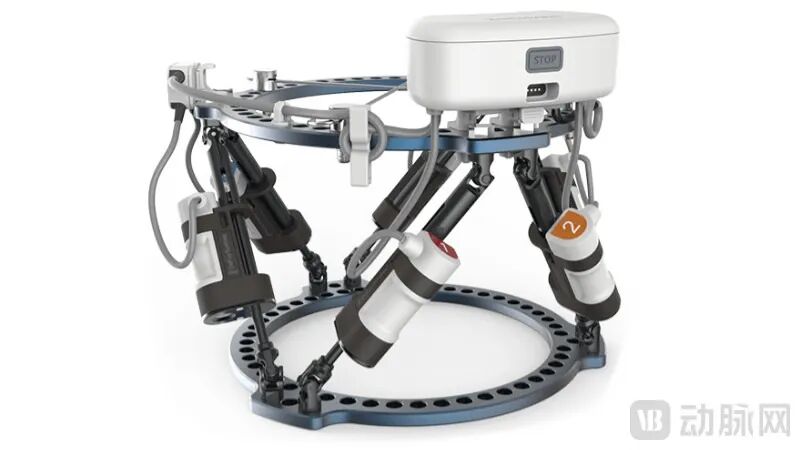
MAXFRAME AUTOSTRUT Bluetooth Version Automatic External Fixation System (Image from the official website of DePuy Synthes)
This series of products correspond to three levels respectively: execution, implantation and guidance, pointing to the same trend: fracture treatment is entering the automatic execution stage.
Why Exactly Now: The Clinical Dilemma of "Manual Transmission"
Before the emergence of automatic external fixation systems, six-axis ring external fixators were the main choice for treating highly difficult cases, such as bone transport, limb lengthening, complex orthopedics, infectious bone defects and even limb salvage scenarios.
These fracture patients often receive a special medical advice when discharged from hospital, that they need to adjust the external fixator by themselves every day. The six-axis ring external fixator consists of two upper and lower rings and six struts, which can correct the bone posture in three-dimensional space. Doctors pre-calculate the adjustment prescriptions for the following months, and the execution relies on patients or their family members to manually complete the operation according to the scale every day.
The course of such treatment is calculated in months, and the average wearing time of six-axis ring fixators in clinical reports is about 47 weeks. Taking the classic bone transport as an example, the daily distraction volume is only 1mm, which must be completed in several separate steps. For decades, the most precise execution link in this chain has always depended on the patient's manual operation and compliance.
This method also has a more fundamental problem: once a deviation occurs and is not corrected in time, the error will be fixed in the bone along with the bone healing process. In mild cases, the treatment course will be interrupted for recalibration; in severe cases, it will lead to abnormal force lines and affect the quality of bone regeneration. The long wearing cycle itself also keeps the risk of complications such as nail tract loosening and infection existing all the time.
It is not difficult to find that in the standardized process of external fixation, the most critical daily adjustment is undertaken by the most uncontrollable factor in the whole chain, that is, human manual operation, so the prescription precision fluctuates with the execution capacity. In particular, elderly, children and disabled patients have the highest demand for fine adjustment, but their execution capacity is relatively the weakest.
This contradiction has accumulated in the clinical end for many years and is in urgent need of solution.
The thrust from the industrial end is also increasing simultaneously. Centralized procurement has compressed the profit margin of metal consumables, and manufacturers need to seek new premium from software and data. The automatic external fixation system is exactly the product of the intersection of these two lines.
However, most common fractures do not need this system. The standard treatment for simple diaphyseal fractures is very mature, which can be solved by one intramedullary nailing surgery, and the effect is better than wearing an external fixator for several months. In the emergency scenario, saving lives takes priority over precision requirements. In addition, this automation solution is oriented to specific cases, has a high cost threshold, and primary hospitals cannot afford the cost of the annual-fee system either.
The real beneficiaries are cases with long treatment cycle and high error cost, such as bone transport, nonunion, infectious bone defect, multi-plane orthopedics, as well as elderly and pediatric patients with limited execution capacity, where the success or failure depends on the accurate execution of every adjustment within several months. Assigning the most error-prone link to the automation system is equivalent to adding an error correction mechanism for the whole treatment course.
Johnson & Johnson's Three New Releases: Assign the Most Error-prone Link to Machines
The biggest innovation of MAXFRAME AUTOSTRUT comes from the execution layer. The six manually adjusted struts of the traditional six-axis fixator are replaced by electric struts, which automatically complete the expansion and contraction according to the software prescription by the control terminal. The official statement says that it can perform up to 20 small-step adjustments per day, and the progress and abnormal alerts are transmitted back to the mobile terminal via Bluetooth.
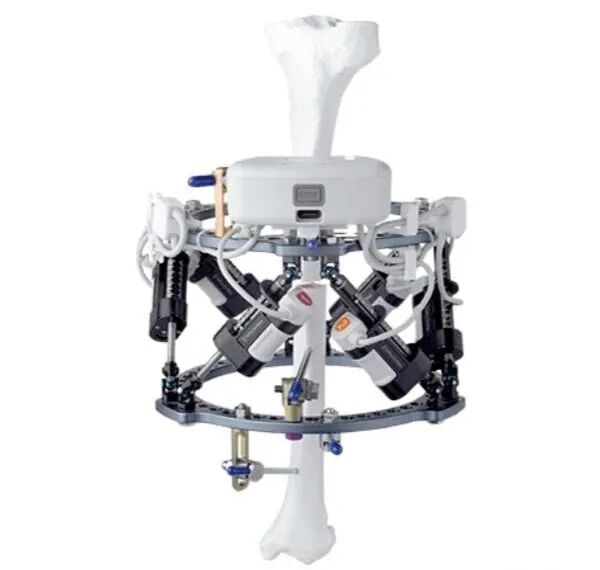
MAXFRAME AUTOSTRUT Bluetooth Version Automatic External Fixation System (Image from the official website of DePuy Synthes)
Official data shows that smaller step size and higher frequency are conducive to the recovery of surrounding soft tissues and improve the quality of bone regeneration. Previous clinical studies of this technology have verified the accuracy of automatic execution: 94% of strut readings have an error of no more than 1mm from the prescription value.
The change for patients is more direct. In the past, every parameter adjustment required returning to the hospital, and it was very normal to visit the hospital more than ten times in a long course of treatment. In addition, fracture patients have inconvenient mobility, so the burden of cross-region medical treatment is quite heavy. MAXFRAME AUTOSTRUT simplifies a considerable part of return visits to one confirmation on the mobile terminal, doctors only need to check the returned data in the background, and patients only need to charge the device daily.
Among the other two products, the VOLT plate system makes changes at the implantation layer: it innovates the design concept rather than the material. Simply put, it does not have higher strength, but has higher fitting degree. This system was first launched in October 2024, and the four newly added models this time introduce MOSAIC technology, which can determine the shape and adaptation of implants by combining CT anatomical data with machine learning.
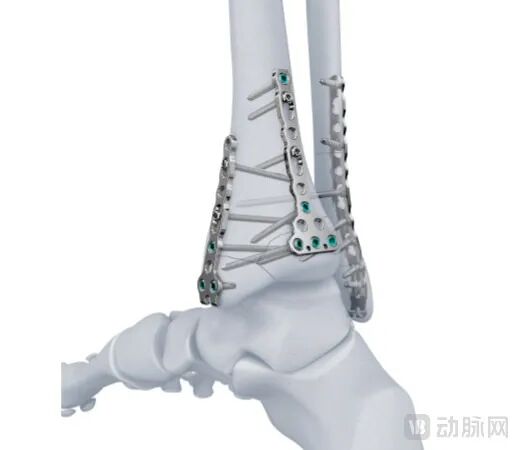
VOLT Plate System (Image from the official website of DePuy Synthes)
The traditional plate catalogue is designed according to the average anatomical structure of human body, which often cannot fit the widely varied individual anatomical structures. When selecting plates for individual cases, doctors can only choose the plate that is closest to the required one. MOSAIC technology makes the plate shape fit the patient's anatomical structure better, instead of making the bone adapt to the radian of the plate. As a result, doctors' choice becomes the model calculated according to the patient's anatomical structure, and the difference is particularly significant in deformity and revision cases.
VELYS Trauma AI is a transformation of the guidance layer, which is planned to be launched in the US in 2027.
In trauma surgery, fracture reduction has always been the most difficult link to realize automation, which highly depends on intraoperative fluoroscopy and surgical experience. VELYS Trauma AI will provide doctors with reference for displacement direction, reduction path and force line, and visually present the ideal reduction position and path of fracture blocks to the surgeon. This system is designed to reduce the error rate, not to replace the doctor's operation.
The whole process is based on 3D guidance, no tracker is used, which saves the links such as reference frame installation, registration and intraoperative waiting. Due to the large number of participants in the field of intraoperative AI, the tracker-free design will be its differentiated competitive means to enter the market.
In general, none of the products unveiled by DePuy Synthes this time is the first of its kind if taken out separately: the electric strut was first commercialized by OrthoSpin, and this launch is more like a step-by-step upgrade; all manufacturers have laid out anatomical plates, and the competition in the field of intraoperative navigation AI is also fierce. But DePuy Synthes has taken the lead in process integration: the preoperative plan is completed in the software, the operation is executed based on the same set of anatomical data during the operation, and the postoperative adjustment continues the same data chain. Execution, implantation and guidance share one workflow, which significantly simplifies the doctor's workflow.
The advantage of this integration will also be amplified over time. Hospital data, prescriptions and follow-up visits are all deposited in the same system, leading to higher and higher conversion cost, making it difficult for latecomers to achieve single-point breakthroughs; only the original equipment manufacturer of instruments has the implementation conditions for this system-level integration.
However, this series of products also have risks: the attribution of responsibility for electric strut adjustment errors and the responsibility division when AI suggestions deviate need to be further clarified. After the division of labor between human and machine changes, the reconstruction of responsibility boundaries is also a process that all scenarios introducing automation have to go through.
International Giants' Layout and the Catch-up Window for Domestic Substitution
Israel's OrthoSpin was the first to commercialize electric struts and obtained FDA approval in 2019. In December 2021, it was acquired by DePuy Synthes, which led to today's MAXFRAME AUTOSTRUT.
Although Smith+Nephew owns the Taylor Spatial Frame with the deepest accumulation in the six-axis configuration, it has never launched an automatic strut product; Orthofix has a focused and narrow layout, and its direct competition with DePuy is limited.
However, Stryker's Mako has been installed in the joint field for many years, which will be an unavoidable competitor for VELYS in the follow-up stage.
In addition to these international giants, domestic enterprises have also made remarkable progress in recent years.
At present, domestic six-axis fixator manufacturers are still blank in the field of electric struts and remote follow-up. Although Luosen Bot covers intraoperative reduction — the public clinical data shows that the incision is only 2cm and the average intraoperative blood loss is 110ml, it does not involve postoperative adjustment and has not formed a closed treatment loop.
However, the conduction effect has emerged. DePuy Synthes' three new releases this time not only further consolidate its own competitive advantages, but also objectively list the links that domestic manufacturers need to make up for, providing direction for subsequent catch-up.
Business Model Reconstruction: From One-time Consumables Sales to Subscription-based Workflow
DePuy Synthes' three new releases will not only change the whole process of treatment and rehabilitation of intractable fractures, but also reconstruct the business model in this field.
At present, the annual scale of the global external fixator market is about 2.2 billion US dollars, and it is difficult to support the platform-based narrative only by selling metal consumables. DePuy Synthes' system may transform the sales form from one-time plate procurement to combined charging of annual fee, AI module and follow-up platform.
The significance of the annual fee model is to let manufacturers jump out of the pricing logic of centralized procurement. Centralized procurement can control the price of one-time metal products, but cannot control subscription services, and the imagination space of this income is far larger than selling consumables.
Obviously, the target of this round of competition is no longer a certain plate or a certain fixator, but the whole set of workflow covering preoperative planning, intraoperative execution and postoperative adjustment. DePuy Synthes has made the first move, and the direction for domestic manufacturers to make up lessons is also clear. The industry rules of the next generation of orthopaedic trauma will be defined by the first party that runs through the whole system.
This article is from the WeChat official account "Arterial Network" (ID: vcbeat), Author: Chen Peng, published by 36Kr with authorization.