A business that Huawei, Tencent and Alibaba are all eyeing: they do not manufacture robots, yet seek to take control of all robots.
From the Spring Festival Gala performance at the beginning of the year, to the humanoid robot half marathon in April that broke the human world record;
From the scenario where various robots competed in screw tightening and heavy object carrying at the World Robot Conference last month, to the recent official launch of Qiyuan's personal robot with a starting price of only 19,999 yuan...
A series of market changes all confirm one point:
At present, the full-machine hardware and cerebellar motion capabilities of robots have been on the right track, and even tend to be mature.
This may also explain to a certain extent the reason for the continuous sharp drop in Unitree Robotics' stock price after its previous listing — when other robot players such as Agibot can achieve the same performance, what remaining value highlights does Unitree have?
It is precisely for this reason that from the perspective of the entire industry, after the "body" of robots is no longer scarce, the strategic focus of the embodied intelligence track has shifted to the competition at the "brain layer"...
The "Embodied Brain" in a Polarized Situation
In fact, when talking about the "brain" of embodied intelligence, the performance of the entire industry market is also very interesting:
The overall situation shows a trend of two completely opposite extremes:
On the one hand, hot capital is pouring in frantically.
Because the "brain" determines the upper limit of robot intelligence, and compared with the manufacturing-oriented model of the embodied intelligence ontology players, the business logic of the brain layer is more inclined to the software industry — once the business model is proven feasible, it has inherent advantages such as scalable replication and diminishing marginal cost.
Therefore, according to statistics from institutions such as QbitAI, in the first half of this year, the financing of China's domestic embodied intelligence track reached about 438 billion yuan.
Among them, the brain-focused companies absorbed about 222.53 billion yuan, accounting for as high as 50.8%; while the financing of robot ontology companies only accounted for 12.8%...
Thus, against the background that the industry has promising prospects, abundant hot capital, and the market has not yet produced absolute leading players like Unitree Robotics and Agibot in the ontology track, there are now dozens of brain-focused enterprises in this field, and the number is still growing continuously.
The "hundred-brain war" in the robot industry seems to be just around the corner...
On the other hand, the technology side is in a "cold" state.
Although the investment market is heating up, there is a consensus in the robot industry: The technical route of the current embodied intelligence "brain" has not been truly determined, and it is still unknown which route is correct and which players are leading or lagging behind...
In this regard, Peng Zhihui, co-founder of Agibot, stated at WAIC 2026: "At present, the industry has not converged on the technical path of the embodied brain. New architectures may emerge in two or three years, and it is difficult to predict the only correct technical solution."
In response to this, Shen Yujun, chief scientist of Ant Group's Lingbo, also admitted that "The future will not be dominated by VA or VLA, but a new model that can achieve the effect of '1+1>2' will emerge."
So the situation is very contradictory. At present, all brain-focused players are essentially moving forward according to their own chosen technical routes, and some are even constantly redefining their routes to attract more financing.
The investment market is also making wide-spread bet on multiple targets...
But on the whole, there are three main mainstream technical routes for embodied intelligence brains at present:
The first is the end-to-end VLA (Vision-Language-Action) route similar to the intelligent driving in the automotive industry, which means that the robot directly outputs actions after seeing or hearing instructions.
This route is characterized by a fast start, but its shortcomings are also obvious — just like intelligent driving cannot do without data labeling, the generalization ability of VLA is highly dependent on similar scenarios covered by the training distribution. If the task is complex or there are complex scenarios and action trajectories that the robot has not been trained on, it is very prone to logic crash.
The second is the world model route. If the essence of VLA is rote learning-style imitation learning, the world model route is characterized by its ability to understand the operation rules of the physical world: first build the representation of the physical world in the "mind", then preview the consequences of actions, and finally select the optimal action to execute.
During this process, the robot can modify the execution strategy in real time.
However, the challenges are also obvious. The world model requires a large amount of physical world data for training. A qualified robot brain requires at least tens of millions of hours of high-quality real interaction data. But as of the beginning of 2026, the total amount of compliant and available robot data in the world is only 500,000 hours.
In addition, computing power is also a major constraint. It takes dozens or even hundreds of milliseconds for the world model to perform one inference, and multiple inferences are needed to find the correct answer, which cannot keep up with the rhythm of the real world.
The third is the large and small brain layered route, which counts as an innovation in technical strategy, that is, the LLM large model acts as the "brain" responsible for understanding tasks; the VLA/action model acts as the "cerebellum" responsible for fine control.
As a result, a dual-system architecture — "fast thinking + slow thinking" has also become a new market direction in recent years...
But to be honest, the three technical routes are not developed independently, but are combined with each other. For example, the first two have been combined to form the WAM world action model, which has been followed by Unitree Robotics and Agibot, while these companies have also made other technical layouts.
This is an intuitive manifestation of the complex and unstable situation of the current embodied brain routes.
In addition, although the technical routes are numerous, the brain-focused players can be roughly divided into several categories in terms of their positioning:
The first category is native embodied intelligence players, including a group of powerful players that have attached great importance to the embodied intelligence brain field from the very beginning, such as Independent Variable (which launched the world's first unified world model WALL-B), Starsea Map (the world's technical pioneer of the "fast-slow dual-system" VLA model), and Super Vision (the first domestic technology company dedicated to the world model).
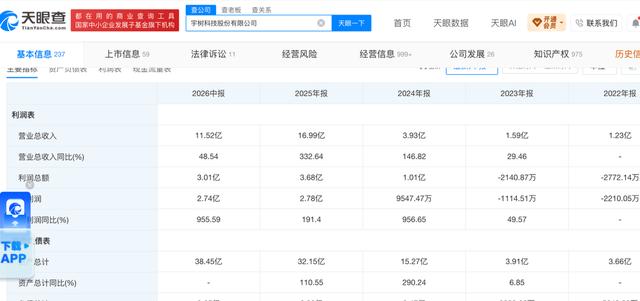
There are also robot representatives that entered this field from the main track and made full-stack layout of software and hardware, such as Unitree Robotics. The Tianyancha APP shows that nearly half of its listing financing will be used for R&D of intelligent robot models, and it has layouts in WMA (World Model-Action Model), VLA, and even WLA (World-Language-Action) models; as for Agibot and UBTECH, they also develop multiple routes simultaneously...
The advantage of this type of players is that they are sufficiently focused and specialized, and any of them has the potential to stand out and become the next Unitree in the robot brain field.
However, due to the uncertainty of brain routes and the constraints of training data and computing power, this may become a long-term battle. Therefore, they not only need to compete in technical capabilities, but also in financing capabilities. Once the hot capital in the market dissipates or concentrates on leading players, the entire industry pattern will be reshuffled...
The second category is players represented by Internet enterprises, including large companies such as Huawei, Tencent, Baidu, and Alibaba, which have successively released their own embodied intelligence platform products this year, and all of them have chosen the route of "not making ontology, but focusing on the brain".
Smaller players include Ant Lingbo under Ant Group, as well as AutoNavi and SenseTime. Among them, Ant Lingbo has also placed bets on two routes including VLA.
The characteristics of this school of players are sufficient capital strength, massive computing power and various multimodal large model bases, but their shortcomings are that they are not deeply involved in the robot field, and some of their layouts are even incidental businesses.
Even if Alibaba, Huawei and other players stand out in the future, they may face the dispute over the "body and soul" theory with robot ontology manufacturers...
The third category is new energy vehicle companies that enter this field across industries.
After all, VLA itself is a key technical route in the field of intelligent driving. In addition, car companies such as BYD, XPeng, and Xiaomi are now also entering the robot field. Relying on the advantages of industrial scenarios, these car company players may also become competitors of native embodied intelligence players in the "brain" field in the future...
Robot Brain: On the Left is "Car-free" Intelligent Driving, On the Right is Unreachable Smart Home
In fact, to a certain extent, the "embodied brain" is not only complex in technical routes and industry pattern, but also in the market side.
The core reason is that many brain-focused players are taking the "no car manufacturing" route.
For example, Ant Lingbo, although it will also develop self-owned robots for technical verification, such as R-1 and R-2, its overall focus is still on third-party ontology manufacturers, taking the empowerment and monetization route similar to Huawei's intelligent driving and Momenta.
However, referring to the lessons learned from the smart home and intelligent driving industries in the past, this is not an easy road.
First of all, even if the models of Huawei, Tencent and Ant Lingbo are proven feasible first, there is an objective problem in the landing phase:
Because current embodied intelligent robots are divided into single-arm, dual-arm, biped, and wheeled types in terms of shape, and there is no unified standard for communication protocols, data formats and control interfaces of different manufacturers, adaptation will consume a large amount of engineering resources.
Even so, subjectively, large-scale robot ontology manufacturers such as Unitree and Agibot are not necessarily willing to accept and open up unified standards.
Why?
On the one hand, this is just like the smart home that has been talked about for a long time. The technology can already realize the interconnection at the technical level.
But the problem is that if Haier, Midea and other manufacturers fully open the interconnection standards or adopt third-party whole-house smart solutions from Huawei and other companies, it is of course the best for consumers. But for Haier Smart Home and other similar companies, in the future they will still only earn money from selling home appliances, rather than selling a unique intelligent life experience.
This will undoubtedly make the valuation logic that Haier and other companies have long expected to directly regress from the highly imaginative technology intelligence logic to the logic of the traditional home appliance manufacturing industry with a saturated overall market...
The concerns of Haier Smart Home and other similar companies are also issues that Unitree Robotics and other similar companies have to pay attention to now.
On the other hand, in terms of benefit distribution between the embodied intelligence brain and the body, the recent adjustment of the relationship between Huawei's Harmony Intelligent Mobility and Seres' AITO is also a real case.
Although there may be many reasons for the adjustment, in the eyes of the public, the core reason is that Huawei as the "brain" has taken too much operating profit from Seres, so in order to reduce costs and increase efficiency, Seres has to make the difficult decision to separate from Huawei...
This has almost set an answer for the dispute over the "soul and body" theory in the automotive industry in the past.
The past smart home industry was like this, and the current Huawei and Seres situation is also like this. How will the ontology players in the embodied intelligence industry treat this issue carefully in the future?
Of course, under this background, can Huawei, Tencent, Independent Variable and other players develop the entire robot business by themselves?
The answer is yes, but this will reduce the overall imagination, turning them from the "shovel seller" with light assets and high gross profit to the "miner" with heavy assets, which will greatly increase the uncertainty...
As for whether they can choose to cooperate with small and medium-sized manufacturers as a second-best solution in the future, just like the Doubao AI mobile phone?
Theoretically it is feasible. But it should be noted that according to the changes in the financing market mentioned earlier, the primary market is tightening its investment in robot ontology players, and there is no clear maturity deadline for the brain field yet. So it is still unknown whether these so-called small and medium-sized robot manufacturers can wait until the moment when Ant Lingbo, Independent Variable and other players "save them".
Looking further into the details, since the commercialization of brain-focused players follows the logic of the software industry, the products must be sufficiently mature to be sold, so the corresponding launch rhythm may be relatively slow, and they have to rely on external financing for a long time.
Therefore, compared with listed players such as Unitree and UBTECH, as well as robot players backed by Internet companies and car companies, those start-up embodied brain companies need to achieve overtaking on curves as much as possible before the hot capital shrinks...
But in the long run, all new species need to experience the misaligned growth of bones, nerves and souls before they take shape.
The heat of capital, the coldness of technology, the bifurcation of routes, and the game between the body and the brain are essentially testing for a greater future.
As long as we move forward firmly, even if the embodied brain will not mature overnight, it may quietly cross the critical point at an unexpected moment, just like smart phones and new energy vehicles.
At that time, robots will become an extension of human capabilities, a collaborator in life, and even a new interface for civilization.
The difficulties today are the prelude to the vastness of tomorrow; all the things we have to do will eventually be rewarded by time!
This article is from the WeChat official account "Internet Jianghu" (ID: VIPIT1), author: Evin, editor: Liu Zhicheng, published with authorization from 36Kr.