Micro electric vehicles that have fallen from their pedestal: when low price is no longer a universal panacea
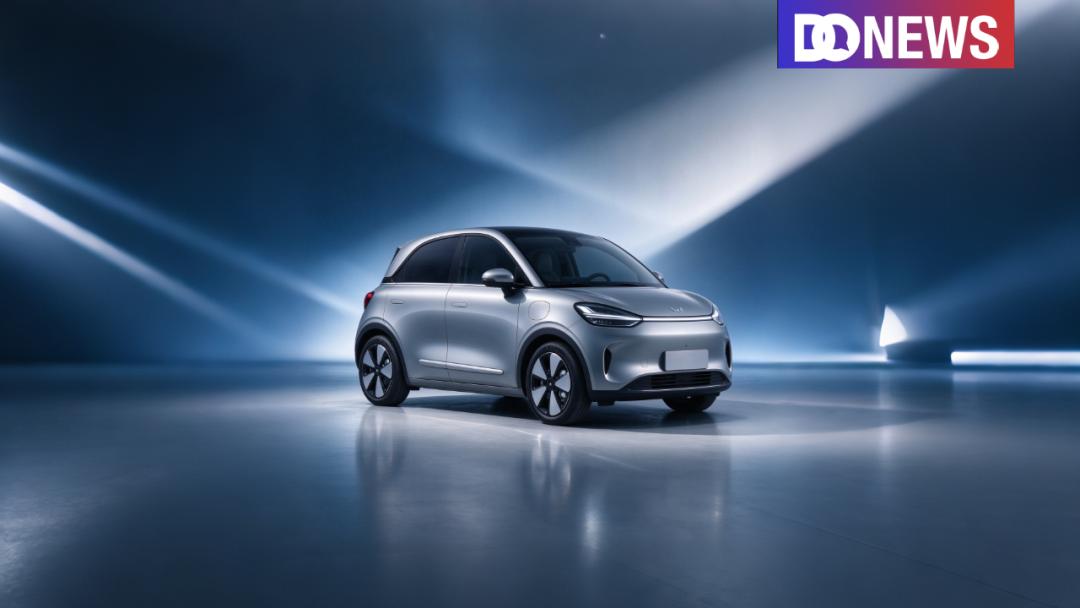
Written by | Zhang Yu
Edited by | Yang Bochen
Cover image source | Doubao AI
"I've been selling micro electric vehicles for five years, and I really can't hold on anymore this year." Zhang Lei, an auto dealer from a prefecture-level city in Shandong, told DoNews with a bitter tone. "I started selling micro EVs back in 2021. Back then, they accounted for 50% of the store's total sales. Sometimes vehicles were booked even before they arrived at the shop, and supply often fell short of demand." Zhang Lei recalled. "Now the situation is completely different. It's a good result if we can close 2 to 3 deals a month. I just cleared out my inventory last month - those units brought no profit and just took up valuable space."
Zhang Lei's personal experience of the micro EV market trend is largely consistent with the trajectory shown by macro statistics. Data from the China Passenger Car Association (CPCA) shows that the cumulative retail sales of A00-segment sedans from January to July 2026 reached 289,000 units, down 61.3% year on year. In addition, calculated based on CPCA's segmented retail data, the retail sales of A00-segment sedans in August 2026 stood at only 32,000 units, among which Wuling Hongguang MINI EV recorded 11,033 retail sales, the only model in the micro EV market with monthly sales exceeding 10,000 units.
What does 32,000 units mean? The comparison of data is the most intuitive. July 2022 marked the peak of Wuling Hongguang MINI EV's retail sales, reaching around 56,600 units. Now the monthly retail scale of the entire micro EV market is less than 60% of the peak monthly sales of this "national popular model".
Micro EVs used to be the most eye-catching business card of China's new energy vehicle (NEV) industry. Its benchmark model Wuling Hongguang MINI EV once outperformed Tesla Model 3 to top the global EV sales ranking. However, in just a few years, micro EVs have quickly fallen from their peak, becoming a microcosm of the changes in China's NEV market.
01. The Rise and Fall of Micro EVs
Micro EVs once had a glorious period. From 2017 to 2018, the sales of micro EVs once accounted for half of the domestic NEV passenger vehicle sales. With the adjustment of subsidy policies, the market share of micro EVs quickly declined, dropping to around 20% by 2019.
The sudden launch of Wuling Hongguang MINI EV once again drove the rise of the micro EV market. In July 2020, Wuling Hongguang MINI EV was officially released. With a starting price of 28,800 yuan, it brought pure electric vehicles into the price range that ordinary families could "buy without hesitation". Wuling Hongguang MINI EV is not equipped with long range, fast charging or smart cockpit, but it precisely meets the user's rigid demand of "costing little more than low-speed unlicensed EVs, while being eligible for license plates and insurance".
Zhang Lei still remembers the hot sales scene back then: "Many people came directly with cash, skipped test drives and paid on the spot. Later, customers had to wait for more than a month to get their ordered vehicles, and some models with specific color schemes even required a wait of two to three months." Recalling the scene of "hard to get a single vehicle" at that time, Zhang Lei said frankly, "Vehicles were never worried about being sold, we were only worried about delivering them to customers."
In 2021, the sales of Wuling Hongguang MINI EV reached 426,000 units, successfully winning the title of China's annual NEV sales champion. According to CPCA data, the retail sales of A00-segment sedans in 2021 was about 898,500 units, accounting for more than 30% of that year's total NEV sales, making it the largest segmented category.
An owner of Wuling Hongguang MINI EV told DoNews that even though her family already had a fuel vehicle at that time, she still decided to buy a Wuling Hongguang MINI EV, "I mainly use it to pick up kids, buy groceries and commute to work. After driving it for more than three years, it is really cost-effective, easy to drive and easy to park." Apart from meeting the practical demand of short-distance travel, many car owners bought such models out of emotional appeal and personality expression. Back then, the "trendy modification" culture was prevalent, a large number of owners carried out personalized modifications on Wuling Hongguang MINI EV, taking the vehicle as a carrier to express their individuality.
Relying on these diversified demands, A00-segment sedans achieved retail sales of 1,078,400 units in 2022, reaching the historical peak of this category. Driven by market dividends, followers flocked into the market, models such as Leapmotor T03, Chery QQ Ice Cream and Changan Lumin emerged rapidly, and the micro EV market also became the first segmented market with NEV penetration rate close to 100%.
But the turning point came in 2023. Rising raw material prices, chip shortage and the termination of subsidy policies jointly drastically squeezed the profit margin of micro EVs, delivering a fatal blow to the sector. In 2023, the retail sales of A00-segment sedans was 950,700 units, down 12% year on year. In the following three years, the micro EV market never really recovered. In the first half of 2026, the retail sales of A00-segment sedans was about 240,000 units, plummeting 63% year on year.
Even Wuling Hongguang MINI EV could not stay out of the downturn. In the first half of 2026, the retail sales of Wuling Hongguang MINI EV was only 72,800 units, nearly 100,000 units less than the 171,100 units in the same period of 2025.
Zhang Lei told DoNews that currently micro EVs generally have large preferential margins, "Models like Wuling Hongguang MINI EV, Changan Lumin and Geely Panda all offer a price cut of about 10,000 yuan. But even if we trade price for sales volume, it is very difficult to get the same customer flow as in the past." A salesperson from another Chery 4S store also shares the same feeling: "The micro EV market has cooled down significantly. Our store no longer displays the Chery Little Ant demo car, and the inventory has been basically cleared out."
The feedback from data and sales channels seems to point to the same conclusion: the cooling of the micro EV market is not a short-term fluctuation, and the once huge market dividend has almost completely disappeared.
02. Who "Killed" the Micro EV?
The shift of policy is the most important inducement for the micro EV market to go from prosperity to decline.
Starting from January 1, 2026, the NEV purchase tax policy was adjusted from full exemption to half collection (at a tax rate of 5%), with a maximum tax reduction of 15,000 yuan per passenger vehicle. For a micro EV with a tax-included price of 50,000 yuan, the payable purchase tax increases by about 2,200 yuan. The lower the car purchase budget, the greater the decision weight of a tax change of several thousand yuan. For car buyers with a budget between 30,000 yuan and 50,000 yuan, 2,200 yuan is enough to change their entire car purchase decision.
The adjustment of purchase tax is not the only driving force, the change of rules for trade-in subsidies has a greater impact. Before the end of 2025, scrapping an old vehicle and buying a new NEV passenger vehicle can get a subsidy of 20,000 yuan, while transferring an old vehicle to replace it with a new NEV passenger vehicle can get a maximum subsidy of no more than 15,000 yuan, both are one-time fixed subsidies. Taking a micro EV priced at around 40,000 yuan as an example, the 20,000 yuan scrapping subsidy can cover nearly half of the car purchase cost, which is extremely attractive for consumers.
In 2026, the subsidy method was changed to be calculated based on the proportion of the new vehicle's selling price: the scrapping and replacement subsidy is 12% of the new vehicle price (capped at 20,000 yuan), and the trade-in and replacement subsidy is 8% (capped at 15,000 yuan). For the same micro EV priced at around 40,000 yuan, the scrapping and replacement subsidy is about 4,800 yuan, while the trade-in and replacement subsidy is only 3,200 yuan, the subsidy amount has dropped off a cliff.
In addition, starting from July 1, 2026, a batch of new national standards for automobile safety known as "the strictest in history" was officially implemented, putting forward mandatory requirements for body structure, airbags, battery protection and other aspects. Industry estimates show that to meet the requirements of the new national standards, the compliance cost of each micro EV will increase by 4,000 to 8,000 yuan. The profit per unit of micro EVs is already extremely thin, and the compliance cost has become an insurmountable cost barrier, further accelerating the shrinkage of the market.
The business logic of micro EVs is to obtain market scale at an extremely low price, then dilute the production cost through scale effect, and finally earn meager profits. But the rise of raw material prices has made this business logic unsustainable.
In 2022, the price of battery-grade lithium carbonate once exceeded 600,000 yuan per ton. Under the cost pressure, micro EVs were forced to raise prices collectively or gradually stop production. For example, the starting price of Leapmotor T03 rose from 59,800 yuan to 82,500 yuan, while Great Wall ORA announced that it would stop accepting new orders for the Black Cat and White Cat models, and permanently withdrew from the market later.
In May 2026, the spot average price of battery-grade lithium carbonate rebounded to about 190,500 yuan per ton, an increase of more than 100% compared with the level of about 70,000 yuan per ton in the first quarter of 2025. The cost pressure has returned, squeezing the living space of micro EVs again.
Caitong Securities once pointed out in a research report that the gross profit margin of Wuling Hongguang MINI EV is only about 2% to 3%. Cui Dongshu, Secretary General of CPCA, also said that the profit per unit of A00-segment pure electric models is less than 1,000 yuan. In July 2026, Tan Benhong, Deputy Secretary of the Party Committee and Director of Changan Automobile Group Co., Ltd., even publicly stated that the version of Changan Lumin priced below 50,000 yuan has extremely narrow profit margin, and Changan has voluntarily stopped this product line, no longer unilaterally pursuing unprofitable scale growth.
The inherent product shortcomings of micro EVs are also an important reason for the market to go from prosperity to decline.
Lao Luo, an automotive industry veteran with more than 10 years of experience, told DoNews frankly that micro EVs are hardly qualified automobiles in terms of safety performance, range and energy replenishment, space comfort and manufacturing process. "The meager profit makes it impossible for automakers to add safety configurations, intelligent driving, fast charging and other features, so there is little room for product capability upgrading."
"The product capability of micro EVs is really not that good." Over the past few years, Zhang Lei has received a lot of feedback from customers: "Most of the micro EVs launched in the early days only support slow charging, which takes more than 6 hours to be fully charged, with an actual range of only more than 100 kilometers. The range will shrink significantly in winter, so frequent charging is a common thing. Besides, such vehicles are light in weight, with narrow tires and weak grip, which are prone to tail flick or even out of control when turning or accelerating sharply."
In contrast, A0-segment models with 5-seat layout, longer range, higher safety and fast charging capability are gradually seizing the market share of micro EVs.
The continuous price reduction of A0-segment models has greatly narrowed the price gap with micro EVs, and the actual price difference of many models has been compressed to the range of several thousand yuan to 10,000 yuan. For example, the starting price of Geely Xingyuan after discount is 59,800 yuan, while the starting price of the 5th generation Wuling Hongguang MINI EV 301km Premium version after superimposing trade-in subsidy is 51,800 yuan. Although the starting price of Geely Xingyuan is 8,000 yuan higher, consumers get a full upgrade in space, range, safety and user experience.
Data intuitively reflects the change of car purchase preference. In the first half of 2026, the retail sales of A0-segment pure electric compact cars reached 684,000 units, up 27.5% year on year, becoming one of the few bright spots of growth in the passenger vehicle market.
03. Micro EVs Are Not Completely Out of the Game
The plummeting sales of micro EVs do not mean that the market demand has disappeared.
Overseas markets are becoming an important incremental market for micro EVs. Data from China Association of Automobile Manufacturers (CAAM) shows that in the first half of 2026, China's NEV exports reached 2.355 million units, up 120% year on year. Among them, A00-segment and A0-segment NEV models together accounted for 53.8% of the total exports.
In some Southeast Asian countries, motorcycles are still the mainstream travel tool, so micro EVs are regarded as the optimal choice to replace motorcycles.
"The domestic micro EV production capacity is over-supplied and the market is saturated, but the NEV market in Southeast Asia is just starting," Lao Luo said. "Most of the urban roads in local areas are relatively narrow, so the compact body of micro EVs has inherent advantages. Many automakers have launched overseas market research, model localization adaptation and other work, and going global will be the most important development direction for micro EVs in the next stage."
More importantly, micro EVs can obtain higher profit margins in overseas markets. Lao Luo revealed that the gross profit margin of automakers' export business is generally better than that in the domestic market. "The gross profit margin of micro EVs sold in the domestic market is extremely low, most of which are less than 3%, but the gross profit margin of exports is quite considerable. According to conservative industry estimates, the gross profit margin per unit of the same model for export can basically reach about 10%."
Many micro EV brands have already started to lay out overseas markets.
In May 2026, Chery Automobile, together with Jiangsu Yueda Automobile, Gotion High-tech and other partners, established the joint venture EMT, launching the EMTA brand targeting the Japanese market. Its first product is a pure electric K-Car (light motor vehicle) that complies with Japanese regulations, which is planned to enter the Japanese market in 2027.
In July 2026, the 5th generation Wuling Hongguang MINI EV made its debut at the Indonesia GIIAS Auto Show under the name of "Wuling Aira EV", officially starting its large-scale global expansion. In fact, SAIC-GM-Wuling has been deeply engaged in the Indonesian market for many years, building a three-dimensional global expansion system covering "complete vehicle export + CKD assembly + local manufacturing".
Also in July, BYD RACCO was officially launched in the Japanese market, which is a pure electric K-Car specially built by BYD for the Japanese market. As of early August 2026, the orders of BYD RACCO in the Japanese market have exceeded 1,000 units.
These data and trends seem to depict a picture of "the east is not bright but the west is bright", but can going global really become a lifeline for micro EVs?
"Going global will not be a lifeline," an automotive industry analyst believes that overseas markets have completely different requirements for micro EVs in terms of product quality, after-sales service and brand tonality