Counter-offensive of Joint-Venture New Energy
"For those car owners who used to drive joint-venture brand vehicles before, this should be the 'least bad' option when switching to new energy vehicles."
On the evening of the 20th, as the launch price of FAW-Volkswagen ID. AURA T6 was announced, a friend left such a comment in the comment section of my Moments post.
The so-called "least bad" refers to a solid and reliable option for many veteran car owners who have concerns about vehicle quality and reliability, but also hope to experience more favorable prices and various cutting-edge functions in the intelligent era, in an era where the new car launch cycle is accelerating crazily and the configuration war and price war are extremely fierce.
Later that day, I asked a friend working at Volkswagen China about the reason why the T6 price was set so low. The other party hesitated for a few minutes and only replied with four words: full of sincerity.
"You mean... go all out to fight for market share?" "My personal understanding (does not represent any corporate opinion) is that it's time to go all out now." "After all, Volkswagen's 34 years of achievements in China... must be kept on the table."
With the four words "kept on the table" coming out, the topic seemed to have come to an end. My friend finally sent a "strive hard" emoji and did not continue the conversation.
With a starting price of less than 130,000 yuan and a version equipped with lidar priced under 150,000 yuan, the launch of the T6, a mid-size all-electric SUV wearing the Volkswagen badge, means that joint-venture brands have once again accepted the current mainstream pricing rules of the Chinese market in their core selling price range. The reason for saying "once again" is that GAC Toyota bZ3X brought the lidar-equipped model into the 140,000 yuan range as early as 2025. However, compared with GAC Toyota's model of upgrading existing models in the GAC system, this time the brand has adopted a completely forward development process.
Time is of the essence. In August 2026, the retail penetration rate of new energy passenger vehicles reached 65.2%, with self-owned brands at 83.9%, luxury brands at 38.9%, and mainstream joint ventures at only 13.4%. Among the new energy retail share, self-owned brands account for 63.7%, new forces account for 26.0%, and mainstream joint ventures only account for 4.3%. The task of joint ventures is no longer to push the penetration rate to double digits, but to regain a foothold in a market where self-owned brands and new forces occupy nearly 90% of consumer mindshare.
The three words "least bad" are not only consumers' choice logic, but also the ready-to-use advantage that joint-venture brands can offer when facing strong competitors. The same situation also appears in GAC Toyota and Changan Mazda, which is also the direction that other joint-venture brands need to work toward.
A few hit products, not an overall reversal
The monthly retail sales of GAC Toyota bZ3X have stabilized at more than 9,000 units, the total sales of Dongfeng Nissan's N series remain at the level of several thousand units, the plug-in hybrid version of the Buick GL8 family has surpassed its fuel version for the first time within the product line, and the cumulative scale of the ID. family has also exceeded most new forces.
Domestic joint-venture brands have gradually ended the first stage where they could only make verbal announcements without actual new products. However, with the launch of a large number of new-generation products, the current situation only proves that a few joint-venture new energy vehicles can "sell well", but their scale is not enough to reverse the overall trend. It needs to be clarified that although the ID. family has accumulated about 230,000 units in sales, the old ID. series has been discontinued. As far as the domestic market result is concerned, FAW-Volkswagen's first electric transformation can be called a failure. As for the current T6, although it is still inherited from the ID. family, it is essentially a second transformation.
But adding up all these achievements, the share of mainstream joint ventures in new energy retail is still only single-digit. The hit products of joint ventures are scattered points, while self-owned brands and new forces form a continuous surface. Self-owned brands have a complete product matrix and a faster pricing mechanism in the 100,000-200,000 yuan range. If one model fails, another model on the same platform can quickly make up for it; if a joint-venture model fails, it is often difficult to fill the gap for a long time.
To judge whether joint-venture new energy vehicles are gaining momentum, we should not look at the order numbers at the press conference, but at the stable sales volume for 6 to 12 consecutive months, whether the terminal transaction price can be maintained, and whether the software functions can be delivered as scheduled. Orders represent traffic, delivery represents capability, and price discipline represents the health of the system. Most joint-venture hit products have only proven their performance in the first dimension.
Joint ventures still have real advantages, but unfortunately these advantages are depreciating. The mature vehicle verification system, nationwide after-sales network, huge fuel vehicle user base and manufacturing experience are assets that new forces are difficult to replicate in the short term, but their value is highly dependent on the scale of fuel vehicles. As the user base shrinks, the frequency of vehicles entering the service shop drops, and young consumers lack recognition of joint-venture brands, the larger the scale, the heavier the transformation burden. It needs to be distinguished that the capabilities themselves will not disappear, what disappears is the scale carrier that they are attached to.
Considering the overall scale, localization depth, supply chain efficiency and shareholder synergy, different joint ventures are in different positions, roughly divided into four tiers.
The only one that has truly stood out is GAC Toyota. The bZ3X has steadily ranked first in the sales of a single joint-venture new energy vehicle for several consecutive months, the monthly sales of the bZ series has exceeded 10,000 units, and the hybrid vehicle base is still contributing sales and profits, which means one business line supports the other. But we also need to clearly realize that the sales of the bZ7 of the same brand dropped from 4,500 to 4,600 units in the second month after launch to just over 2,000 units in August, and the prospect is not very optimistic. Therefore, as for the question of whether this set of strategies can be replicated, GAC Toyota itself has tried it once, and it was not very successful.
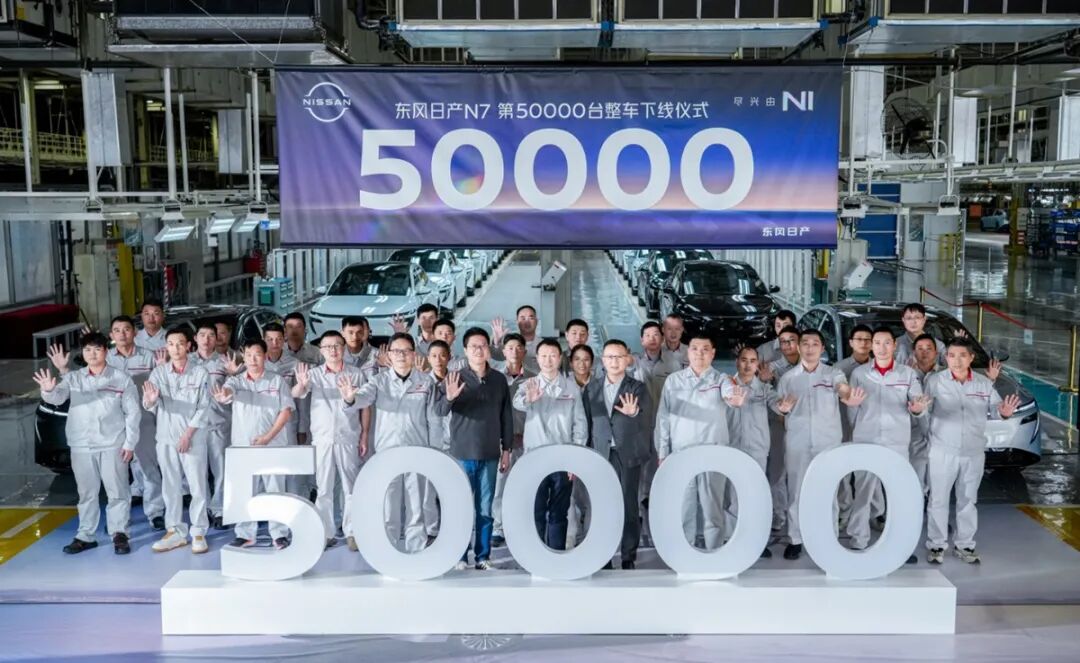
Picture | Since the N7 was launched last April, its monthly sales once rose to five figures in August last year, but unfortunately it failed to sustain the momentum
Dongfeng Nissan was originally highly expected, but after the N7 reached the sales volume of 10,000 units in August 2025, its sales fell all the way, and the sales volume last month was less than 1,000 units. The N6 also dropped from a high point of nearly 7,000 units to the level of about 1,000 units. It is still a question mark whether the latest NX8 can truly take over the baton.
The second tier has opportunities, but still needs verification. With the official launch of the ID. AURA T6, FAW-Volkswagen has proved that it has initially integrated the China Architecture, intelligent driving solutions, pricing and after-sales services. SAIC Volkswagen and SAIC Audi have more room for Chinese side to lead, but the trouble lies in the boundary of product lines. Beijing Hyundai, Yueda Kia and Jiangling Ford are more like playing another card: exports support factory utilization, and it is still unknown whether the China-defined models can be sold globally. Changan Mazda's opportunities lie in niche markets, and channel coverage is its short board.
The third tier is already in a difficult situation. FAW Toyota, GAC Honda and Dongfeng Honda are temporarily bound by the global architecture, stuck in the dilemma of decision-making power and cost control. The mainstream pure electric products of SAIC GM, together with the electrification of Chevrolet and Cadillac, only have bright spots in some individual niche markets; Changan Ford and Dongfeng Peugeot Citroen have too limited public attention and sales in China.
The last tier is the BBA that can only hold local advantages. The new energy penetration rate of luxury cars is still 38.9%, much higher than that of mainstream joint ventures, and the brand foundation is still there, but the premium logic is failing. The SAIC Audi AUDI E7X is an exception, with a starting price of 270,000 yuan and 4,017 units delivered in the first month after launch, making it the first pure electric SUV in the BBA camp that truly approaches the threshold of "high-volume sales", which shows that as long as luxury brands launch sufficiently localized products for the Chinese market, they can also achieve high-volume sales in the pure electric track. But it also proves the fact that traditional pure electric platforms cannot sell well only by relying on the car logo.
Where is the "catch-up progress" of joint ventures now
Volkswagen has chosen the most arduous and most noteworthy path, which is to embed the "software" of its Chinese partners into its global system.
The essence of the ID. AURA T6 is to be equipped with the CEA electronic and electrical architecture based on the MEB platform. CEA is the abbreviation of China Electronic Architecture, which is jointly developed by Volkswagen Group China Technology Company, CARIAD China and Xpeng Motors, and is planned to cover all domestically produced pure electric models starting from this year. Its significance lies in redoing the vehicle electronic topology with regional control and quasi-central computing, reducing costs while improving speed. The SAIC Volkswagen ID.ERA 9X, launched during the Beijing Auto Show in the first half of the year, is the first product equipped with CEA.
Whether it is the ID.ERA 9X or the ID. AURA T6, they all point to one direction: in this counterattack, the part of Volkswagen operating in China will completely abandon the previous global vehicle model led by Volkswagen Germany.
Whether this path can succeed depends on whether it can be replicated. If CEA is only implemented in a few models and the software is still led by overseas teams, the localization of T6 is only a project-level experiment. Only when it is deployed on a platformized basis and the R&D cycle is compressed from the global vehicle rhythm to 18~24 months can Volkswagen obtain the long-term foundation for cost control and iteration.
Toyota and Nissan have proposed another more pragmatic solution: the China team defines the products, and the global system is responsible for quality control. The reason why the bZ series can achieve scale is not a certain battery technology, but the integration of Chinese intelligent solutions, local product definition, rapid iteration and pricing system. The FAW Toyota bZ series also covers sedans and SUVs, and its product portfolio is not incomplete, but it is constrained by the global platform and overseas rhythm, leading to lagging sales. The same Toyota has two different results, the only difference is who holds the decision-making power.
Nissan's GLOCAL model is similar, emphasizing "in China, for China", expanding the Chinese R&D team while cooperating with local intelligent driving and battery partners to compress the R&D cycle to within 20 months. However, the multi-line parallel model, while reducing the risk of betting on the wrong path, also increases the complexity of platforms, supply chains and channel training. And the lesson is already in front of us — just like the N7, which relied on the brand base and channel reach to boost sales at the launch stage, but its popularity faded just as quickly. In the final analysis, to maintain scale, we still need a systematic product matrix, a large amount of user word-of-mouth accumulation, and continuous OTA optimization, which cannot be achieved once and for all by simply and rudely expanding channel volume.
In contrast, Hyundai Kia and Ford have set their sights on the global market. Beijing Hyundai and Yueda Kia are transforming their Chinese factories from producing for the Chinese market to producing for the whole world. Exports can improve factory utilization and retain a capable workforce. Changan Ford eases pressure by producing in China and supplying to the Middle East and ASEAN. But exports only improve the quality of survival, not the competitiveness of new energy vehicles. If the main export products are still fuel vehicles, consumers will not change their perception of joint-venture new energy vehicles. Only when China-defined pure electric and range-extended platforms become global models in turn, can the reverse output be regarded as a success, which is the watershed between Korean and American brands.
It is worth noting that the catch-up on the configuration sheet has been completed, and the real gap lies in the iteration rhythm. The new joint-venture products can already match their competitors in terms of hardware list and even pricing, but the current rhythm of the Chinese market is a major upgrade every 12~18 months. Whether they can keep up with this pace determines that after catching up in a hurry now, they are likely to fall behind again next year.
But the other side of the above problem is that some things just can't be rushed. "Quickly developed vehicles" has become the biggest buzzword in the automotive industry in recent months. The T6 launch conference emphasized many times that it completed real vehicle tests for two winters and two summers and more than 400 battery tests before launch. This kind of down-to-earth effort can truly ensure solid quality, but it is really slow. Therefore, the real difficulty of the whole problem lies in how to speed up the iteration rhythm while maintaining the verification cycle, after all, the two are inherently conflicting.
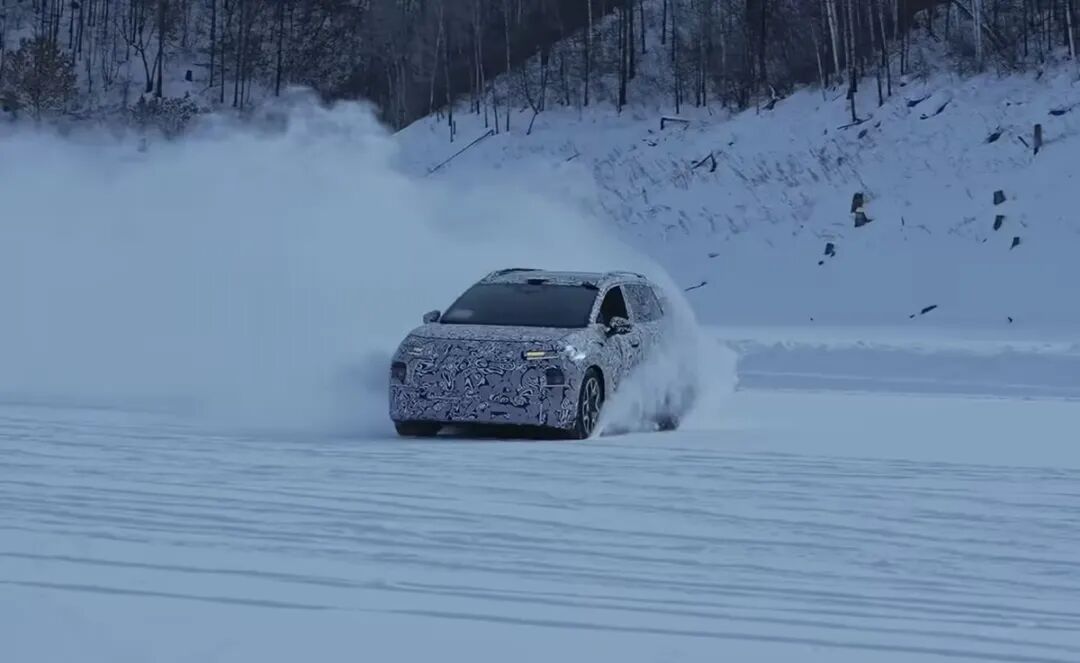
Picture | Whether real vehicle tests for two winters and two summers can be used as product advantages and the focus of publicity depends on the overall public opinion environment. As the problem of "quickly developed vehicles" is gradually being taken seriously, the timing is ripe
Localization also brings a new trouble: supplier locking and verification pressure. Introducing Chinese batteries, chips and intelligent driving algorithms does reduce costs and speed up progress, but the parallel use of multiple suppliers will increase the interface complexity, leaving joint ventures in a dilemma. If they stick to the original verification cycle, the speed cannot keep up; if they relax the reliability requirements for speed, their reputation will be damaged. The real capability is not to build a completely independent local supplier system, but to use local suppliers while still meeting global safety and durability standards, which is exactly the premise for the "least bad" positioning to be valid.
The really hard part is how to calculate the accounts
Technology can be purchased and cooperated, but organization and benefits are difficult to adjust. The most unavoidable problem for joint ventures is the decision-making chain between Chinese and foreign shareholders. In the past, the global platform could amortize R&D costs and ensure consistent quality, but the price paid is that it cannot keep up with the current domestic rhythm of a new generation of products every 12~18 months.
As long as the foreign side holds the final veto power over the platform, software, brand and procurement, the Chinese side can only carry out superficial localization, and the products will inevitably lag behind in configuration and be conservative in pricing. The difference between the two Toyota joint ventures, the speed difference between Honda and FAW-Volkswagen, is ultimately the difference in the depth of authorization. The reason why the bZ3X can be launched quickly is that it is the first model in the Toyota system completely led and defined by the China team, without the need for layers of approval from the Japanese headquarters. On the eve of its launch, the intelligent driving function was temporarily extended to the low-range version, involving the readjustment of more than 600 parts, which would never be completed in time under the past decision-making chain.
The channel is another account that is getting tighter and tighter. In the past, joint ventures relied on a huge 4S network to complete sales, after-sales and brand reach. But in the new energy era with low gross profit, parallel direct sales and shopping mall touchpoints, store renovation, inventory financing and declining service shop frequency are squeezing cash flow at the same time. If dealers cannot shift their revenue from vehicle sales margins to delivery, finance, insurance, charging and after-sales services, the more outlets they have, the harder it will be to transform. The number of dealer stores of FAW-Volkswagen has shrunk from about 1,000 in 2020 to about 700 at present, with the channel scale reduced by nearly 30%.
The most awkward part of this transformation is that it requires enterprises to personally cut off the most capable skills they relied on in the past.
The dilemma between price and residual value is also tricky. Self-owned brands set prices extremely fast in the 100,000