Who urgently needs a pair of AI glasses for the Golden Week?
Recently, a group of "peculiar" tourists have emerged in Shanghai.
They wear the same model of AI glasses, stop by the Nine-turn Bridge, and before they can take out their phones, the story of the century-old teahouse at Huxin Pavilion is heard in their ears. When passing the Nanxiang Steamed Bun Shop, they mutter a few words, then walk straight into the store and pick up the xiaolongbao they just ordered.
Prior to this, iFLYTEK AI Glasses gained popularity among outbound travel circles with its real-time cross-border translation function, and many outbound travelers regard it as a must-have hardware for overseas trips.
With the implementation of real-world cultural tourism pilots in domestic urban blocks on the one hand, and the consumption boom in cross-border tourism scenarios on the other, the superposition of the two phenomena puts forward a proposition of great industrial discussion value: Will AI glasses break out of the geek circle and become a universal travel companion for ordinary tourists?
For a long time, AI glasses have been in an awkward position in the industry. Tourism is very likely to be the first killer scenario for AI glasses to achieve mass adoption. But usability does not equal popularity. Whether the story of the travel companion is a beautiful marketing narrative of hardware manufacturers or a real inflection point for the commercialization of wearable devices, the upcoming peak travel season is exactly an observation window.
From tour guidance and translation to consumption, what kind of AI glasses do users need?
The pain of traveling during holidays is deeply experienced by the vast majority of tourists. Walking in the scenic area, one hand holds the mobile phone to check navigation, the other flips through travel guides; when seeing ancient buildings and wanting to learn about their history, you need to lift the phone to take photos for recognition and switch to search software; when traveling abroad, you can't understand menus and street signs, and you have to open the translation software repeatedly for communication; when encountering interesting details of scenic spots, the small mobile phone screen makes you look down at the screen while walking, which not only fragments the sightseeing experience, but also poses safety risks.
Smartphones solve the problem of information acquisition, but they occupy both hands, forcing users to switch their sight back and forth between the screen and the real scenery, which is an unavoidable pain point for existing travel tools.
The Yu Garden pilot in Shanghai shows us another sightseeing paradigm. When tourists put on Qwen AI Glasses and walk in front of the Huabao Building, the glasses will introduce the architectural features; when they reach the Maritime Pear Garden, the content switches to opera culture; when passing Huxin Pavilion, the history of this century-old teahouse is played in their ears.
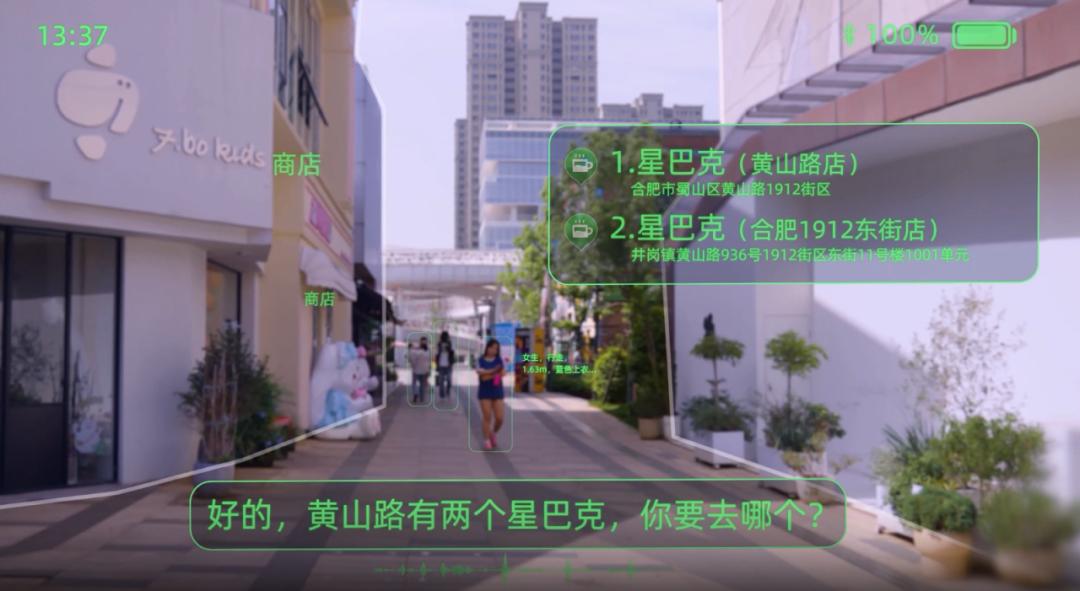
AI Glasses usage scenario Source: AIUI Official Website
The biggest difference between this interactive logic of "providing guidance wherever you go" and traditional audio guides lies in initiative. Traditional guides require users to scan codes, enter numbers, and click play by themselves, which is essentially users looking for services. But after continuous iterations, today's AI glasses have begun to realize the experience of services finding users. The device knows where you are standing, which direction you are facing, and what you were asking just now, and then actively pushes the corresponding information to you.
Moreover, tourists can also place orders directly through the glasses and pick up their meals at the store. From seeing the store to completing the consumption, there are no steps of switching between apps, searching for price comparisons, or jumping to payment. This process requires at least four or five operations in the traditional mobile phone scenario, but is compressed into a single voice command in the glasses scenario.
The technical foundation supporting this experience is the self-developed GPASS framework of Ant Group. This framework was first released at the 2025 Bund Conference. Previously, it was integrated with the summit intelligent agent "Tong Xiaowu", providing services such as route navigation, voice explanation, information push, convenient payment, real-time translation and intelligent consultation through AI glasses. In May this year, the city tour guide function was launched in Hangzhou, and later the integration of GPASS and the intelligent agent "Fu Xiaocuo" also realized functions such as voice Q&A, building recognition, route planning and story explanation.
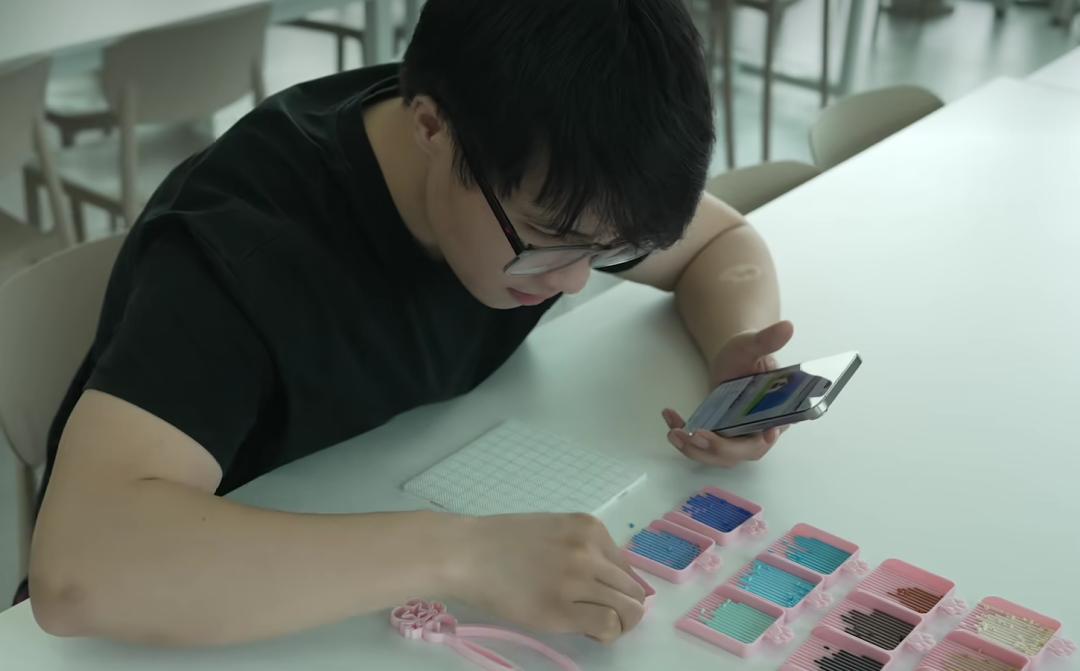
Color-weak blogger "Titan" modified AI glasses to complete bead splicing
In the outbound travel track, the popularity of iFLYTEK AI Glasses also hits the real pain points of users. Many outbound travel consumers share that when traveling in multiple European countries, they used to have to hold up their mobile phones to take photos for translation of restaurant menus, subway signs and museum exhibit descriptions, which is very inconvenient to operate while walking. However, AI glasses can directly recognize the text in front of you, and the translation is displayed on the lens. For face-to-face conversations, real-time subtitles are synchronously displayed. In noisy environments, multi-microphone array is used for sound pickup and noise reduction, supporting translation of hundreds of languages, and basic translation work can also be completed in offline mode.
Behind the two types of scenarios, two modes of AI glasses entering the tourism scenario have emerged. The first type is domestic in-depth tourists, mainly young people and family tourists, who pursue immersive sightseeing, are tired of superficial check-in, and hope to obtain flexible and personalized explanation services. The second type is outbound travelers, including business travelers and outbound tourists, whose core demand is barrier-free cross-language communication.
Three Bottlenecks Restrict the Popularization of "Travel Companions"
The market and consumers are full of expectations and imagination for AI glasses. Omdia data shows that in the first half of 2026, the shipment volume of AI glasses in mainland China surged 306% year-on-year, and domestic manufacturers are accelerating their breakthroughs; Morgan Stanley predicts that by 2028, the global shipment volume of AI glasses is expected to hit 35 million units, and the year-on-year growth rate of the industry will remain at a high level.
However, behind the rapid growth, the base number is still very small. Compared with the annual shipment volume of more than one billion smartphones, AI glasses are still in the introduction stage. Even if the demand in the tourism scenario is clear, there are still three practical bottlenecks of hardware, content ecology and business model preventing the products from entering the backpacks of millions of ordinary tourists.
The first bottleneck is the long-standing unsolvable hardware "impossible triangle" in the industry: weight, battery life and display performance are mutually restricted, which directly determines the quality of travel experience.
For tourism, wearing comfort is the first threshold. When going out to visit scenic spots, if the glasses are heavy and press the bridge of the nose, the experience of wearing them for a long time will deteriorate sharply. Although domestic AI glasses have achieved lightweight breakthroughs at present, many products weigh around 40g, close to the weight of ordinary frame glasses, as long as they are equipped with an optical waveguide display screen, the overall weight of the device will increase significantly.
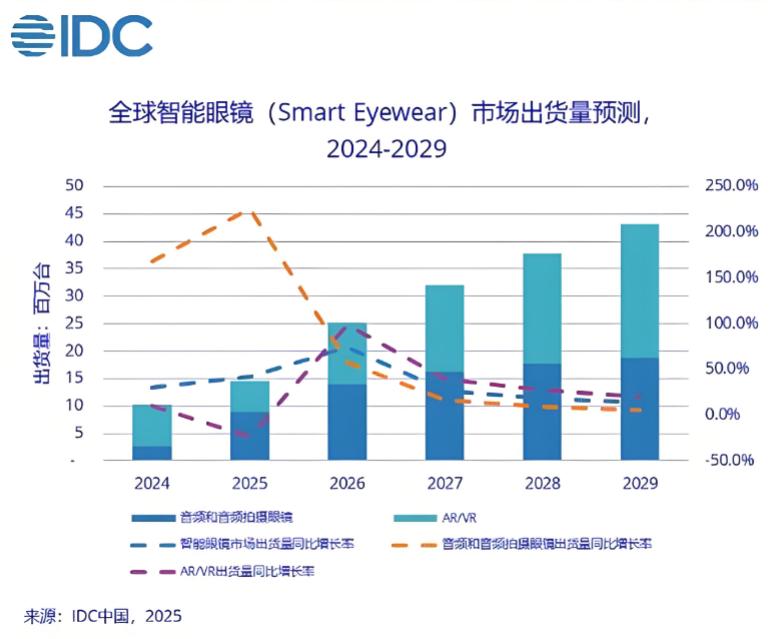
Source: IDC China
Battery life is a fatal shortcoming for outdoor tourism. For current mainstream consumer AI glasses with display screens, the single continuous use time is mostly 2 to 5 hours. A full-day urban roaming or a full-day scenic spot tour often lasts 6 to 8 hours, and the battery life is not enough to support a full day of travel.
At the same time, the interaction reliability in noisy environments is also a tough test for tourism scenarios. "I tried the translation effect in quiet scenes such as home and meeting rooms before, and it was really good, but if I go to outdoor, shopping malls, scenic spots and other places with loud environmental noise, the recognition accuracy will drop significantly." Vicky, who often travels abroad for tourism and business, told Zinc Scale, "The deterioration of network information will also lead to higher latency and stuck responses, which often happens when I am abroad."
The second bottleneck is the insufficient supply of cultural tourism content ecology. With the hardware available, there is a huge gap in high-quality localized service content.
The smooth operation of the Yu Garden pilot does not only rely on a pair of hardware glasses. It is supported by multiple sets of services connected by the GPASS intelligent agent framework, including geographic location and local historical database, and the hardware is only the output terminal. If you move to other ordinary urban scenic spots, most places have not completed the construction of this set of digital content.
The current market status is that hardware products are emerging in endlessly, but the cost of vertical cultural tourism content construction is high. To make AI glasses work normally as a tour guide in an ancient city or block, you can't just tell random stories. You need to input a large amount of information and do a lot of localized manual verification. General large models are prone to output wrong historical knowledge points and mislead tourists. However, every new cultural tourism point requires the content team to carry out refined processing, which costs a lot of manpower.
In comparison, traditional mobile applets and official account smart tour guides have low deployment costs, and tourists can use them by scanning codes without hardware modification. However, the city tour guide function of AI glasses requires multi-party collaboration of hardware, content and technical framework, and the overall implementation cost is higher.
Hardware is the skeleton, and cultural tourism content is the flesh and blood. If the content ecology cannot keep up, no matter how advanced the hardware is, it is just an empty shell.

Source: UP Master "Dalizi Qieqieli"
The third bottleneck is the dilemma of business models: the cost of personal purchase is high, and the public rental model is difficult to replicate on a large scale to achieve profitability.
At present, the retail price of mainstream consumer AI glasses with screens ranges from 2000 yuan to more than 10,000 yuan. To make the vast majority of ordinary tourists purchase additional equipment for the few travel trips they take every year, the threshold of consumption decision is actually very high.
However, the rental model piloted by various scenic spots also faces commercial problems. To operate the rental service, scenic spots need to purchase a large number of hardware devices, and also bear the continuous costs of equipment maintenance and personnel management. During holidays, the passenger flow is huge and the devices are in short supply, while in the off-tourism season, a large number of glasses are idle, leading to low asset utilization.
However, despite many practical shortcomings at present, the huge imagination space presented by AI glasses in the cultural tourism track also brings hope to the whole industry.
Looking back at smartphones, they were not originally created for tourism. Communication, social interaction, entertainment and payment are used frequently in all scenarios, and tourism is only one of the application scenarios. Similarly, tourism can be the stepping stone for AI glasses to break out of the niche market, but it cannot be everything. If the industry only defines AI glasses as a "travel magic tool", its ceiling is obvious.
The Mid-Autumn Festival and National Day travel rush is approaching. The pilot in Yu Garden is not only a new way of cultural tourism experience, but also a field survey of the next-generation wearable computing terminal for the general public. The story of the travel companion has already begun, but there is still a long way to go for the industry to achieve universal popularization.
This article is from WeChat Official Account "Zinc Scale" (ID: znkedu), written by Zinc Scale, authorized for release by 36Kr.