With a napkin, she made a winning bet on Zhang Yiming.
At the age of 43, Zhang Yiming's net worth exceeded 105 billion US dollars, making him the new richest man in Asia.
Few people, when talking about this rising tech star under the spotlight, remember the days in the first few years of his entrepreneurship when he was rejected by investors one after another, ran out of cash in the account, and stayed up all night worrying about the future.
In those darkest moments, it was not the prevailing industry trend that supported him, but a woman.
This woman is Wang Qiong, former Managing Director of SIG (Susquehanna International Group). Back when Zhang Yiming could not even produce a decent business plan, she bet all the chips she had on him.
Wang Qiong once explained at a public event why she dared to place the bet when no one else was optimistic about him:
"Yiming's inner thoughts and external behaviors are completely consistent... For investors, being true to one's self is extremely, extremely important."

Fate did not fail her: this investment later returned more than 10,000 times, elevating her to the ranks of the world's top investors.
1. Communicated more than 30 times in one month: at Zhang Yiming's lowest point, Wang Qiong became his "listener"
Mentioning investor Wang Qiong, most people's first impression is that she is the legendary female investor who bet on ByteDance and reaped a 15,000-fold return.
But behind the word "legend", what lies is long-term companionship.
From the end of 2012 to the beginning of 2013, Wang Qiong became the dedicated listener for Zhang Yiming.
During that period, Toutiao was most short of capital. Since the product used algorithms to push news to users, there was almost no other professional person in the market at that time who understood this track.
Every time he came back after being rejected by an investor, Zhang Yiming would find Wang Qiong to review the whole meeting. Wang Qiong would comfort him from a relatively objective perspective, and help him adjust his communication strategy step by step.

Wang Qiong later recalled in a TV program that the two of them communicated more than 30 times a month back then.
In the years when Zhang Yiming was the least favored by the market, besides being his listener, Wang Qiong also used the banner of SIG to help him knock on one closed door after another, connected him with top overseas capital, and opened up the key financing channels for his subsequent development.
This role of "listening and giving full support" is far more precious than capital itself.
Here comes the question:
Why did a Managing Director devote so much time to a young man who had not yet proved himself at that time?
The story dates back to a company called Kuxun.
In 2007, SIG invested in Kuxun.com, and Wang Qiong, the then Managing Director, was sent to the company as the investor representative. That was the first time she met Zhang Yiming.
Zhang Yiming was 24 years old then, serving as the chairman of the technical committee of Kuxun, with a baby face.
Wang Qiong was confused at that time: How could the company dare to assign such an important business line to such a young person?
But after Zhang Yiming stood in the board meeting and explained his logic of the layout for real estate search, the entire board of directors was convinced on the spot.
In 2009, the real estate search business of Kuxun was spun off into an independent company called 99fang. It was Wang Qiong who overruled the objections of others and supported Zhang Yiming to take charge of the new business. 99fang did not eventually grow into a large company, but it left Zhang Yiming with something more valuable: a proven credit record.
Later, Zhang Yiming came to Wang Qiong again and told her that mobile internet was a huge opportunity, and he wanted to start his own business, but he had not yet figured out what specific project to do. If it were someone else, they would have urged him to make a decision long ago, but Wang Qiong just said: Come to me again when you figure it out.
It is widely spread in the venture capital circle that after the Spring Festival in 2012, Zhang Yiming, who had a clear plan in mind, met Wang Qiong in a small café. He drew the prototype of his product on a napkin, an engine that recommends content for people by algorithms. According to Wang Qiong's recollection:
"I don't remember where that napkin went later, and Yiming has forgotten it too. Anyway, roughly, the product he drew is exactly what Toutiao looks like now."
Just like that, without any mature product or formal company, Wang Qiong made the final decision on the spot, and SIG became the only institutional investor in ByteDance's angel round. A napkin brought SIG two consecutive rounds of early investment.
The first investment was only 80,000 US dollars, which was the "life-saving money" for Zhang Yiming in that winter. Later, SIG kept increasing its investment, pouring in about 6 million US dollars in total, and obtaining 12% to 15% of ByteDance's shares.
Calculated based on ByteDance's peak valuation, the book value of the shares held by SIG once exceeded 90 billion US dollars, with a return of 15,000 times. In the VC industry, an investment that brings 100 times return is already enough to make a legendary investor, but this single investment directly breaks the revenue ceiling of the global venture capital industry that has lasted for a hundred years.
Wang Qiong's real excellence never lies in the money itself.
Looking back on her career, you will find that she is the most rare type of investor: she does not follow the consensus of the market, but only focuses on evaluating people.
In an industry almost monopolized by men, where people can get along well just by taking sides in camps and creating hot topics,
She relies on the calmness of an engineer, which is closely related to her career path.
2. The deified female investor never succeeds by luck
In 2016, in the article titled "Why I Invested in Toutiao", Wang Qiong wrote in her own account:
"I am one of the first batch of people in China who believe that machine learning will become a major trend in the future."
Indeed, Wang Qiong's resume is a rare technical type among investors.
She graduated from Shanghai Jiao Tong University, majoring in electronic engineering. Then she went to the United States and obtained a master's degree in electronic engineering at Stony Brook University, State University of New York. After working for many years, she got her MBA from INSEAD, which is known to insiders as one of the top business schools with the most difficult admission in the world.
After graduating with a master's degree, she got the offer that countless people dream of, and joined AT&T Bell Laboratories as a telecommunications engineer.
The experience that completely changed her career was joining UTStarcom in 1997. She transferred from a technical position to management, and was promoted to senior executive step by step, experiencing the whole process of the company from startup to listing.
All in all, she has worked in the IT and telecommunications industry for 13 years. In 2006, 33-year-old Wang Qiong ushered in a key career transition: she officially entered the VC industry and joined SIG (Susquehanna International Group) as a venture capitalist.
This unique experience became the core confidence for her to gallop in the venture capital circle later.
Therefore, when most VC investors in 2012 were still evaluating projects with the traditional logic of "traffic, users, market share", Wang Qiong could understand the content Zhang Yiming drew on the napkin: machine learning, personalized recommendation, and the transformation of information distribution methods.
Wang Qiong's belief that machine learning technology will affect the future completely benefits from her solid technical background.
Many people think that VC investment is precise sniping, 100% hit, and glamorous accurate prediction. But Wang Qiong, who has been deeply involved in the industry for many years, saw through the cruelest truth of VC from the very beginning.
When she first entered the industry, she laid out a wide range of tracks, covering the internet, wireless technology, entertainment media, modern services, high-tech manufacturing and many other fields.
Lanxun Technology, Bona Film Group, Inmage China, 56.com, Grace Dental, Top Rent Car, Damai.cn, Kupan... The list of projects she invested in the early stage is long and complicated, most of which are unknown to the public.
Among these projects, the investment cycle of multiple projects led by her exceeded 5 years. A small number of projects succeeded smoothly, but more of them faded away quietly and were submerged in the tide of the times.
This is actually the underlying logic of her whole investment philosophy. She has always adhered to the strategy of "patient capital", emphasizing the establishment of deep partnership with founding teams.
The super winner that Wang Qiong waited for many years and always stuck to is ByteDance. She has stayed with the company for a full 12 years.
Around 2024, SIG gradually downsized its China venture capital team, and news came out that Wang Qiong, the "talent scout" who had been deeply engaged in this industry for nearly 20 years, was about to retire. The entire venture capital circle was full of regret.
Looking back, there is never a legend that comes out of nowhere. Her accuracy comes from the accumulation of technical vision. The so-called 15,000-fold return is nothing but a natural result after the superposition of professionalism, accumulation, patience and rationality.
3. The venture capital queen who was deterred by the $7 billion valuation
If Wang Qiong is the "person who entered the market before dawn", then Xu Xin is the one who "hurriedly bought the ticket after the day broke".
It is precisely this "miss" that makes Xu Xin's story more lamentable than Wang Qiong's. She once admitted publicly that missing the investment in ByteDance is one of the biggest regrets in her life.
Xu Xin and Zhang Yiming actually met a long time ago.
She recalled this meeting on many occasions later, saying that she could not remember exactly which year it was, only that it was the early stage of the mobile internet era. Zhang Yiming sat across from her with a financing plan, and quoted a number: 7 billion US dollars.
Her first reaction was shock:
"When I first met Zhang Yiming very early, he asked for a valuation of 7 billion US dollars. I was shocked as soon as I heard it, because we focused on early-stage investment and had never seen such a high price. In fact, it was because I did not understand the track at that time."
What she was familiar with at that time was consumption, retail, search advertising and e-commerce advertising, while the recommendation algorithm, information flow and content distribution that Zhang Yiming talked about were completely outside her research scope. In her own words, she was completely unfamiliar with the field of "content creation" at that time, which was beyond her core competence of consumption and e-commerce research.
So she left, did not sign the TS (Term Sheet), did not lead the investment, nor did she participate in the follow-on investment. Zhang Yiming left her office with the 7 billion US dollar valuation plan, and continued to look for the next investor.
How did she finally "see the light"? She went back to study Mark Zuckerberg's 2012 annual report, and pondered over it little by little, and finally understood how powerful the "recommendation engine" technology is.
But by the time she figured it out, ByteDance's valuation had already multiplied several times. Xu Xin later had a sentence that was forwarded by countless people:
"You can never earn money beyond your own cognitive level."
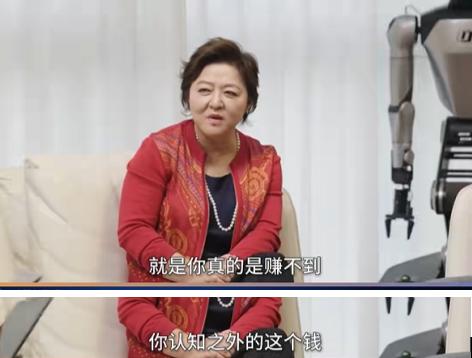
This sentence sounds like a cliché, but behind it is the real cost of hundreds of millions of dollars.
In this industry, the most terrible thing is not that you have no money, or no good projects, but that you are sitting at the gambling table, but you cannot understand the cards in your hand.
At the end of 2025, a piece of news exploded in the venture capital circle:
A batch of old shares of ByteDance were put up for auction. 7 investment institutions competed fiercely for the shares.
The final winner is Xu Xin's Capital Today.
She invested nearly 300 million US dollars, equivalent to 2.1 billion RMB, to take over the shares of ByteDance from the old shareholders. The transaction price was 50% higher than the original valuation, pushing the company's valuation to about 480 billion US dollars.
The public said she was chasing a high valuation. But Xu Xin knew clearly in her heart that this was not chasing high, but paying off the debt caused by her lagging cognition.
She used 300 million US dollars to tell everyone one thing:
I didn't understand the project back then, and that was my problem; now I understand it, even if the price is high, I still want to get on the train.
This courage to admit that you made a mistake, and are willing to use real money to correct the mistake, is actually more rare than "never making a wrong judgment".
4. Conclusion
You see, the cruelest part of the venture capital circle is here: some people focus on evaluating people, some focus on data, some focus on luck. Wang Qiong won by daring to place the bet before dawn, and Xu Xin won by daring to admit her mistake after dawn. One stayed with the company for 12 years, the other spent 300 million US dollars to buy a ticket that was many years late.
So stop asking why other people always get rich overnight. Wealth never rewards those who hear the news the earliest, nor those who are best at chasing the prevailing trends. It only rewards those who can understand the value when no one cares about the project, who can hold on through the long cycle, and who dare to use real money to admit their mistakes after realizing they are wrong.
That napkin Zhang Yiming drew on not only made the richest man in Asia, but also outlined the two most expensive words in the venture capital circle: thorough understanding.
This article is from WeChat Official Account "Financial Gossip Girl Channel