The invasion of generative AI: people who have been fed with "swill" are beginning to resist.
Several months ago, a company based in Shenzhen approached illustrator Xiaofei, hoping she would design a cultural and creative product themed on mahjong tiles.
The client sent some reference renderings online, where simple red and green lines outlined the traditional patterns of plum blossom, orchid, bamboo and chrysanthemum, saying "the final product should achieve this exact effect".
Xiaofei has been in the illustration industry for ten years, and she spotted at a glance that these renderings were AI-generated. She casually browsed the web and found the original image with extremely high similarity. "I will not trace over images generated by AI," Xiaofei replied, "because this kind of project is of no benefit to me at all, and will also bring copyright risks."
This client company had just transformed from the industrial design industry to enter the cultural and creative project sector. It had never been exposed to art illustration design before, and did not have basic aesthetic competence. They smiled with a confused look and said, "Okay, it's just for reference." The next day, they sent a new demand form for drawing — which was filled out by Doubao.
This document was very long, but logically incoherent and completely unusable. The client said that their leader had specially held a meeting to discuss just to generate such a demand document.
Xiaofei realized that this company knew nothing about design, and there would definitely be constant conflicts in subsequent cooperation. She returned the deposit on the spot and terminated the cooperation.
In just the past one or two years, Xiaofei has found that AI content has invaded her work and life on a large scale. In addition to dealing with clients who rely heavily on AI, her mobile phone is already flooded with AI short dramas, AI product images from major shopping platforms, and AI-generated graphics and texts on official accounts. High-speed railway stations, subway stations, airports, all kinds of places are filled with low-quality AI-generated images.
A report released by the China Netcasting Services Association (hereinafter referred to as "CNSA") shows that the total number of AI-generated videos and audios exceeded 2 billion in 2025, and more than half of users have been exposed to AI-generated video and audio content.
Unconsciously, AI content has penetrated from online to offline, surging from all directions to surround ordinary people like Xiaofei, filling the time and space waiting to be occupied. In the second half of this year, AI content has repeatedly been so realistic that it can pass off as real, breaking into the long-standing aesthetic domain of human beings, leading to continuous disputes.
Merriam-Webster named "slop" as its Word of the Year 2025, referring to the mass-produced, empty and meaningless low-quality content churned out by AI assembly lines. Some people who can no longer tolerate it exclaimed: "I can't swallow any more of this."
At a time when the drawing, short drama and novel sectors are all collapsing, "Storm Eye" of Phoenix Net has contacted multiple practitioners and audiences in the AI content industry, to explore what the producers of these "AI slops" are anxious about, how the business logic driven by high efficiency and algorithms has quietly completed the domestication of human aesthetics, and what else human beings can hold on to.
01
Whose "Home Field"
On her way to work, Xiaofei's eyes always sweep across the huge bus billboards by the road: AI-generated characters have delicate and smooth facial features, but their eyes are completely empty, without any trace of real emotional fluctuations, and their mouths wear stiff and standardized smiles. This weird feeling makes people dare not look at them a second time.
Her day starts from this moment of staring at a "pseudo-human".
When ordering takeout at noon, in the mobile app, the AI product images of food show ingredients that are modified to be crystal plump and bright in color, but cannot arouse any appetite. She opens the shopping app casually, where AI models show the wearing effect of clothes, with perfect, slender and tall figures, and the clothes have almost no wrinkles...
She blinks, turns off the phone screen, and feels lost for a moment. Those distorted images have seriously affected her consumption judgment.
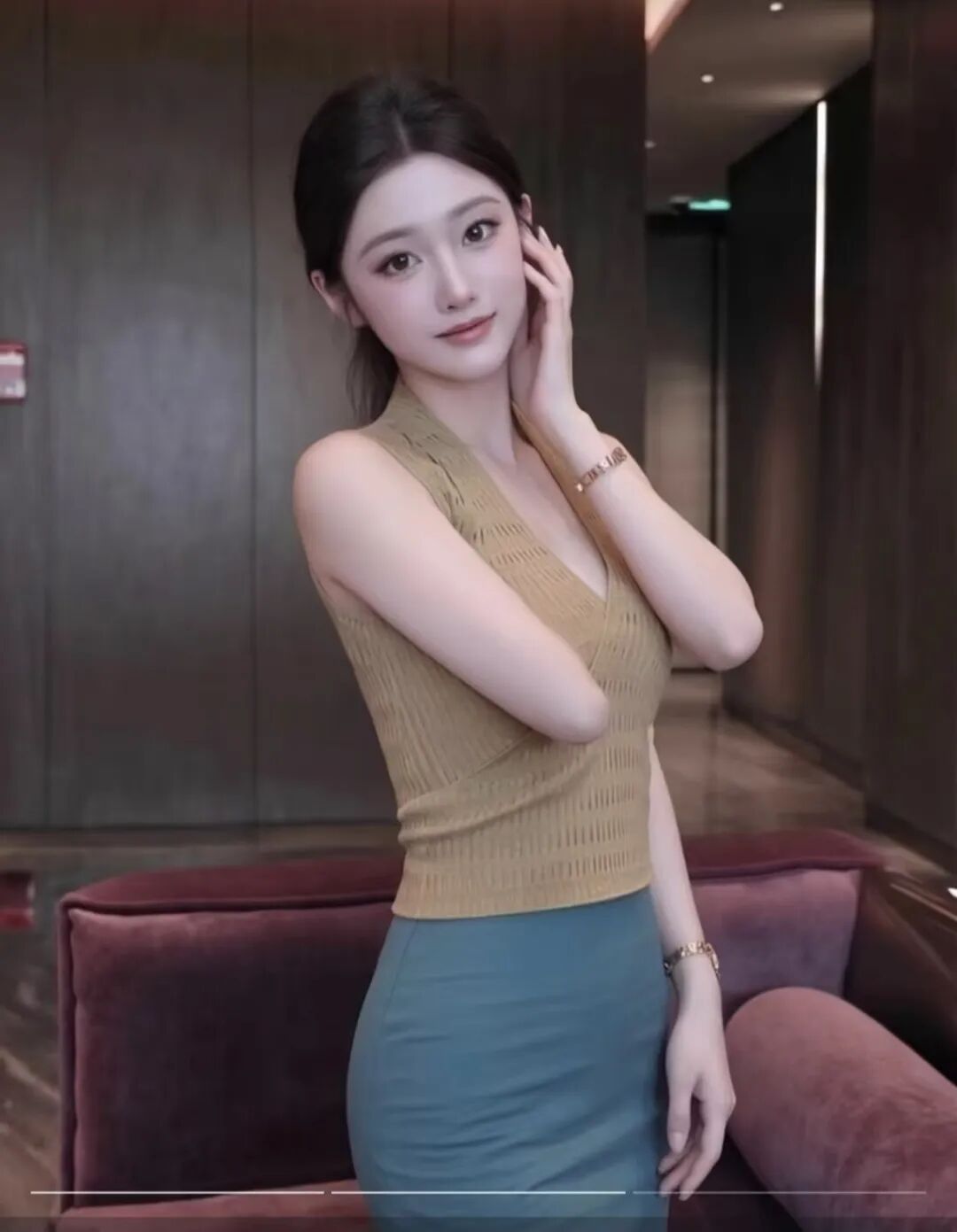
In early August, a netizen posted online saying that the homepage was recommended AI product images, and the model unexpectedly had three hands. Screenshot from Xiaohongshu.
When working, Xiaofei searches for creative materials online, and is even more disturbed. In order to find a real shot of a jellyfish for reference to study its body structure, she has to flip through several more pages, because almost all the top-ranked images are AI-generated, with very low reference value.
Even though she has blocked AI content, as long as she browses relevant content once, the platform algorithm will continuously push similar materials to her.
On social platforms, more and more people surrounded by AI like Xiaofei share their experiences: when traveling and choosing hotels, they have to distinguish the real from the fake among numerous exquisite AI images. After landing at the airport, along the long passage, both sides are full of weird "pseudo-human" advertisements, which are very roughly made. If you look closely, some characters even have an extra finger.
"Even if I choose not to look at either side, when I look up, I find there are also such advertisements above my head." Netizens feel helpless.
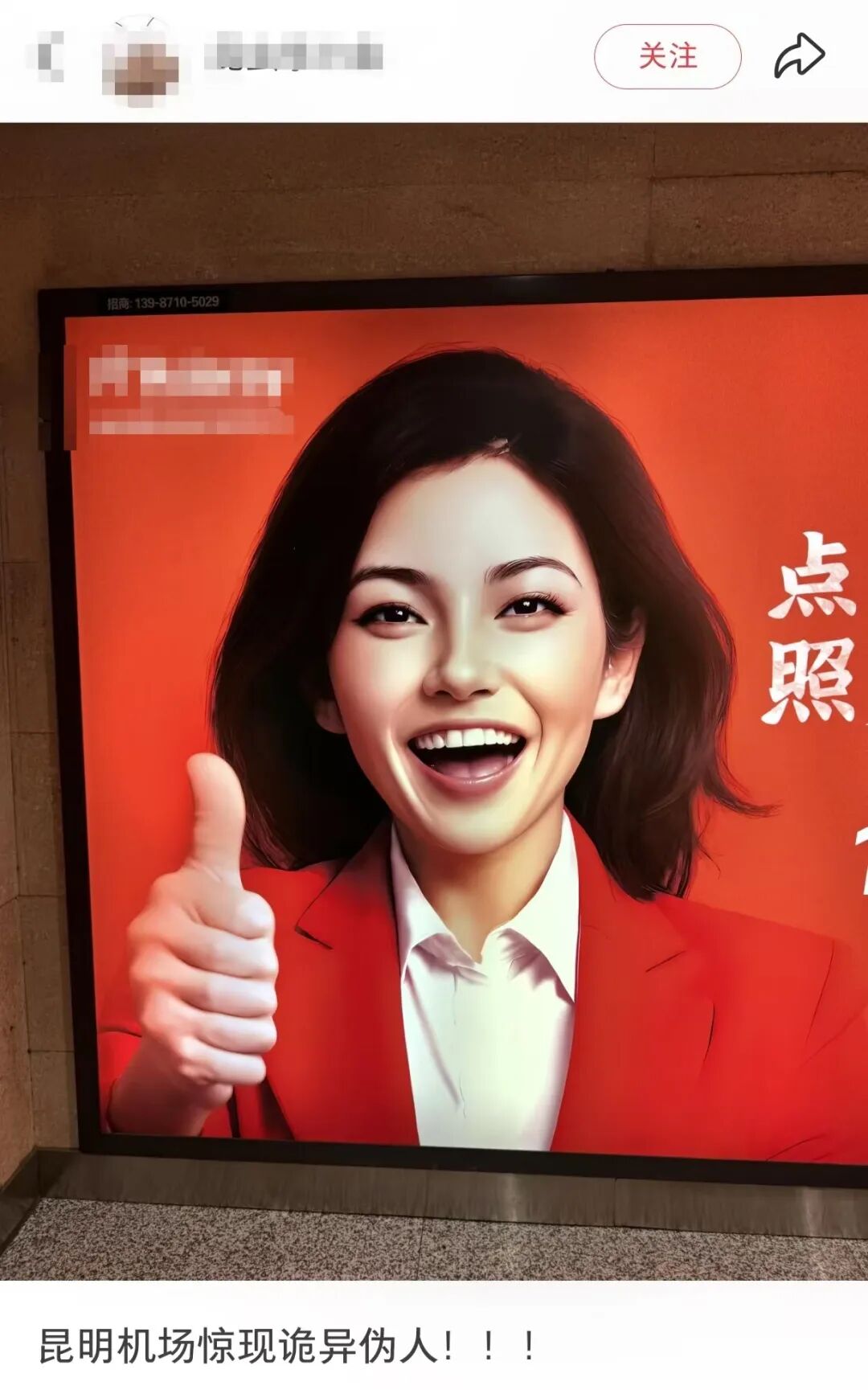
Netizens complain about AI advertisements at the airport. Screenshot from Xiaohongshu.
Even the children's teaching aid books and picture book market have been occupied by AI graphics and texts; documentaries produced by TV stations have begun to use AI-generated images to make empty shots, transitions, historical reviews, mythological and legendary shots... After turning off the TV, AI short dramas continuously pour into mobile phones, reaching hundreds of millions of audiences.
The *2026 H1 AI Drama and Manhua Drama Data Report* released by industry research institution DataEye shows that domestic users of AI drama and manhua drama have exceeded 600 million in the first half of the year. At present, with the advancement of technology, in some episodes, AI actors can already achieve micro-expressions and eye movements like real human actors.
However, the AI content that the larger base of ordinary users have to access often only blindly stimulates the senses, without any expression of meaning.
Some netizens have come across some spoof videos of "Nailong", where the yellow cartoon character rides a bicycle and suddenly falls apart, with its body broken into pieces to shock the audience outside the screen. Every time she brushes against such a video, she feels a wave of nausea.
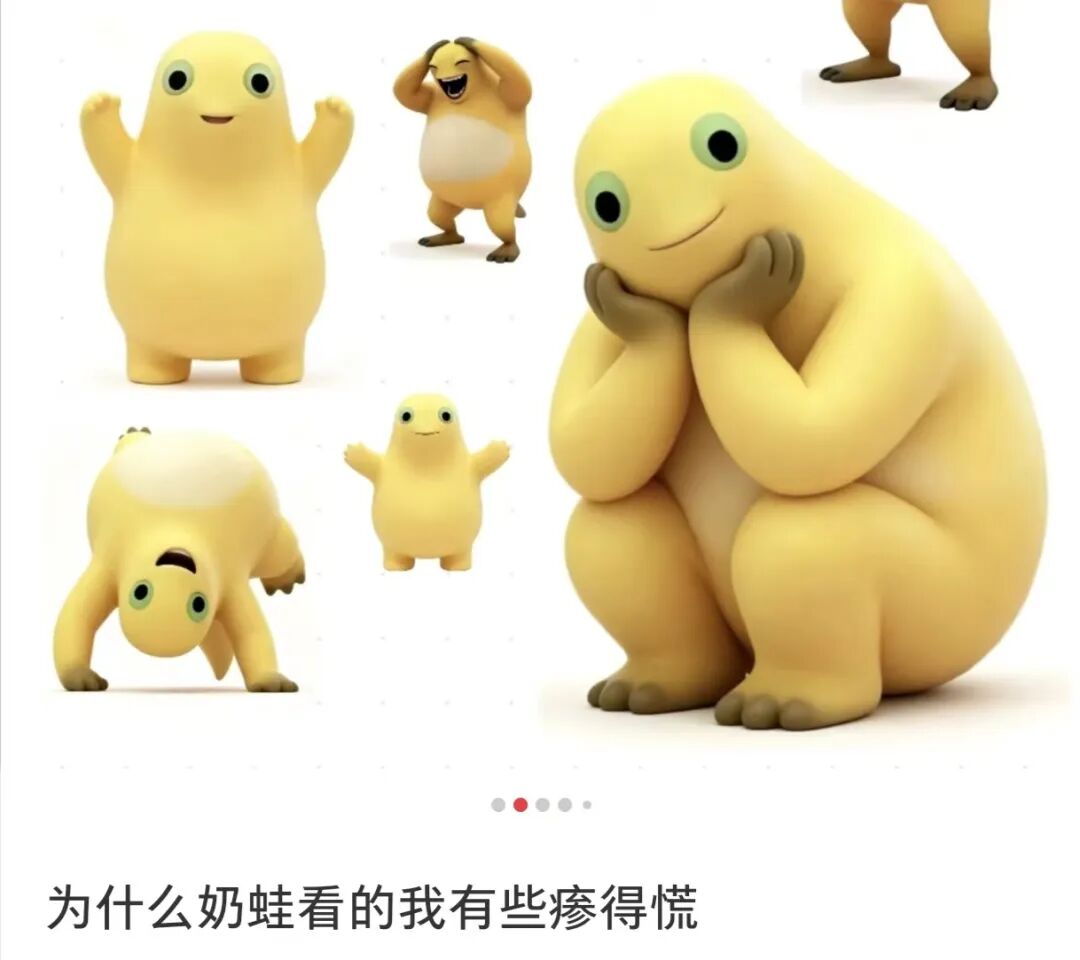
On social platforms, some netizens post to complain that the "Naiwa" image, which is a distorted AI secondary creation based on the Nailong image, is creepy. (Screenshot from Xiaohongshu, irrelevant to the characters in the text)
Why are you so disgusted with AI content? When describing the feeling that AI images bring to her, this netizen uses the word "greasy".
The characters' skin is polished to be free of pores and texture, with big eyes, full lip color, false and even light and shadow, and even the walking pace maintains exactly the same speed, without any rhythm change. In short, "exquisite but lifeless".
"The ultimate goal of such low-quality content produced by assembly lines is mostly to make short-term marketing profits," she told "Storm Eye" of Phoenix Net.
While AI content is integrated into people's daily life through various media, it also begins to quietly occupy the human aesthetic domain.
Not long ago, an AI-generated image named *Pleasure in the Garden* won the first prize in the third selection of Hohhot National Photography Biennial. Later, netizens found that the three people in the picture almost had the same face, the text on their clothes was full of mistakes, and the AI traces were obvious. On July 14, this image was disqualified from the award.

The award of the AI-generated image *Pleasure in the Garden* in a photography competition triggered controversy. Image from the Internet.
Then, a cow with five legs appeared in the "Biweekly Competition" column of the authoritative photography publication *Popular Photography*; AI paintings with three hands, two noses and twisted and disordered fingers appeared in the "First Children's Picture Book Exhibition of China Artists Association", and all the authors finally admitted that they used AI tools.
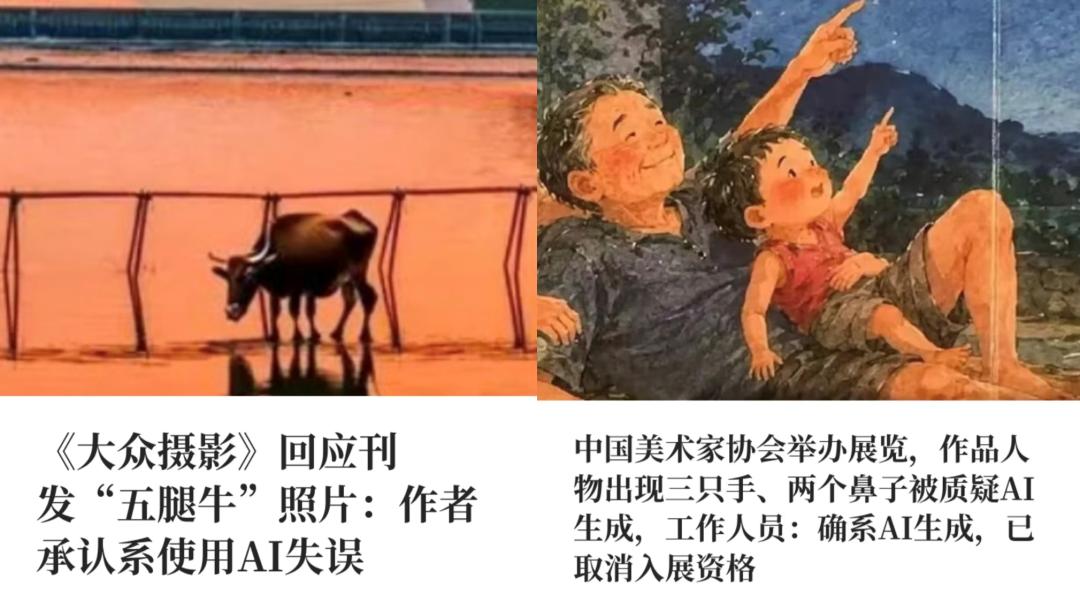
Two controversial AI works. Image from the Internet.
Similar incidents happened one after another, making people more and more uneasy, and questioning the aesthetic judgment of relevant parties.
After these farces, at the end of August, the official release of *COSMO*'s electronic journal COSMO CRUSH launched the cover blockbuster, with Fang Taozi, the virtual heroine of the AI short drama *The Laid-off Girl*, appearing on the cover. She also became the first AI actor to appear on the cover under the five major magazine systems in China.
The entire set of cover images is generated entirely by AI, without the need for actual shooting and light and shadow processing. This also makes Fang Taozi involved in the discussion about the boundary of AI again after endorsing contact lens products.
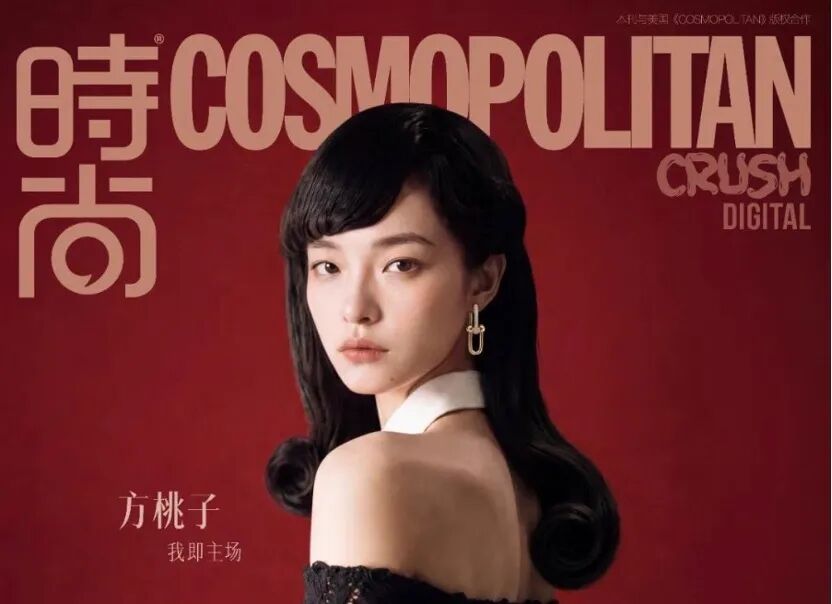
AI actor Fang Taozi appears on the magazine cover. Image from the Internet.
Supporters believe that this is a bold digital exploration in the fashion industry, and virtual images can expand the boundary of fashion visual expression.
Critics pointed out that this virtual face seems to stitch together the features of many real people, and the aesthetic sense of AI is essentially a reproduction of the existing human aesthetic samples, lacking the life texture brought by real people.
In any case, the slogan on the cover — "I am the home field" — is not only the declaration of the characters in the play to fight for the right to speak, but now it has become a signal that algorithmic aesthetics breaks the boundary and breaks into the human aesthetic domain.
02
Chasing Mass Production, Betting on a "Hit"
Those low-quality AI products seem to pop up overnight and spread everywhere. In fact, in order to seize traffic quickly, every link of this content generation chain is pursuing production efficiency to the extreme.
The explosive growth of the AI short drama industry most clearly reflects this point. In this chain, from script writing, character setting, scene construction, prop production, to video generation and picture adjustment, the entire production chain can be completed by AI.
Although current mainstream AI video tools, such as Kling and Seedance, still have obvious technical limitations, and a single native generation mostly only supports 8 to 15-second video clips, this does not prevent a large number of studios from pouring into the track. Even if they can only use the "stupid method" of editing and splicing to make up for technical shortcomings, they want to seize the traffic dividend.
Data released by the National Radio and Television Administration on September 17 shows that in the first 8 months of this year, a total of 430,000 micro short dramas were launched, of which AI dramas accounted for more than 90%. According to the data of native AI short dramas on the Douyin platform, in this platform alone, 221,900 new AI short dramas were added in the first half of the year, which is equivalent to about 1,226 new dramas on average every day.
It is at this amazing speed that a large number of short videos with old plots and stereotyped characters pour into Xiaofei's mobile phone.
Xie Wenxin is an in-house contributing screenwriter at a manhua drama studio. She told "Storm Eye" of Phoenix Net that AI short dramas on the market are divided into two types: high-quality works and mass-produced works. At the end of last year, many projects were still willing to take the high-quality creation route, but the iteration speed of AI was too fast, and the industry trend changed rapidly. Some leading short drama companies have changed their production models.
Those leading mainstream companies, which originally had in-house screenwriters or accepted submissions from "wild screenwriters", now have widely used internal AI tools to produce scripts. The studio where she works also required employees to use AI tools for creation after March this year. Since then, Xie Wenxin's workload has doubled, from producing 5 to 6 scripts a month to completing more than 10 scripts.
"The whole industry is chasing mass production. If your output volume can't keep up, you will be eliminated by the market soon, so everyone has to bite the bullet and keep up with the rhythm," she said. "As long as you keep producing in large quantities, there is always a chance to make a hit."
The process of AI writing scripts is not complicated. You only need to feed the disassembled script materials into it, and then rely on the workflow built by the company to let AI generate the first draft. The workflow built by small companies is relatively rough, and the generated scripts still need to be modified manually repeatedly.
"The quality requirement for mass-produced scripts is very low, as long as they can pass the review and have basic plot logic," Xie Wenxin said. After the scripts are produced, they will be quickly made into AI animations, and finally released on short video platforms such as Douyin, Kuaishou and Hongguo.
In the link where AI turns text into video, the "card drawer" initially controls the texture of the finished picture. This is an emerging post derived from the unstable stage of AI finished products. The main task is to tame AI, constantly modify the prompt words through "card drawing", and repeatedly modify the AI-generated revealing and wrong content until the desired picture effect is obtained.
An AI high-quality real-person manhua drama card drawer told "Storm Eye" of Phoenix Net that the AI-generated images are limited by the imagination of the card drawer and the ability of the model.
Her boss is a perfectionist, who checks the product details frame by frame, wanting the texture shot by a real film crew and camera, but it is not easy to achieve this effect.
For example, she needs to make pre-production assets for a sect palace, but she has no relevant reserve in her mind, can't imagine the picture, and the things she makes always feel a bit lacking. Sometimes, the physical logic of the lens actions made by the model is wrong. She often supplements the shots until she feels sick, and finally has to hand in the work.
Similarly, in another AI short drama company, Zhou Jia,