American automakers can no longer afford to compete, and have jointly filed a petition to ban the sale of Chinese cars in the United States.
U.S. automakers can no longer sit still.
Not long ago, six major U.S. automotive industry associations, which basically cover the interests of all major automakers, suppliers and dealers across the United States, took an action: they collectively submitted a joint letter to the Trump administration.
The title of this letter is — A Plea to the Trump Administration to Maintain U.S. Bans on Chinese Vehicles, whose purpose is already very clear from its name.
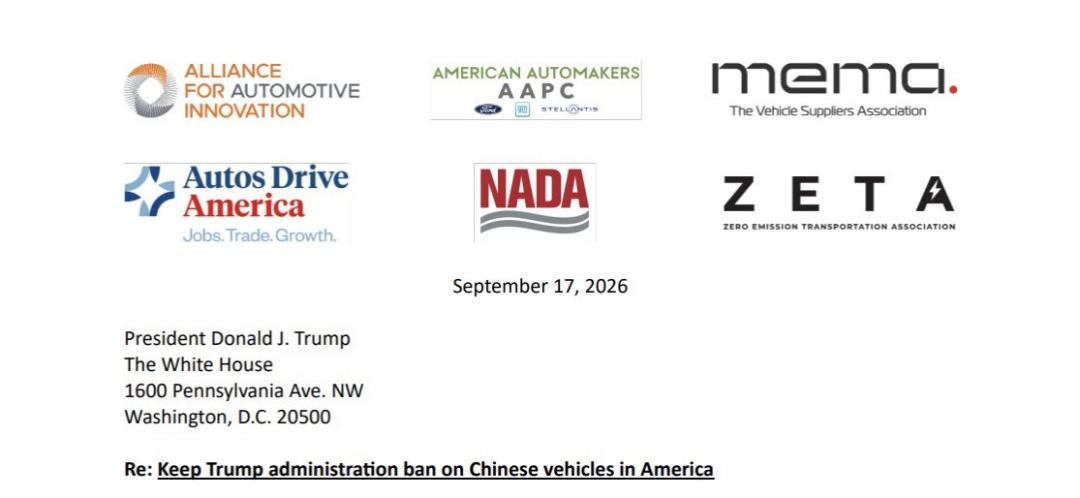
They called for "firmly closing the door" to Chinese automakers, openly advocating trade barriers and unfair competition in the letter, urging the Trump administration to continue implementing relevant policies to "firmly ban Chinese automakers from selling, importing or manufacturing vehicles in the United States".
Not only will imports and sales continue to be restricted, but even Chinese enterprises building factories in the United States for production should also be banned.
These associations used to keep talking about "free market" and "fair competition", but now that Trump has only made a "verbal promise", the major U.S. automotive associations are in such a hurry that they don't even bother to put on a show...
Trump Has Relented
The origin of this joint letter dates back 20 days, when Trump was interviewed on Fox News' The Ingraham Angle.
During the interview, host Laura Ingraham asked Trump a question: whether Chinese automakers are allowed to open factories in the United States.
He first denied claims that he might allow vehicles manufactured in China to be imported into the United States, saying that if existing restrictions were lifted, the U.S. domestic market could be "flooded".
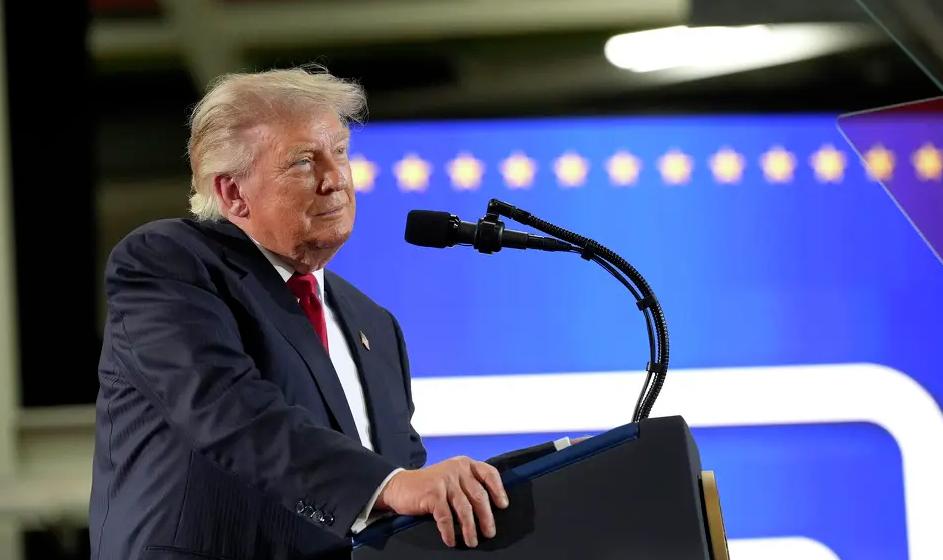
He then added that if China is willing to open factories in the United States and build cars locally, I'd be OK with it. He also said, "Japan does the same thing, the key is that they employ our people." He specifically mentioned the path he does not want to see, that is, Chinese automakers build factories in Mexico and then ship vehicles to the United States. He also said he is not belittling Chinese cars.
However, just such a verbal promise caused an immediate uproar in the U.S. automotive industry. Shortly afterwards, this joint letter was placed on Trump's desk, for fear that Trump would really loosen the restrictions...
The signatories of this joint letter represent the most unified joint dialogue of the U.S. automotive industry with the White House in recent years. The letter was jointly signed by the heads of six core associations, including the Alliance for Automotive Innovation, the American Automotive Policy Council, Driving American Jobs, the Motor & Equipment Manufacturers Association (MEMA), the National Automobile Dealers Association, and the Zero Emission Transportation Association.
Behind them are almost all complete vehicle manufacturers and industrial chain forces producing in the United States, which will not be listed one by one. All the U.S. automakers you can think of are on the list.
It is worth mentioning that the leading "Alliance for Automotive Innovation" had already done a "shameful" thing earlier.
It wrote a letter to senior bipartisan leaders in Congress, asking for the completion of permanent legislation before the current session of Congress adjourns, to completely ban the import and sale of Chinese connected vehicles and related software and hardware in the United States, and even restrict Chinese automakers from building factories in the United States for production.
The core topic of this letter is more or less the same, urging to maintain import restrictions on Chinese vehicles, even if they are manufactured in U.S. factories.
In fact, as the U.S. market access barriers for Chinese vehicles have been continuously tightened, Chinese cars are no longer visible in the U.S. market today.
In early 2025, the Biden administration, under the pretext of so-called "data security", effectively banned all Chinese automakers from selling or producing passenger vehicles in the United States.
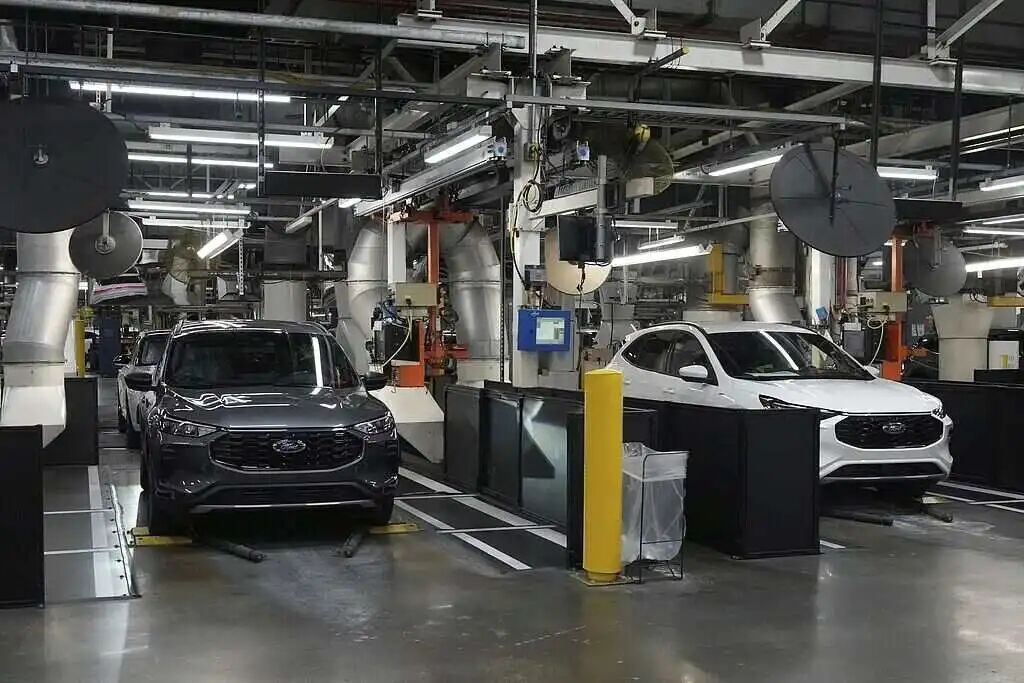
This is not enough. They also have to bear layers of superimposed tariffs: the 2.5% most-favored-nation base tariff, plus the 25% Section 232 auto tariff, plus the 100% Section 301 tariff specifically for Chinese electric vehicles, plus the additional 10% tariff previously imposed under the International Emergency Economic Powers Act; the comprehensive tariff rate for Chinese vehicles entering the United States exceeds 137.5% at most.
The result is that Chinese cars now account for 0% of the U.S. market share.
Up to now, in the U.S. market, there is only one automaker directly related to China's new energy vehicle industry — Polestar, which will also be forced to exit the U.S. market in 2027 due to "national security risks" and its Chinese-owned background. After Polestar leaves, there will be no Chinese automakers selling vehicles in the United States.
The "0% Market Share Is Guilty" Theory
It is precisely because of this 0% market share that these U.S. automotive associations have seized a so-called reason to block Chinese automakers from building factories:
The letter argues that the current market share of Chinese vehicles in the United States is zero. If Chinese-funded automakers are allowed to set up factories locally to gain a foothold in the U.S. market, it will be at the expense of the interests of automakers operating in the United States. In their view, this is not to create jobs, but to seize jobs.
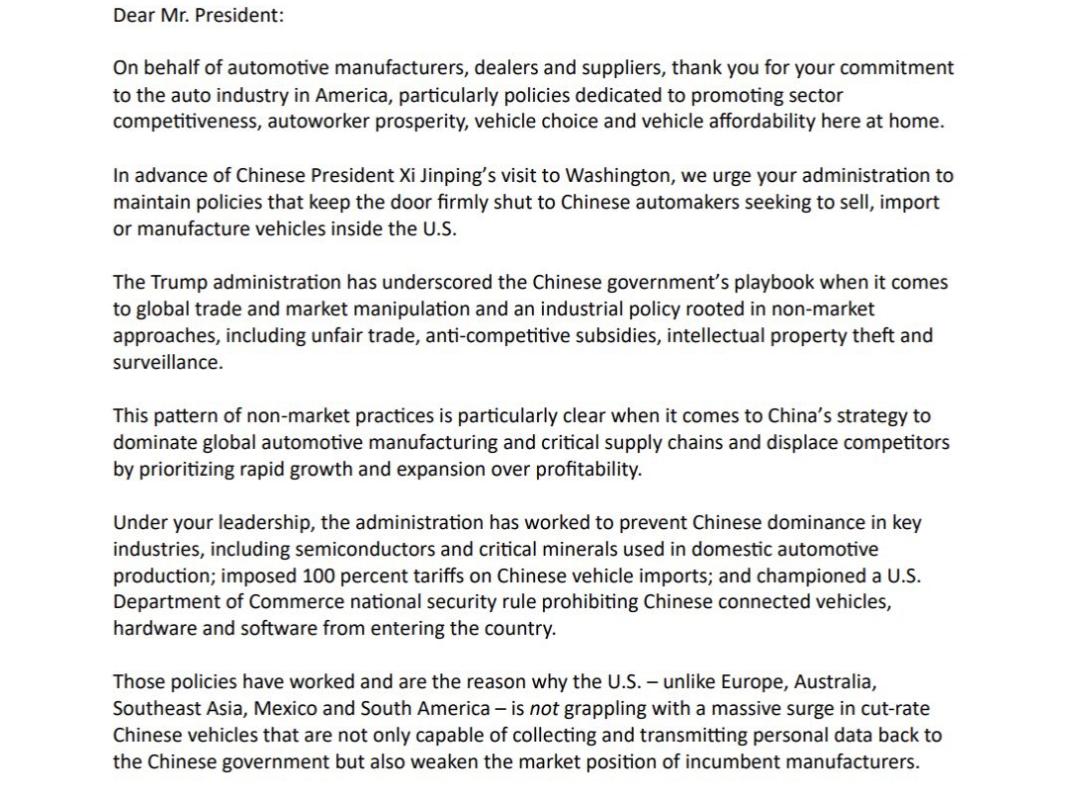
The original wording in the letter states that the investment of Chinese automakers will not create new U.S. jobs, but "transfer employment from manufacturers that have invested for generations in the United States to Chinese-owned and operated companies", thus harming the interests of 17,000 auto dealers across the United States.
In addition, these associations also believe that even if Chinese-funded automakers assemble complete vehicles locally in the United States, they cannot solve the cybersecurity risks related to connected vehicles. Because even if produced in the United States, the industrial chain is still highly dependent on Chinese suppliers and Chinese components.
The letter later escalated to the perspective of industrial security: "The automotive industry is the foundation of the U.S. advanced manufacturing and defense industries, which needs to rely on local production capacity and industrial workers to respond to demands in the event of a national emergency. Once the foundation of the local industry is hollowed out, it cannot be rebuilt in a short time."
After putting on these several "big hats", the demands of the U.S. automotive associations have also emerged: continue to prevent Chinese automakers from selling, importing or producing vehicles in the United States; maintain the 100% tariff on Chinese vehicles and existing national security restrictions; continue to implement restriction measures targeting Chinese connected vehicles, related hardware and software.
They also reject the logic that "local production in the United States can avoid security risks", regarding Chinese vehicles entering the U.S. market as an issue of industrial security, supply chain security and national security, rather than just a trade issue.
Normally, a 0% market share should not make U.S. automakers so nervous. Even the factory-building rhetoric from Trump is essentially just replicating the path that Japanese and Korean automakers took to enter the U.S. market back then, which Toyota, Honda and Hyundai all used to gain a foothold.
The reaction of U.S. automakers precisely shows that they believe that once Chinese automakers take this path, the consequences will be more serious than the impact of Japanese and Korean cars. They know better than anyone that once tariff barriers are loosened, or Chinese automakers detour through Canada and Mexico to enter the North American market, consumers will vote with their wallets.
This point has been verified in the attitude of the consumer market. Affected by the fact that the average price of new cars in the United States has exceeded $50,000 for the first time and entry-level economical vehicles are increasingly scarce, U.S. automotive firm Cox Automotive conducted a survey.
The survey shows that 49% of U.S. consumers consider Chinese cars to be "very cost-effective" or "extremely cost-effective", and nearly 40% of U.S. consumers say they are "very likely" or "extremely likely" to consider buying Chinese brand vehicles. Among Gen Z respondents, this proportion is as high as 69%.
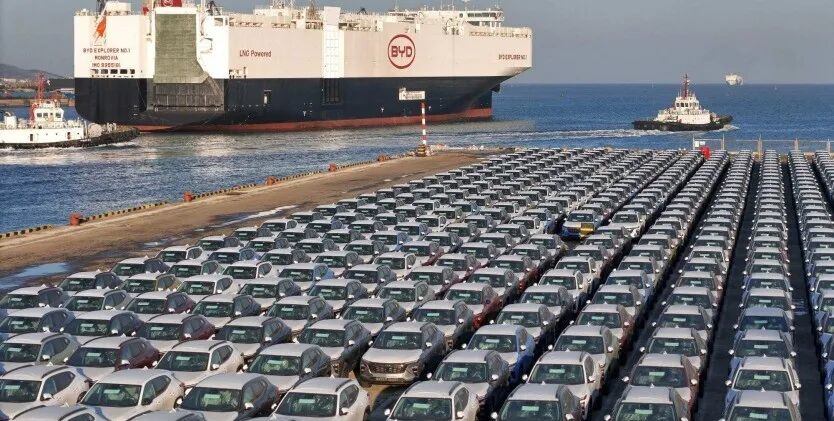
Moreover, the anxious attitude of the U.S. automotive industry precisely reflects the speed of Chinese vehicles going global. In 2025, China's auto exports exceeded 10 million units, ranking first in the world for the second consecutive year. For every 10 new energy vehicles sold worldwide, 6 are from China. In the first half of 2026, exports reached 5.096 million units, a year-on-year increase of 65.3%, of which 2.355 million were new energy vehicles, more than doubling year-on-year.
BYD ranks top in sales in more than a dozen countries including Thailand, Italy, Brazil and Saudi Arabia. In May, the monthly registration volume of Chinese automakers in Europe historically exceeded the total of Japanese brands. Chery also topped the UK's monthly bestseller list, and has taken deep roots in Russia and Brazil. Xiaomi has signed a dealer in Germany and will enter the European market next year. BYD's overseas target has also been adjusted to 1.9 million to 2 million units in 2026, and more than 2.5 million units in 2027, with overseas sales accounting for more than half of its total sales.
A truly confident market will not treat a competitor with a market share of less than 1% as a major threat. Back in the days when General Motors and Ford swept across the globe, they relied on products to convince their rivals, not on political barriers to keep rivals out.
Now the joint resistance of the six major U.S. automotive associations is tantamount to publicly admitting — they cannot beat Chinese cars in head-to-head competition.
This article is from the WeChat Official Account "SuperEV-Lab" (ID: SuperEV-Lab), written by Wang Lei, authorized for release by 36Kr.