If human beings lose the ability to think, the world will not actually change much.
Man thinks, God laughs.
For thousands of years, this proverb has been widely used by scholars, who all know that laugh as God may, thinking is ultimately the unique privilege of human beings. But the idea that "ordinary people can earn a decent living through thinking" has only emerged in recent decades.
The Industrial Revolution first devalued physical labor, followed by more than a century of social upheavals: unemployment, strikes, the eight-hour workday, welfare states, and the expansion of university enrollment. These changes moved a large number of people from farm fields and assembly lines to offices, making a living by "using their brains".
Our generation happens to be born in this era, and we mistakenly take it for granted that earning a living by "using our brains" is an unshakable truth.
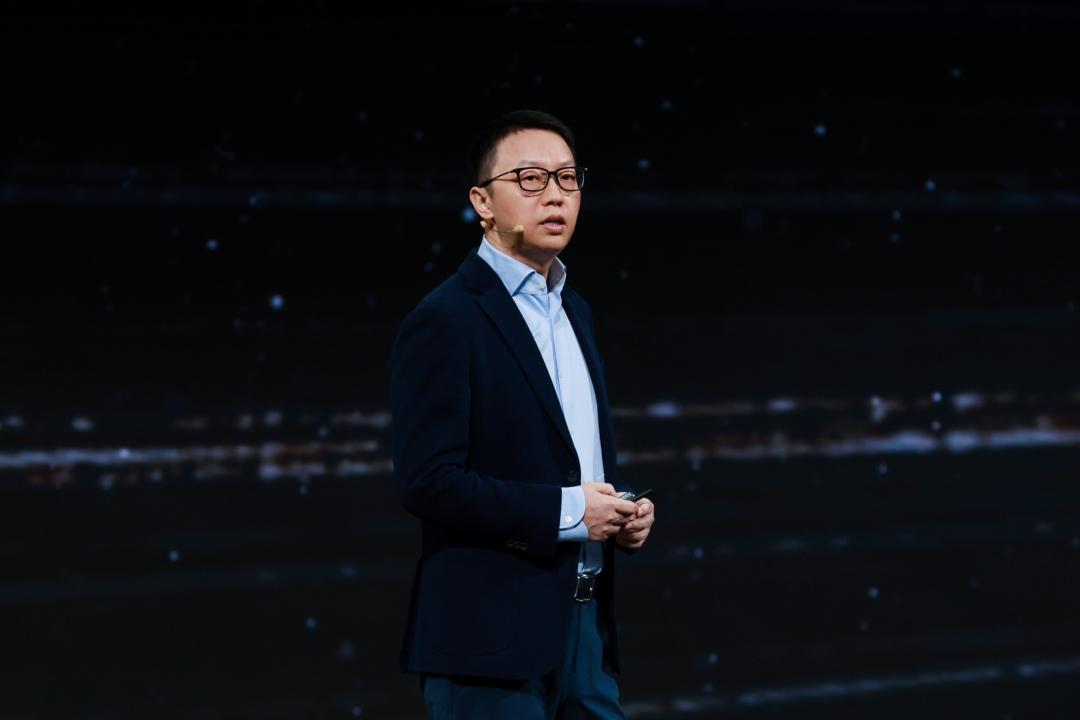
At the Yunqi Conference, Wu Yongming first spent time clarifying a term: Artificial Intelligence. The word "Artificial" means man-made, which is used in the same way as we describe artificial diamonds and artificial leather.
AI has long been positioned as an "imitation product", with human beings as its original template.
That's why in recent years, everyone keeps asking the same question: Is it (this technology, this system) as good as a human?
Wu Yongming also talked about the origin of the term "horsepower". When the steam engine was first invented, it was indeed used to do the work that horses used to do — pumping water, weaving cloth, and carrying goods, so the power unit was simply named horsepower.
But the trains, planes and rockets that came later are by no means just horses with extra legs. Machine power has never been "artificial physical strength", it is a brand new species.
By the same token, machine intelligence is not a substitute for human intelligence, but a new species in its own right. Today's AI can write reports and code, which is no different from the electric light in 1882 — electricity was originally used only to replace kerosene lamps.
I have to admit that this analogy is brilliant. If you think about it carefully, you will find that most of the skills we rely on for a living these years, when broken down, are standardized mental work: looking up information, sorting out materials, writing first drafts, applying established frameworks, and making judgments based on experience.
They are indeed mental work, but they are almost completely different from the curiosity and the drive to "keep thinking even when you can't figure things out". The latter has never been paid for by employers.
In other words, what is to be moved to the computer room for mass production is originally "work", not "thinking". It is us who have been conflating the two all along.
But what about those top-tier, groundbreaking thoughts? Have they also become "worthless"?
Wu Yongming's exact words are: Top-level thinking will change from a luxury good to a commodity that can be supplied on a large scale. In the future, there can be millions of AI scientists in every niche field, working nonstop around the clock. The total amount of machine thinking today is less than 3% of that of human beings, and in the future it will be a thousand times that of humans.
At the end of his speech, he gave a comforting example: Three hundred years ago, farmers working in the fields could never have imagined that later generations would pay to enter a place called a gym to do physical labor. The Industrial Revolution freed people from heavy physical work, and as a result, humans invented the Olympic Games, the World Cup, and the NBA.
What he wanted to say is: When machines take over the thinking tasks that people have to do, people will have time to think about the things they really care about.
But what Wu Yongming did not mention is that the descendants of those farmers did not walk into gyms smoothly. There were hundreds of years of unemployment, unrest, labor movements, the eight-hour workday, and welfare systems in between. It took several generations of sacrifices to support a small group of people who can afford to spend money to sweat in gyms without worries.
Even today, only a part of the population can go to the gym regularly. Running turning from drudgery into a hobby is a result, not a consolation; it is the outcome of more than a century of social restructuring, not something that comes automatically with technological progress.
Thinking will probably follow the same path. Machines will make the "compulsory thinking tasks" extremely cheap, which is a technical problem; but who will distribute the saved time and dividends to ordinary people, so that everyone is entitled to "think for the sake of thinking", is a problem of distribution and institutional design.
Answers will not flow out of the power socket on their own.
In the future, "running for the sake of running" requires qualifications. A person who still makes a living by carrying heavy loads with his shoulders and back will never find running fun.
The same goes for thinking: when "thinking" is no longer a way to earn bread, those who can still find joy in "keeping thinking even when they can't figure things out" must first have enough food and clothing.
For a person who is used to confirming his self-worth from "being useful", once his "usefulness" is taken over by machines, the sense of emptiness he feels is very real, which clinically has another name — depression.
On the other hand, Van Gogh sold very few paintings during his lifetime, and Nietzsche's books were unsalable in his own era.
Groundbreaking thinking and creation are often worthless in the era when they are born. This shows that being paid well has never been the inherent nature of thinking, but only a special state that allows people to make a living from it in a specific era.
Our civilization has spent thousands of years proving that thinking is the most precious trait that distinguishes humans from other creatures, and then decades of technological progress have declared that "thinking" will become as cheap as electricity — The real absurdity here is not that thinking has depreciated, but that for the first time humans are forced to distinguish clearly: which parts of what we do are "work", and which parts are real thinking.
Man thinks, God laughs.
In the past, God laughed at human clumsiness. In the future, this laughter will probably have two layers of meaning: one layer is laughing at the fact that we used to regard "work" as the essence of human beings; the other layer, perhaps, is a sign of envy — when thinking no longer needs to be started for the purpose of making money, human beings will for the first time have the possibility to think, simply because they want to.
Of course, people who can reach that state must first be properly taken care of by this era. This is a far more difficult problem than developing AI.
This article is from the WeChat official account "Tao Weibin's Business Notes", the author is Bai Wu, and 36Kr publishes this article with authorization.