It only took 22 months to achieve profitability in Saudi Arabia, but Meituan's cross-border food delivery business has encountered the "contract wall" in Brazil?
A ruling by Brazil's antitrust regulator kicked off September on a rocky note for Keeta, the overseas food delivery platform under Meituan.
According to a Reuters report on September 2, the Brazilian antitrust body CADE rejected Keeta's application for interim measures against 99Food (the overseas food delivery platform under Didi), declining to invalidate the relevant exclusive clauses signed between 99Food and its merchants. CADE also ordered an in-depth follow-up investigation to further understand the actual impact of these clauses on competition in the food delivery market.
Across the Atlantic Ocean and the African continent, Keeta delivered a completely different performance not long ago.
In July 2026, 22 months after entering Saudi Arabia, Keeta announced that it had achieved profitability on Unit Economics (UE) per food delivery order. In comparison, for the Hong Kong, China market that Keeta entered in May 2023, it took the platform about 29 months to make its UE model profitable. Wang Xing, CEO of Meituan, also regarded the performance in Saudi Arabia as a verification of the replicability of the overseas operation model during this year's Q2 earnings call.
For the whole year of 2025, Keeta delivered more than 150 million orders in Saudi Arabia, covering 23 cities, with more than 50,000 partner merchants and over 38,000 riders.
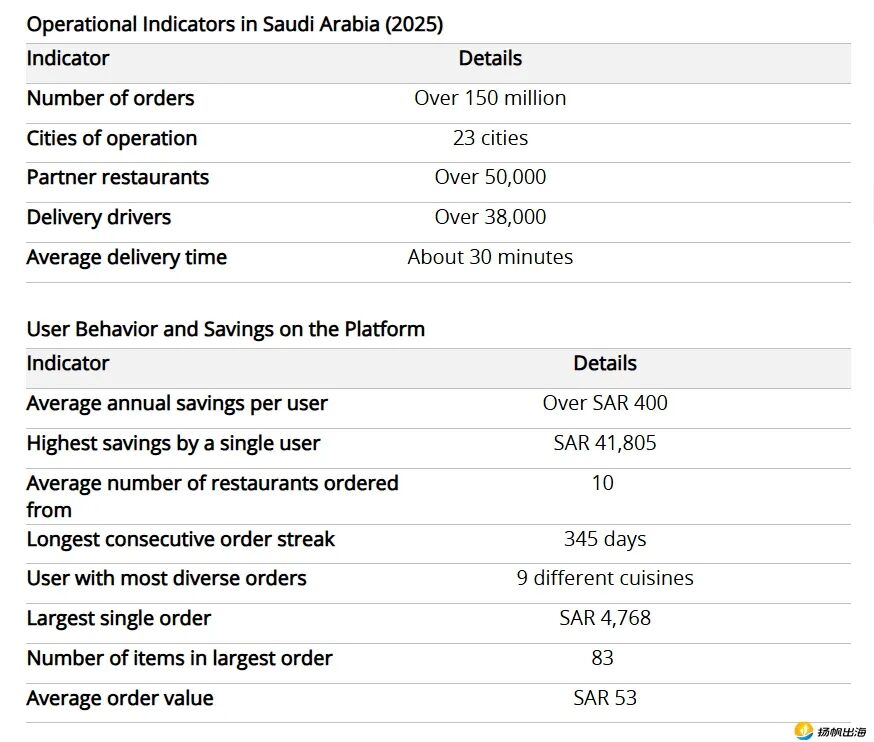
The 2025 Saudi Arabia operation data of Keeta reported by leading local Saudi financial media. Source: Argaam
With the same set of product, fulfillment and operation strategies, why did Keeta achieve success in Saudi Arabia but get stuck at the merchants' door in Brazil?
22 Months in Saudi Arabia:
Ready-made Track and Withdrawable Subsidies
In September 2024, Keeta started from Al-Kharj, about 80 kilometers southeast of Riyadh, and entered the capital Riyadh about a month later. After that, it successively entered cities including Jeddah, Mecca and Dammam, and continued accelerating its expansion in 2025.
It is worth noting that Saudi Arabia, where Keeta entered at that time, was not a food delivery market that required educating users from scratch.
Take the local food delivery platform Jahez as an example. Its total orders in 2023 had reached 84.6 million, and the market size of Saudi food delivery aggregation platforms was about 4.3 billion U.S. dollars that year. Users had already formed the habit of ordering food through apps, merchants had adapted to receiving orders via platforms, and riders had a mature instant delivery system.
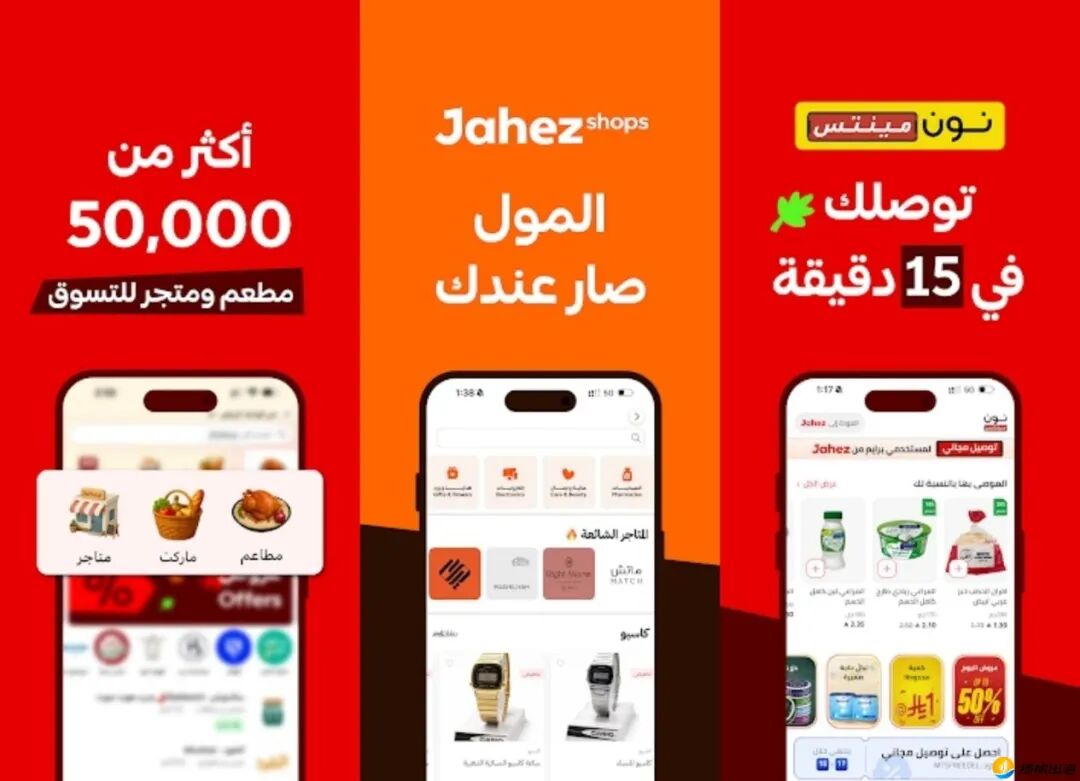
Screenshot of the Jahez app. Source: Diandian Data
What Keeta really needed to solve was how to take orders from existing players, which was exactly where subsidies worked most effectively.
When entering Saudi Arabia, Keeta planned to invest about 1 billion Saudi riyals, and quickly acquired new users through preferential treatments such as new user coupons, first-order discounts and free delivery fees. According to the calculation of third-party institution Redseer, about 4–5 months after its launch, its order share reached about 10%. Later, the platform gradually reduced subsidies and converted the users attracted by subsidies into regular paying users.
By early 2026, the management of Meituan began to emphasize that Keeta had drastically cut subsidies in Saudi Arabia, yet the order volume remained resilient. In July, the UE finally turned positive.
More importantly, Keeta proved that a set of fulfillment and operation systems polished in the Chinese market could rebuild scale in a maturing overseas food delivery market, and finally withdraw subsidies.
Of course, this does not mean that the domestic model was copied completely unchanged. Factors including the local community address system, Ramadan consumption rhythm and merchant product structure all required the platform to readjust its operation methods. For example, some local areas have long lacked standardized house number addresses, so riders need to confirm the delivery location by phone, positioning and other methods; during Ramadan, orders will surge intensively before and after Iftar.
Therefore, what Saudi Arabia provided for Keeta was actually a relatively mature track: market education had been completed, users, merchants and riders were all already present, and what Keeta needed to do was to exchange subsidies for scale, and then convert scale into efficiency.
When it came to Brazil, what did Keeta do?
Suppression by Giants, Restart of Local Players
Entry Plan Under Reshuffle
First of all, Brazil is indeed a sufficiently "promising" food delivery market. A survey by the Brazilian Institute of Economics Foundation shows that in 2025, the economic scale of Brazil's delivery industry reached 167 billion Brazilian reais, accounting for 0.70% of Brazil's GDP.
But at the same time, it is also a "hard nut to crack" market. Data from Abrasel 2023 shows that the local food delivery platform iFood occupied about 82% of the Brazilian food delivery market at that time. In April 2025, with the re-entry of 99Food, the overseas food delivery platform under Didi, Brazilian food delivery entered the stage of multi-platform competition.
However, there are still entry points in the national market. Data from Worldpanel by Numerator shows that from August to October 2025, iFood's market share in the Greater São Paulo region in terms of sales was about 52.3%; during the same period, 99Food had obtained a share of about 10%.
On October 30, 2025, Keeta was launched in Santos and São Vicente on the coast of São Paulo state. About a month later, it further entered the city of São Paulo and its surrounding cities.
To pry open the market, Keeta launched supporting policies from three dimensions: users, merchants and riders. For consumers, during the trial operation in Santos in October 2025, it launched new user coupons of up to 100 reais; after entering the São Paulo market, the new user discount was increased to up to 200 reais, more than 90% of partner merchants waived delivery fees, and delayed orders could get a maximum of 50 reais in compensation.
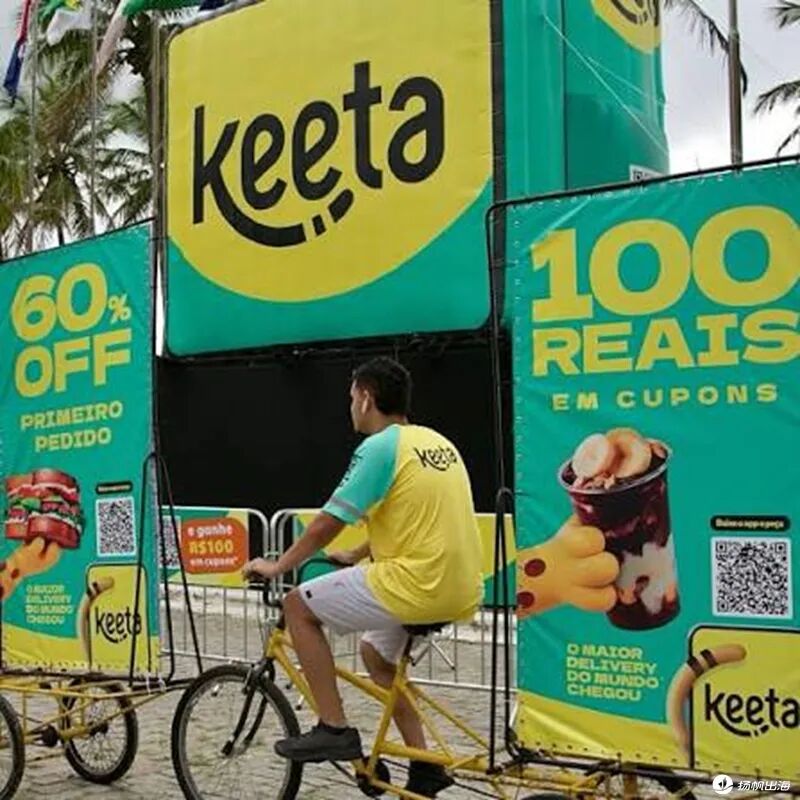
Keeta launched 100 reais new user coupons during its trial operation in Santos. Source: Instagram
For merchants, third-party platform recruitment information shows that Keeta promised "zero commission for three years, only collecting payment fees (about ~3.5%), and distributing dividends within 7 days". For riders, the platform set up a São Paulo regional rider support plan with 100 million reais, supporting benefits including daily free cash withdrawal, free smart helmets, offline training and rider service centers.
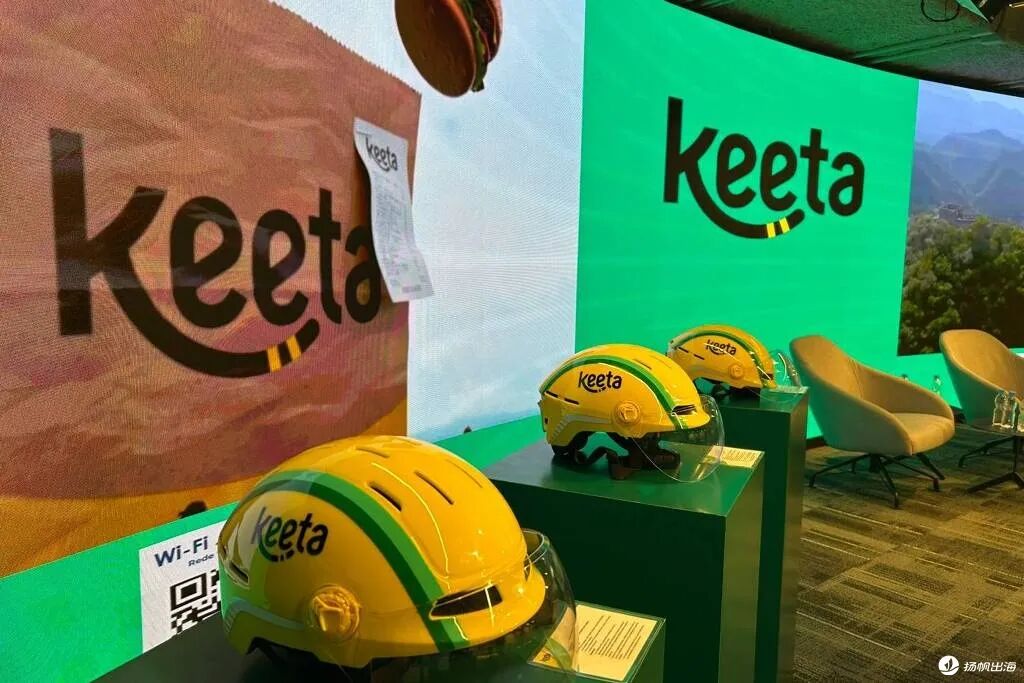
The offline service center for food delivery riders opened by Keeta in São Paulo. Source: Keeta official website
As of February 2026, Keeta had built an operation network in the São Paulo metropolitan area and the Baixada Santista region where Santos is located. The number of merchants grew from about 27,000 in December 2025 to nearly 40,000, and the number of delivery riders also increased from about 98,000 to 115,000; Keeta said at that time that about 2.8 million users had used this app.
After establishing its basic market in São Paulo and its surrounding areas, Keeta began to work on more complete brand localization.
In the same month, Keeta launched the yellow and black brand mascot KiKi for overseas markets, a little cheetah that symbolizes "speed". In São Paulo, KiKi was also brought to local offline places, including street billboards and events such as the São Paulo International Marathon.
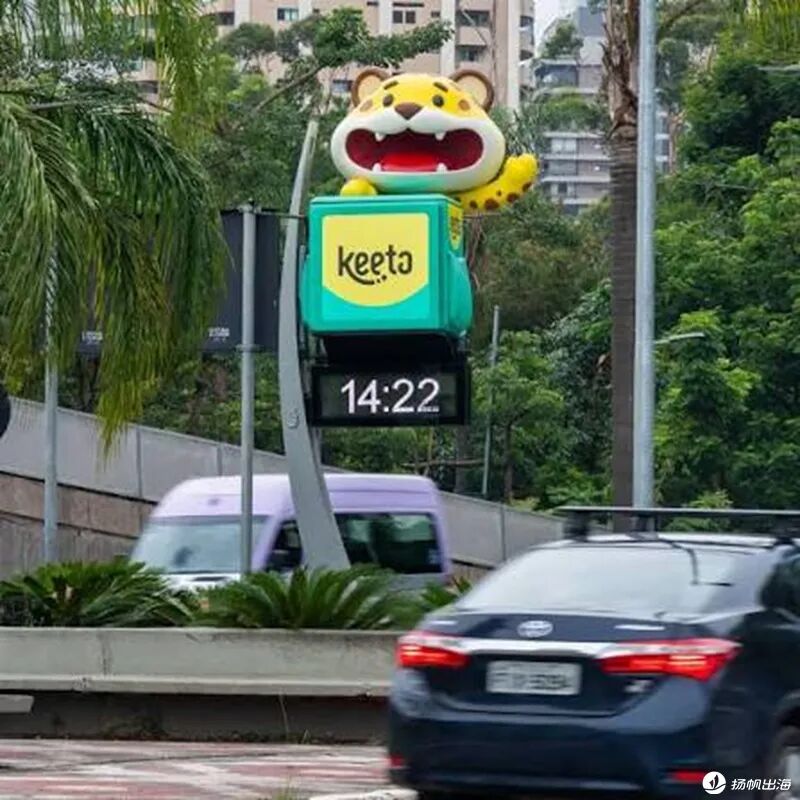
Keeta's overseas mascot KiKi on the streets of São Paulo. Source: jcdecaux
The 2026 World Cup was another larger traffic field. Keeta concentrated its budget on the São Paulo area where it could already provide services, and reached a digital sponsorship cooperation with the Brazilian top-tier team Palmeiras to further reach local fans.
In addition, on the app side, it also launched the activity of ordering food delivery and collecting World Cup virtual cards for users in the São Paulo metropolitan area and the Santos coastal area, taking iPhone 17, free meal coupons, platform coupons and other items as the prize pool of the lottery.
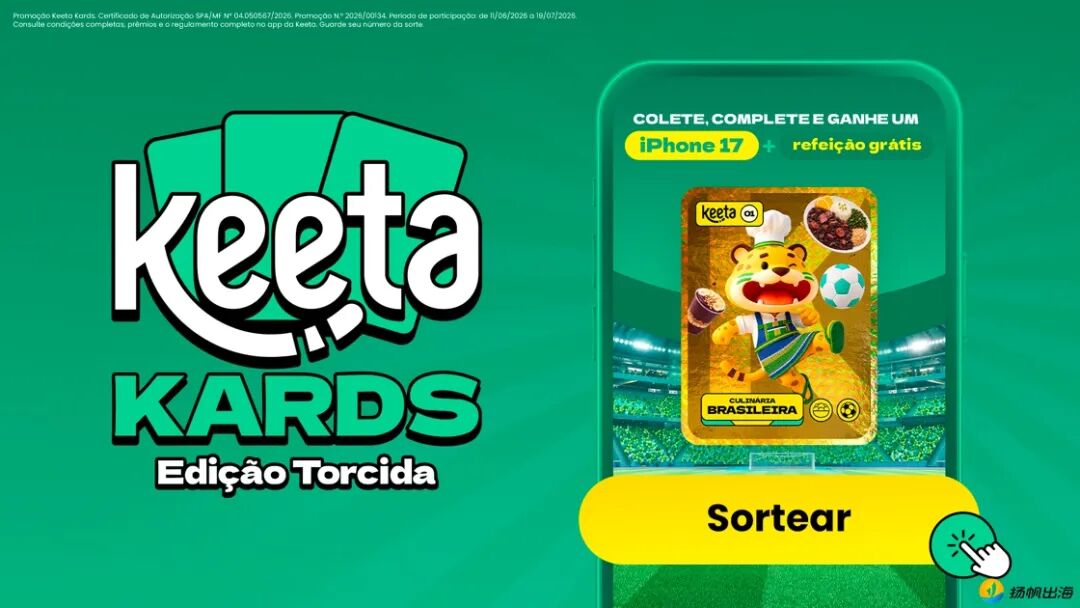
The fan-themed trading card marketing activity launched by Keeta in Brazil. Source: Diandian Data
This actually conforms to Keeta's current status in Brazil: it has begun to compete for user mindshare, but has not yet spread its network across the country.
What really slowed it down was neither users nor riders, but merchants.
Outside the Rio de Janeiro Contract Wall: Hitting the Brakes One Week Before Launch
At the end of February 2026, Keeta suddenly postponed its original planned launch in Rio de Janeiro. At that time, the company had prepared about 17,000 registered merchants and about 27,000 delivery riders, and even prepared a budget of more than 400 million reais for Rio de Janeiro. However, only one week before the launch, Keeta found that the exclusive cooperation ratio of local merchants was much higher than expected.
Keeta originally expected this ratio to be between 8% and 10%. According to Danilo Mansano, Vice President of Keeta Brazil, more than 50% of the popular chain merchants in São Paulo cannot settle in Keeta, and this ratio exceeds 55% in Rio de Janeiro. It is worth noting that this data in São Paulo was only statistically discovered after the platform was put into operation.
As a result, the already prepared riders, merchants and marketing plans all had to hit the brakes together, and Keeta also laid off more than 200 employees recruited for Rio de Janeiro.
The root of the problem lies in various exclusive, semi-exclusive and "no-entry" contracts that have been formed between Brazilian merchants and existing platforms.
In 2023, CADE reached a cease-and-desist agreement with iFood, setting a number of restrictions on its exclusive cooperation, including constraints on the exclusive cooperation of some chain brands, the number of exclusive partners and the proportion of GMV.
After Keeta entered Brazil, it ran into another set of contracts from 99Food.
In June 2026, the General Supervision Bureau under CADE once planned to terminate the relevant investigation against 99Food, believing that 99Food's market share at that time was not sufficient to constitute a dominant position. 99Food called the relevant clauses "semi-exclusive": merchants can still cooperate with iFood, but cannot access other competing platforms such as Keeta at the same time.
Keeta's understanding of this is completely different. It believes that such contracts have actually formed a "no-entry" restriction for new platforms.
On September 2, the CADE tribunal did not accept Keeta's application to immediately stop the relevant clauses of 99Food, but did not make a final judgment on whether these clauses ultimately constitute anti-competitive behavior, and decided to continue the investigation, including further understanding of the situation of affected merchants and the consideration provided by the contracts.
In the merchant breakthrough plan disclosed as early as June 2026, Keeta adopted a special "food delivery war" strategy: spend money to help merchants terminate their old contracts.
According to Keeta's disclosure, the company specially formed a team of nearly 1,000 people to check the contract status of merchants one by one. The liquidated damages in the restrictive contracts signed by some merchants with iFood in the early years reached hundreds of thousands of reais, even more than 1 million reais. Keeta will bear the relevant breach costs to help merchants lift the original exclusive restrictions.

The liquidated damages incurred by merchants terminating their exclusive cooperation with iFood caused Keeta to spend millions of reais in Brazil. Source: Folha
More interestingly