GAC has finally got its long-awaited strong reinforcement.
Announcements on Sunday evenings usually hide major breaking news.
On September 14, GAC Group announced that it plans to issue shares to purchase part of the equity of a complete vehicle joint venture held by FAW Co., Ltd. Fortune China later confirmed that the underlying target is FAW Toyota. After the transaction is completed, FAW Co., Ltd. will become the second largest shareholder of GAC Group. When trading resumed the next day, GAC's Hong Kong-listed shares once rose by more than 15% — the capital market cast its vote of approval for this "North-South Toyota integration" with real money.
However, if you only see the two Toyota entities coming together, you are underestimating the significance of this transaction. For GAC, this is a lifeline; for FAW, this is a ticket it has waited for more than a decade; for Toyota and the State-owned Assets Supervision and Administration Commission, this is a mutually beneficial experiment tailored to each party's needs.
01
GAC is in urgent need of a victory
Comprehensive information from Tianyancha Media shows that in 2023, GAC's attributable net profit still reached 4.429 billion yuan; in 2024, the figure dropped to 824 million yuan, marking its first loss after deducting non-recurring gains and losses; in 2025, the loss expanded to 8.784 billion yuan — this is the first annual loss in GAC's history since its listing. In the first half of this year, it recorded a further loss of 4.467 billion yuan, a year-on-year increase of 76%. In just three years, this former profitability benchmark has become the loss-making leader among 23 listed automotive enterprises.
Behind this, on the one hand, Aion has slid from the top of the new energy vehicle sales ranking into the quagmire of price wars, with the sales volume of its self-owned brands falling by 23% in the first half of the year. On the other hand, the profit contribution from its cash cow joint ventures GAC Honda and GAC Toyota shrank from 8.349 billion yuan in 2023 to 1.326 billion yuan in the first half of this year, a drop of over 80%.
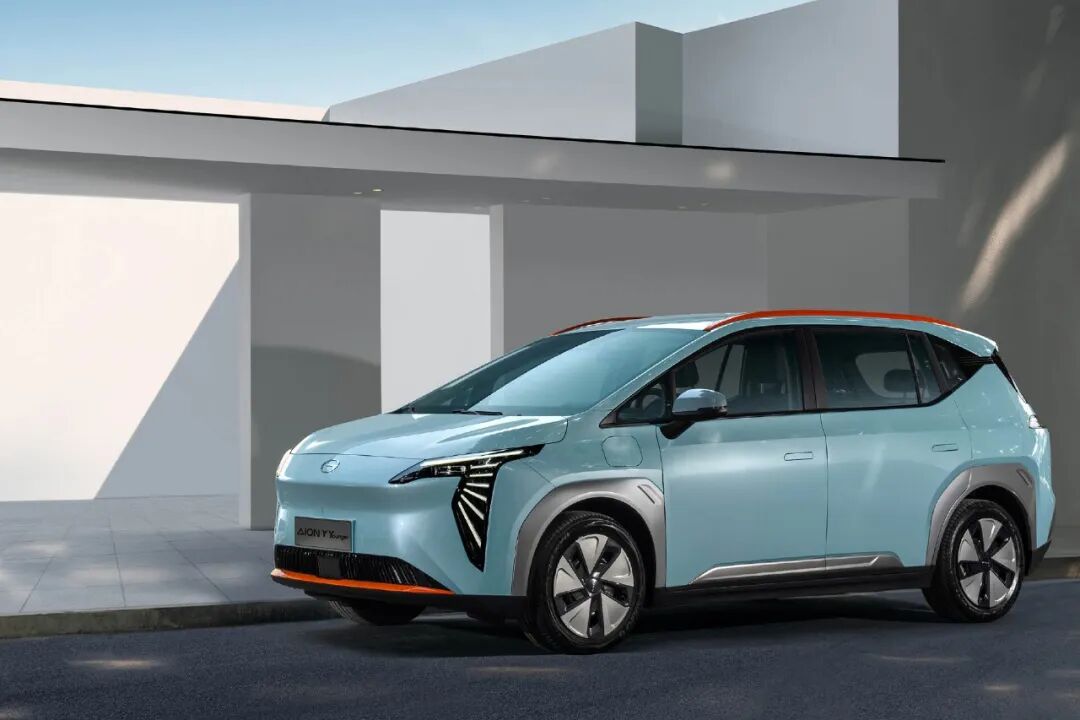
Over the past decade, profits from joint ventures have always been the source for GAC to support its self-owned brand business, and this source is now drying up. The only relatively resilient performer is GAC Toyota, which recorded 356,000 units of sales in the first half of the year, ranking first among all joint venture brands, and its bZ3X model leads the pure electric vehicle segment among joint ventures — but a single cash cow can no longer support the entire group.
Looking at the structure of the transaction, GAC will acquire approximately 25% of the equity of FAW Toyota with a consideration of about 20 billion yuan, all paid by issuing new shares. Calculated at the price of 5.09 yuan per share before trading suspension, about 4 billion new shares will be issued. FAW Toyota's net profit in 2025 exceeded 7.3 billion yuan, and the 25% equity corresponds to an annual profit share of about 1.16 billion yuan — this is a timely help for GAC which loses 4.4 billion yuan per year. Meanwhile, the shareholding of Guangzhou state-owned assets will be diluted from 54% to about 38%, and the controlling stake remains firmly in its hands.
No trading suspension, no loss of control, and extended life for the business — this is the best possible plan GAC can get.
02
The ticket FAW has waited for more than a decade
FAW has a much stronger asset base.
Comprehensive information from Tianyancha Media shows that in 2025, FAW achieved a revenue of 541.5 billion yuan and sold 3.302 million vehicles. However, for every 10 vehicles sold, 7 are under the Volkswagen and Toyota brands. FAW Toyota, the most profitable cash cow, sold 805,500 vehicles in 2025 and made a net profit of over 7.3 billion yuan, but it is also the fastest declining segment in the FAW system in the first half of this year, with a year-on-year drop of 27.4% — the milk yield of the cash cow is shrinking.
There is also pressure from the capital market. Under FAW Group, FAW Jiefang is a listed commercial vehicle enterprise, but the passenger vehicle segment has never had its own listing platform. According to comprehensive information from Tianyancha Media, as early as 2011, FAW Co., Ltd. promised to solve the horizontal competition problem and integrate its sedan assets for listing through restructuring, but this promise has not been fulfilled for more than a decade.
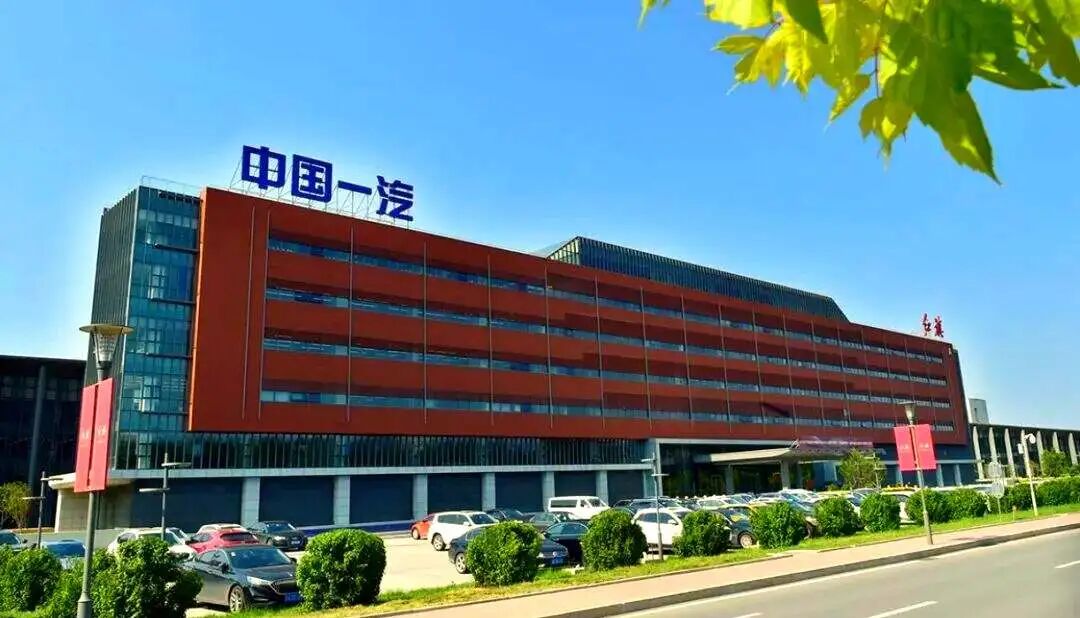
This time, FAW exchanged a quarter of the equity of FAW Toyota for nearly 28% of the shares of GAC and a strategic shareholder seat on GAC's A+H dual listing platform — the asset securitization that FAW could not achieve after more than a decade of attempts has been realized in a curve way through share exchange.
There is also a regional consideration behind this calculation.
The draft for comments on the 15th Five-Year Plan of Changchun Municipal Bureau of Industry and Information Technology clearly states that it supports complete vehicle enterprises to invest in high-quality enterprises in the form of equity participation. Beyond the listing platform, what FAW also wants is GAC's three-electric core technology assets: the magazine battery has been installed on a total of 1.3 million vehicles, and the 36GWh capacity Yinpai battery factory has been put into production — these are exactly the missing pieces for FAW's electrification transformation. Exchanging a quarter of the 7.3 billion yuan annual profit for the listing platform, core technologies, and time to expand beyond Northeast China, FAW is making a calculation for the next decade.
03
A transaction that leaves no party at a loss
There is another party easily overlooked in this transaction: Toyota.
The biggest rival of North Toyota and South Toyota over the years is no other than each other — the Sienna and the Granvia share the same platform, same powertrain, and target the same group of family users. The two joint ventures undercut prices at the end market, eroding per vehicle profit to a very low level. In the first 8 months of this year, Toyota's sales in China dropped by 19% year-on-year. The integration is also a relief for the foreign partner: instead of watching the two companies undermine each other, it is better to restore the price system through integration.
Taking a broader perspective, this transaction also coincides with the state-owned assets reform timeline. Last March, the State-owned Assets Supervision and Administration Commission announced the strategic restructuring of three major automotive central SOEs, and the market once expected the merger of Dongfeng and Changan, but the plan was suspended in June, and Changan was upgraded to an independent central SOE — the old path of "group merger" is no longer feasible. The GAC-FAW model provides another possibility: no full merger, but mutual embedding through share exchange. The central SOE takes shares in the local SOE as the second largest shareholder, while the controlling stake remains in Guangzhou. FAW Toyota's assets are included in the listed company's financial statements, Guangzhou retains the controlling stake, and the State-owned Assets Supervision and Administration Commission obtains a low-friction reform sample. All three parties get what they need most at the moment.
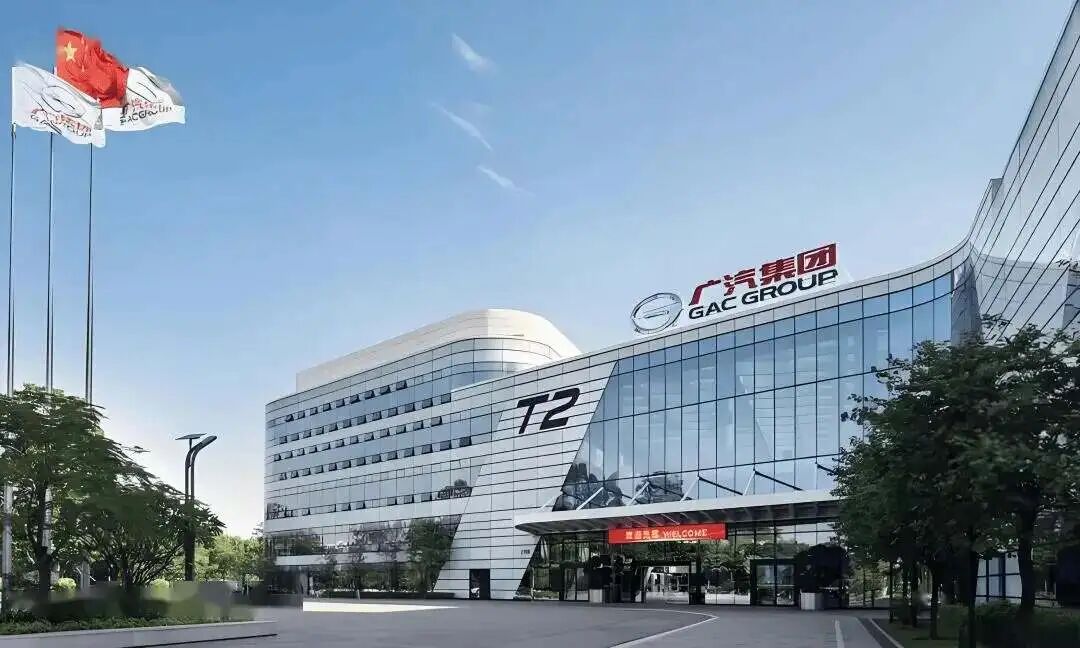
Of course, the challenges are also obvious. The valuation of profit-generating assets and the determination of the number of new shares to be issued involve the interests of state-owned assets on both sides; it remains unknown whether Toyota will simply transfer its equity benefits or take a solid major shareholder position through the new share issuance. The more fundamental issue is integration: after the change of shareholders, the reporting lines of employees, production plans, and channel interest distribution will not change automatically.
Therefore, this transaction is not so much the integration of North and South Toyota, but an accurate swap of three sets of accounts: GAC exchanges equity for profit to extend its business life, FAW exchanges profit for the listing platform to break through development bottlenecks, Toyota exchanges integration for ending internal friction, and the State-owned Assets Supervision and Administration Commission obtains a reform sample that does not change the controlling stake. Each party gives up a little, and gets what it needs most at present.
The outcome of this experiment will be watched closely by the entire automotive industry: if the "share exchange without full merger" model proves to be successful, it will become the template for the next round of state-owned automotive asset integration — the answer will not be written in the official announcement, but will be reflected in the first business performance report of the new structure.
This article is from WeChat Official Account "LingTai LT" (ID: LingTai_LT), written by Zhang Qian, edited by Hu Zhanjia, and published with authorization from 36Kr.