The Pinglu Canal brings benefits far beyond Guangxi.
On September 16, 2026, the Pinglu Canal was officially opened to navigation.
As the only western province in China that has coastline, river borders and land borders, Guangxi has a coastline of more than 1,600 kilometers, borders the Beibu Gulf to the south, and is equipped with high-quality ports including Fangchenggang Port, Qinzhou Port and Beihai Port. But for a long time, even though Guangxi faces the sea, it lacks a natural inland waterway that links its inland hinterland with the seaports of the Beibu Gulf. Goods transported from inland areas to coastal ports had to take detours or go through long-distance land transshipment.
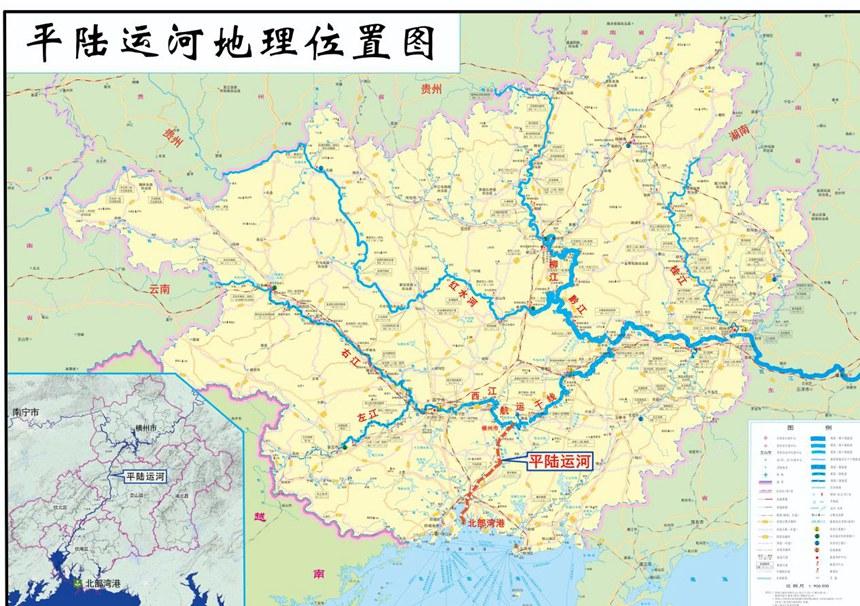
The completion of the Pinglu Canal fills this gap. The Pinglu Canal has a total length of 134.2 kilometers, with a total investment of about 72.73 billion yuan, and the average cost per kilometer is 540 million yuan. This canal starts from the Pingtang River estuary at the Xijin Reservoir area in Hengzhou, Nanning, passes through Luwu Town, Lingshan County, Qinzhou, and flows straight into the Beibu Gulf along the Qinjiang River. The canal is built in accordance with the Class I inland waterway standard and is navigable for 5,000-ton ships. After the canal is opened to navigation, the most intuitive changes are the reduction of cargo logistics costs and the improvement of transportation efficiency.
In the current era where high-speed railways crisscross and expressways form a network, why invest huge sums of money to dig this canal? What changes will the opening of this waterway bring to Guangxi?
01
Timing
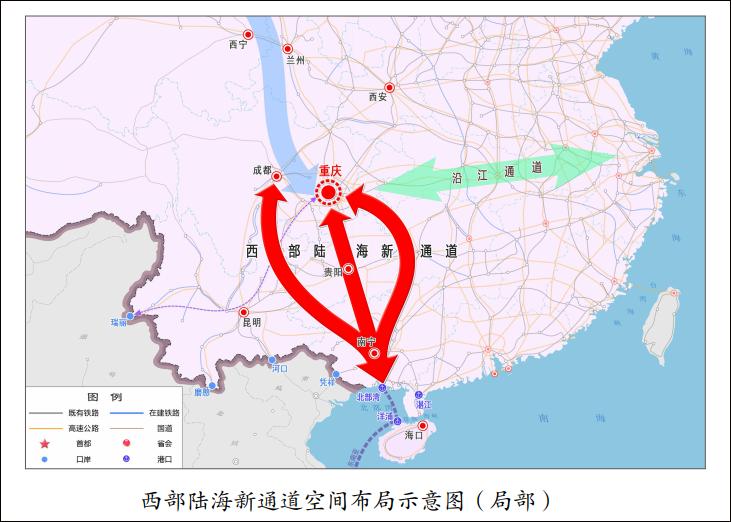
The construction concept of the Pinglu Canal took shape as early as the Republic of China era. In *The International Development of China*, Sun Yat-sen envisioned taking Qinzhou as an important seaport to shorten the sea access distance for the southwest hinterland. After the founding of the People's Republic of China, Guangdong and Guangxi successively conducted three surveys on the project. The Pinglu Canal project has also been included in a series of important national plans such as the *Master Plan for the New Western Land-Sea Corridor* and the *Outline of the National Comprehensive Three-dimensional Transportation Network Plan*.
Previously, there were mainly two ways for goods from the southwest inland to go to sea: first, transporting goods directly from Yunnan, Guizhou and inland Guangxi to the Beibu Gulf ports via highways and railways; second, transporting goods eastward to Guangdong relying on the Pearl River water system, and then going to sea via the Pearl River Delta ports. One of the two channels has high logistics cost and limited transportation volume, while the other has a long detour distance and low transportation efficiency.
From the perspective of location conditions, Guangxi is the only western province in China that has access to the sea. Qinzhou Port, Fangchenggang Port and Beihai Port in the Beibu Gulf are all natural deep-water good ports, with superior port conditions and shipping potential. However, the vast majority of rivers in Guangxi belong to the Xijiang River system. Affected by altitude drop and terrain trend, the rivers flow from west to east into the Pearl River. As a result, goods in the upper and middle reaches of the Xijiang River in southwest China can only flow eastward down the river, detour through the Pearl River Delta ports to go to sea, which creates a water transport break point for sea access in the Beibu Gulf.
Department of Transport of Guangxi Zhuang Autonomous Region
Le Xiaohua, deputy director of the Institute of Southeast Asian Studies of Guangxi Academy of Social Sciences, pointed out that the core reason why the Pinglu Canal is selected to start construction and open to navigation at the current moment is that the timing for economic development is already mature. In the past, the western region had weak industrial foundation, insufficient agglomeration, and limited demand for foreign trade cargo transportation. Even if goods needed to detour through the Pearl River Delta to go to sea, it could basically match the market supply and demand at that time and meet the needs of regional development. But with the advancement of national regional strategies, the continuous implementation of the large-scale development of the western region and the construction of the Chengdu-Chongqing economic circle, industries in the southwest region have risen rapidly, the production capacity of industries such as steel and equipment manufacturing has continued to expand, and the demand for goods transportation and exports has increased sharply. The original eastward water transport channel detouring the Pearl River Delta, due to its long transport distance, high cost and saturated transport capacity, can no longer adapt to the current development rhythm and freight demand of the southwest region. Against this background, the construction of the Pinglu Canal came into being. It opens up a shortcut for water transport directly from southwest China to the Beibu Gulf, which can shorten the sea voyage by about 560 kilometers, reduce logistics costs by 18%-30%, and save about 5.2 billion yuan in transportation costs for the society every year, with remarkable economic benefits.
As a native of Qinzhou, Fu Yuanjia, a professor at the School of Digital Economy Management of Guangxi University of Foreign Languages, has been paying attention to the construction process of the Pinglu Canal, and has gone deep into the route for field investigations for many times.
In Fu Yuanjia's view, the Pinglu Canal project is an inevitable measure to adapt to the coordinated development of national regions, the upgrading of comprehensive transportation, and the optimization of the opening-up pattern. For a long time, China's transportation construction has been concentrated in the fields of high-speed railways, expressways, aviation and sea transportation, and at the present stage, the development focus has gradually shifted to making up for the shortcomings of high-grade inland waterways. Compared with highways and railways, inland water transport has the advantages of large volume, low cost and high investment cost-effectiveness, which can efficiently promote the two-way flow of various production factors such as capital, technology and talents between the eastern, central and western regions, help the central and western regions undertake high-quality industries and resources from the east, and promote the balanced development of the national regional economy. At the level of opening up to the outside world, the canal water system is also an important support for high-quality joint construction of the "Belt and Road Initiative". Previously, China's inland access channels to ASEAN were relatively weak. After the implementation of major water system projects such as the Pinglu Canal, Xiang-Gui Canal and Gan-Yue Canal, the short-distance water transport channel directly from inland to ASEAN will be opened, allowing the southwest and central-south inland regions to directly connect with the Southeast Asian market, further deepening economic and trade exchanges and interconnection between China and ASEAN, and improving the southward opening pattern.
From the perspective of the overall national water transport planning, China is building a high-grade water transport pattern of "four longitudinal, four transverse and two networks", and will build about 25,000 kilometers of high-grade waterways by 2035. At present, more than 18,000 kilometers of the national high-grade water network have been completed, and the remaining about 7,000 kilometers of construction tasks will be completed intensively in the next 10 years.
Fu Yuanjia believes that during the period from the 15th Five-Year Plan to the 16th Five-Year Plan, the state will focus on promoting two major longitudinal core canal projects: the first is the Xiang-Gui Canal, which connects the Yangtze River system and the Pearl River system to realize the water system connection between Hunan and Guangxi; the second is the Gan-Yue Canal, which connects the water systems of Jiangxi and Guangdong.
02
Cargo Sources
The implementation of the new water transport channel also faces practical tests: the industrial foundation in the western hinterland of Guangxi is relatively weak, the cargo sources are insufficient to support the transportation volume in the short term, and a large number of enterprises have long relied on highway or railway transportation, so shifting to water transport still needs to adjust the formed transportation mode.
Le Xiaohua believes that although water transport is a new transportation method for many enterprises, it has extremely strong attraction due to its advantages of low cost and large volume. A truck can only carry several tons of goods, while a single ship can carry 5000 tons, with a huge gap in transport capacity. The real bottleneck of water transport lies in whether multimodal transport can be efficiently connected. As long as all transportation links are opened up, smooth transshipment is realized, and a stable and credible service brand is built, the long-term cargo sources of the Pinglu Canal can be guaranteed.
In addition, logistics enterprises along the canal should also actively explore the market. On the one hand, they need to go deep into enterprises for docking and negotiation, and customize logistics service plans for enterprises; on the other hand, they should closely follow the business needs of enterprises, design entry logistics plans for enterprises to import raw materials such as mineral products from overseas, and simultaneously plan the outbound transportation routes for export goods. With supporting services formed for both import and export, enterprises will gradually recognize this brand-new water transport channel. Once a stable transportation habit is formed, the cargo sources can be continuously accumulated.
Both experts said that in the initial stage of the Pinglu Canal's navigation, the bulk cargo suitable for water transport is mainly divided into three categories: the first category is industrial raw materials and industrial processed products, such as steel, aluminum profiles and other building materials; the second category is chemical products, covering chemical raw materials, potash fertilizer and other fertilizer products; the third category is pulp and related goods of the paper industry. Guangxi has a strong foundation in the paper industry. A large amount of pulp is imported from overseas to Guangxi for processing, and the finished paper is then transported outward. These types of materials have low requirements for transportation efficiency, are suitable for large-volume long-distance transshipment, and are the most ideal cargo types for inland waterway transportation.
It can be predicted that when goods are transported outward, they will mainly go to two major markets: one is domestic coastal markets such as the Guangdong-Hong Kong-Macao Greater Bay Area and Hainan; the other is overseas markets such as Vietnam and the Middle East. In terms of inward transportation, ASEAN countries are also actively organizing cargo sources to enter China's inland market through this channel. For example, potash fertilizer and mineral products from Laos can be transported by land to Vinh Yen Port in central Vietnam, then loaded onto ships and transferred via sea routes to the Pinglu Canal to reach Guigang, Guangxi. In addition, various mineral products, processed products and agricultural products are also exploring this import route, which will first be transported to Guangxi and then distributed to the domestic hinterland.
From the perspective of the cargo sources participating in the maiden voyage, local enterprises in Guangxi have high enthusiasm for participation, and there are already goods from Chongqing, Sichuan, Yunnan and other places dispatched to Guigang Port and Nanning Port.
According to reports from CCTV News, on the first day of navigation on September 16, Nanning Customs supervised 1679.8 tons of import and export goods transported via the Pinglu Canal, covering categories such as auto parts, plywood, thenardite and fiberboard.
Of course, a canal cannot naturally drive industrial prosperity. If it only exerts the function of channel transshipment, the canal is just a transit waterway, which is difficult to drive the implementation and agglomeration of industries along the route. At present, there are both pessimistic and optimistic perspectives on the development prospects of the Pinglu Canal.
Fu Yuanjia believes that the pessimistic view essentially worries about falling into the "channel economy" trap, and believes that the canal will face problems such as insufficient cargo sources and weak local industrial support, which is a static way of looking at the project. If observed from a dynamic perspective, the development prospects are quite different. First of all, the Pinglu Canal will reshape the cargo flow pattern: in the past, a large number of goods from Guangxi, Yunnan, Guizhou and western Hunan were transported eastward to the Pearl River Delta to go to sea, and in the future, this part of cargo sources can go south through the Pinglu Canal to connect with ASEAN markets such as Vietnam and Thailand, creating new freight increments. Secondly, after the low-cost water transport channel is formed, combined with the highway-railway-water intermodal network, it will attract industries to agglomerate along the canal. Guangxi has comparative advantages in resources, land costs and other aspects. As long as it is equipped with high-quality government services, smooth intermodal connection, as well as perfect port routes and infrastructure, capital will be deployed here.
In Fu Yuanjia's view, the subsequent industrial cultivation and economic belt construction of the Pinglu Canal can hardly be completed by Guangxi alone, which is inseparable from the national overall planning and the counterpart support from the eastern region. The assistance cannot only stay at the policy level, but also needs supporting funds and the implementation of major physical projects. From the perspective of the national overall planning, industries in the east and north can all be deployed in Guangxi, turning the channel dividend released by the Pinglu Canal into a dividend shared by the whole country, rather than limiting this dividend and development responsibility to Guangxi alone.
03
Differentiation
The Pinglu Canal not only changes the direction of freight transportation, but also plays a certain role in the development division, cooperation of the Guangdong-Hong Kong-Macao Greater Bay Area, the southwest inland and various regions in Guangxi. The relationship between the ports along the Pinglu Canal and the ports in the Guangdong-Hong Kong-Macao Greater Bay Area is also undergoing subtle changes.
Fu Yuanjia believes that between the Pinglu Canal and the ports in the Guangdong-Hong Kong-Macao Greater Bay Area, the synergistic effect is greater than the competitive relationship. In the short term, part of the goods that originally went eastward to the sea via the Pearl River water system will turn to the Beibu Gulf Port to go to sea, and the direction of cargo flow will be adjusted. But in a longer cycle, the problem of ship detention in sections such as Wuzhou and Changzhou Hub is prominent, and the congestion degree even once exceeded that of the Three Gorges of the Yangtze River. The Pinglu Canal can share the transportation load of the original waterway.
Secondly, the options for goods to go to sea are more diversified. Guangxi thus has two sea access paths. If the destination of the goods is in the Guangdong-Hong Kong-Macao Greater Bay Area, the original transportation line will most likely remain unchanged; if the cargo supply place and target market face ASEAN, or are located in the area west of Qinzhou, the goods are more suitable to take the Pinglu Canal. The division of labor for each channel will become clearer.
In addition, the positioning of the ports in the Guangdong-Hong Kong-Macao Greater Bay Area and the Beibu Gulf is also different. The Guangdong-Hong Kong-Macao Greater Bay Area is positioned as an international science and technology innovation center, focusing on the layout of high-end industries, artificial intelligence and other tracks; Guangxi and western Guangdong undertake more cooperation functions facing ASEAN, and part of the ASEAN economic and trade business originally dominated by Guangdong will gradually shift to Guangxi in the future. But Guangxi does not completely give up the layout of high-end industries, but focuses on different aspects in industrial division of labor.
*Master Plan for the New Western Land-Sea Corridor*
For southwest provinces such as Yunnan and Guizhou, the most direct benefit brought by the Pinglu Canal is the addition of an alternative sea access channel with lower cost and higher efficiency. The expansion of logistics channels will also produce a chain effect: convenient logistics drives trade growth, prosperous trade attracts industries to settle down, helping southwest provinces expand trade with ASEAN, and undertake foreign investment and industrial transfer at the same time.
After the canal is connected, goods from Yunnan can enter the Pinglu Canal from Funing Port via the Youjiang River and Baise Hub, directly reach the Beibu Gulf waters, becoming the most convenient golden waterway for Yunnan to go to sea; goods from Luodian Port in Guizhou can smoothly enter the main canal channel along the Hongshui River, Qianjiang River and Yujiang River. In the short term, Yunnan and Guizhou are the most direct beneficiary areas; in the medium and long term, Chongqing and Sichuan will also be deeply connected to this water transport system. In the future, if the Yu-Qian-Gui Canal and Xiang-Gui Canal are implemented one after another, the southwest and even central and western regions such as Shaanxi will share the dividend of river-sea intermodal transport, and the pattern of southwest inland access to the sea will be completely opened.
While reshaping the external regional pattern, the Pinglu Canal will also drive the internal development of Guangxi. Le Xiaohua proposed that Guangxi can build a "vein-like" industrial layout relying on the canal economic belt, taking key cities along the route as the main vein to gather leading port-side industries; taking other cities as the