Are catering brands collectively "withdrawing" from the mooncake market?
01
Mooncake Sales Are Slumping?
Many F&B Brands Are Still Devoting Great Efforts to Mooncake Business
The Mid-Autumn Festival is approaching, and mooncakes have entered their annual peak sales season again.
For F&B brands, cross-border mooncake sales are no longer a new thing. It can not only cater to holiday consumption, but also fit into gifting scenarios, and even become an important annual marketing activity for many brands.
This year, this business is still going on, and every brand has its own plans.
Some F&B brands are making their mooncake flavors more youth-oriented. For example, Ziguangyuan mainly promotes milk skin mooncakes, which reduce the greasiness and excessive sweetness of traditional mooncakes. The mooncake gift boxes also have flavors such as matcha and Oreo, and the product positioning is closer to more daily, younger consumer groups.
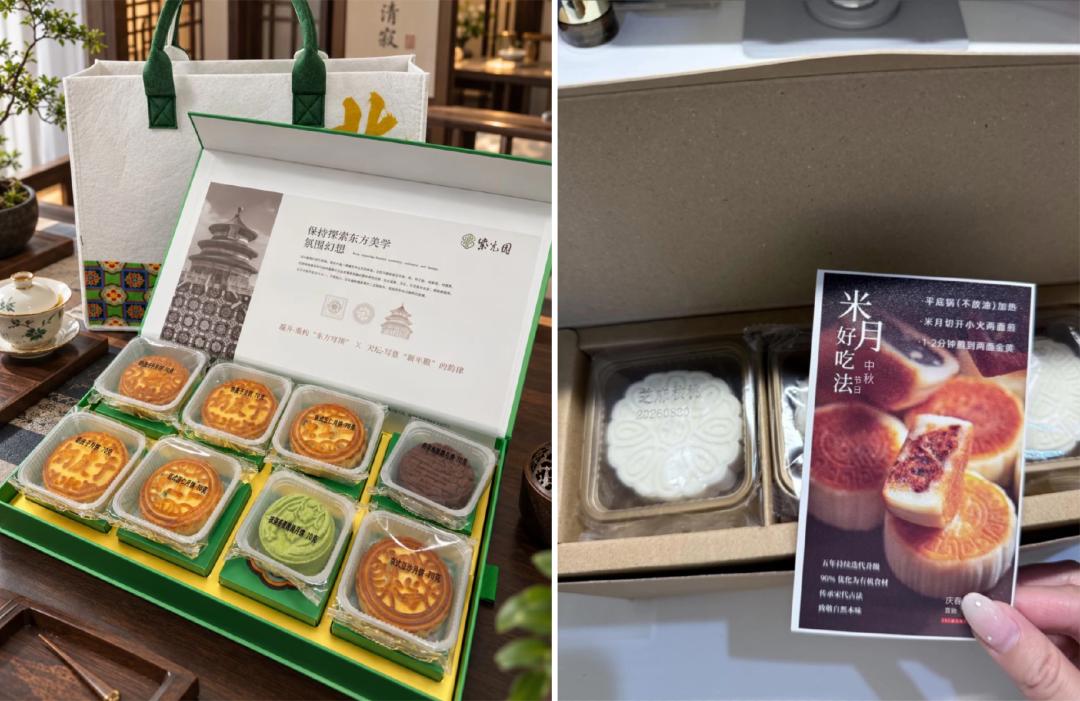
The vegetarian organic chain brand Chunpu Men continues to bind mooncakes with its own brand concept. The mooncake products launched this year are all freshly made on the same day, with fully upgraded organic ingredients, extending the brand proposition of "natural diet" to its Mid-Autumn products.
Some mid-to-high end F&B brands choose to directly integrate the signature flavors of their restaurants into mooncakes.
Xinrongji still focuses on hand-baked Su-style mooncakes this year, with three main flavors of pickled mustard green pork, black truffle pork and Musang King durian. Some stores have also launched limited flavors such as crab roe. Netizens in some cities reported that the black truffle flavor is out of stock; the black truffle mooncake gift box sold by Dongdaojia under Da Dong targets high-end business gifting scenarios.
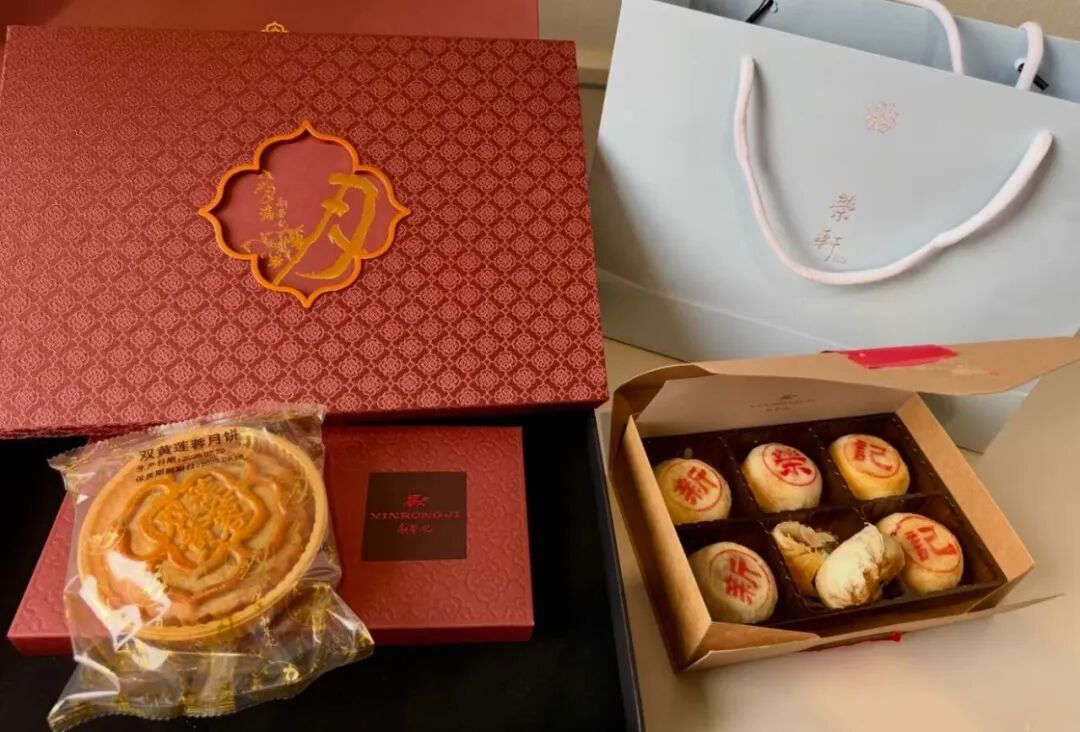
Haidilao also launched the "Moonlao" gift box this year, which can be redeemed with points. At the same time, mooncakes are also used by the brand as gifts to maintain relationships with regular customers, and some high-frequency consumers have received mooncakes given by the stores.
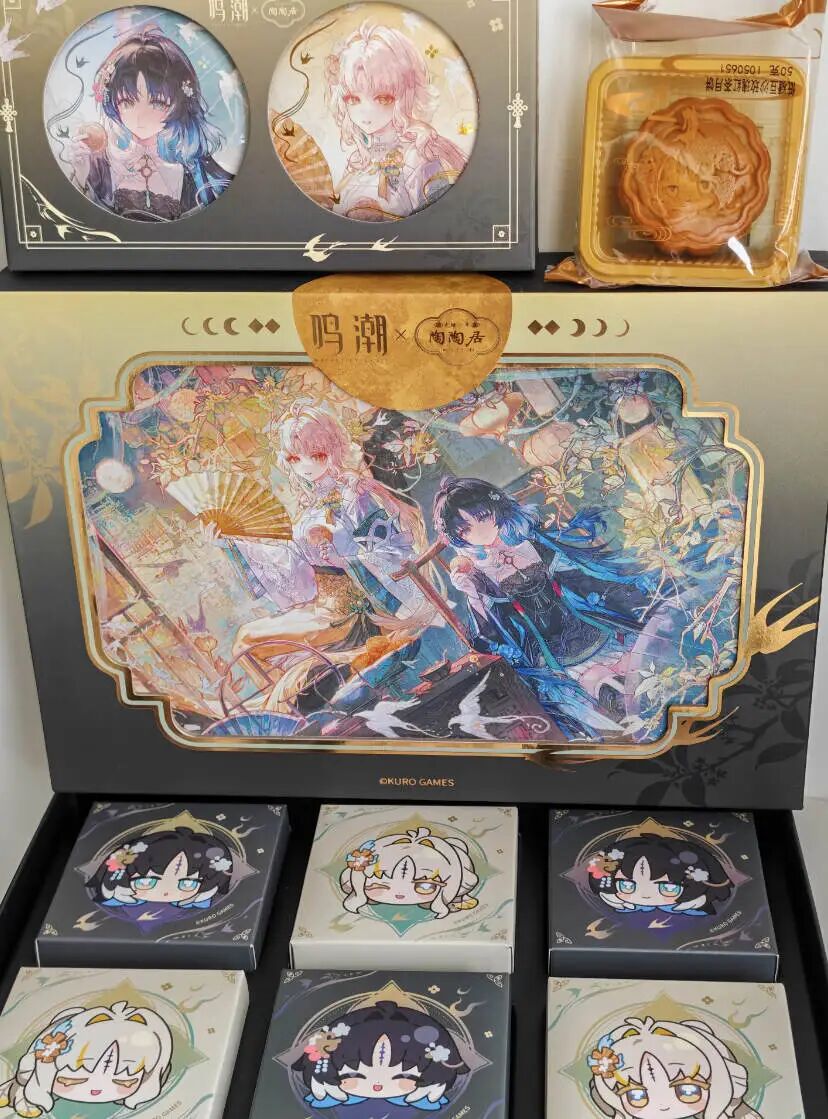
Taotaoju has launched a number of new Mid-Autumn products, and this year it has also co-branded with the game Wuthering Waves, promoting intangible cultural heritage techniques while launching new low-sugar products to respond to health consumption demands, and reaching more young consumers through the co-branded IP.
In the baking track, mooncake is a seasonal business that highly overlaps with its own products, stores and consumption scenarios, so brands invest more heavily in it.
As early as late July, Ganso launched its Mid-Autumn marketing campaign nearly two months in advance, with more than 800 offline stores and all online channels carrying out preheating and pre-sales of its signature snow mooncakes at the same time, and the highest price of this product is 490 yuan.
Luxihe has brought back its fresh-baked juicy pork mooncakes this year, added many new flavors, and launched various low-sugar versions of its gift boxes, covering Su-style crispy mooncakes, peach crisp mooncakes, Cantonese-style mooncake boxes and flowing heart mooncake boxes, with both bulk and gift box sales channels.
In the past two years, a number of baking brands that focus more on "mooncakes" have emerged in the market.
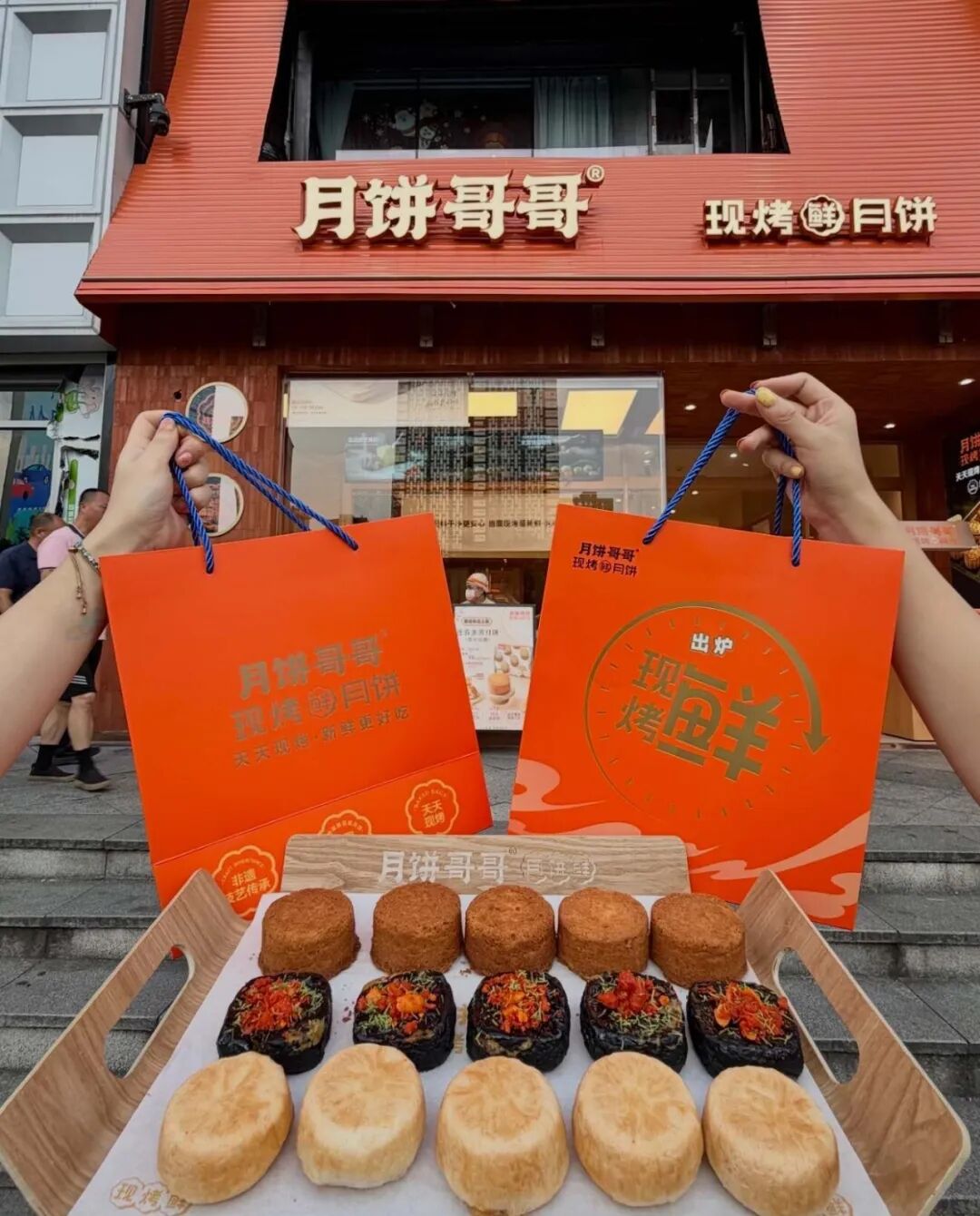
For example, Mooncake Brother is a popular fresh-baked mooncake brand based in Changsha, Hunan, focusing on fresh-baked short-shelf-life products without preservatives. It has opened 5 chain stores nationwide, most of which are located in Hunan, with no permanent stores in other regions, so most consumers outside Hunan can only buy its products online.
Tea and dessert brands are not lagging behind either. Starbucks is already a "veteran player" in this track. This year, it has launched two gift boxes named "Thousand Rivers Reflect the Moon" and "Cloud Sea Mirror the Moon", priced at 358 yuan and 468 yuan respectively; COSTA launched mooncakes on its mini-program right after the Dragon Boat Festival; Haagen-Dazs uses its classic ice cream as the core material to form differentiated competition, with gift box prices ranging from more than 200 yuan to nearly 700 yuan...
02
Meanwhile, More and More F&B Brands
Are Quietly Exiting the Mooncake Market
While some F&B brands are still launching new flavors, doing co-branding and seizing Mid-Autumn gifting opportunities, some brands that once sold mooncakes across categories have become quiet this year, and quietly stopped launching new mooncake gift boxes.
In the past few years, mooncakes were once an important part of Mid-Autumn marketing for F&B brands.
NAYUKI once cooperated with the Forbidden City IP "My Emperor's Delicacies" to launch Mid-Autumn gift boxes; Pizza Hut once co-branded with Dunhuang Art Museum, launched mooncakes with the theme of "Flying Apsaras", combining catering with national tide culture; KFC cooperated with the Palace Museum to launch the limited-edition Mid-Autumn mooncake gift box "Flowers Surround the Moon".
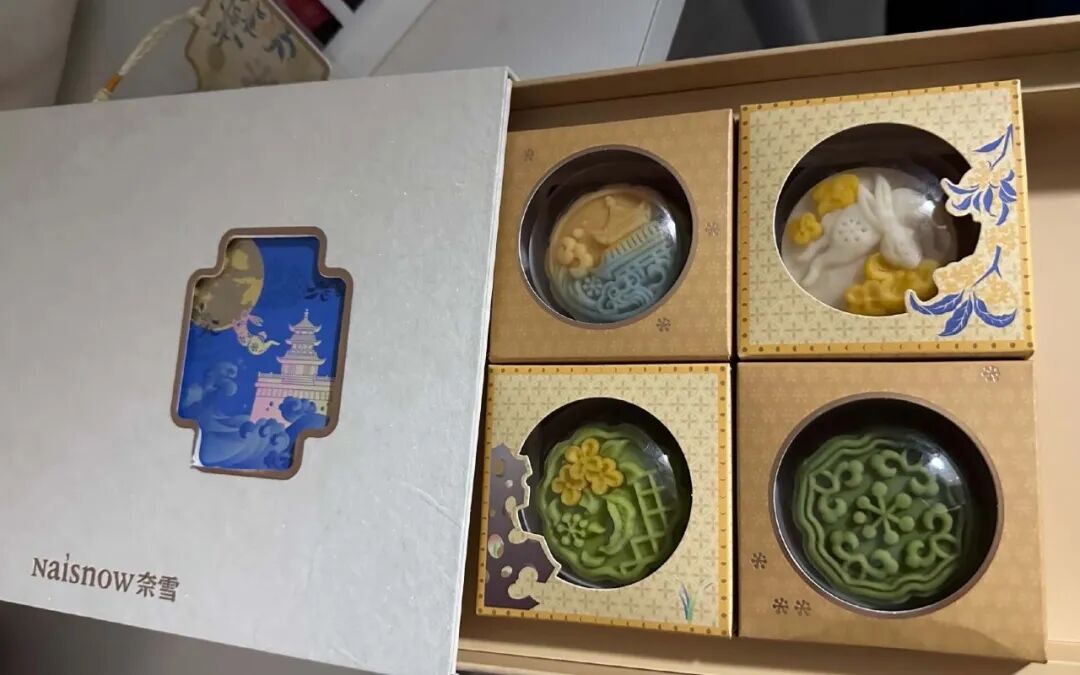
But this year, these familiar marketing tactics are decreasing. By the Mid-Autumn Festival this year, brands such as NAYUKI, HEYTEA and Pizza Hut have not carried out centralized marketing activities for mooncake products.
After all, for F&B brands, adding mooncakes is not as simple as adding a new SKU.
From production, packaging, warehousing, transportation to in-store sales and inventory digestion, a seasonal product involves a whole set of additional operating costs. In particular, the sales cycle of mooncakes is highly concentrated. If too much stock is prepared in the early stage, inventory pressure will come after the festival window passes.
In fact, the article "Starbucks Forces Employees to Sell Mooncakes? This Year's Mooncake KPI Is Overwhelming Frontline Workers" published by Neican mentions that many F&B and hotel employees are burdened with mooncake sales tasks, they not only have to keep promoting to customers, but also may have to pay for the unsold mooncakes themselves if they fail to meet the targets.
Take NAYUKI as an example. In recent years, its baking business has been under pressure. Under the background of business contraction and resource re-focusing, some low-benefit, non-core derivative categories need to be re-evaluated. In particular, IP co-branding itself means additional authorization and marketing budget.
When more and more restaurants begin to re-examine the mooncake business, it actually reflects that the logic of mooncake consumption is changing.
03
The 28.2 Billion Yuan Mooncake Market Is Undergoing Adjustment
Leading Players Are Slowing Down, But Gross Margin Remains Impressive
Before this year's Mid-Autumn Festival, topics such as "mooncakes are not selling well" and "no one buys Mid-Autumn mooncakes" have emerged one after another, and discussions about the cooling of the mooncake market have heated up rapidly.
But if we take a longer-term perspective, it is a more obvious change in consumption structure.
In 2025, China's mooncake sales reached 28.24 billion yuan, down 5.9% year on year; the output was 518,000 tons, down 5.4% year on year. This is the first negative growth in the mooncake market in the past ten years. Before that, the mooncake market had experienced a round of rapid expansion. From 2022 to 2024, mooncake sales increased from 24.38 billion yuan to 30.01 billion yuan, with a three-year compound annual growth rate of over 10%.
The first category to shrink is the high-end gift boxes that used to easily generate high unit prices in the mooncake market. Data shows that the sales volume of mooncake gift boxes priced above 1,000 yuan has dropped by 76% year on year, and the market share of gift boxes priced above 500 yuan has also decreased from 7.2% to 1.8%. At the same time, the share of affordable gift boxes priced between 68 yuan and 200 yuan has risen to more than 60%, becoming the absolute mainstream of the market.
Behind this set of figures is actually a shift in mooncake consumption scenarios.
In the past, a box of mooncakes could be used for business exchanges, corporate welfare, festival gifting, personal relationship interactions... The higher the price and the more complicated the packaging, the easier it is to be endowed with gifting value. Now, this logic is being re-examined.
This change can also be seen from the operating performance of leading brands.
Guangzhou Restaurant's 2025 annual report shows that its mooncake series revenue reached 1.652 billion yuan, with a year-on-year growth of only 0.96%. For this time-honored brand with mature mooncake business, the revenue scale is still considerable, but the growth rate has slowed down significantly. It is worth noting that the gross profit margin of this business is as high as 53.31%, and mooncake is still a business with profitable space.
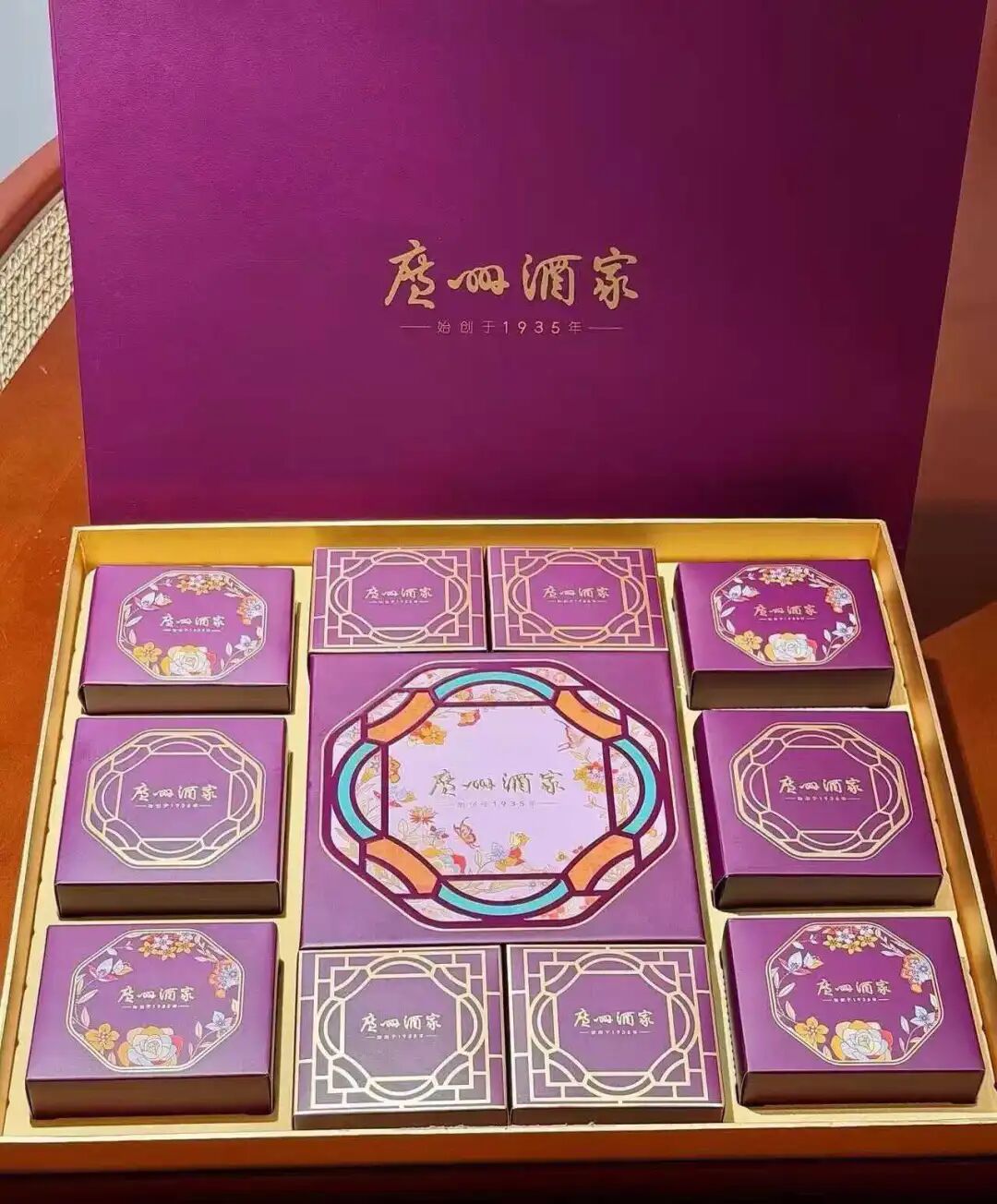
The performance of Wufangzhai is more interesting. As a leading rice dumpling brand, its mooncake business is a cross-category extension in itself. In 2025, Wufangzhai's mooncake revenue was 201 million yuan, down 15.03% year on year, but the gross profit margin increased to 21.29%.
The market still exists, and the profit still exists, but it is getting more and more difficult to continue expanding relying on the old high-growth logic.
On the one hand, the market scale is adjusting and high-end gift boxes are shrinking rapidly; on the other hand, consumer demands for affordability, personal use, health and innovation continue to emerge. Mooncakes are experiencing a return from "gift" to "food".
This change is particularly important for F&B brands.
Because when mooncakes are increasingly returning to the essence of "food", the advantages that F&B brands used to rely on gifting, group buying and festival atmosphere to complete sales will be weakened; on the contrary, those F&B brands that truly have product capabilities, store scenarios and brand characteristics need to rethink what kind of product experience they should provide to consumers.
04
What Should Restaurants That Are Still Making Mooncakes Do?
Judging from the new products in the market this year, restaurants are looking for answers from four directions.
Health Orientation: Bring Mooncakes Back to the Essence of Food
Many F&B brands this year start with "reducing burden". In the past, mooncakes were often associated with "sweet, greasy and high-calorie". Now, healthiness is becoming an increasingly clear main line in mooncake innovation. It is reported that the search volume of "low-sugar mooncakes" has increased by 320% year on year, and 73% of consumers will check the ingredient list before buying mooncakes. The changes on the demand side are also directly reflected in product sales: the sales volume of low-sugar and low-fat mooncakes has increased by 35% year on year.
Freshly-made Orientation: The Trend of Freshly Baked Food Has Come to Mooncakes
In Shanghai, the freshly baked mooncakes of Longhua Temple are not only a seasonal food, but also gradually become a popular check-in experience during the Mid-Autumn Festival. While buying mooncakes, consumers complete the consumption process of visiting the store, queuing up, watching the production process and tasting the products immediately.
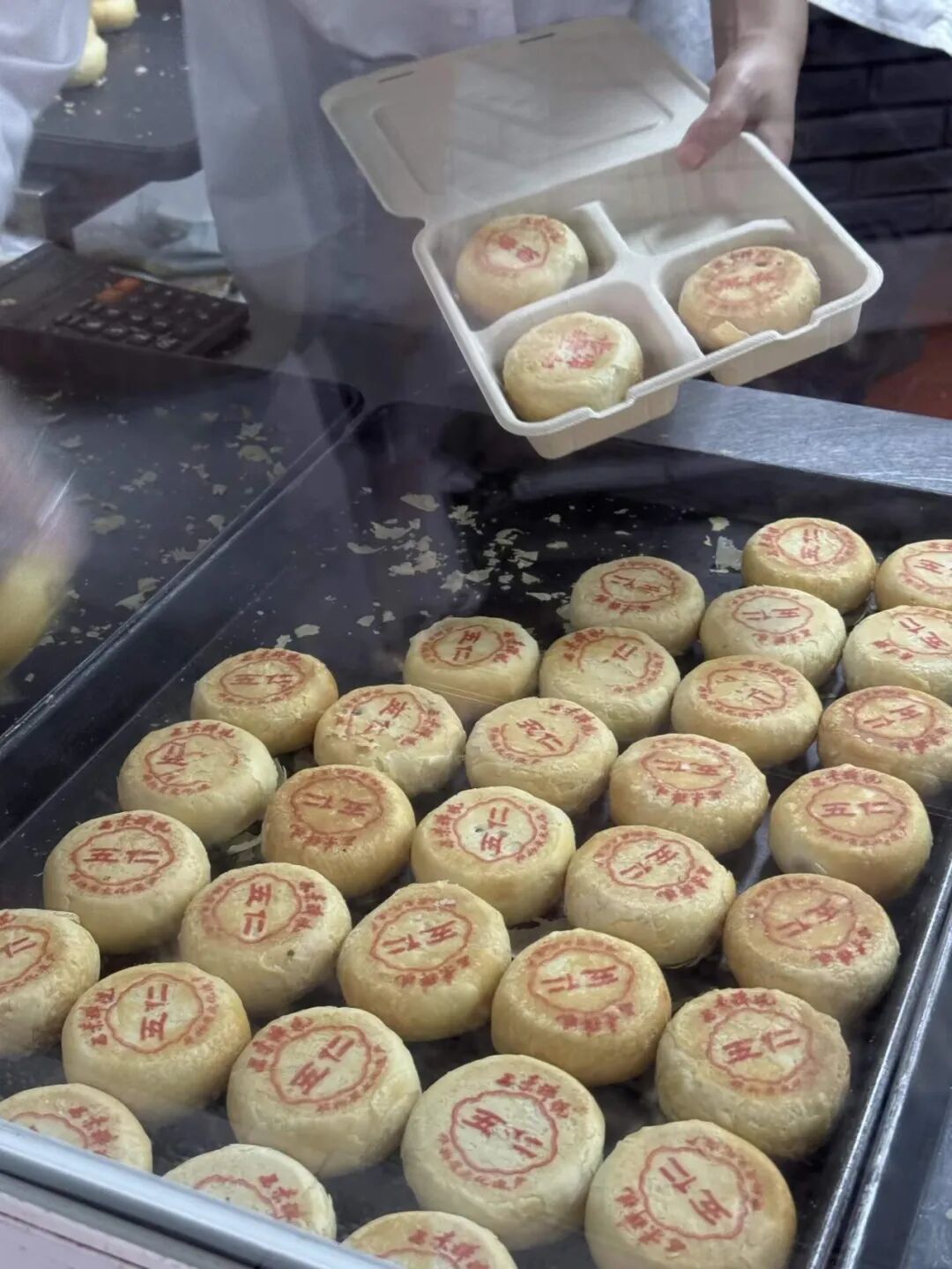
Especially for F&B brands, the value of freshly baked mooncakes is not just "fresher". When mooncakes are made in front of consumers through the processes of rolling dough, filling, baking and coming out of the oven, the production process itself becomes a kind of content. The heat of freshly baked mooncakes, the crisp sound of breaking the pastry, the aroma of the filling, and the immediate feedback from consumers when they get the products, can all become part of the in-store experience.
Local Flavor Orientation: Regional Flavored Mooncakes Are Gaining Popularity
This Mid-Autumn Festival, regional flavor is becoming a new boom in the mooncake market. Long queues formed in front of the time-honored stores on Nanjing East Road in Shanghai, and the stinky tofu pork mooncake of Taikang Food became a hit product, with daily sales of 3,000 to 4,000 pieces per store, and the longest queuing time was 2 to 2.5 hours, even attracting many foreign tourists.
Similar changes have taken place in Yunnan ham mooncakes. In the past, its consumption radius was mostly concentrated in Yunnan and surrounding areas; with the expansion of online channels, local flavors have begun to break through geographical restrictions. When it was first launched in 2022, orders mainly came from Yunnan, Guizhou and Sichuan. Now, the Yangtze River Delta, Beijing-T