Cockroach milk, which has three times the energy content of cow's milk, has won the "Ig Nobel Prize". Will leading dairy giants step in to carry out relevant business layouts?
Once, when we saw self-driving vehicles and intelligent robots in sci-fi movies, we only regarded them as distant futuristic fantasies.
Nowadays, with the deep integration of AI and new energy vehicles, high-level assisted driving has entered ordinary households, and the era of fully autonomous driving is approaching us step by step; facial recognition, wireless charging, and intelligent housekeepers that once appeared in movies have now become commonplace in daily life.
TV dramas and films have always reflected humanity's desire for a better life, and some settings that seemed wildly imaginative at the time often quietly come into reality many years later.
No one expected that this time the sci-fi iconic scene that "comes into reality" would be the creepy black protein block from the movie Snowpiercer.

In this classic doomsday movie, the only food that the bottom-class passengers on the non-stop train depend on for survival is protein blocks made of cockroaches.
When watching the movie back then, many people thought this was an exaggerated setting created by the director to highlight class differences and the absurdity of the doomsday. After all, how could cockroaches, such creepy creatures, possibly become human food?
That was until the Ig Nobel Prize awarded its physiology prize to a research on "cockroach milk"...
This "cockroach" is not the common household cockroach
Friends in northern China, don't rush to feel nauseous first, and friends in Guangdong, which is a gathering place for household cockroaches, don't get too excited too early.
First of all, "cockroach milk" is not secreted by the common German cockroach or American cockroach we see at home, nor is it made by squeezing cockroaches into juice. It comes from a special species of cockroach called Diploptera punctata, also known as the Pacific beetle cockroach.
Different from the oviparous cockroaches we are familiar with, the Pacific beetle cockroach is one of the few viviparous cockroaches. The female nurtures larvae inside her body and secretes a milk-like nutrient solution to feed the embryos.
This nutrient solution crystallizes in the intestinal tract of the larvae, forming a type of protein crystal, which is what people call "cockroach milk".
The reason why this research won the Ig Nobel Prize is not entirely due to its "novelty-seeking" or "funny" attributes.
People familiar with the Ig Nobel Prize know that the essence of this award is "it seems funny at first glance, but makes sense when you think deeply". It rewards researches that seem absurd but actually contain scientific value.
Scientists have found that the protein content of cockroach milk crystals is more than 3 times that of ordinary cow milk. It not only contains a variety of essential amino acids for the human body, but also has a reasonable proportion of fat and sugar, making it an extremely high-density full-nutrition source.
Of course, no one is drinking cockroach milk directly as a beverage for now.
For one thing, the yield is extremely low. Extracting one kilogram of cockroach milk requires tens of thousands of cockroaches, with an incredibly high cost; for another, the public's acceptance of this creature may be even lower than the depth of the Mariana Trench.
However, although mass production of cockroach milk is unrealistic, various "insect elements" have long been hidden on our dining tables.
The "insect economy" on the dining table
Many people's resistance to "eating insects" essentially comes from the feeling that it is "unhygienic" and "abnormal", but in fact, insect ingredients have long penetrated into our daily diets in various forms.
The most common ones are insect-derived food additives actively added in food processing, among which the most famous one is cochineal red.
Cochineal red is a natural red pigment, whose raw material is the cochineal insect that parasitizes on cacti.
People collect these insects, dry them in the sun, and extract carminic acid from them to get the bright-colored, highly stable red pigment.
It is extremely safe, a globally recognized legal food additive, widely used in candies, beverages, yogurts and baked goods. Even in many cosmetics such as lipsticks and blushes, the red color also comes from cochineal red.
In the early years, a red velvet drink from a chain coffee brand once became a hot search topic, as it used cochineal red and received protests from vegans.
Many people learned for the first time at that time that the pink drink they were consuming was actually made from insects.
But putting aside the psychological discomfort, cochineal red is actually a healthier and safer natural colorant than artificial pigments, and humans have used it for hundreds of years.
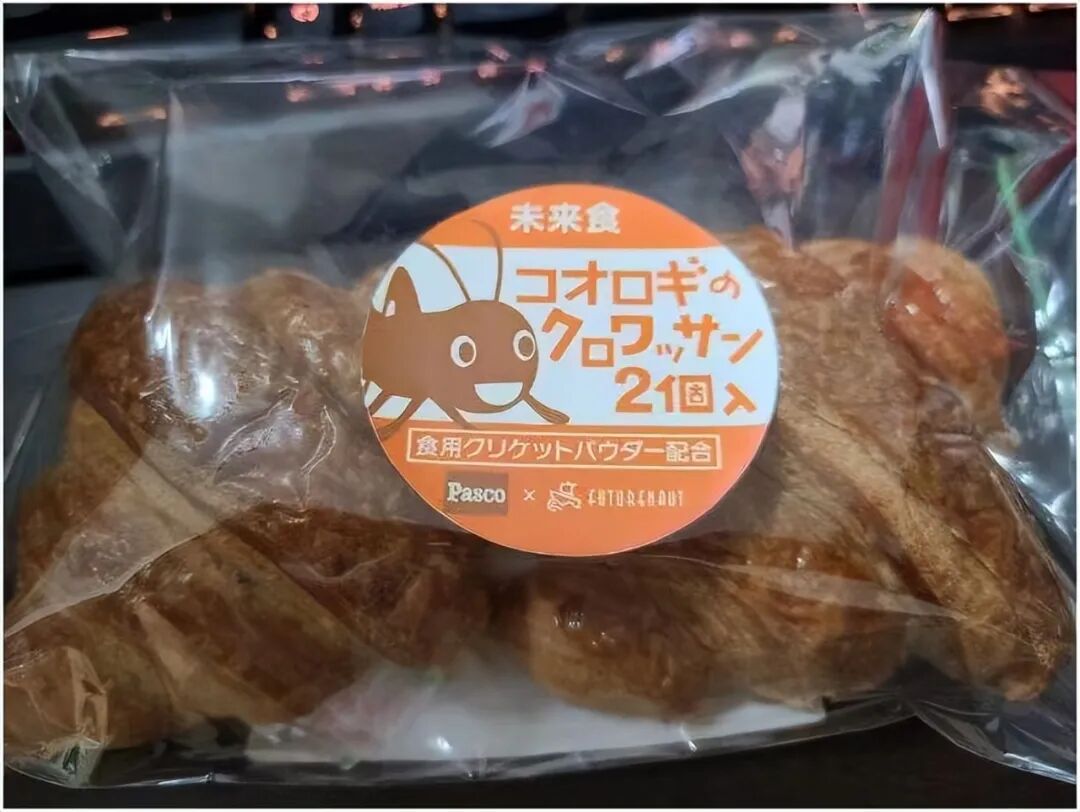
In recent years, more and more "insect foods" have come directly to the public view. In Europe, cricket powder has been approved as a food raw material, and cricket protein bars and cricket bread are available on the market; in China, fried locusts and fried silkworm pupae in regions like Yunnan and Shandong have long been characteristic snacks, and many people will specially eat them during festivals.
Tianyancha APP shows that Liaocheng Xinsheng Biotechnology Co., Ltd. is a large cricket farming manufacturer.

More importantly, the Food and Agriculture Organization of the United Nations released a report as early as 2013, vigorously promoting edible insects as one of the important ways to solve global food security and protein shortage problems.
From this perspective, the research on cockroach milk is not absurd at all. It is just another attempt by humans on the road to exploring alternative proteins.
Compared with cricket powder and cochineal red, its only "disadvantage" is probably that its raw material is cockroaches, whose negative image in human culture is so deeply rooted that people will resist it as soon as they hear the name.
Back to the statement that "Snowpiercer comes into reality" at the beginning, there is an essential difference between the two.
The cockroach protein blocks in the movie are a forced choice for the underclass in the desperate doomsday situation, with cruel class metaphors; while the research on cockroach milk in reality is an active scientific exploration by humans to cope with future food challenges.
Sci-fi works always like to use extreme settings to warn about the future, while technology in reality always uses more gentle and rational ways to solve possible problems step by step.
Cockroach milk sounds funny, and cochineal red sounds unexpected, but behind them are the ordinary efforts made by humans to eat better, safer and more sustainably.
Maybe in a few decades, when insect protein really becomes a daily routine, looking back at us today will be like looking back at people who drank cow milk for the first time in the past, thinking we are making a fuss over nothing.
After all, the history of human diet is essentially a history of constantly expanding the boundaries of food.
This article is from the WeChat Official Account "Shanxiang Finance" (ID: IPOxscj), written by Shanxiang Finance, and published by 36Kr with authorization.