Gentle Intelligence: AI Robots Transition from Mechanical Execution to Empathetic Companionship
Shen Translation is a translation team under 36Kr, focusing on technology, business, workplace, lifestyle and other fields, introducing cutting-edge new technologies, new perspectives and new trends from around the world.
Editor's note: The new generation of AI companion robots break through the technical limitations of being mere tools, take "gentle intelligence" as the core, and shift from passively executing commands to active perception and empathetic companionship. This article is translated and compiled, hoping to bring you inspiration.
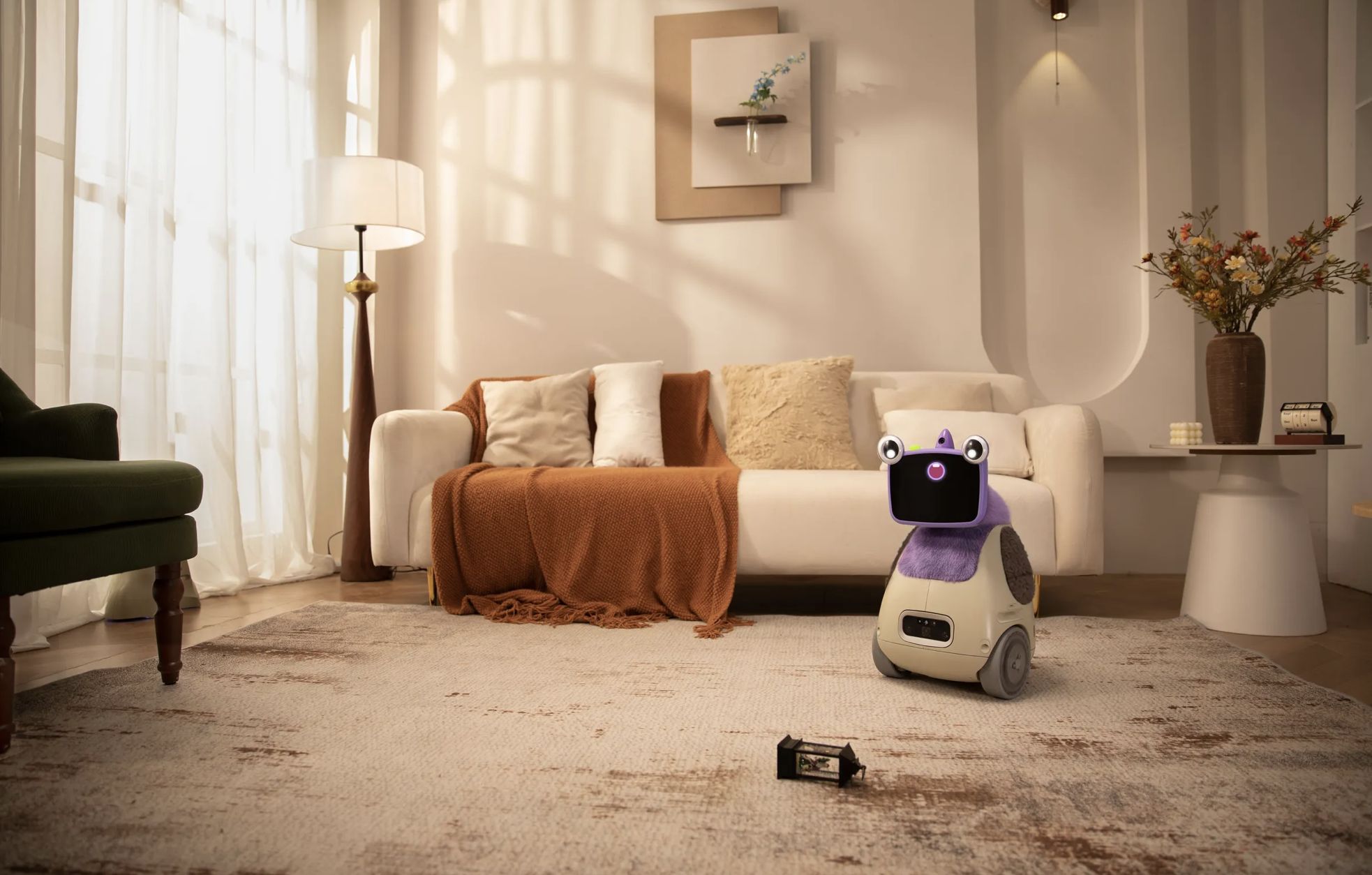
Image source: OLLOBOT
Around 2017, the first generation of companion robots began to enter the public life. This type of robot is endowed with personality, capable of autonomous movement, able to tell jokes, and can respond to human voice commands. However, the vast majority of early companion robots were limited to simple voice interaction with very limited functions. After the novelty wore off, many products were left idle on shelves. After some manufacturers shut down their servers, many users described the experience as losing a pet.
The gentle intelligence concept proposed by Ollobot points out the real R&D direction of this track: instead of pursuing more powerful assistants, it aims to create partners with a stronger "sense of presence".
The Realistic Problems That Companion Robots Aim to Solve
Loneliness is not a niche problem. Studies show that nearly one third of the elderly people live alone and lack daily companionship. Other studies indicate that left-behind children whose parents work in other cities and are cared for by relatives are 2.5 times more likely to feel lonely than ordinary children. Social alienation is also widespread among working adults living alone in cities, yet it often goes unnoticed.
For many years, various technical products have tried to solve the loneliness dilemma. Video calls, smart speakers, instant messaging applications have emerged in endlessly, but with little success. These tools serve established interpersonal relationships, they can only arrange communication, but cannot create a real sense of companionship presence. The new generation of AI companion robots is born exactly to fill this gap.
The New Generation of AI Robots Is Completely Different
Today's companion robots are no longer just cute toys. Product design integrates psychological research, clinical practice conclusions and long-term interaction models, which truly adapts to the usage scenarios of real families.
The current generation of products has undergone three fundamental changes:
1. Shift from passive response to active interaction. Old-style robots only react when humans take the initiative to speak; modern robots rely on cameras, microphones and environmental sensors to perceive the whole house environment, can actively start interactions without humans issuing commands, and can capture changes in people's emotions.
2. Shift from function-first to emotion-first design. The foothold of early companion robot promotion was "what it can do", while the core proposition of current industry R&D has become: how does it make people feel. This is a more difficult engineering task, and it is more in line with the essential positioning of the product.
3. Shift from independent hardware to interconnected ecosystem. Leading manufacturers no longer only produce a single hardware device, but build a complete platform, with built-in software at factory, supporting remote access.
In 2025, the global AI companion robot market reached a size of 36.8 billion US dollars; it is expected that the market size will reach 48 billion US dollars in 2026, and grow to 318 billion US dollars by 2033, with a compound annual growth rate of 31% from 2026 to 2033.
Three Types of Family Usage Scenarios and Interaction Modes
AI home companion robots make up for many shortcomings of existing technologies.
1. Elderly people living alone: Active interaction, fall detection and continuous present companionship can not only protect the safety of the elderly, but also provide emotional comfort, without frequently troubling family members to make special trips for visits.
2. Families where parents work in different cities: The robot can become a stable companion that is familiar with children's preferences, emotions and daily routines. The remote interconnection function allows parents to participate in their children's lives without specially scheduling phone calls; the life recording function can gently show children's daily life, which is less cold sense of surveillance than security cameras.
3. Single working people in cities: It adapts to users' daily routines, gradually learns users' preferences, and provides low-pressure atmospheric companionship.
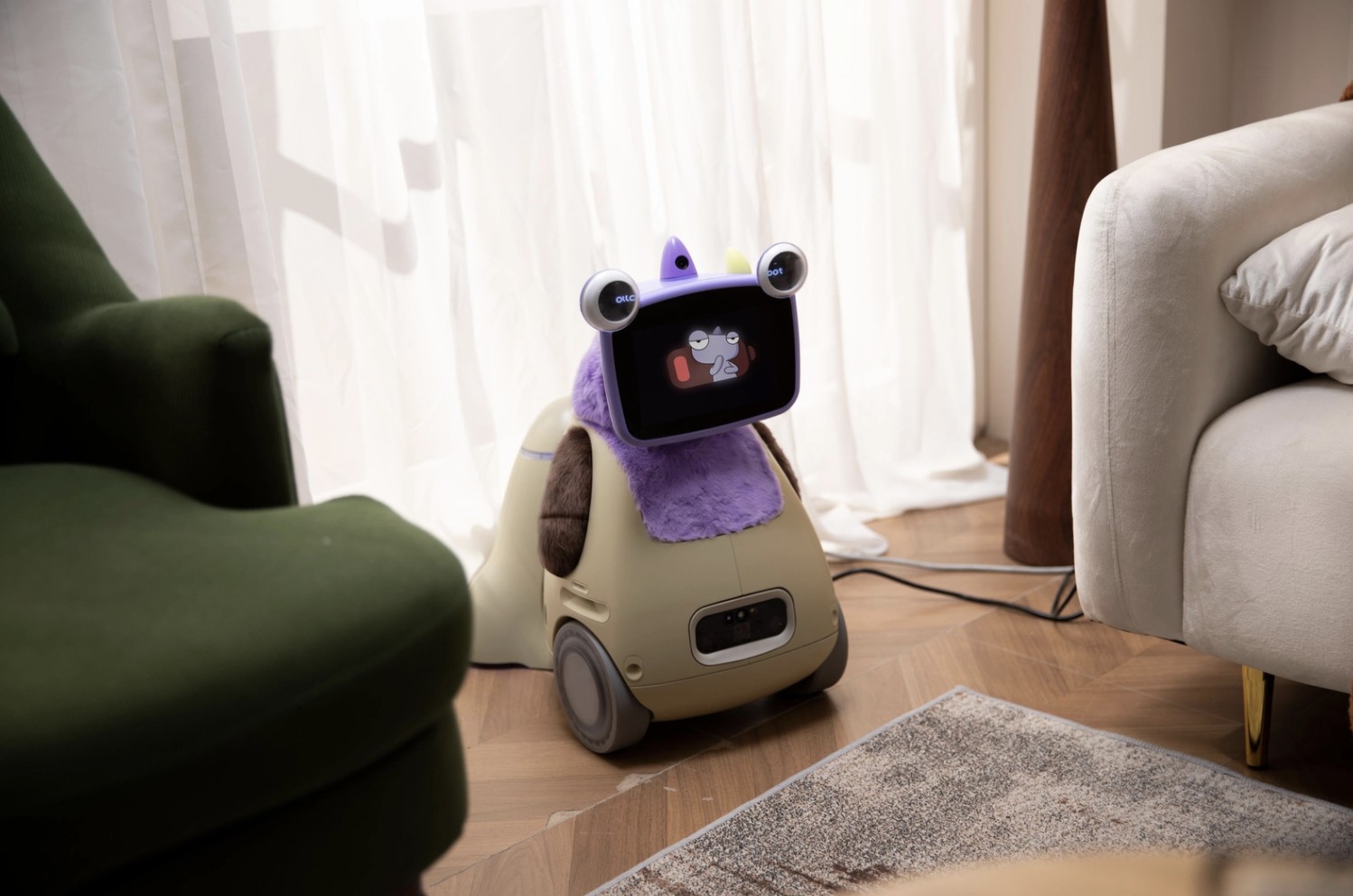
Image source: OLLOBOT
Focus on Sense of Presence, Not Tool Utility
Ollobot develops intelligent companion robots with the goal of making up for the shortcomings of existing technologies. It does not blindly pursue automatic processing of various affairs, but fills the emotional gap in people's hearts.
For a long time, the robot industry has mostly pursued simulating humans: to create machines that look, speak and behave exactly like humans. But the SS1 does not insist on high anthropomorphism, its design idea focuses on sense of familiarity and long-term coexistence.
Multiple designs of OlloNi SS1 reflect the emphasis on sense of presence and interaction continuity.
It can identify different family members (including pets), and adjust the interaction method in a targeted manner. With the remote communication function, family members can communicate through the robot, without turning every contact into a deliberately arranged call. The environmental sensor can provide scenario-based reminders combined with weather and indoor status.
The robot is equipped with an automatic life recording system based on face recognition and behavior event detection, which automatically captures moments of laughter, intimate time spent together, multi-person interactions and more. The built-in AI short video generation engine automatically edits materials, completes shot sequencing and background music matching to generate short videos. The original design intention is to preserve the spontaneously occurring life moments in the family, without requiring users to manually operate recording.
Visual data is mainly calculated on the local AI module of the device, family memories are stored locally, in the exclusive Ollobot ecosystem, and will not be shared with third-party smart home platforms. Only authorized users can access the recorded content and real-time footage through the supporting App; the communication during remote access is encrypted. Users can independently set recording permissions; when image collection is not needed, the physical camera privacy cover provides hardware-level security protection.
Remote interaction also emphasizes sustainability, rather than one-off transactional communication. Traditional video calls are intermittent and restricted by screens; the SS1 is a resident interaction entrance embedded in the family environment. Relying on autonomous movement, environment perception and family memory, distant family members can perceive the ongoing daily life of the family.
"Gentle Intelligence", a Larger Industry Transformation
In the final analysis, gentle intelligence does not mean making robots more and more like humans, but making robots integrate into people's lives more naturally. Each robot will form a unique behavior pattern according to the family it is in. Two identical machines will show significant differences after running in different families for a year — they are shaped by the family members, living habits and daily rhythm of that home.
This long-term personalization is exactly what early companion robots lacked. It is this point that determines whether a product will be left idle to gather dust, or truly have its place in the family.
Translator: Teresa