Zhang Yiming has incubated another AI company with a valuation of 10 billion RMB.
When I saw this news today, my first reaction was not:
Why did ByteDance get into pharmaceutical R&D?
Instead, it was:
ByteDance has spun off another company, which is valued at tens of billions of yuan right after its spin-off.
Earlier today, Reuters reported that Anew Labs, an AI pharmaceutical company spun off from ByteDance, has completed a $290 million financing round, with a post-money valuation reaching $1.5 billion, equivalent to over 10 billion yuan.

HSG (formerly HSG China), IDG and GL Ventures led the round, with 5Y Capital as a co-lead investor, and other institutions including Gaorong Capital, Chunhua Capital and Boyu Capital also participated.
More notably, after the completion of this financing round, ByteDance still holds approximately 56% of the shares of Anew Labs.
Strictly speaking, this is not ByteDance "selling" a business.
Instead, it spins the business out from ByteDance's system and allows it to grow into an independent company on its own.
The further I read, the more I think this case is worth discussing.
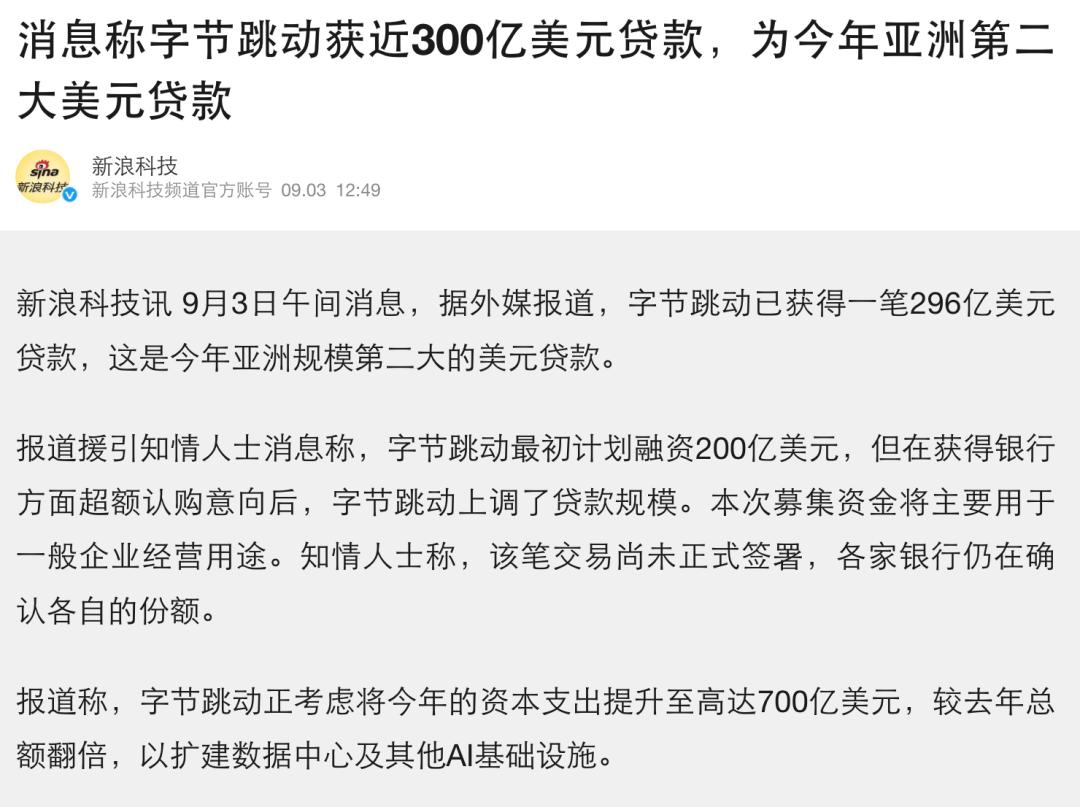
Because just over ten days ago, ByteDance itself just borrowed nearly $30 billion.
A company so profitable is borrowing money on one hand, and letting its own business raise external financing on the other hand.
Why is that?
ByteDance's AI products are so numerous that they need a dedicated diagram to be sorted out
Nowadays, when many people mention ByteDance's AI business, their first thought is still Doubao.
However, if you lay out all the AI products that ByteDance has independently developed in recent years, you will find that it is far more than just "one Doubao".
In the Chinese market, there are dozens of products of different sizes including Doubao, Doubao Work, Jimeng AI, domestic Coze, TRAE, Doubao Input Method, Catbox, Sponge Music and so on.

Overseas, there are more than ten products such as Dola, Dreamina, TRAE, Coze, Gauth and so on.
These products cover general assistants, AI office, AI programming, image and video processing, music, education, Agent platforms, and even AI companionship scenarios.
The official materials of ByteDance Seed also clearly state that its model technology has been applied in a large number of product scenarios including Doubao, Jimeng, TRAE, Dola, Dreamina, etc.
Of course, this diagram does not include all the AI functions in Douyin, Feishu and CapCut.
The total number will be even larger if these functions are counted in.
What is interesting is that ByteDance has taken the initiative to "integrate products" this year.
In August, the TRAE and domestic Coze teams were fully merged into the Doubao system, and Doubao Work was launched subsequently. That means for products that are getting closer and closer to the main business track, such as office, Agent and programming, ByteDance is re-concentrating their entrances to Doubao.
But Anew Labs has taken a completely opposite path:
Instead of being integrated back, it is spun out.
Why is that?
In fact, this is not the first time ByteDance has done this
Anew Labs is not the first business that ByteDance has spun off for independent development.
In 2021, ByteDance confirmed its plan to spin off its real estate business Xingfuli and introduce external strategic shareholders to support its independent development. The reason given at that time was very straightforward: the real estate business is highly dependent on offline operations and services, which is not completely aligned with the logic of ByteDance's main business.

Then it was the turn of Dongchedi.
After Dongchedi was spun off from ByteDance's system, it completed a financing of approximately $600 million in 2024, with the participation of institutions including HSG, General Atlantic, KKR and Gaorong Capital, and its valuation was around $3 billion.
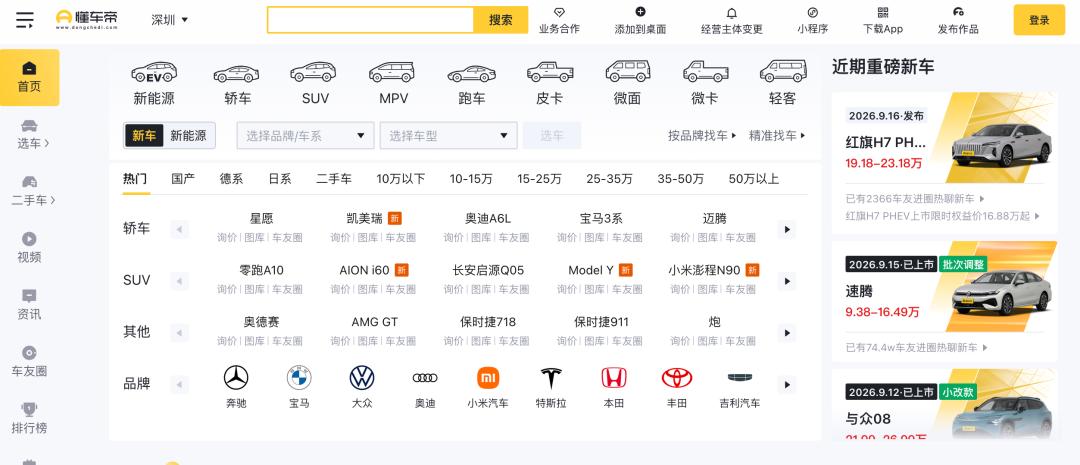
In February this year, there were news that Dongchedi is considering an IPO in Hong Kong, with a planned fundraising scale of $1 billion to $1.5 billion.
Now it is Anew Labs' turn.
Putting these companies together, ByteDance's logic gradually becomes clear.
Those AI products that have strong synergy with the core Internet business and may become the next generation of traffic and productivity entrances, such as Doubao, Doubao Work and TRAE, are being integrated into the main business line.
However, other businesses with particularly heavy industry attributes, such as automotive, real estate and AI pharmaceutical R&D, are more suitable to be spun out independently.
This is especially true for AI pharmaceutical R&D.
Its operational logic is far too different from that of developing a common App.
The publicly available products of Anew Labs now include AnewFold, AnewSampling, AnewOmni, AnewDesign and AnewMind, and it also has its own drug R&D pipelines such as IL17 and IL4R. It faces laboratories, drug R&D, clinical trials, regulatory compliance, and investment cycles that often last for several years.
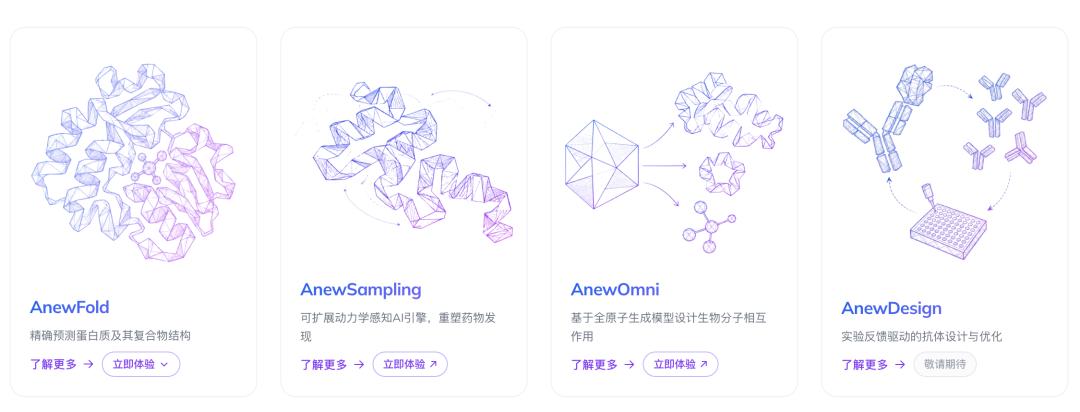
If it continues to be fully managed as an internal Internet business division, it may not be the appropriate management model.
But there is another question: ByteDance is so wealthy, why does it still need to raise financing?
I think this question is particularly interesting.
Because on paper, ByteDance is by no means a company short of money.
According to data from people familiar with the matter cited by The Wall Street Journal, ByteDance's revenue in the first half of 2026 has reached approximately $120 billion, up more than 30% year on year, and its net profit is around $20 billion.
Its full-year revenue in 2025 was approximately $200 billion, with a net profit of around $42 billion.
What does this concept mean?
The profit it earns in one year is enough to support the operation of many AI startups.
However, at the beginning of September, ByteDance secured a $29.6 billion loan from nearly 30 banks.
What's more, it is an unsecured loan.
It originally planned to borrow $20 billion, but due to the extremely positive subscription from banks, the final amount was raised all the way to nearly $30 billion.
Reuters cited people familiar with the matter saying that although the money is nominally used for general corporate purposes, a large part of it will be used to support AI-related projects, including overseas data centers, AI infrastructure and other initiatives.
So it is easy to fall into a misunderstanding here:
"Why borrow money when you have enough cash?"
In fact, for a company of ByteDance's size, borrowing money is completely different from being short of money.
Being able to borrow money under very favorable terms is itself a kind of capability.
If banks are willing to lend ByteDance nearly $30 billion in one go without requiring it to pledge assets or shares, why should ByteDance pour all its earned cash into data centers and GPUs?
Furthermore, debt financing has a very direct benefit:
It does not dilute equity.
ByteDance can continue to use its profits to develop businesses, conduct share repurchases and make investments, while using long-term funds to match heavy asset investments such as data centers, chips and computing power.
Essentially, this follows the same capital logic that several major US tech giants are adopting now, which is to issue bonds aggressively to build AI data centers.
Anew Labs raising its own financing is a completely different arrangement
Then why doesn't Anew Labs just ask ByteDance for funding?
This is another separate issue.
Because what a company gets from external financing is not just "money".
It also obtains independent valuation, independent equity structure, employee incentive mechanism, access to industrial capital and the entry for the next round of financing.
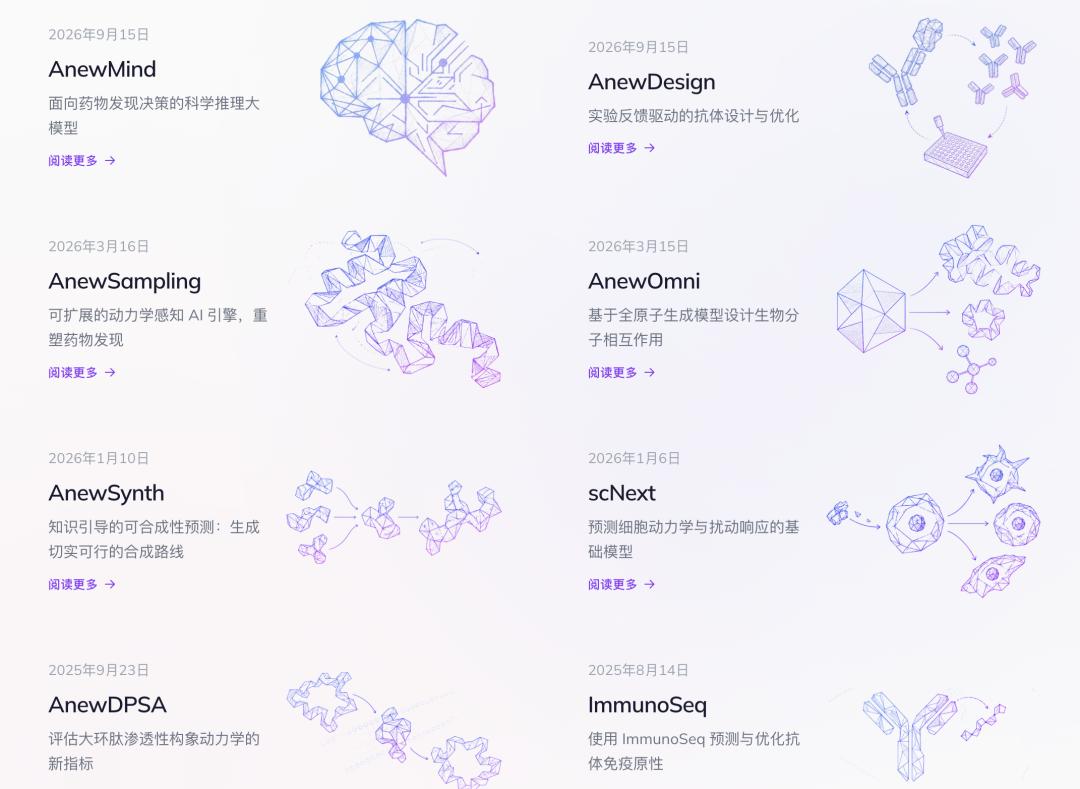
For example, after the completion of this financing, the market has directly given Anew Labs a clear valuation:
$1.5 billion.
From today on, it is no longer just an internal "AI pharmaceutical R&D department" of ByteDance that is difficult to value, but an AI biotech company with its own independent market capitalization.
No matter it continues to raise financing in the future, introduces pharmaceutical partners, carries out strategic cooperation, or even goes public independently in the end, this capital structure will be much more convenient.
Moreover, in the pharmaceutical industry, having sufficient capital is far from enough.
You also need professionals who truly understand biomedicine, clinical trials and the whole industry.
Bringing in professional investment institutions and industrial capital is essentially tying more external resources to this company.
Therefore, I prefer to interpret Anew Labs' this round of financing as:
ByteDance is not unwilling to fund it, but does not want to be the only party that funds it forever.
A more realistic issue is that AI is indeed consuming capital at an increasingly rapid pace
There is another background that cannot be ignored:
Even for a highly profitable company like ByteDance, AI investment has already begun to affect its profit performance.
In the first half of this year, ByteDance's revenue increased by about 30% year on year to $120 billion, but its net profit instead dropped to around $20 billion, with a single-digit percentage decline year on year.
One important reason given in the report is the increased investment in AI.
Large model training costs a huge sum of money.
Inference costs another huge sum of money.
Purchasing chips costs a huge sum of money.
Building data centers costs yet another huge sum of money.
After Seedance, Seedream, Doubao, TRAE and AI cloud services are all fully operational, every batch of new users brings real money cost in computing power behind it.
So now it is very easy to understand ByteDance's series of moves.
On one hand, it secures a loan of nearly $30 billion to prepare sufficient capital ammunition for the group's entire AI infrastructure;
On the other hand, it spins out businesses like Anew Labs that have large capital demands, extremely long cycles and completely different industrial logic, and introduces independent investors for them.
It is not that ByteDance has no money, but that AI has become so expensive that even a highly profitable company like ByteDance does not need to pay for everything on its own.
ByteDance may be evolving from an "App Factory" to an "AI Company Factory"
In the past, when we described ByteDance, we most liked to use a term:
App Factory.
Toutiao, Douyin, TikTok, CapCut, Feishu...
It adopts an internal competition mechanism, and the products that stand out will get more resource investment.
But in the AI era, I think this model has taken a further step forward.
Some products will eventually be integrated into a super entrance, such as Doubao.
Some products may remain within the group and become technical infrastructure, such as Seed and Volcano Engine.
For other particularly vertical AI businesses with heavy industry attributes, in the future, they are very likely to follow the path of Anew Labs:
Get incubated inside ByteDance first, get spun out after the technology matures, and then raise financing in the capital market.
This may be the most noteworthy part of the Anew Labs news.
A valuation of 10 billion yuan is certainly very high.
But what is more interesting is:
If this model proves to be successful, will there be more than one AI company spun out from ByteDance in the future?
In addition to the basic large model, ByteDance Seed has already laid out tracks including AI for Science and robotics.
Anew Labs may just be the first obvious sample.
In the past, when we looked at ByteDance, we were wondering what its next new App would be.
In the future, we may need to ask one more question:
What will be the next AI company incubated by ByteDance?