The "one-day wonder" of purchase restriction easing, the minimum purchase limit as low as 2 yuan, large investors stepping in with 30 million yuan... Against the backdrop of expanded QDII quotas, why is the scramble for available quotas even fiercer?
"Welcome to the Two-Yuan Store": QDII quotas are further expanded, why can investors hardly get access to subscriptions as expected?
With the new batch of QDII quotas issued, cross-border funds that previously implemented strict purchase restrictions have successively "opened to the public". The loosening of purchase restrictions was originally a favorable move, but some funds have triggered investor dissatisfaction due to their improper rhythm of adjusting purchase limits.
Recently, after multiple products raised the upper limit of large-amount single-day subscription, fund companies had to immediately cut the available quotas and return to the tight restriction mode due to the surging enthusiasm of investors. In particular, an over-the-counter QDII-ETF connected fund was ridiculed by investors as "Welcome to the Two-Yuan Store" as its single-day subscription limit was as low as 2 yuan, while some other products with no purchase restrictions also sparked controversy after a single large client invested 30 million yuan in subscription.
The expansion of QDII quotas has become a dilemma for fund companies, that is, how to balance efficiency and fairness in quota allocation, and how to strike a balance between scale growth and investor experience.
After QDII quota expansion, one-day subscription loosening and "Two-Yuan Store" phenomenon draw wide attention
Recently, driven by QDII quota expansion, relevant fund companies have successively opened up available quotas. Phenomena including the "one-day trip" of subscription loosening for individual products, the 2-yuan purchase limit, and large-amount subscription from a single over-the-counter client have also aroused certain disputes.
First, some QDII funds saw a "one-day trip" of purchase restriction loosening. Take the Nasdaq 100 ETF connected fund under Company A as an example: on September 2, it raised the upper limit of large-amount subscription and regular investment for multiple share classes to 10,000 yuan. Only one day later on September 3, the fund further tightened the large-amount subscription and regular investment restrictions for all share classes, lowering the single-account daily limit to 2,000 yuan. By September 4, the upper limit of the cumulative subscription or regular investment amount per single account per day for all share classes was shrunk to 10 yuan. However, on September 12, the fund loosened purchase restrictions for direct sales channels, and the upper limit of subscription and regular investment amount for investors through direct sales channels was set at 1,000 yuan.
Similarly, Company B also encountered the "one-day trip" of purchase restriction loosening on its cross-border fund. On September 9, the Nasdaq 100 Index Fund under the company raised the single-day per-channel subscription and regular investment amount on agency sales channels to 5,000 yuan, and adjusted the limit for direct sales channels to 20,000 yuan. Just one day later on September 10, the upper purchase limits for both agency sales and direct sales channels of the fund were adjusted to 100 yuan at the same time.
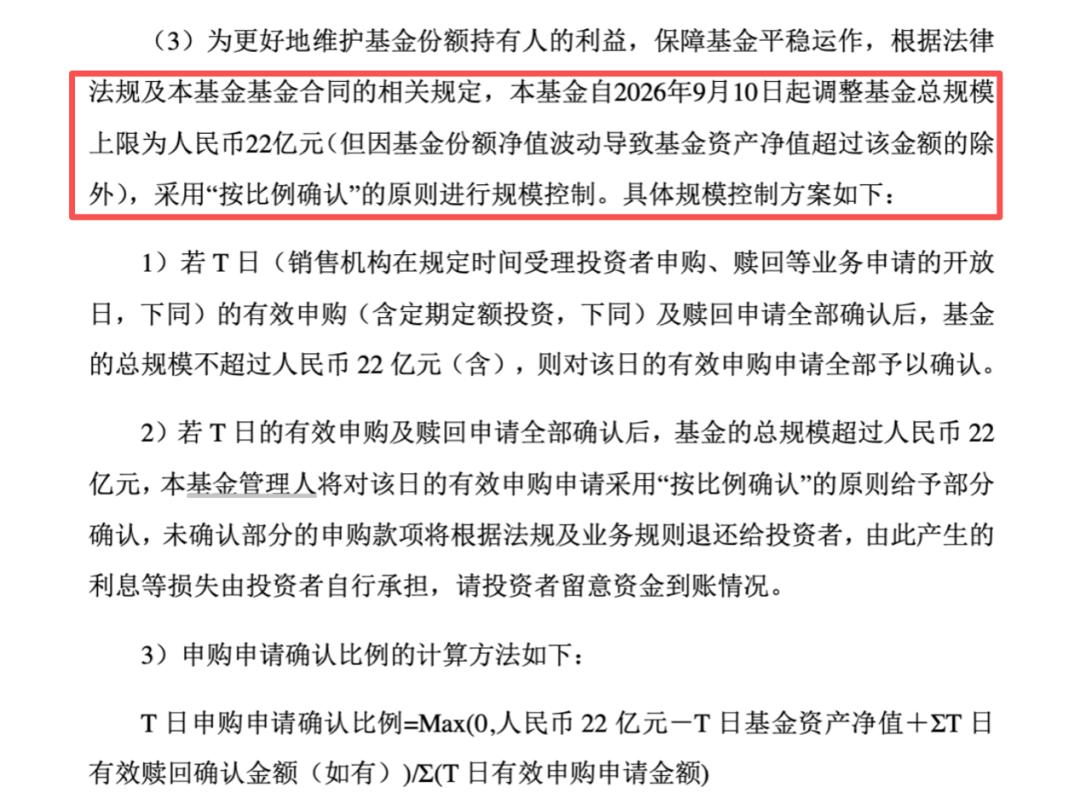
Interestingly, the fund company also announced that the upper scale limit of the fund product was 2.2 billion yuan, and the part exceeding the limit would be subject to scale control in accordance with the principle of pro-rata confirmation.
Second, some QDII funds were ridiculed by netizens as "Two-Yuan Store" due to the 2-yuan purchase limit. The Nasdaq 100 ETF connected fund under Fund Company C announced that starting from September 11, the single-day purchase limit per account was set at 2 yuan. In fact, this fund did not suddenly lower its purchase limit to 2 yuan: as a popular product, it set the purchase limit at 5 yuan on September 10.
The controversy among investors lies in that with a 2-yuan single-day purchase limit, investors can only buy about 500 yuan of the fund even if they keep making regular investments for a whole year, which makes little difference from a total ban on subscription. On investor communication platforms, there are endless teasing remarks such as "Welcome to the Two-Yuan Store", "Just stop the regular investment, is it still necessary to do this?" and "Haven't you got the QDII quota?", while some investors also said, "The insufficient quota is the fundamental problem, I will buy products from other companies."
An e-commerce staff member of a fund company said that although the phenomenon of a purchase limit as low as 2 yuan is not common, it is reasonable from the perspective of cultivating investors' regular investment habits. "Most investors who invest in cross-border funds have the habit of making regular investments. If we completely cancel the quota limit, the fund company worries that investors will terminate their regular investment plans. Even if we loosen the quota later, it may be difficult for investors who have switched to other products to come back."
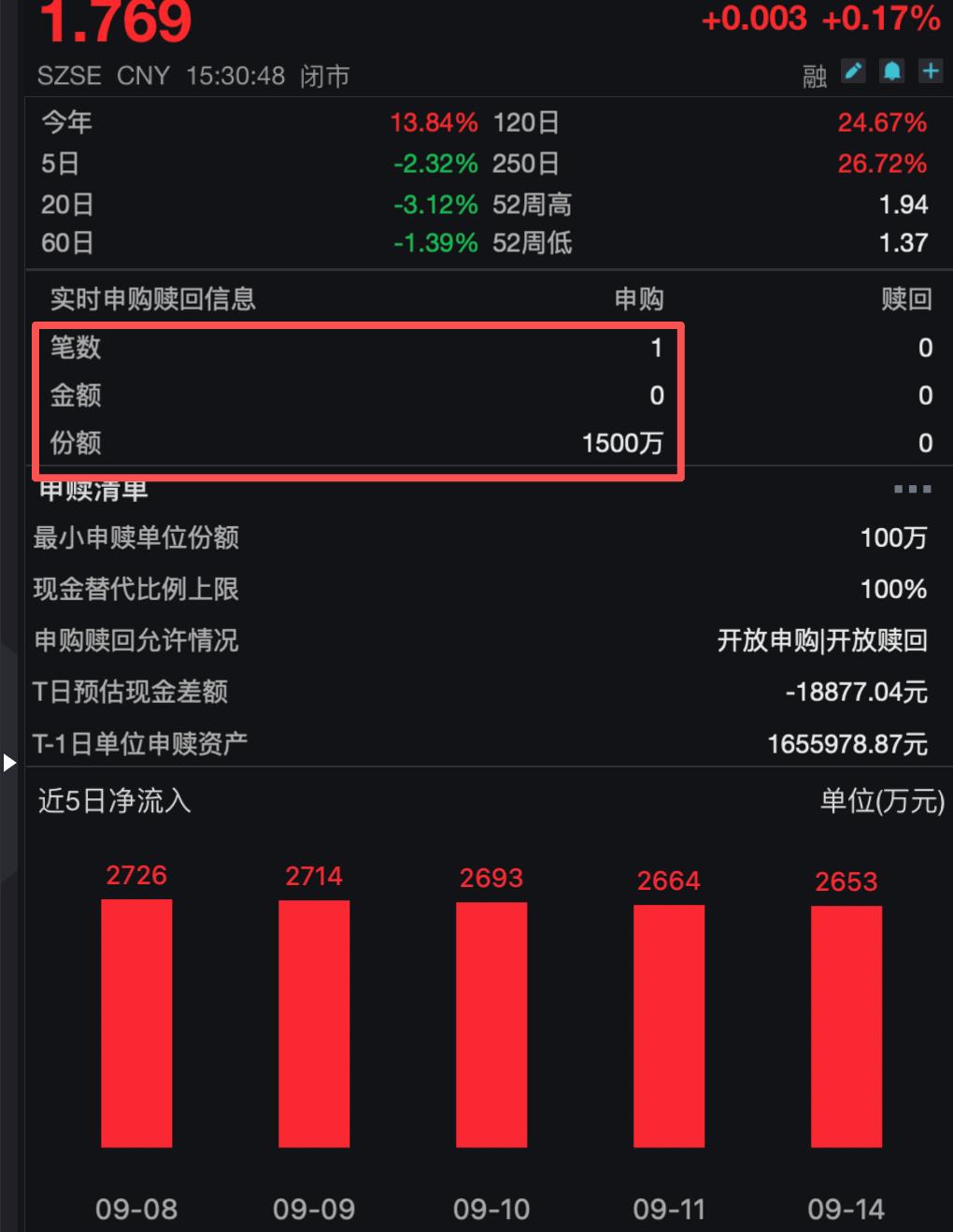
Third, the principle of "valuing fairness rather than scarcity" also leads to disputes when there is no purchase restriction. On September 15, a subscription of 15 million shares appeared on the exchange for the Nasdaq 100 ETF under Company D. Calculated at the on-exchange price of 1.769 yuan on that day, the subscription amount exceeded 30 million yuan, and there was only one large subscription order, which means it came from a single large client.
The fund is currently in the status of opening for subscription and redemption, and the fact that a single client's subscription exceeded 30 million yuan has also raised doubts among investors: "The total QDII quota is not large in the first place. Without purchase restrictions, the capital volume of retail investors cannot compete with institutional investors, and the quota will be quickly occupied by institutional capital." In the view of some investors, the result of no purchase restriction is that most of the quota is allocated to a small number of clients, which is unfair to retail investors.
QDII quota allocation becomes a "dilemma" problem for fund companies
From the "one-day trip" of purchase loosening to the "Two-Yuan Store" phenomenon, and then to the situation where large clients take up most of the quota under no purchase restriction, the problems seem to be caused by improper rhythm of purchase restriction adjustment on the surface, but actually reflect the industry-wide difficulty of QDII quota allocation.
In fact, the allocation of QDII quotas is indeed a test for fund companies. "For fund companies, there are two considerations for QDII quota resource allocation: first, the company will tilt quotas to the products it values, as 'scarce quotas should be used where they are most needed'; second, the issuance time of QDII quotas is uncertain, so fund companies also need to reserve a certain amount of quotas to deal with the high premium problem of certain individual products," a relevant person from a fund company told the reporter of China Fund News. Generally speaking, funds with larger loosened quotas are the products that the company attaches more importance to, and the growth of fund scale is controlled through the "valve" of purchase restriction.
Another person from a fund company said that generally speaking, investors who buy cross-border products do not specifically select managers, but choose products from companies that have available quotas. Given the market demand for allocation, many agency sales institutions have launched relevant functions such as "QDII Quota Link". Once a fund company suddenly loosens restrictions on a certain product, investors can receive the information quickly and make subscriptions, which makes it very easy for the product to expand its scale rapidly. "The fundamental reason lies in the scarcity of QDII quotas."
In addition, disputes over QDII quota allocation are not new. In early 2026, there was market news showing that when QDII quotas were insufficient, the regulatory authority had provided window guidance to some fund companies to release QDII quotas to public fund clients after the capital of institutions and separate accounts exited normally. At that time, many fund products suddenly raised their upper limit of single-day purchase limit.
A senior investor who has long tracked the ETF arbitrage market analyzed that under the background of scarce QDII quotas, the emergence of a single large client will easily lead to speculation that the fund company is in collusion with the large client. However, judging from the multi-day subscription situation of the above-mentioned fund products, there are also cases of small-amount subscriptions. "This incident may be an occasional case, but there are indeed cases where fund companies did not set purchase limits for individual clients before just to avoid extra trouble."
In the industry's view, quota expansion is originally a favorable move to ease the contradiction between supply and demand. However, under the background of uncertain quota issuance rhythm and imperfect allocation mechanism, fund companies have to weigh repeatedly between "opening to the public" and "controlling scale". If they lift purchase restrictions, they are worried that the quotas will be quickly snapped up; if they tighten the purchase limits, they are worried that investors' regular investment habits will be damaged; if they set no purchase restrictions, the quotas may be preempted by institutional capital.
This article is from the WeChat official account "China Fund News" (ID: chinafundnews), author: Yan Jun, published with authorization from 36Kr.