The most low-key overseas giant has quietly achieved explosive sales across the globe, with annual sales exceeding 40 billion.
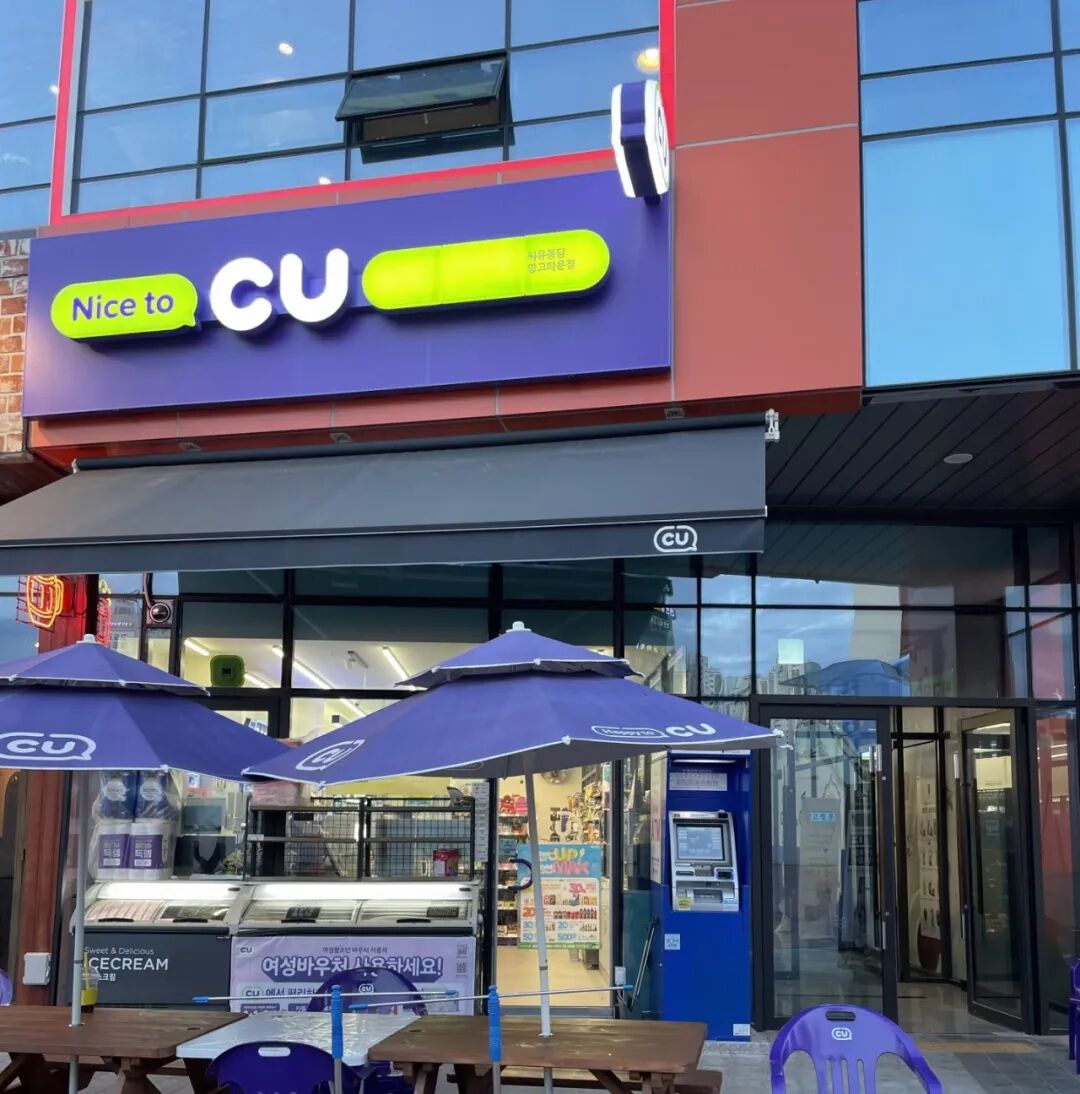
In Seoul, South Korea, convenience stores are so ubiquitous that they have almost become a commonplace sight. At the base of office buildings, on the corners of residential blocks, and at subway exits, you can always spot lit-up convenience stores one after another.
Among them, the purple signboards of CU are particularly dense: tourists walk in to grab snacks and drinks, young people buy hot food and eat it right in the store, and office workers pick up a cup of iced Americano on their way out. Convenience stores have long been integrated into every nook and cranny of urban life.
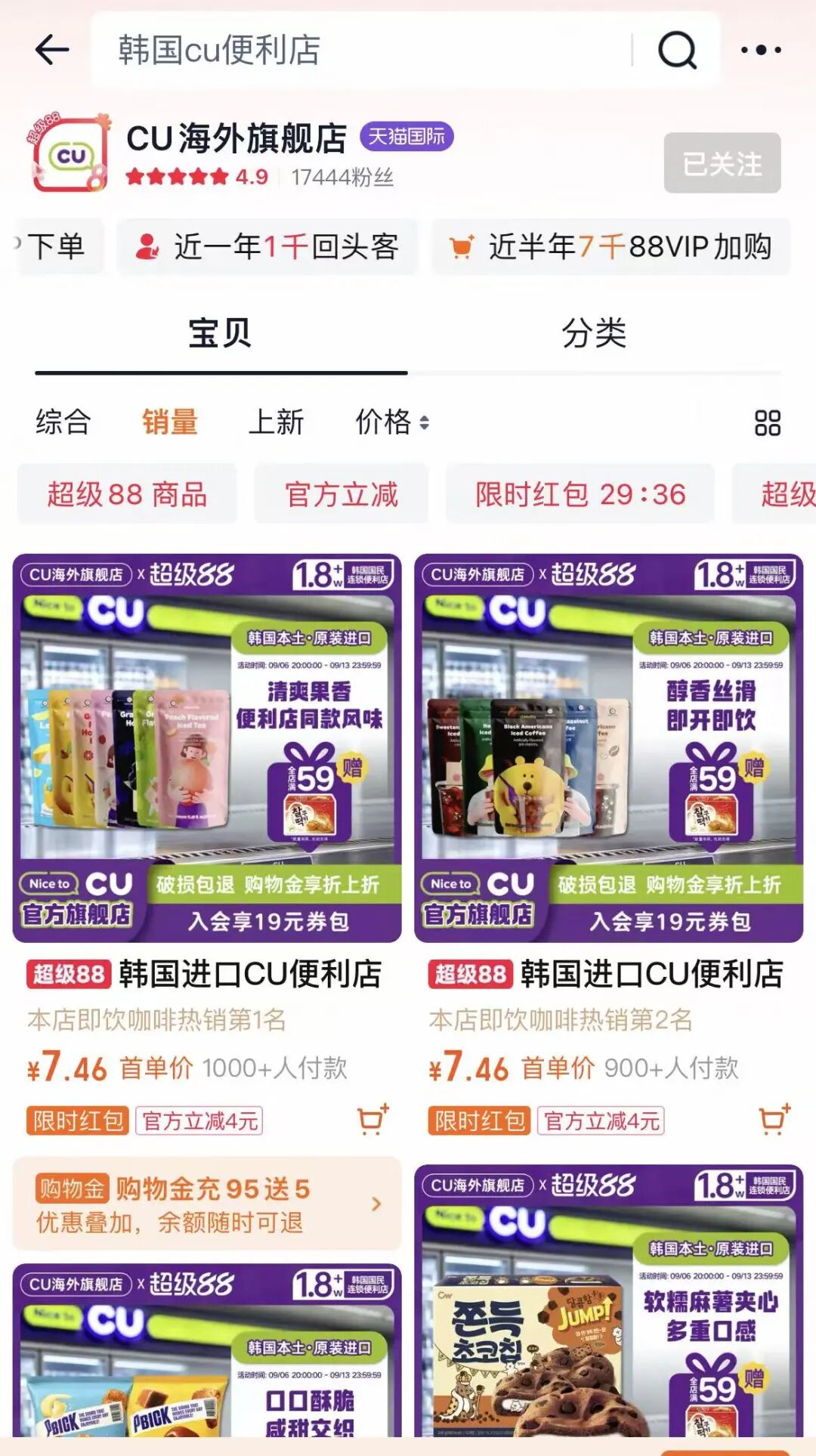
In June 2026, this South Korean local "convenience store king" that operates more than 18,000 stores across South Korea and generates annual sales of over 880 million won (about 40 billion yuan) finally stepped into the Chinese market. According to media reports, CU's first offline store in China is likely to be located in Shanghai and is currently in the preparation stage. At the same time, the "CU Overseas Flagship Store" has simultaneously launched on Tmall Global, with the first batch of products mainly focusing on Korean-style snacks, ready-to-drink coffee and meal replacement products, priced between 8 yuan and 60 yuan.
CU obviously has sufficient confidence to bet on the Chinese market. According to data disclosed by its parent company BGF Retail on the Korea Exchange, by the end of 2025, CU had 18,711 stores in South Korea, with a market share of about 35% in terms of store count, ranking first in the industry. In the 2025 fiscal year, BGF Retail's total consolidated revenue reached 9.0612 trillion won (about 47 billion yuan), a year-on-year increase of 4.2%, and its operating profit was 253.9 billion won, both hitting all-time highs.
In a mature market where the density of convenience stores is already approaching the ceiling, profits can still rise at such a speed, which is fully convincing.
At the same time, CU's arrival happens to coincide with a subtle node in China's convenience store industry. Data released by the China Chain Store & Franchise Association shows that the total number of stores of the top 100 convenience store enterprises in China reached 208,000 in 2025, a year-on-year increase of 5.6%, but the industry's expansion rate has continued to slow down. In the first half of 2026, among the 60 sample enterprises surveyed by the association, 71.7% of the enterprises saw a decline in customer footfall.
Instant retail, snack discount stores and community group buying are diverting the passenger flow of convenience stores from all directions, and the path of relying solely on store expansion to achieve growth is becoming increasingly difficult to follow.
Can a retail enterprise that has turned convenience stores into a consumer content platform in South Korea, and continuously optimized its product mix and profitability through hit private-label products and prepared food catering, replicate that business logic in the Chinese market? In a crowded market with Meiyijia, Lawson, 7-Eleven, FamilyMart and countless regional brands, can CU become a consumption entry point that Chinese consumers are willing to walk into again and again?
18,000 Stores: What Makes CU Consumers' Go-To Choice?
To understand CU, you can't just look at its financial reports. In Seoul, if you live in an ordinary apartment building in Mapo District or Gangnam, it usually takes no more than three minutes to walk from the unit door to the nearest CU store.
Behind this is a network woven by nearly 19,000 stores. Seoul has an extremely high population density, but CU's stores are also very densely distributed. In commercial areas such as Hongdae, Sinchon and Myeongdong, it is not uncommon to see two to three CU stores on one street, and they may even be separated by only a few storefronts. This density brings extreme convenience, as well as fierce internal competition.
But CU survived, and is thriving.
The first core capability of CU is to turn store density itself into a type of infrastructure. When a convenience store is so close that it can be reached within three minutes, it starts to undertake a large number of daily needs that originally do not belong to the retail sector. This physical irreplaceability is the premise of all product and marketing strategies.
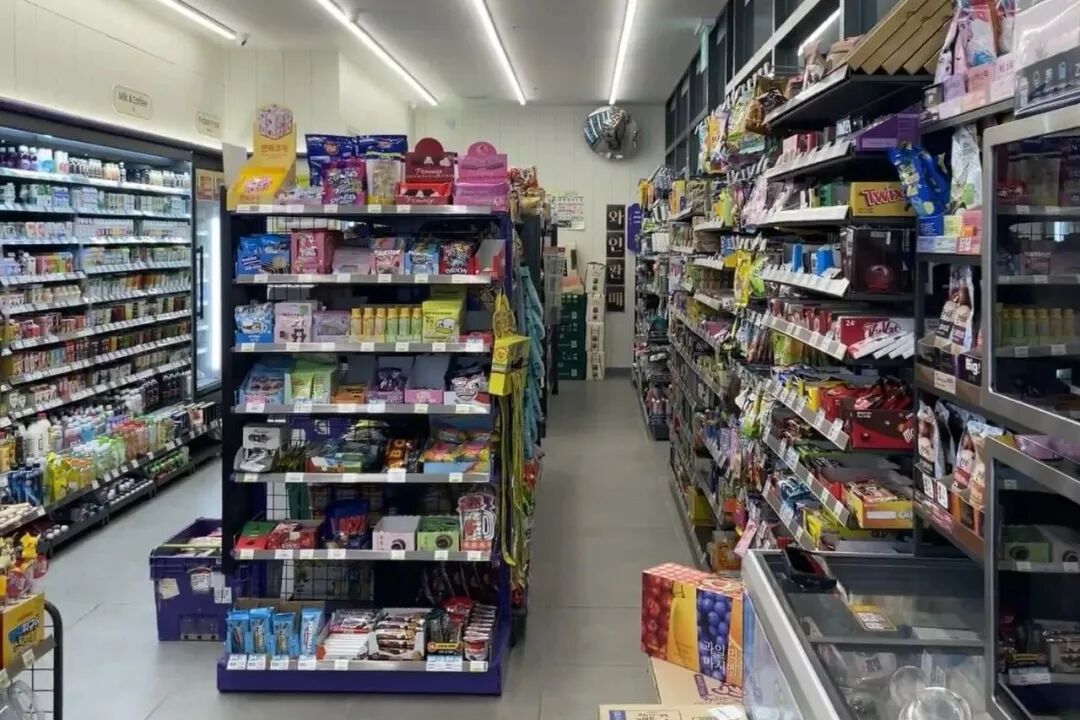
Tianxia Wangshang has visited Seoul, Busan, Jeju Island and other places for many times. The first feeling when walking into any CU convenience store is "full". The spacing between shelves is compressed to just enough for one person to turn around, but the product display is almost obsessively neat.
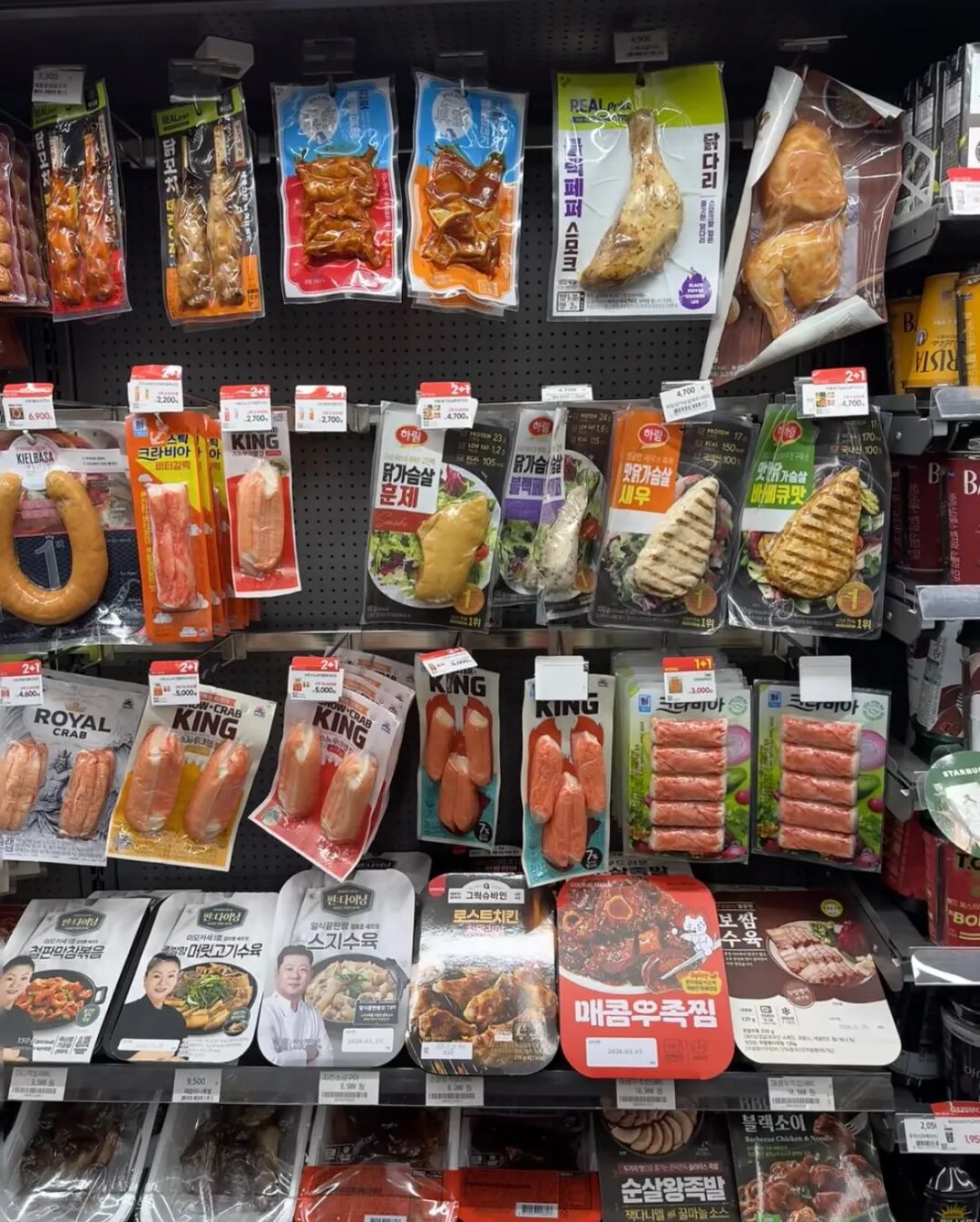
The most prominent position in the refrigerated cabinet is always reserved for the triangular rice balls, gimbap and bento of the private brand HEYROO, and the price tags usually use eye-catching red labels to mark promotion packages such as "1+1" or "2+1".
In Seoul, convenience stores meet far more meal needs than Chinese consumers can imagine. During lunch hours, long queues form at the checkout counters of CU stores near office buildings. White-collar workers skillfully pick up a box of Korean bibimbap bento and a cup of GET coffee, and complete the whole process from selection to self-heating in just a few minutes.
The second capability of CU is to stack as many life services as possible in a very small physical space.
Tianxia Wangshang once noticed a detail: a convenience store with an area of only more than ten square meters also provides functions such as utility bill payment, transit card top-up and ATM cash withdrawal. In front of the self-service instant noodle machine in the store, many young people operate it skillfully, and a bowl of hot ramen is ready in their hands two minutes later.
This machine can sell hundreds of servings of instant noodles every day during the peak tourist season, which also drives the associated consumption of drinks and snacks. This integrated model of "catering + retail + life services" is one of the core barriers CU has built in the South Korean market.
The third capability of CU is its hit product strategy.
Different from many convenience stores we know, CU is no longer a channel provider that passively waits for suppliers to deliver goods to the shelves. Taking the Yonsei Milk Cream Bread as an example, this co-branded product launched by BGF Retail and Yonsei Dairy has accumulated sales exceeding 100 million units as of April 2026.
A convenience store private brand can achieve 100 million-level sales for a single product, relying on precise capture of consumer tastes and extremely fast supply chain response. In CU's internal system, the R&D cycle of a new product is compressed to several weeks. It is first tested in some stores, quickly rolled out nationwide if the data performance is good, and quickly eliminated if the performance is not satisfactory.
This rapid trial-and-error mechanism keeps CU's shelves always full of freshness.
A retail industry analyst told Tianxia Wangshang that CU is more like a product planning company disguised as a convenience store. Its stores are only the end nerve to reach consumers. What really determines why consumers come to the store is the products on the shelves; and what determines why the shelves always stay fresh is the product R&D and supply chain system behind them.
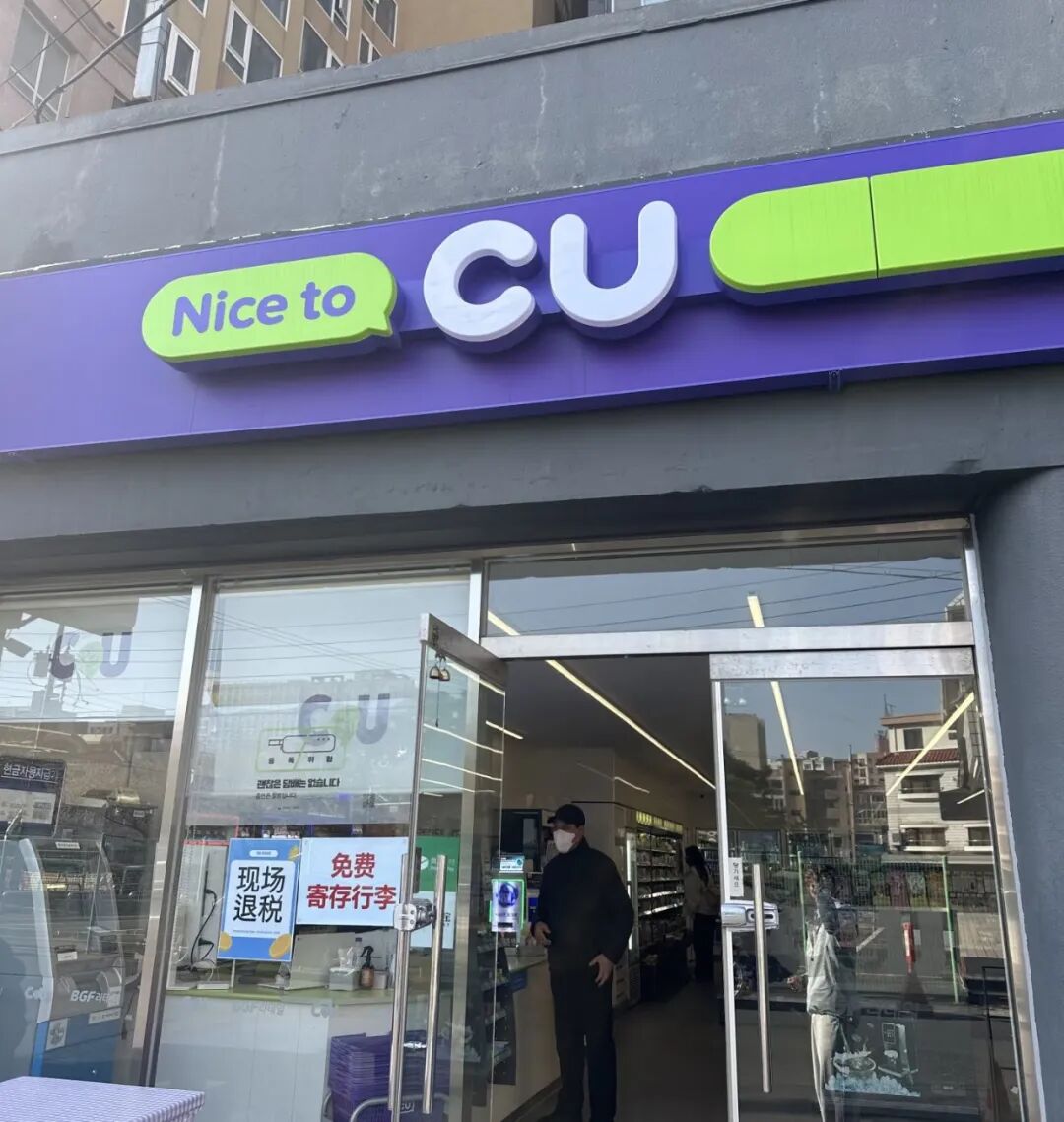
At the same time, CU also creates reasons for consumers to "make a special trip" to the store.
According to reports, CU's official app Pocket CU has millions of users, which means a huge private traffic pool in South Korea. New product launches, limited-time discounts, and member-exclusive offers are all pushed precisely through this app. The screens and posters in the store also undertake another communication function.
In South Korea, CU has successfully built a psychological perception: there is always something new here.
The aforementioned retail industry analyst believes that this is perhaps the most worthy part of CU for China's retail industry to study: what it really sells is never just convenience, but the high-frequency needs, product innovation and consumer relationships behind convenience.
From FamilyMart Agent to No.1 in South Korea: CU's Leap Forward
The story of CU started from acting as an agent for a Japanese brand.
In 1989, South Korea's Bogwang Group established a convenience store business division, and opened its first store in 1990, originally named Galleria Convenience Store. In 1994, it cooperated with Japanese convenience store brand FamilyMart to establish Bogwang FamilyMart, operating FamilyMart branded convenience stores in South Korea.
Over the next nearly 20 years, the company borrowed the brand of FamilyMart while accumulating its own logistics network, information system and fresh food supply chain in the local market. By the beginning of 2012, it had operated more than 7,000 stores in South Korea, becoming the convenience store brand with the largest number of stores in South Korea.
The real turning point came in 2012. That year, Bogwang FamilyMart terminated its licensing agreement with FamilyMart, renamed the parent company BGF Retail, and launched its own brand CU.
This move was not favored by everyone at the time. Losing the mature brand of FamilyMart meant that it had to rebuild consumer awareness from scratch.
But in hindsight, this was precisely the starting point for CU to become truly powerful.
The licensing model of Japanese convenience store brands around the world essentially collects rents through the brand, while the South Korean operator has already mastered all local operation capabilities. Stripping off the original brand not only freed CU from the burden of licensing fees, but also released its freedom in product development and store format design.
After independence, CU began to concentrate resources on private brands and fresh food systems, which was the key to later differentiating itself from GS25 and 7-Eleven.
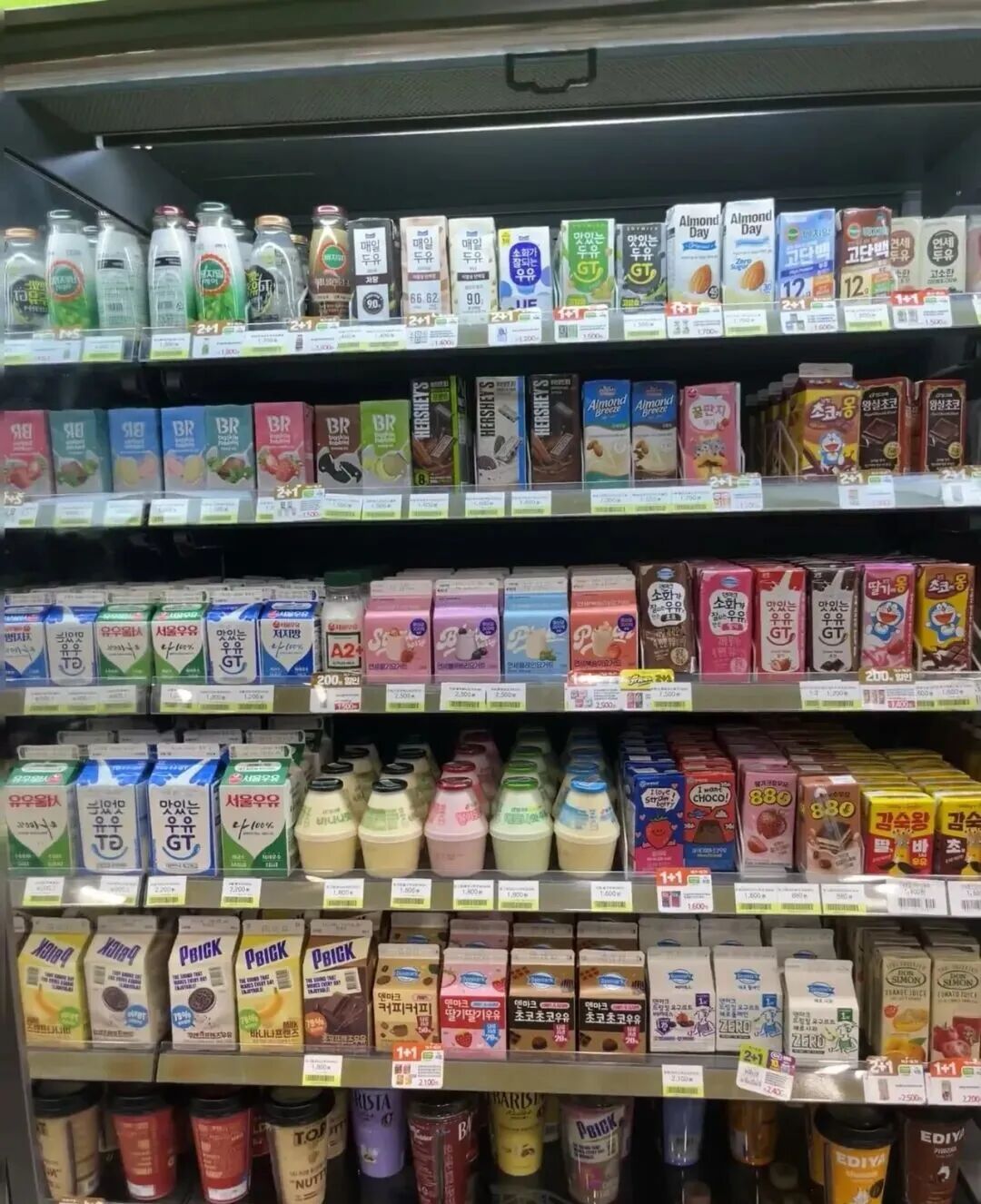
After independence, CU's development speed was staggering.
In 2015, CU launched its private label coffee GET, which is famous for its cost-effectiveness and quickly became a powerful traffic driver for stores. For convenience stores, a cup of freshly made coffee can bring in consumers who originally have no clear shopping plans, and then drive their consumption of breakfast, snacks, drinks and even lunch.
If you compare CU and 7-Eleven's competition in the South Korean market, you will find an interesting phenomenon. 7-Eleven has more than 86,000 stores worldwide and is the absolute overlord in the convenience store industry, but in the South Korean market, its number of stores is far less than that of CU and GS25.
Behind this huge gap is CU's deep integration with local South Korean consumption habits. 7-Eleven's global standardized product system appears to be somewhat slow in South Korea, a highly discerning and fast-changing market. CU's localized R&D and rapid iteration capabilities exactly meet South Korean consumers' almost greedy demand for freshness.
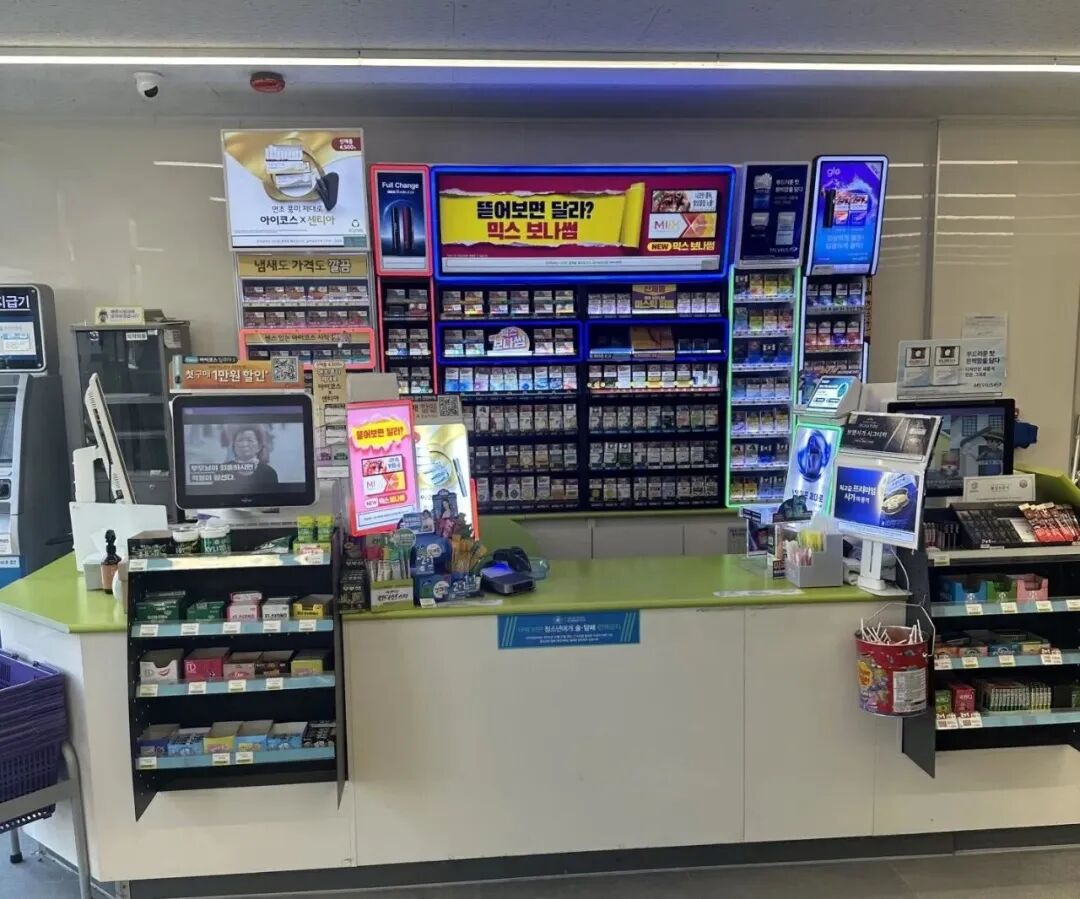
Nearly 19,000 stores provide a sufficiently large consumer sample. The product R&D center keeps exploring new demands, the logistics and fresh food system are responsible for quickly distributing products to stores, and then the stores send sales results and consumer feedback back to the headquarters. The more stores there are, the higher the test efficiency; the faster the test, the faster the product iteration.
In its performance briefing disclosed in August 2026, BGF Retail also mentioned that seasonal products such as beverages and ice cream recorded strong sales in the second quarter, the private label PBICK The Kitchen ready-to-eat food performed outstandingly, and the rising proportion of food categories all directly drove the improvement of profit margins.
Facing 7-Eleven, Meiyijia and Other Players: The Second Half of China's Convenience Store Industry
When CU entered China, it did not face a blank market waiting for overseas brands to fill.
China's convenience store industry has formed a unique competitive landscape. According to the latest data, at the end of 2025, Meiyijia ranked firmly first with 40,147 stores, followed by E-Joy and Kunlun Youhao, with Lawson operating 7,068 stores, 7-Eleven 5,565, and FamilyMart 3,226. Over the past decade, local and foreign brands have jointly developed convenience stores from a relatively novel retail format into a high-frequency consumption channel covering communities, business districts and transport hubs.
Meiyijia represents another kind of ultimate efficiency. It has scaled up its franchise system and dense network, owning more than 40,000 stores by the end of 2025, with coverage far ahead of single-city convenience store brands; Lawson, FamilyMart and 7-Eleven focus more on fresh food, standardized operation and localized products.
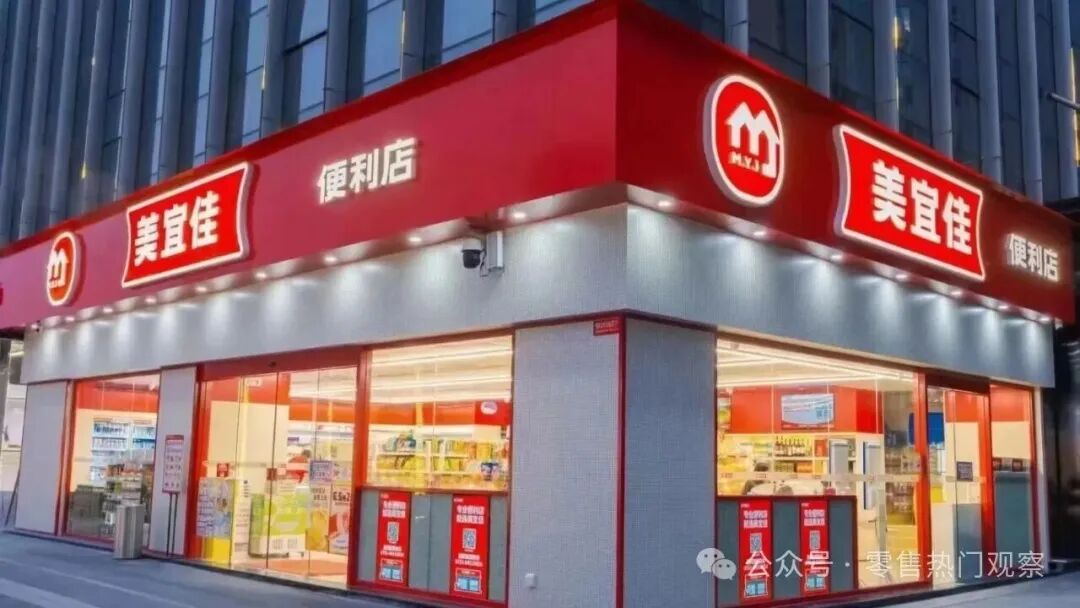
None of these models is absolutely better than the others, but they all illustrate one thing: the threshold of China's convenience store industry has shifted from store opening itself to the comprehensive competition of site selection, supply chain, franchise system and product efficiency.
This is precisely the problem that CU most needs to solve after entering China.
CU is best at frequent new product launches and hit product strategies, which work well in South Korea, but the whole chain needs to be rebuilt in China.
At present, CU's entry into China still focuses on private label products and online channels, and its first batch of products are mainly Korean characteristic food. Once it opens offline physical stores in the future, products such as rice balls, b