Why are NVIDIA and JD.com simultaneously placing their bets on Physical AI for the second half of the AI development?
Right after the start of September, a striking billboard suddenly went viral at airports across multiple regions in China — "Push AI to the Physical World", with a short and straightforward message, signed by JD Cloud.
Along with the launch of this billboard, the JDD (JD Discovery/Developer Conference) held on September 9 also clearly positioned its theme as "Physical AI".
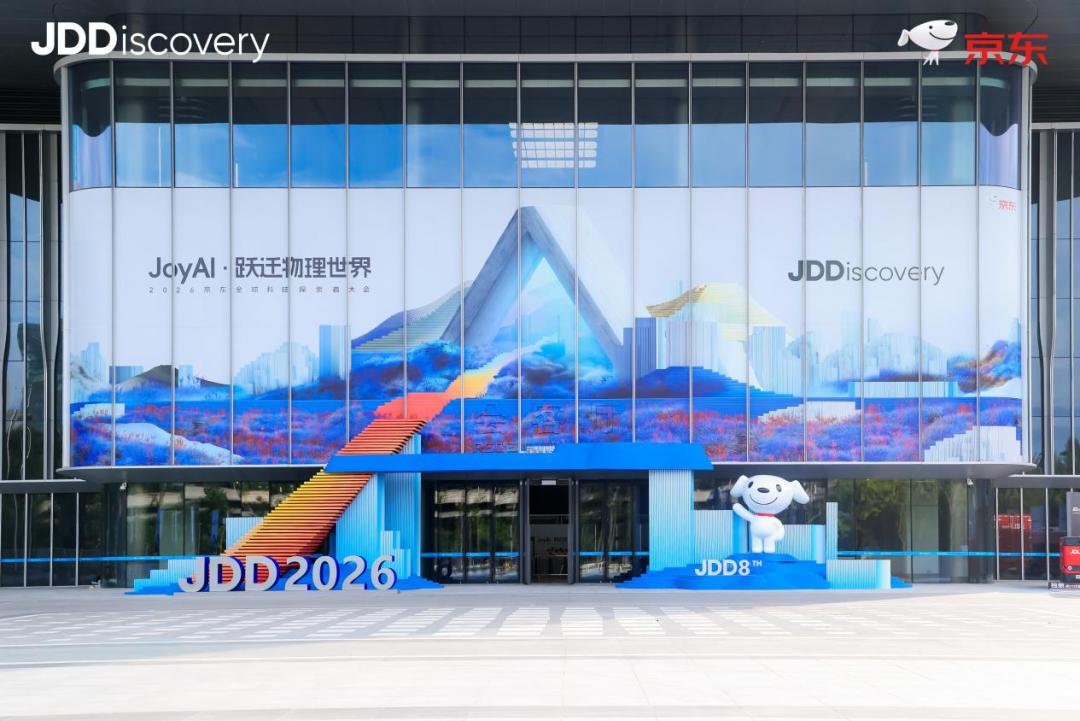
"Physical AI" is undoubtedly the most critical hotspot in the Chinese-language context over the past half year, and the physical world is widely regarded as the next stop for AI.
After two years of technological carnival, the industry has been frantically competing for inference speed, long context, and even which chatbot is more human-like. But at this moment, a very realistic, even somewhat harsh issue has been put on the table: How can these tokens that consume astronomical amounts of computing power, as well as the massive traffic accumulated on the C-end, be transformed into real commercial value?
From the perspective of an industry observer, this shift reflects two core propositions: Why must AI move out of the digital world? And why are enterprises like JD seizing this high ground?
01
When AI Starts to Leave the Chat Box
In the past few years of AI evolution, it has essentially been chasing higher performance scores in the virtual digital world. However, the diminishing marginal effect of technological iteration and high operating costs have forced the entire industry to face reality directly: how much work can these capabilities ultimately complete, and how much actual value can they create?
Agent is the most obvious signal of this trend.
In the past, Copilot mainly participated in people's work processes, helping programmers write code, helping sales sort out materials, and helping finance analyze data; Agent has begun to take over a complete task further, reading enterprise data, calling different tools, and writing the results back to the business system. A study released by OpenAI in June this year summarized this change as the basic unit of knowledge work is shifting from single interaction to "delegable long-term tasks".
The way enterprises measure AI has also changed accordingly. If Token measures how much intelligence the model produces, and Task measures how much work AI can undertake, what enterprises ultimately need to see is still cost reduction, efficiency improvement, and business closed loop, that is, Result.
When the general capabilities of the underlying large models are gradually leveled, "who has larger parameters" no longer has an absolute moat. The battlefield of AI competition will inevitably shift to "who can deeply access industrial processes and solve specific problems".
This is also the background why JD pushed "Physical AI" to the core position at this year's JDD.
JD's judgment is that, AI competition is shifting from "parameter race" to "productivity race". At JDD, JD integrated cloud, data, models, terminals, scenarios and supply chain into the same system, hoping to further bring AI into real scenarios such as retail, logistics, industry, healthcare and households.
Compared with the industry's widespread vague use of "Physical AI" to generally refer to robots, the logic JD wants to discuss is obviously much broader.
Robot is a typical form of AI acting directly on the real world, but more extensive changes have already taken place quietly in different industries: retail AI ultimately needs to affect transactions and fulfillment, logistics AI starts to participate in warehousing and distribution, industrial AI enters the production process, and robots further convert the model's judgments into physical actions. AI is starting from producing information, and further participating in the production and service processes of the real world.
This judgment is also becoming the underlying consensus of the global AI industry. This year, NVIDIA has continuously strengthened its layout of Physical AI, from the Cosmos world model, Isaac simulation framework to the GR00T robot model, and cooperated with giants such as ABB, FANUC and Figure to promote technology into electronic assembly and industrial automation scenarios.
Physical AI is extending from a technical branch in the robotics field to the only main track for AI to cut into the real production system and realize productivity value.
02
Why Is It Harder for AI to Enter the Physical World?
The rapid progress of large models in the past few years is largely based on the massive digital content accumulated by the Internet. Web pages, books, pictures, videos and codes can be continuously used for training; after the model is trained, it can be quickly deployed to different products and users through APIs.
But when it comes to Physical AI, the Scaling Law begins to encounter the famous "Moravec's Paradox" — For AI, abstract logical reasoning has become easier, but grasping an object and identifying a tiny obstacle in the complex real physical world is extremely difficult.
When an AI enters a warehouse, it needs to know where the goods are, how the inventory changes, and how different devices cooperate; when it enters a factory, it needs to understand materials, machines and production processes; when it enters a household, it needs to adapt to different spaces and hardware; when it is integrated into a robot, it further involves movement, force, environmental feedback, and differences between different bodies.
This is also why the development of Physical AI can hardly simply copy the Scaling path of large models in the past few years. NVIDIA once summarized the core problem faced by robot development as "data gap": the Internet provides rich pre-training data for large language models, but the robot data in the real world is limited in quantity, expensive to collect, and a large number of extreme scenarios are difficult to be covered by real collection.
Specific to industrial implementation, the problems that Physical AI needs to solve can be further summarized into three layers: whether there is enough data for learning, whether there are enough scenarios for verification, and whether it can be scaled after successful verification.
This exactly corresponds to the logic JD put forward at JDD: Data enables AI to evolve, scenarios enable AI to be verified, and supply chain enables AI to be scaled.
The first priority is data.
Data in the digital world mainly records the knowledge that humans have expressed. Physical AI needs to further understand how people and objects move, how actions change the environment, and how tasks are completed in real space. The production cost of this type of data is also higher. A piece of web text can be directly read by the model, but a robot task may involve different modalities such as cameras, sensors, motion trajectories, force feedback, and also need to go through collection, labeling, training and real environment verification.
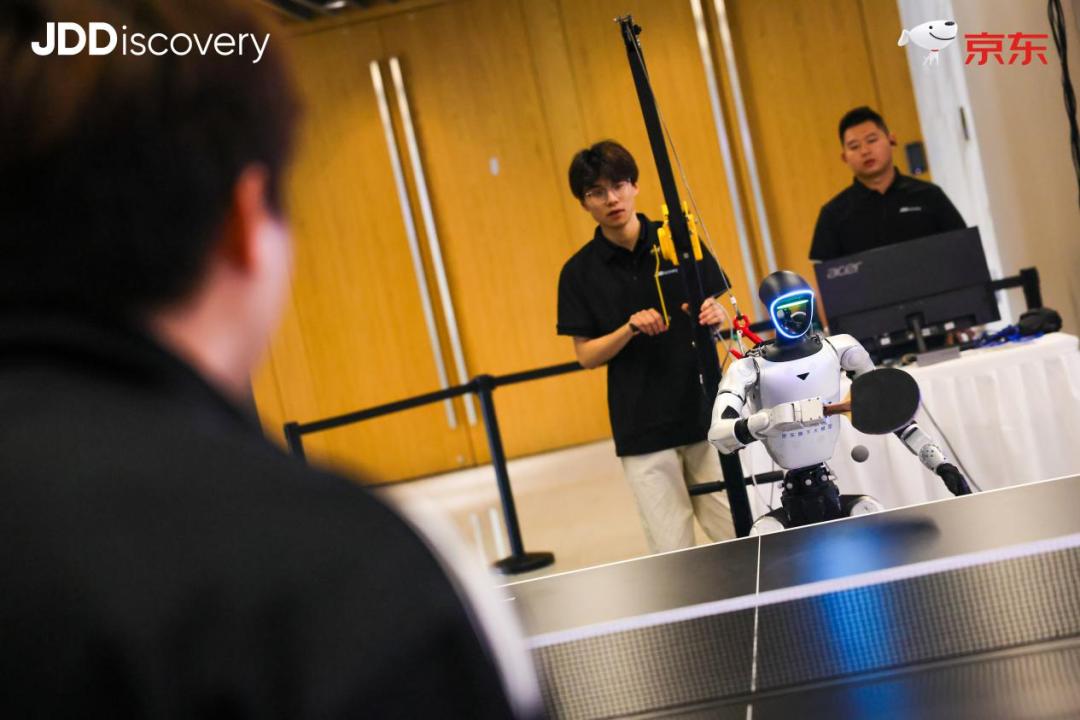
JD chooses to extend its data infrastructure further to the real world. At present, its embodied data system has covered the full link of "collection, storage, labeling, training, evaluation, simulation and testing", and plans to accumulate 10 million hours of real-scene video data within two years. The data source has also expanded from robot body data to force tactile data, simulation data and human first-person perspective operation videos.
Apart from data, the second barrier is scenario.
Physical AI ultimately faces a continuously changing real environment with an extremely low fault tolerance rate. A capability that works in Benchmark or laboratory does not mean that it is still effective after entering warehouses, factories and households.
This also leads to the fundamental difference between Physical AI and general digital models: in digital AI, the model usually completes training first and then is deployed to scenarios such as search and office; while in Physical AI, the relationship between scenarios and models is getting deeper, and the scenario itself is part of the continuous iteration of AI capabilities.
Real business generates data, data goes into model training, the model re-enters the business to perform tasks, and the execution results continue to form new feedback — thus a continuously circulating flywheel is formed between data, models and scenarios.
From this perspective, the business that JD has accumulated in retail, logistics, industry, healthcare and households has a unique value in the AI era. Taking the industrial scenario as an example, JD disclosed that its industrial large model JoyIndustrial has accumulated more than 1 billion calls, and its applications have further deepened from industrial knowledge understanding to Agent task planning, tool call and enterprise business system execution, and the execution results are fed back to the system again.
Scenario is not only the place where AI capabilities are finally applied, but also the physical closed loop where AI obtains real feedback and completes self-evolution.
The third barrier is scaling.
There is still a long engineering and industrial chain distance between completing a task in the laboratory and allowing a large number of devices to run stably for a long time in different environments. After AI enters the real world, model deployment is only one part of the process. Hardware production, components, channels, logistics, installation, maintenance and after-sales will all affect whether a commercial closed loop can be finally formed.
Therefore, among the six elements of JD's "cloud, data, model, terminal, scenario and chain", the final "chain" is particularly noteworthy.
The model solves whether a capability can be realized, the scenario tests whether it can run in the real environment, and the supply chain determines whether this capability can enter the real world on a large enough scale.
This also forms a more complete set of industrial barriers for Physical AI: Data determines how AI understands the reality, scenario determines how AI adapts to the reality, and supply chain determines how AI enters the reality on a large scale.
When the resources required for competition change, the original AI advantage ranking among large technology companies may also change accordingly.
03
Physical AI May Redefine the AI Advantages of Large Technology Companies
As Physical AI brings competitive variables into the real world, the physical infrastructure accumulated by JD over the past 20+ years has gained a new interpretation space.
Compared with many Internet platforms that mainly run online, JD's business has long penetrated into the actual circulation process of goods and services. From procurement, inventory, warehousing to distribution and after-sales, to industrial procurement, health services, home appliances and smart hardware, a large number of businesses need to connect online systems and offline fulfillment at the same time.
In the past, these capabilities mainly served e-commerce and supply chain efficiency. After entering the Physical AI stage, they may also become the foundation for AI to acquire data, train and verify capabilities, and finally achieve large-scale deployment.
The core of JD's "Super AI Supply Chain" proposed at JDD is to deeply connect this physical network with AI. From the underlying cloud, data and models, to the intermediate Agent, development platform and simulation tools, then connect to terminals such as robots, home appliances, medical devices and unmanned vehicles, and finally enter the actual businesses such as retail, logistics, industry, healthcare and households.
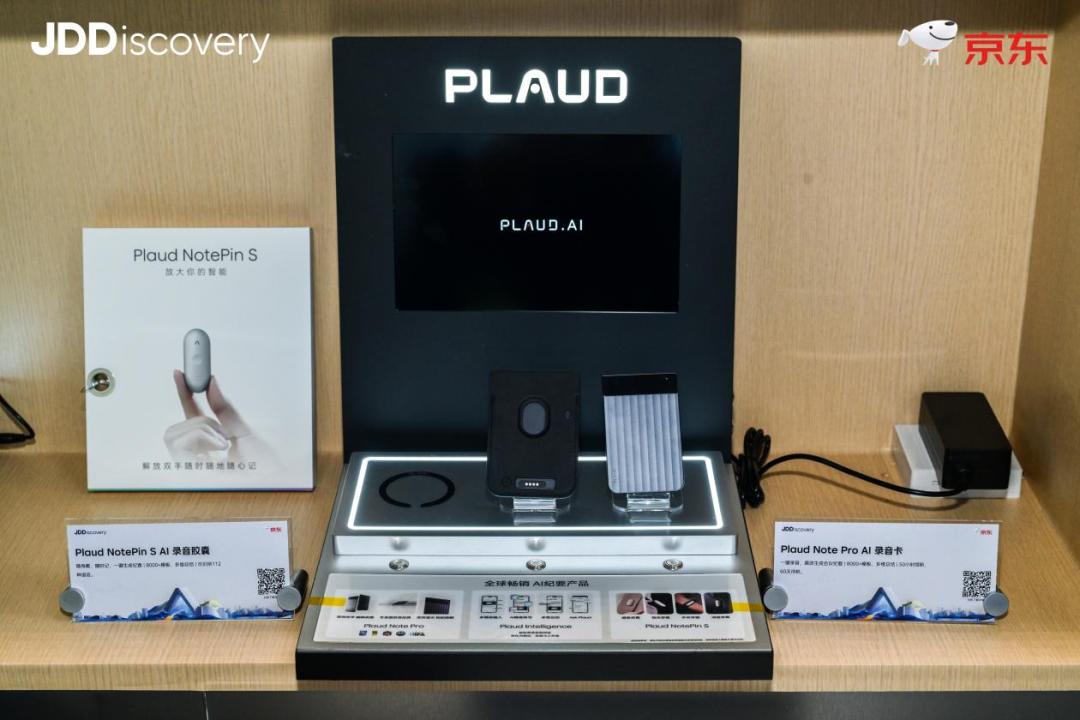
The robotics industry can more directly reflect the implementation mode of this "Super AI Supply Chain".
JD's current positioning is not limited to developing a certain type of robot product. According to the plan disclosed at this JDD, JD hopes to enter multiple links at the same time, including embodied data collection, robot industrial base, core component supply, retail channels and maintenance services.
In the next five years, JD plans to deploy more than 80 RoboBase; on the supply chain side, it hopes to reduce the BOM cost of robot bodies by more than 50% through large-scale procurement, C2M customization and supply chain collaboration; on the sales and service side, it proposes to help 100 robot brands achieve sales revenue of more than 1 billion yuan in the next three years, and build a robot after-sales service network covering more than 100 countries and regions around the world.
Behind these layouts, there are actually corresponding to the undetermined problems in the future of the Physical AI industry: if robots eventually become a large enough intelligent terminal category, how will the industrial value be distributed?
After the PC industry matures, value is scattered in different links such as chips, operating systems, complete machines, software and channels; smartphones have further formed a complete division of labor of chips, operating systems, terminal brands, application ecology and supply chain. If robots really enter factories, shopping malls and households, they also need models, data, core components, complete machines, channels, maintenance and service systems.
At present, this industry is still in its early stage, and the final industrial pattern is far from formed. But for JD, the significance of participating in Physical AI therefore goes beyond launching a certain robot or a certain model.
What it is trying to answer is: When a large number of AI terminals really enter the real world, what position can a platform with supply chain and physical operation network occupy in it?
This is also the entry point to understand JD's proposal of "the world's largest physical world operation center".
JD has long been operating the flow of goods in the real world. After an order is generated, it is connected to procurement, inventory, warehousing, transportation, distribution and after-sales, and the digital system ultimately needs to complete fulfillment in the real world.
Physical AI makes it possible for these capabilities to extend further. What needs to be organized on a large scale in the future may also include how AI obtains real data, enters different terminals, completes tasks in specific scenarios, and runs continuously through the supply chain and service system.
The competition dimension of the second half of AI is being redefined by the physical world, and this is exactly the battlefield where JD has the deepest accumulation and is best at.