Former President of Elon Musk's Neuralink: Brain-Computer Interface Is Not a "Moonshot Project"
Brain-Computer Interface (BCI) is often described as a distant future scenario: typing with your mind, holding conversations with AI, or even uploading consciousness. But Max Hodak chose to start with a more specific problem: restoring sight to people who are blind.
Max Hodak is the founder and CEO of Science Corporation, and also served as the co-founder and President of Neuralink. From Neuralink to Science, he has participated in the two most high-profile entrepreneurial practices in the BCI field over the past decade.
In Hodak's view, the brain is the most vital part of human beings. Visual, auditory, balance and motor signals pass through tiny neural connections, allowing us to perceive and reshape the world.
He regards the brain, and even the entire universe, as a computer.
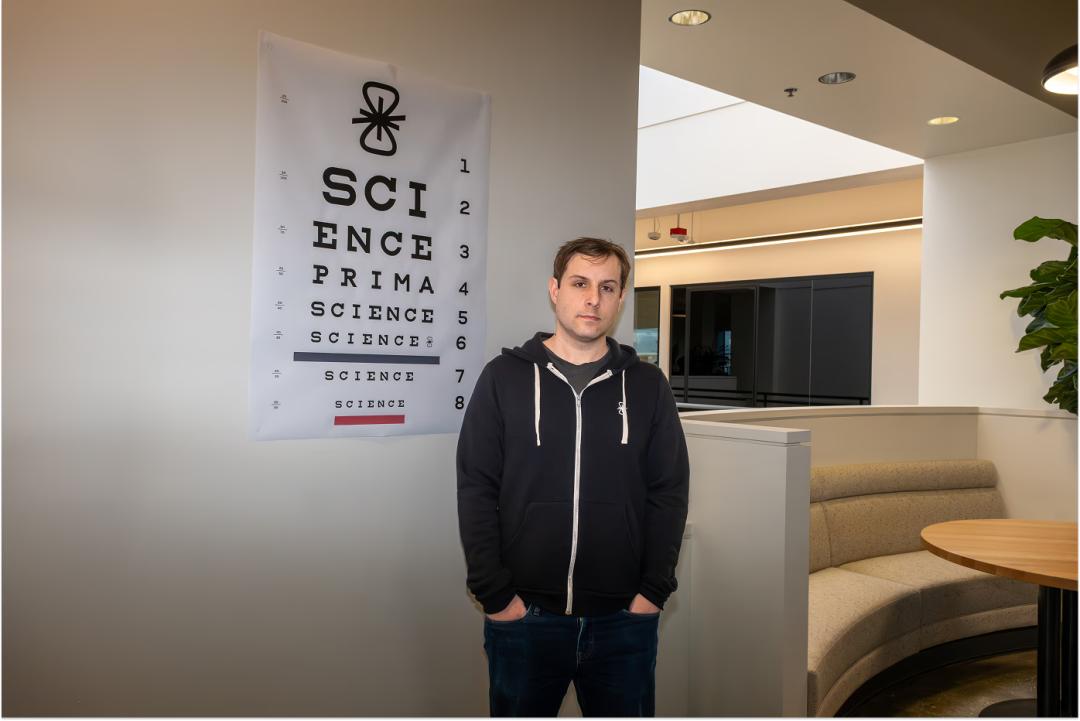
In this interview, Hodak talks about how Science is turning the grand BCI vision into products step by step. Prima cannot yet fully restore people's sight, and it still has limitations such as black-and-white display and a narrow field of view, but it has already proved one thing: if we regard the brain as a computer, there may be another solution to the pending problems.
BCI is always regarded as a "moon shot project". But in Hodak's view, humans have already landed on the moon and left footprints. Many seemingly distant things are not as unreachable as people imagine.
Restore vision first, then understand the brain; develop products that can truly help people first, and then talk about physical upgrades and how to extend human experience.
The value of this conversation goes far beyond a retinal chip. It provides an entrepreneurial mindset: the long-term vision must be grand enough, but the first step must solve a real problem.
ZhenFund is also looking for and supporting entrepreneurs with long-term vision who start from specific problems. If you are also working on such a problem, welcome to talk to us.
This issue is sourced from No Priors, and the full Chinese translation by ZhenFund is as follows:
01
The mission is to improve the human condition
Q: For people who are not familiar with Science, can you first introduce why you left Neuralink to found this company? What is Science's mission?
Max Hodak: We are a medical device company. If lowercase "science" means using a unique understanding of the universe to improve the human condition, then uppercase "Science" follows exactly this mission.
More specifically, we use our understanding of how the brain works to carry out rare, highly intuitive interventions in the medical field. Our core product is the Prima retinal prosthesis.
You can think of it as the "cochlear implant" for the eyes.
Cochlear implant is one of the most influential technologies in medical history. If you have ever watched the video of a newborn turning on the cochlear implant for the first time, the impact is extremely strong. Our goal is to create something similar.
Q: It is a chip, right? And it needs to be used with a pair of glasses?
Max Hodak: Exactly. It is a very small chip implanted under the retina, which is mainly suitable for patients who have lost their sight due to photoreceptor cell loss.
Patients will wear a pair of glasses with a laser projector. The glasses first capture images, then project the images onto the chip under the retina. The chip converts light into electrical signals, stimulates the still healthy nerve cells in the retina, bypasses the failed rod cells and cone cells, and sends visual information back to the brain.
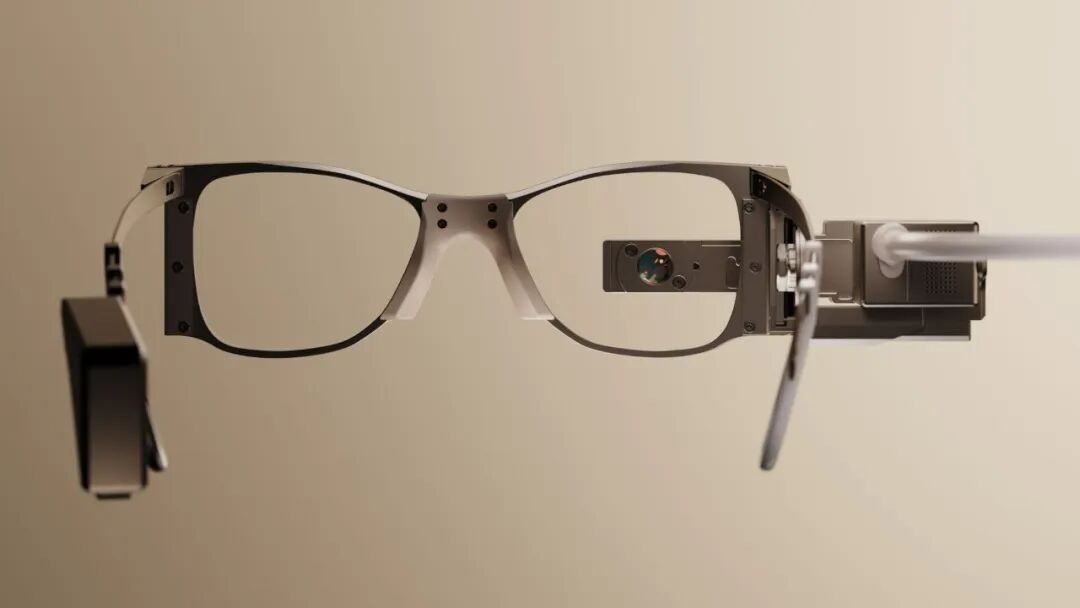
Our current clinical trials mainly target geographic atrophy caused by advanced dry age-related macular degeneration (AMD). Next, we will also conduct research on other retinal diseases such as retinitis pigmentosa and Stargardt disease.
02
Retina as our first bet
Q: You initially wanted to develop invasive brain chips, why did you set your first step on this product form later?
Max Hodak: When we founded the company, we had several directions, one of which was biohybrid neural interfaces. Instead of inserting metal electrodes into the brain or directly performing genetic modification on the brain, we transplant living neurons to let them form new biological connections in the brain.
This is a huge research project, very exciting, but the cycle is too long, and the company also needs a product line that is closer to commercialization.
So we asked ourselves: with our existing resources and the technical state of this field in early 2021, what is the most valuable thing we can do?
Our judgment is to help blind people restore their sight.
If you want to restore vision, you must first understand how visual signals enter the brain.
What exactly is vision in the brain? We can start with the retina, which is the starting point of visual signals entering the nervous system. We can also consider stimulating the lateral geniculate nucleus in the thalamus, which is an important transfer station after the optic nerve enters the brain. Further back is the primary visual cortex (V1) located at the back of the brain. V1 is at the back of the brain and has about 500 million cells.
So if you want to restore vision, there are three paths to choose from: through the retina, through the thalamus, or through V1. If the patient still has an intact optic nerve, we prefer to start with the retina.
Next, we need to choose which type of cells to stimulate and what method to use for stimulation.
In the early stage, we explored various possibilities, including gene therapy, electrical stimulators and ultrasound solutions. Finally, we independently developed an advanced retinal gene therapy, which is expected to enter human trials next year.
We are also searching for the most advanced technology in the field of retinal electrical stimulation around the world. At the end of 2022, we found that a French company called Pixium Vision was far ahead in this direction. Its technology was first developed by the Daniel Palanker team at Stanford, and later licensed to this French company, which was conducting clinical trials at that time.
We spent a few years getting to know this company and decided to acquire it. We saw something that others didn't see at that time.
This transaction turned out to be very successful.
03
BCI is not a "moon shot project"
Q: Can you talk about the CE certification and regulatory approval you recently obtained?
Max Hodak: After the acquisition, we spent about two years bringing Prima to market. In July this year, Prima just obtained marketing authorization in Europe. This is a very important milestone, and the first batch of sales will start in the next few weeks.
Q: That's amazing. Most people think of Brain-Computer Interface (BCI) and may consider it a "moon shot project" that will take maybe ten years to see if it can succeed.
Max Hodak: People forget that the "moon shot" was a success.
We have already been to the moon and left footprints. But in Silicon Valley, the term "moon shot" is often used to refer to things with extremely low success rates that are hard to deliver, as if that justifies burning a large sum of investors' money without guilt.
But the original moon landing was actually accomplished. I think the success rate of "moon shot projects" in history is higher than people think.
The most important point is that we want to build a real, viable business, and Prima is the starting point for that.
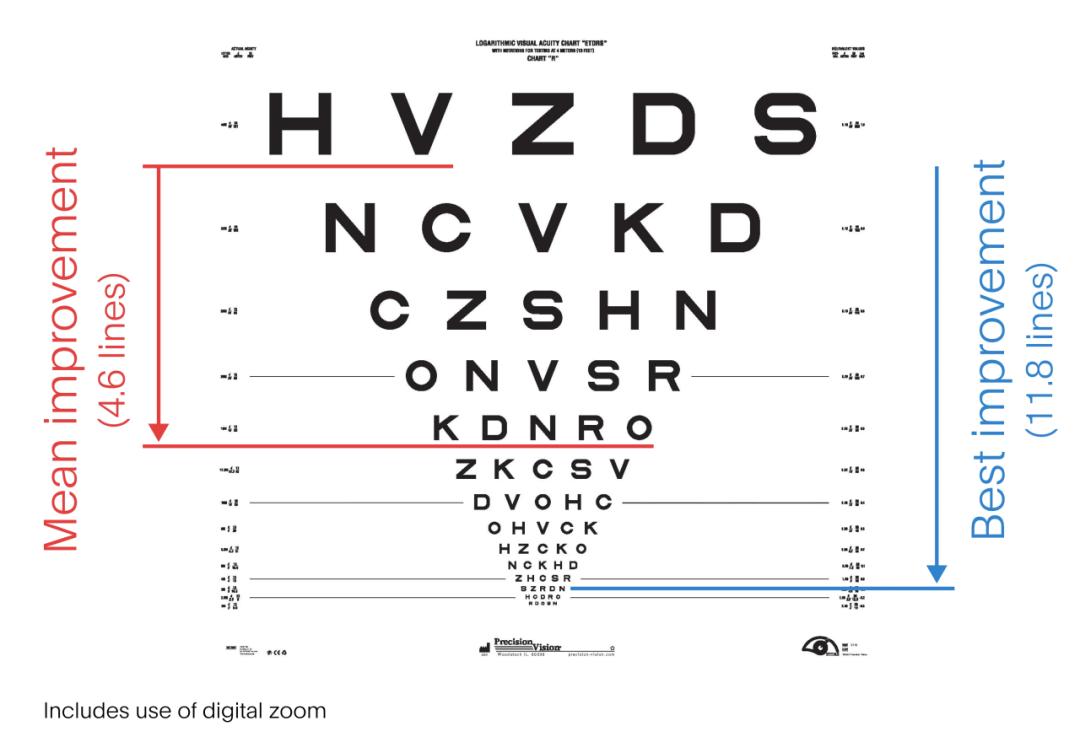
When patients use Prima to read letters, their recognition ability is significantly improved
04
The minimal combination that drives medical transformation
When you choose the signal path, product form and indications, how do you consider the time cycle, engineering cost and risk? Are you looking for a direction that is large enough, useful enough, and can be delivered within a certain period of time?
Max Hodak: Our pipeline has three parts. The first is vision restoration, the second is biohybrid neural interfaces, and the third is our perfusion program Vessel.
If these three things can succeed on a 10-15 year timeline, they are the minimal combination we believe is enough to drive significant changes in medicine.
In the past, people spent a lot of time and money looking for drugs to restore vision or hearing, stop the progression of Parkinson's disease, or help paralyzed patients move again. But it is very difficult to first understand the details of biology and molecular level, and then develop drugs based on that.
Frankly speaking, humans are not good at this.
On the contrary, if you regard the brain as a computer, many problems are easier to solve through engineering. In medicine, there are few treatments that can produce immediate changes in patients as soon as they are turned on, like cochlear implants or deep brain stimulation.
You can implant electrodes into the motor cortex of a quadriplegic patient, and he may be able to play video games an hour later. This rarely happens in most drug therapies.
Q: Small molecule drugs are more like random walking and screening in nature.
Max Hodak: Small molecule drugs are particularly difficult. You can also develop some highly engineered, patient-specific CAR-T therapies, but the result may also trigger a severe immune reaction. In contrast, if you put electrodes in the primary motor cortex, the patient will most likely be able to use a computer an hour later.
Drug development may take ten years, and by the time the clinical trial is over, you will know the result like turning over a card, only to find that it says "No". Once it fails, it is very difficult to move forward.
But on the path of neural devices, we know clearly how to adjust next and how to make the product better.
The current retinal prosthesis is a great proof of concept for us. No one has ever restored shaped vision in the mind of blind patients in this way before.
Of course, its field of view is still very small now, like looking through a straw, and it only presents black and white. Next, we will add grayscale and layers to let patients distinguish red and green, while blue will be a bit more difficult.

This is a route that allows continuous engineering iteration, and the products will get better and better from generation to generation.
Q: Can you talk about the situation in clinical trials? Is the difference between different patients large? What is the current upper limit?
Max Hodak: The most important thing in clinical trials is to prove that this kind of success is achievable.
We have seen patients doing Sudoku and crossword puzzles, and some patients are reading books. I have talked to both patients and surgeons. These videos are so good that they feel almost unreal.
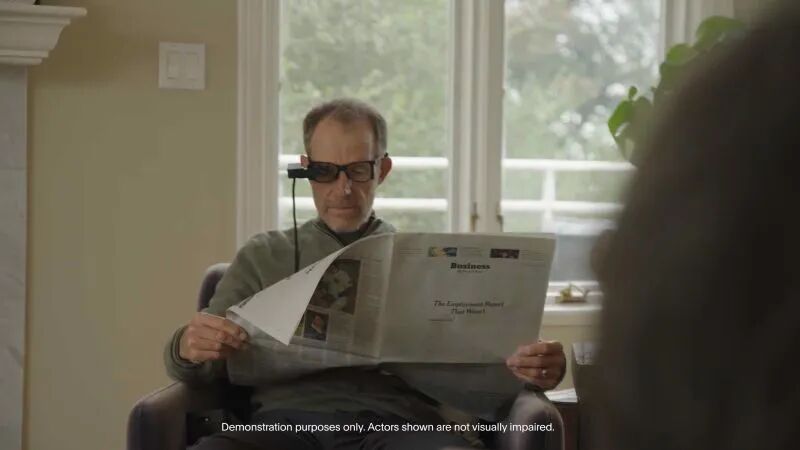
Q: What is the reaction of clinicians when they see these results? Will the people who cooperate with you at the beginning agree with your statement that "the brain is a computer"? Will they think this path has a higher probability of success?
Max Hodak: If you want to make people angry, you can go online and say "the brain is a computer". As soon as you say that, you are already in a defensive position.
05
The brain is a computer
Q: Why don't people like the statement that "the brain is a computer"?
Max Hodak: I don't know. According to my understanding of the world, the brain is clearly and truly a computer. I even regard the entire universe as a computer. You can arrange matter in a certain way and let it evolve over time to solve a certain computational problem. The brain works in exactly this way.
Q: This is much broader than my original definition of a computer.
Max Hodak: Exactly. Transistors are nothing special. We usually understand computers in an idealized way, such as Turing machine, which is an abstract computational model.
I define computation as a system transitioning from one state to another according to certain rules, and these state transitions are meaningful.
This view is counterintuitive on several levels. First of all, BCI is not just about decoding motor intentions from the brain to control cursors, keyboards or robotic arms. Secondly, is a retinal prosthesis a BCI? That's also a question of definition.
If you think it is, you will open up a new way of understanding: many medical problems can potentially be solved through BCI, it's just that people haven't thought about it this way in the past.
It's not that no one is interested in this direction at all, but our approach is different, and our culture is different from many traditional biotech companies. American biotech has always had a certain East Coast cultural difference. We are more like a Silicon Valley tech company: we see many traditional biological challenges as problems that can be solved with devices and engineering.
That's why we mainly raise funds from tech investors. During our Series A, the only biotech investor I actively approached was Bob Nelsen (co-founder of ARCH Venture Partners, a top investor in the biotech field).
Q: When you introduce BCI products, you often place them on a spectrum. Can you talk about what devices and paths people are working on in the BCI field now?
Max Hodak: I think BCI is a category, just like pharmaceuticals is a category. Sometimes when I talk to investors, they say they have already invested in a BCI project. I will ask back: "Would you say you have covered the entire pharmaceutical industry just because you invested in one drug project?"
Of course not. Pharmaceuticals include small molecule drugs, gene therapies, CAR-T, and completely different disease areas. The same is true for BCI. There are many different paths that cannot be confused. Even if everyone is working on neurodegenerative diseases, there can be completely different technical assumptions: some work on protein degraders, some work on gene therapies, and there may be other paths.
At one end of this spectrum are silent speech devices. To what extent they count as BCI is debatable. Some devices record neural signals through electroencephalography (EEG), and some may use methods like radar to capture tiny movements on the face.
They are replacing hands as input devices.