Review of the semi-annual reports of tea beverage enterprises: The per-store revenue of Mixue and Bawangchaji has registered a double-digit decline, and the takeaway war cannot be fully blamed for this situation; Guming's performance is boosted by its coffee business, while Aunt Shanghai is surging against the trend.
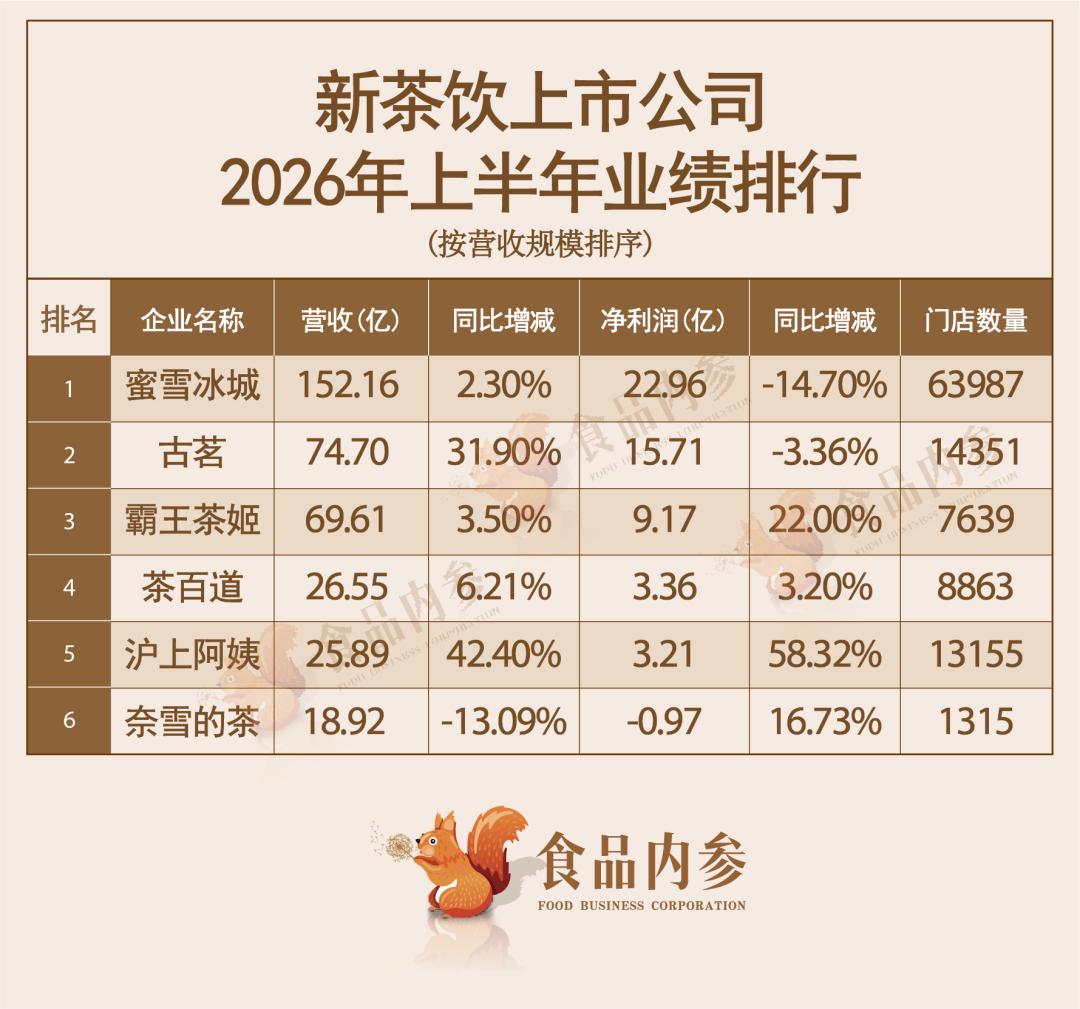
As the main battlefield of the 2025 food delivery war, the new-style tea drink industry, which was extremely bustling a year ago, is now in a slump. As the 2026 mid-year reporting season draws to a close, six listed enterprises, Mixue Group, Guming, Bawang Chaji, Chabaidao, Aunt Shanghai, and Nayuki, have all handed in their half-year transcripts for the first half of the year.
In terms of total volume, the six companies recorded a combined revenue of 36.78 billion yuan in the first half of the year, representing a year-on-year increase of about 9%, a significant slowdown from the over 20% growth rate in previous years. Their combined net profit even dropped 2.7% year-on-year to 5.37 billion yuan, a sharp decline compared with the 43.4% growth rate in the same period of 2025. Behind this are both the high base effect brought by last year's food delivery war and the impact of further intensified industry competition. These two factors have more or less affected the six companies' earnings in the first half of the year.
Head Enterprises See Slower Growth, Ceiling Becomes Visible
"Snow King" bore the brunt. The number of stores has reached nearly 64,000, but revenue has not grown synchronously, and profits are getting lower.
Mixue Bingcheng's performance in the first half of the year has exposed its real predicament to the outside world, and made many people wonder whether it has touched the scale ceiling.
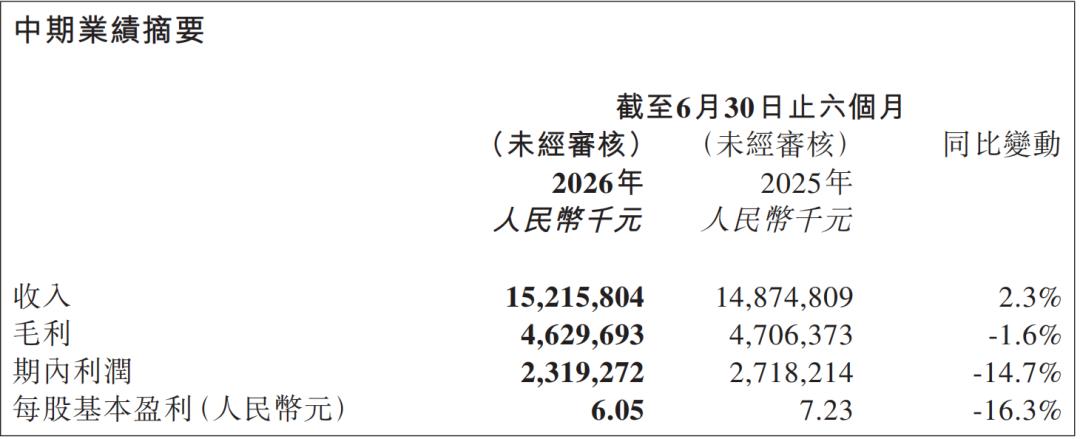
In the first half of the year, Mixue Bingcheng achieved a revenue of 15.216 billion yuan, with a year-on-year increase of only 2.3%, a sharp slowdown from the nearly 40% growth rate in the same period last year. In terms of revenue composition, revenue from product and equipment sales increased 2.1% year-on-year to 14.798 billion yuan in the first half of the year, and revenue from franchising and related services increased 10% year-on-year to 418 million yuan.
While revenue saw a slight increase, Mixue Bingcheng's sales cost rose 4.1% year-on-year to 10.586 billion yuan, which led to a 1.2 percentage point year-on-year drop in the company's gross margin to 30.4%, and a 1.6% year-on-year decline in gross profit to 4.63 billion yuan. At the same time, the company's sales and distribution expenses in the first half of the year rose 22.9% year-on-year to 1.123 billion yuan, and administrative expenses surged 39.4% year-on-year to 610 million yuan. The combination of reduced gross profit and substantial increase in expenses led to a 14.7% year-on-year decline in Mixue Bingcheng's net profit to 2.319 billion yuan in the first half of the year. This is the first time that Mixue Bingcheng has recorded negative profit growth in its half-year report since its listing.
Zhang Yuan, CEO of Mixue Bingcheng, admitted at the performance exchange meeting that the company went through a very difficult period in the first half of the year, and analyzed three major reasons behind it.
The first is the high base effect of last year. "The food delivery war in the first half of last year pushed the average turnover per store to an unprecedented high", which led to a decline in the average turnover per store in the first half of this year. The second is the intensification of industry competition. As the boundaries between categories and between brands gradually blur, enterprises are competing for consumers through subsidies, marketing and other methods, which weakens the long-standing price advantage of "Snow King". Third, the company has carried out a series of upgrades around the product concept of "Authentic, Fresh, Pure", and it takes a certain amount of time for these investments to take effect.
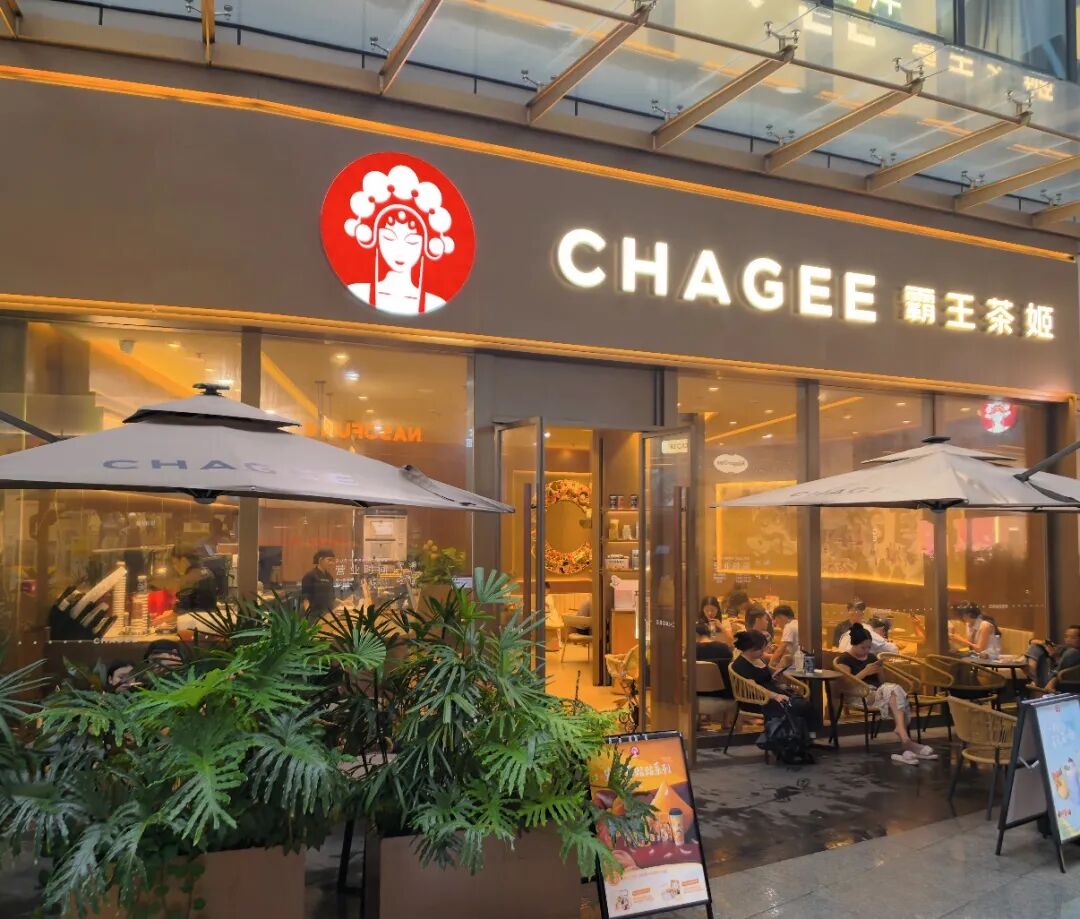
However, Bawang Chaji, which refused to participate in the price war last year and did not suffer from the high base trouble brought by the food delivery war, also had a tough time in the first half of this year. Zhang Junjie, founder of the company, defined 2026 as the "year of adjustment and stabilization". In the first half of the year, the company's revenue increased 3.5% year-on-year to 6.961 billion yuan. Although the revenue growth rate slowed down significantly compared with 21.61% in the same period of 2025, the company's net profit surged 22% year-on-year to 917 million yuan.
The imbalance between the two main operating indicators is due to the fact that the company had a 550 million yuan equity incentive expense in the second quarter of 2025, which significantly lowered the net profit base of the same period. This expense no longer occurred in the same period of this year, so the net profit naturally rebounded. But after excluding equity incentives and other expenses, Bawang Chaji's Non-GAAP net profit in the first half of the year was 996 million yuan, which actually decreased by 23.8% compared with 1.307 billion yuan in the first half of 2025.
Bawang Chaji slowed down its pace, and was successfully overtaken by Guming, which used to be comparable to it in scale. In the first half of this year, Guming achieved a revenue of 7.47 billion yuan, a year-on-year increase of 31.9%; its gross margin increased by 1.9 percentage points to 33.4%; the profit for the period decreased 3.6% year-on-year to 1.568 billion yuan affected by a 557 million yuan fair value change gain last year, but the adjusted net profit increased 44.4% year-on-year to 1.568 billion yuan.
Although Guming's performance growth rate is much higher than that of Mixue Bingcheng and Bawang Chaji, it has also slowed down significantly compared with the over 40% revenue growth and doubled profit growth in the same period last year.
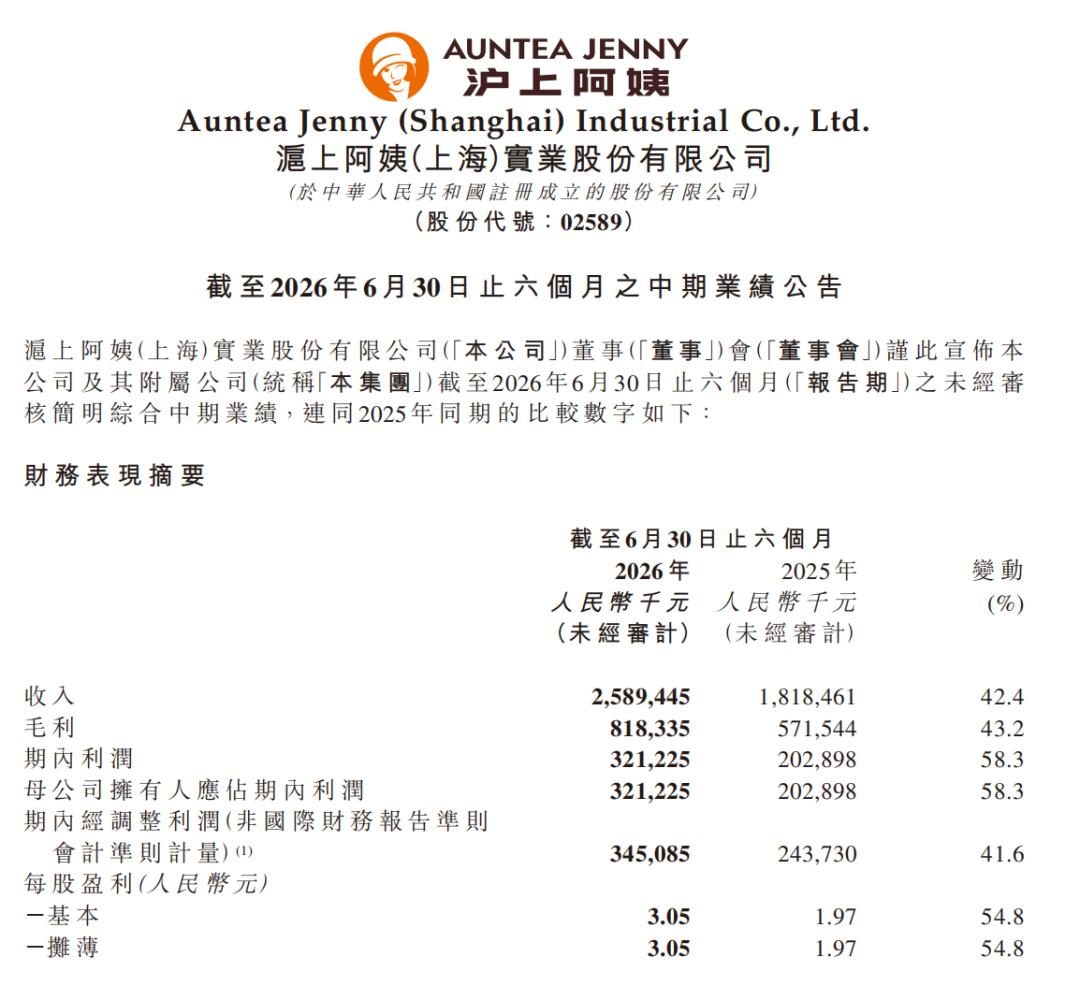
While the top three enterprises in terms of scale are seeing slower growth, Aunt Shanghai, which is of small and medium scale, has accelerated its pace. It added 1,706 net new stores in the first half of the year, 6.5 times the number of net new stores in the same period last year. Thanks to this, Aunt Shanghai became the listed tea drink company with the fastest performance growth in the first half of the year, with revenue increasing 42.4% year-on-year to 2.589 billion yuan, and profit for the period reaching 321 million yuan, a surge of 58.3% year-on-year.
In comparison, Chabaidao's performance is moderate, with single-digit growth in revenue, number of stores and net profit in the first half of the year. Although it is steady, it lacks highlights. Nayuki, on the other hand, is still at the bottom, and is the only brand among the six listed tea drink enterprises that has seen declining revenue and net profit loss.
In the first half of the year, Nayuki's revenue decreased 13.1% year-on-year to 1.893 billion yuan; the adjusted net loss was 97 million yuan, narrowed by 18.0%; the net operating cash flow plummeted 56.1% to 61 million yuan. Several main operating indicators are not ideal, especially the severe shrinkage of cash flow.
For Nayuki, the more dangerous thing is that all its three business lines are declining. Among them, the revenue of freshly made tea drinks decreased 11.2% year-on-year to 1.456 billion yuan; the revenue of bakery products dropped sharply by 32.4% to 133 million yuan; the revenue of bottled beverage business shrank by 31.6% to 73 million yuan.
It is worth mentioning that bakery products used to be the core of Nayuki's differentiated positioning of "tea drinks + soft bread". Now, the revenue proportion of this sector has dropped from over 20% around 2021 to less than 10%.
Single-store Efficiency Under Collective Pressure, Coffee Becomes New Growth Driver
In the first half of the year, the revenue growth rate of the three leading tea drink enterprises slowed down, mainly because the store expansion slowed down. Among them, Mixue Bingcheng added 4,176 net new stores in the first half of the year, compared with 6,500 in the same period last year; Guming added 797 net new stores, compared with 1,265 in the same period last year; Bawang Chaji added 186 net new stores in the first half of the year, compared with 598 in the same period last year.
Correspondingly, the growth rate of Aunt Shanghai and Chabaidao in the first half of the year is higher than that in the same period last year, because their store expansion has accelerated. In particular, Aunt Shanghai's net new store number is more than six times that of the same period last year, which brings about a revenue growth of over 40%.
The contrast between slowdown and acceleration actually points to the same logic: the revenue growth of tea drink enterprises is mainly driven by opening new stores. Once the pace of opening new stores slows down, revenue will lose growth momentum. This also shows that the single-store efficiency of existing stores is not ideal.
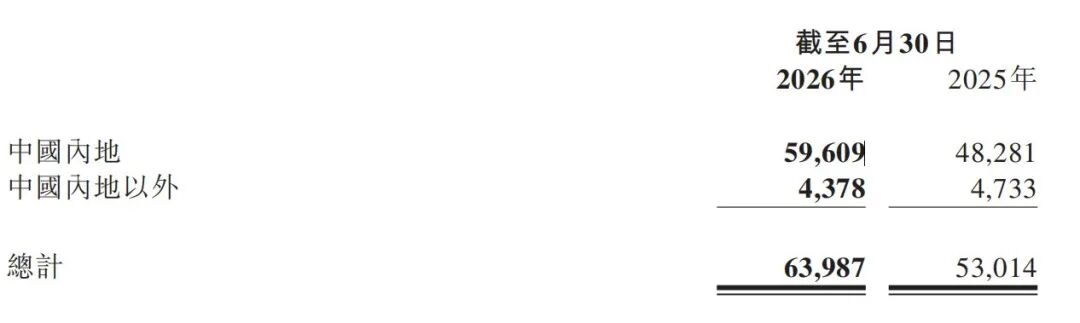
Take Mixue Bingcheng, which has an absolute leading scale, as an example. As of June 30, 2026, including Mixue Bingcheng, Lucky Coffee, and Fresh Beer Fulu Family, the total number of global stores of Mixue Group reached 63,987, a net increase of 10,973 compared with 53,014 in the same period of 2025, with a year-on-year growth rate of 20.7%. However, the revenue in the same period only increased by 2.3%. The serious disconnection between revenue growth and store expansion indicates that the single-store output has decreased significantly.
At the performance exchange meeting, the CEO of Mixue Group admitted that in the first half of the year, the average turnover per store of the whole group and the average turnover per store of the main brand both saw double-digit declines. At the same time, Mixue Bingcheng closed 1,289 stores in the first half of the year, higher than 1,187 in the same period last year; in the same period, equipment sales decreased 18.2% year-on-year to 533 million yuan, and product sales increased slightly by 3.0% to 14.265 billion yuan. The logical connection between these sets of data is not complicated: the decline of single-store efficiency makes it harder for franchisees to make money, so the number of closed stores naturally increases.
Bawang Chaji's single-store operation is also not ideal. The average monthly GMV per store in Greater China has declined for several consecutive quarters, dropping from 574,000 yuan at the peak to 338,000 yuan in the second quarter of 2026, with a cumulative decline of over 40%. In the first half of this year, its same-store GMV maintained a trend of -16.1% for two consecutive quarters. The continuous weakening of single-store operation is also the most thorny problem that Bawang Chaji is facing at present.
In addition, the average daily sales per directly operated store of Nayuki dropped from 7,600 yuan to 7,000 yuan, with the average daily order volume and customer unit price declining simultaneously. Among the several enterprises that publicly disclosed their single-store operation data, only Guming still maintains positive growth. In the first half of the year, its average daily GMV per store was 7,800 yuan, an increase of 2.6% compared with 7,600 yuan in the same period of 2025. However, the growth rate slowed down by 20 percentage points compared with 22.6% in the same period last year, and the endogenous growth momentum of existing stores has also weakened significantly.
The collective pressure on the single-store operation of tea drink enterprises is certainly related to the high base effect brought by the food delivery war in the same period last year, but it cannot be entirely attributed to this. As Zhang Yuan said at Mixue Bingcheng's performance exchange meeting, the boundaries between tea drinks and coffee categories and brands are gradually blurring, brands are expanding their own categories, and industry competition is intensifying. Of course, there is also the ceiling problem that brands are reluctant to admit. When the number of brand stores increases to a certain extent, the marginal effect of scale decreases, and new stores cannot bring the same increase in GMV, they will only seize the sales of old stores.
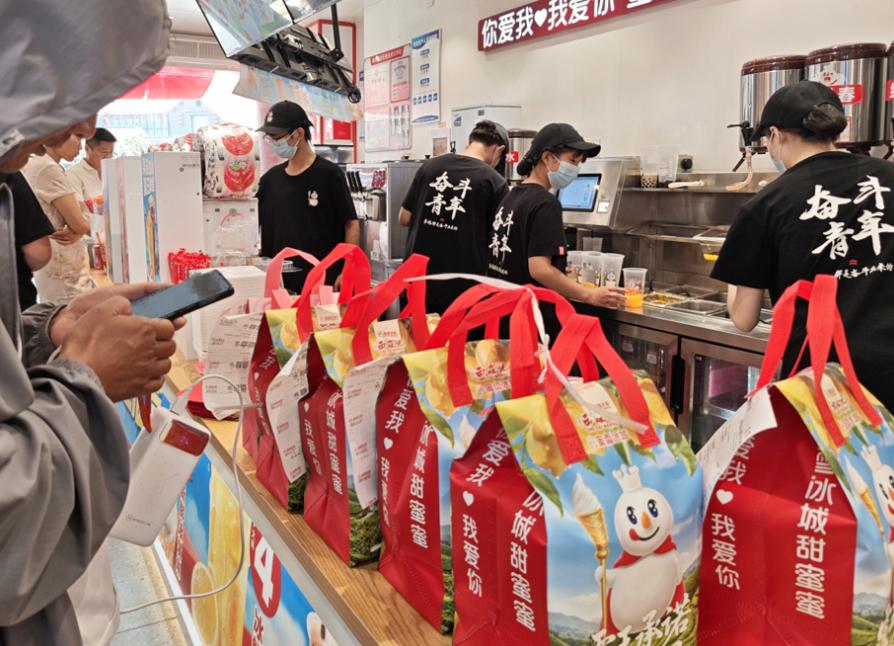
When the original scale expansion path no longer works, the managements of several leading enterprises have mentioned concepts and methods such as cultivating internal strength, high-quality growth, and focusing on store operation quality, but this kind of transformation cannot take effect in a short period of time. At present, tea drink brands are expanding to categories such as coffee and freshly made ice cream to increase single-store sales, and coffee is the key category they focus on.
Take Mixue Bingcheng as an example. In addition to its sub-brand Lucky Coffee, the main brand Mixue Bingcheng is also accelerating the deployment of freshly ground coffee in its stores. The coffee production method has been upgraded from fresh brew to freshly ground, and as of the end of August, freshly ground coffee machines have been installed in about 6,000 stores. The management revealed at the performance meeting that it plans to deploy the machines in about 14,000 stores within the year, and cover the whole country by 2028.
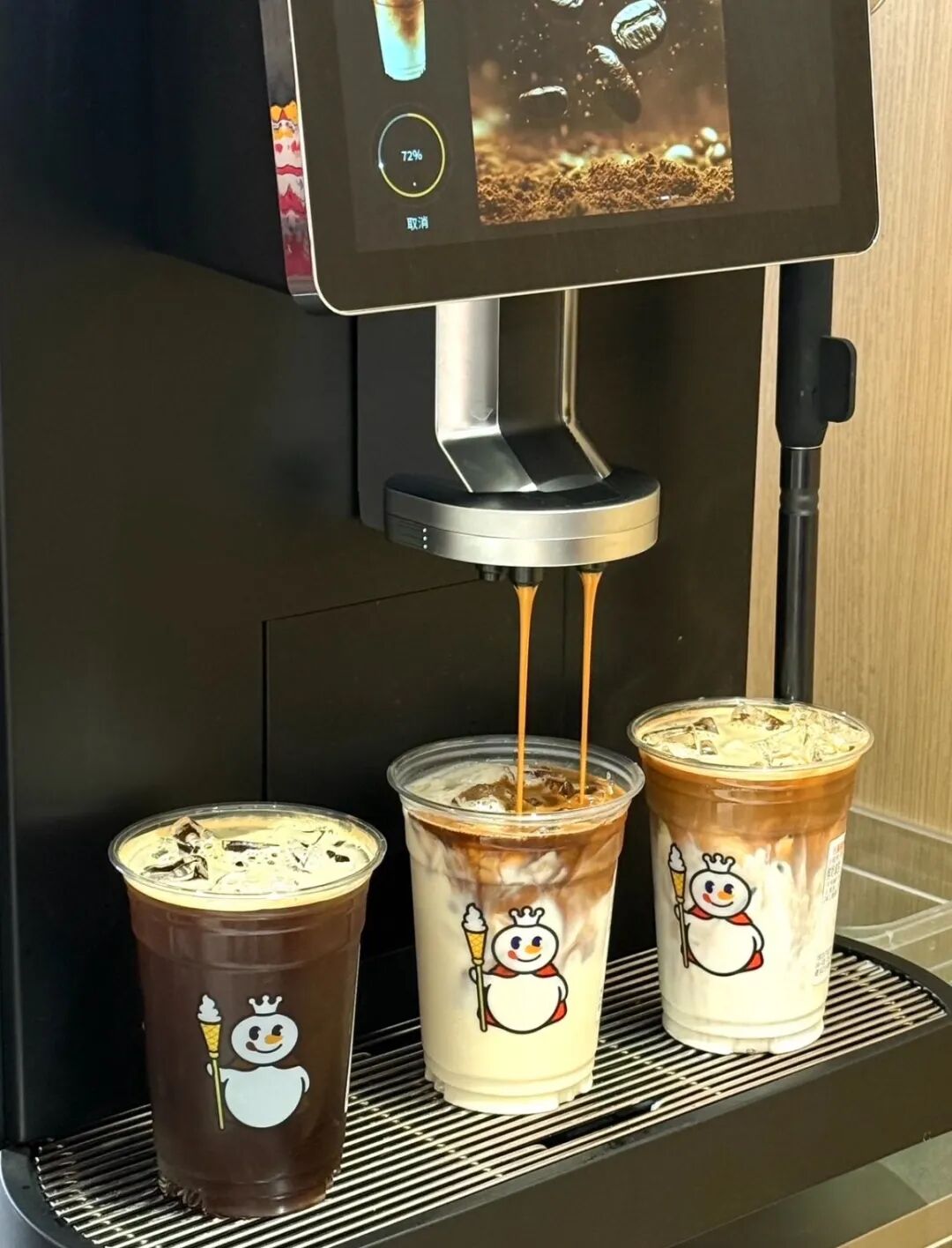
Guming is currently the biggest winner of tea drink enterprises that cross-border into coffee. As of the end of June this year, 13,500 Guming stores have been equipped