Tesla's driverless taxi service has been plagued by frequent mishaps since its launch on public roads: the vehicles get stuck at intersections with non-functional air conditioning that fails to cool, and the related operation is still under review by the traffic management authority.
How has Tesla's Cybercab performed in the Robotaxi fleet 5 days after its public launch?
CheDongXi September 8 news, on September 4 Beijing time, Tesla released the mass-produced Cybercab, which has no steering wheel, pedals or rearview mirrors and runs entirely on autonomous driving technology.
Up to today, after 5 days of operation in Tesla's Robotaxi fleet, a number of users have experienced Tesla Cybercab in person and shared numerous experience videos on social media platforms.
Judging from the comments posted by users who have had actual rides, the current performance of Tesla Cybercab receives mixed reviews. Some say they feel like VIP when sitting in the car, some point out that it is very convenient as there is no need to communicate with a driver, and even some claim that the experience of Tesla Cybercab is flawless with no issues at all.
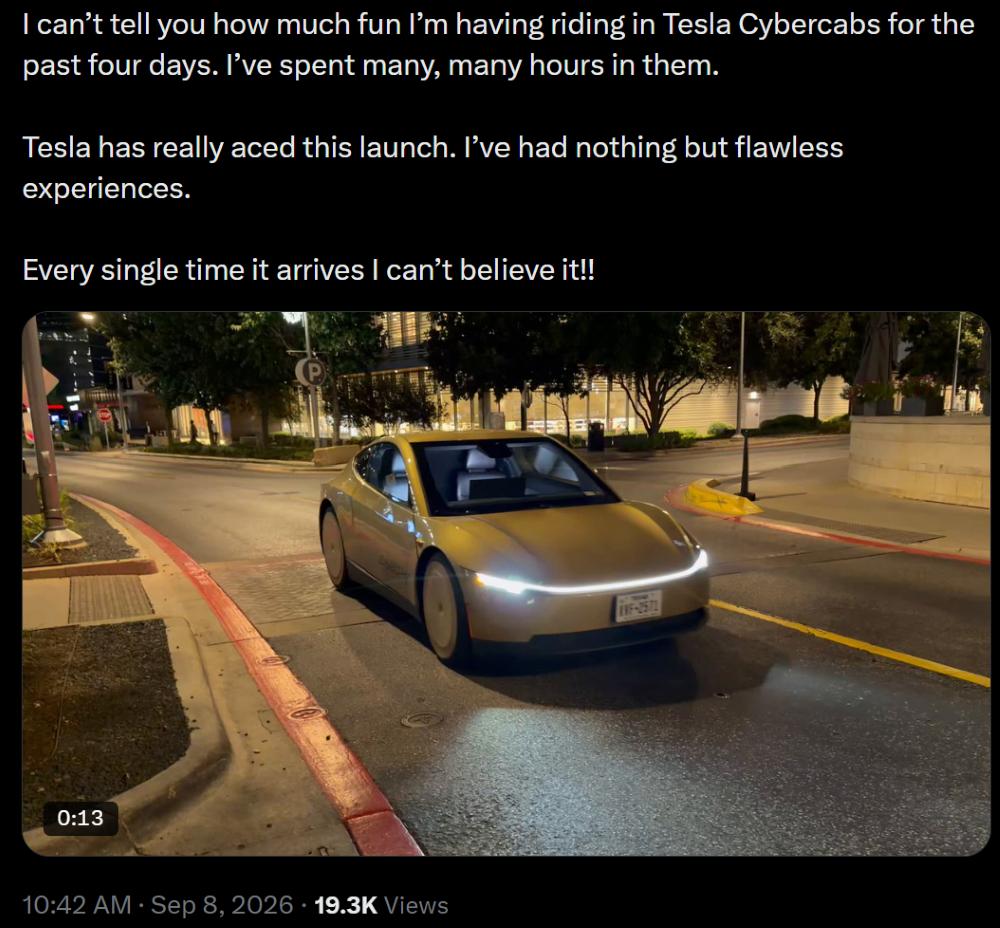
▲ Users experience Tesla Cybercab in person
However, many users on social media also reported encountering various problems, which mainly focus on low driving efficiency, some software anomalies and imperfect detail settings.
Meanwhile, some users said they have spotted Tesla Cybercab in cities outside the current operation zone, which means Tesla Cybercab will likely be launched in other cities soon.
Overall, reviews of Tesla Cybercab are extremely polarized 5 days after its public launch, and this steering-wheel-free, pedal-free taxi still needs to withstand tests from more complex scenarios in the future.
01.
Not decisive enough when turning during driving
Virtual joystick for manual driving pops up by mistake
At present, many users who have experienced Tesla Cybercab have reported its problems when driving on roads, which are mostly related to operation efficiency.
One user posted a video on social media platforms, showing that Tesla Cybercab behaved very hesitantly when making a right turn in front of a stop sign, and stayed still for a long time without trying to move forward.
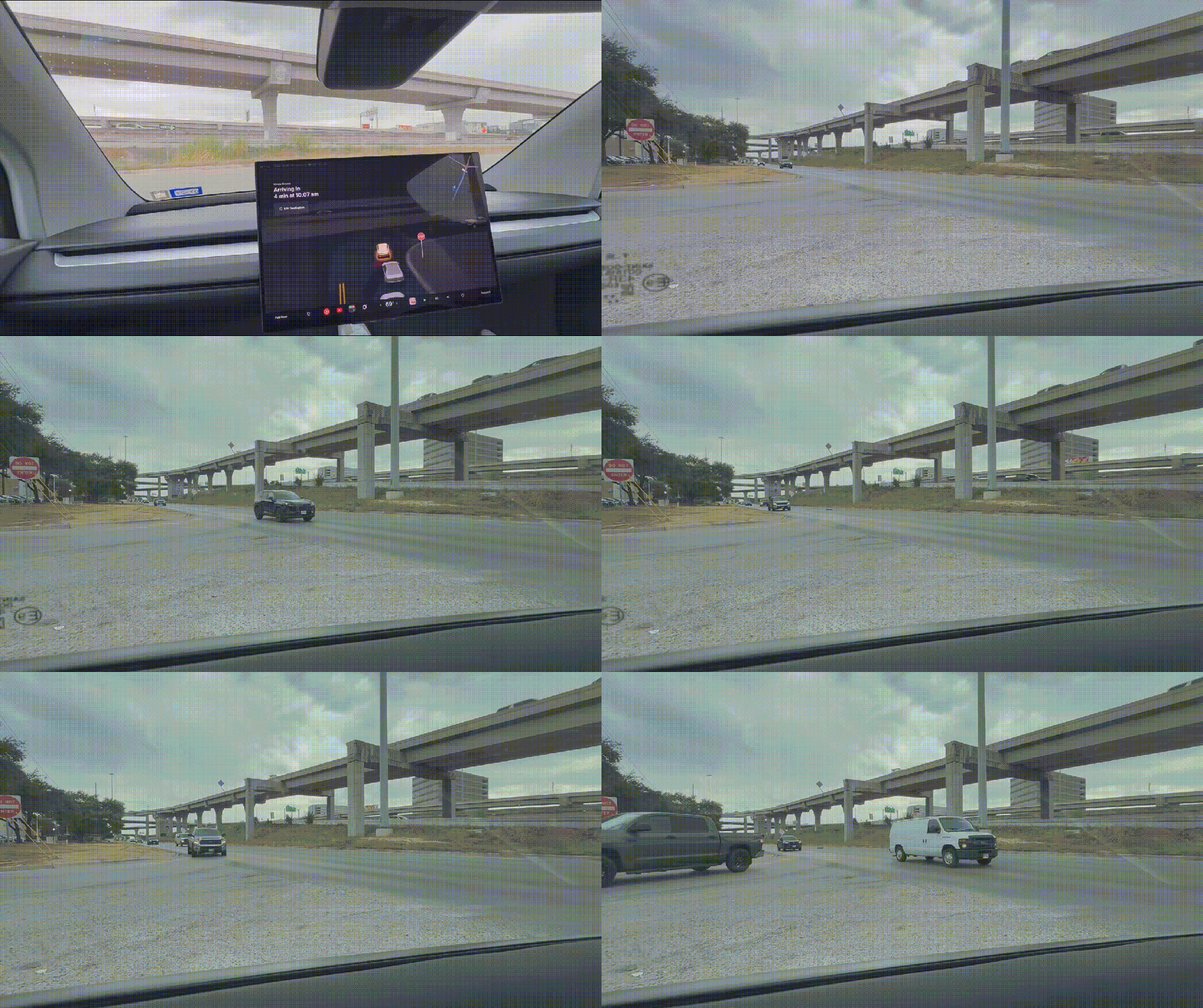
▲ Tesla Cybercab experience video shared by user (Source from the Internet)
After waiting for a while, an impatient driver bypassed this Tesla Cybercab, and successfully made a right turn to join the traffic flow very soon.
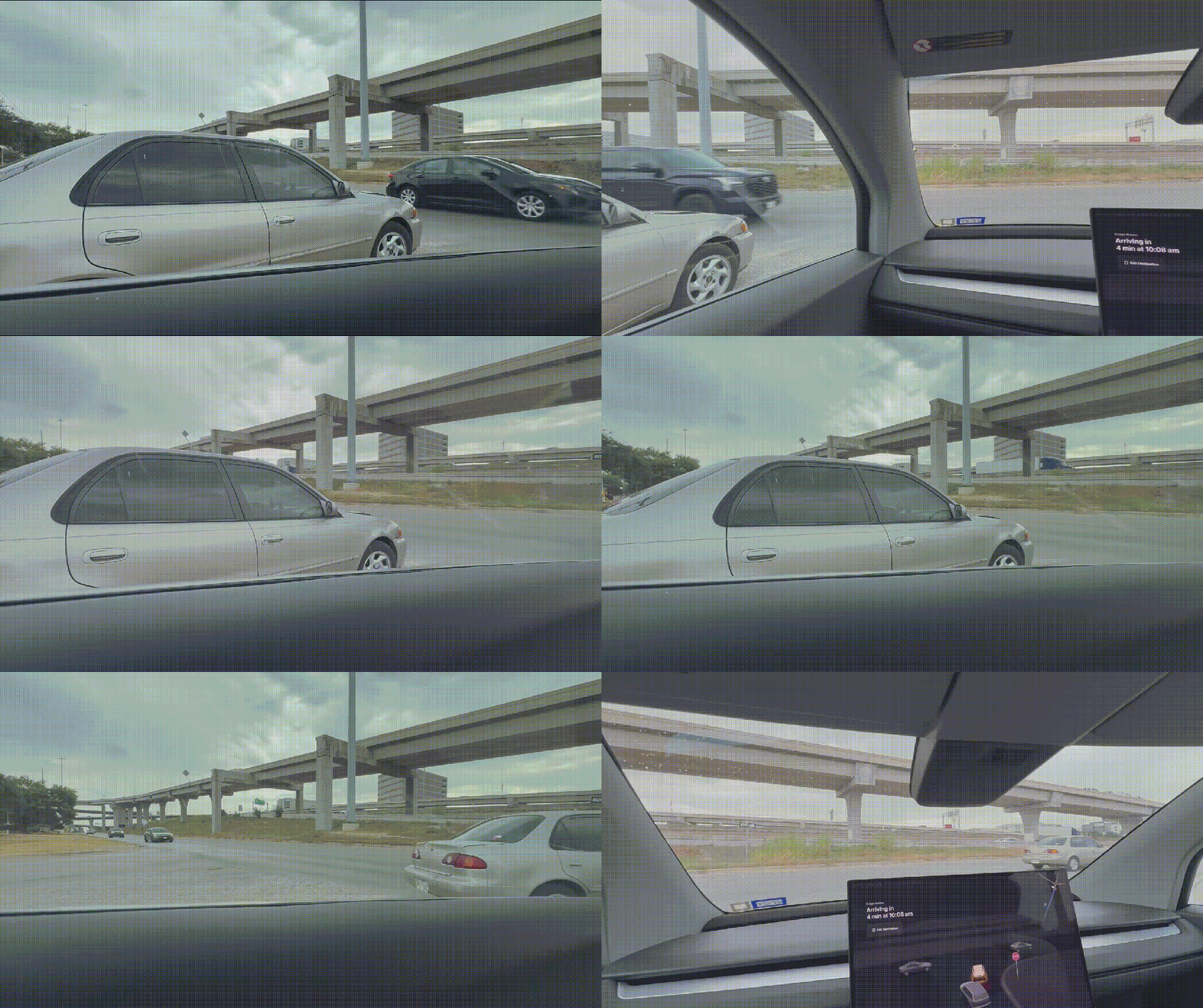
▲ Tesla Cybercab is overtaken by another vehicle (Source from the Internet)
After waiting for another period of time, when a large gap appeared in the traffic flow on the main road, this Tesla Cybercab finally successfully completed the right turn.
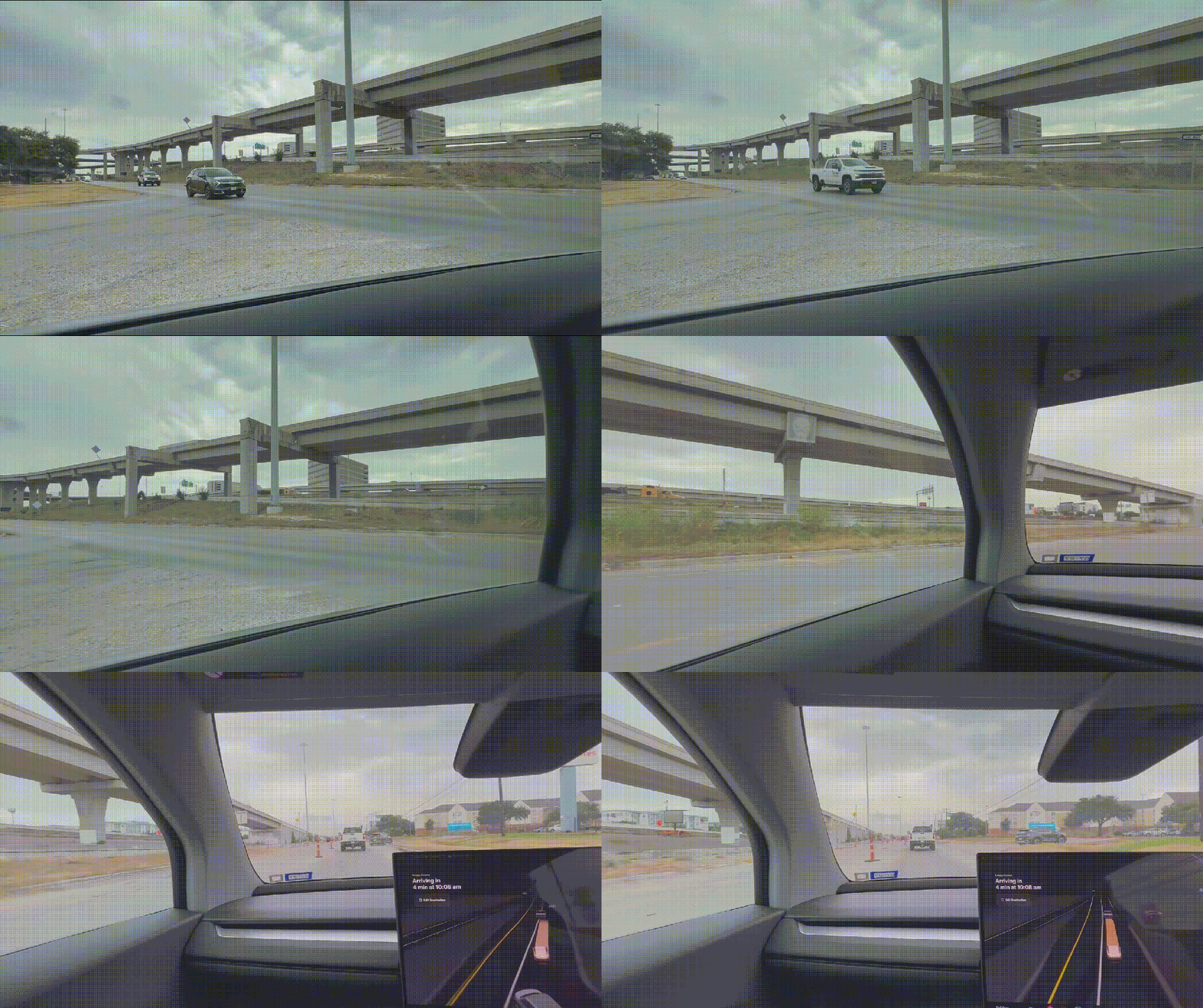
▲ Tesla Cybercab makes a right turn after waiting (Source from the Internet)
The user who posted this video also wrote on social media that obviously Tesla Cybercab will never get road rage, but it could have been more decisive when passing this turn.
In terms of software, more than one user encountered the situation where the virtual joystick for manual driving appeared on the screen.
Since Tesla Cybercab completely removes steering wheels and pedals, the appearance of the manual driving virtual joystick on the screen is presumably prepared for official staff to temporarily control the vehicle. The user who shared the experience on social media wrote that "I always feel that this is not supposed to be seen by passengers".
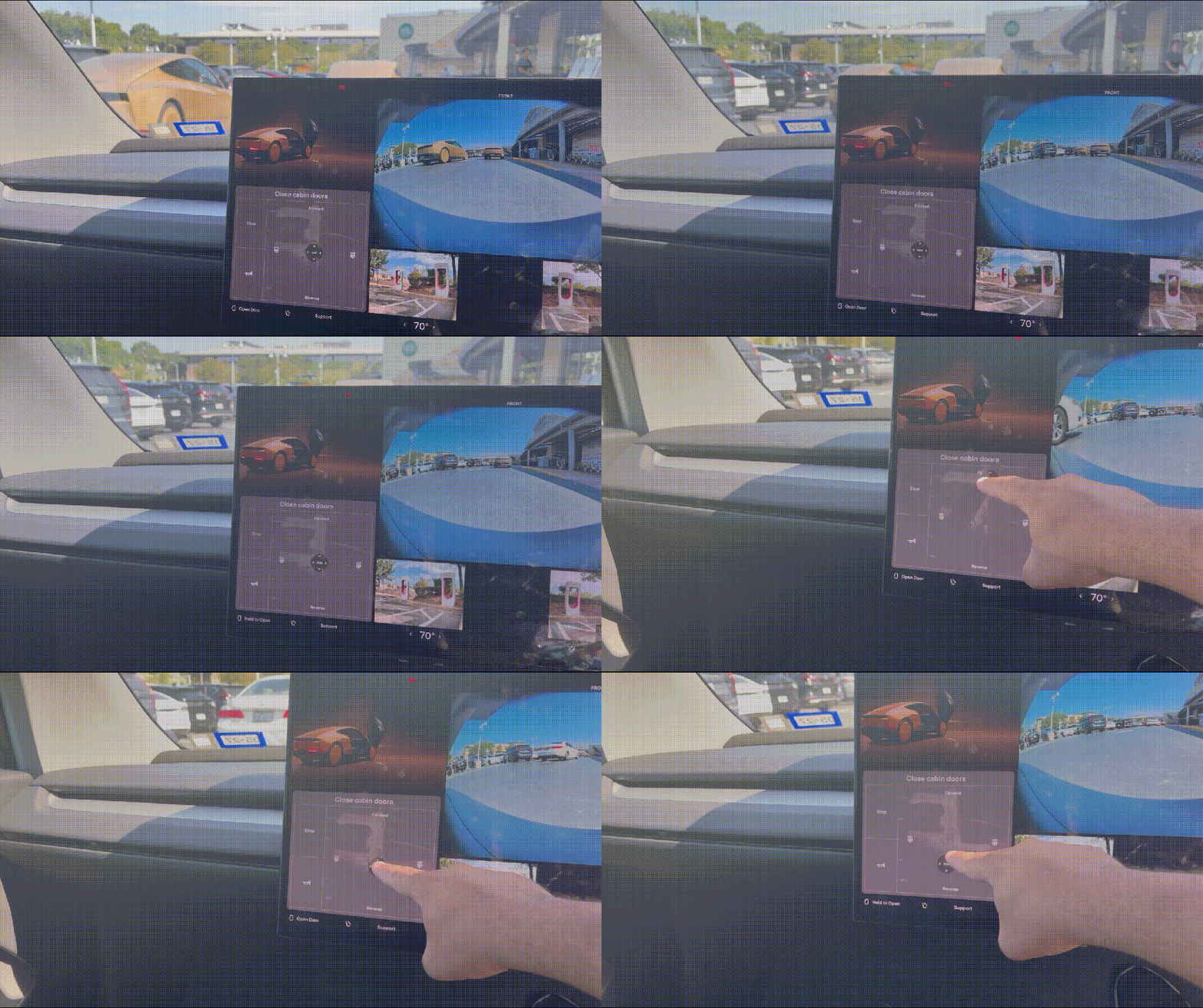
▲ Virtual joystick appears on Tesla Cybercab's screen (Source from the Internet)
In the video, it can be seen that a control area appears at the lower left of Tesla Cybercab's central control screen, which can control the vehicle's acceleration and deceleration, left and right steering respectively, as well as a horn button and a "Stop" button.
The user in the video tried to click the buttons on the screen to control the vehicle, but the vehicle did not respond and just stayed in place all the time.
Some other users found small detail issues of Tesla Cybercab. One user posted on social media that when he experienced Tesla Cybercab in Austin (the current operation area of Tesla Cybercab), the local temperature was as high as 96 degrees Fahrenheit (about 35.6 degrees Celsius), and the air conditioner of Tesla Cybercab could not be adjusted below 66 degrees Fahrenheit (about 18.9 degrees Celsius).
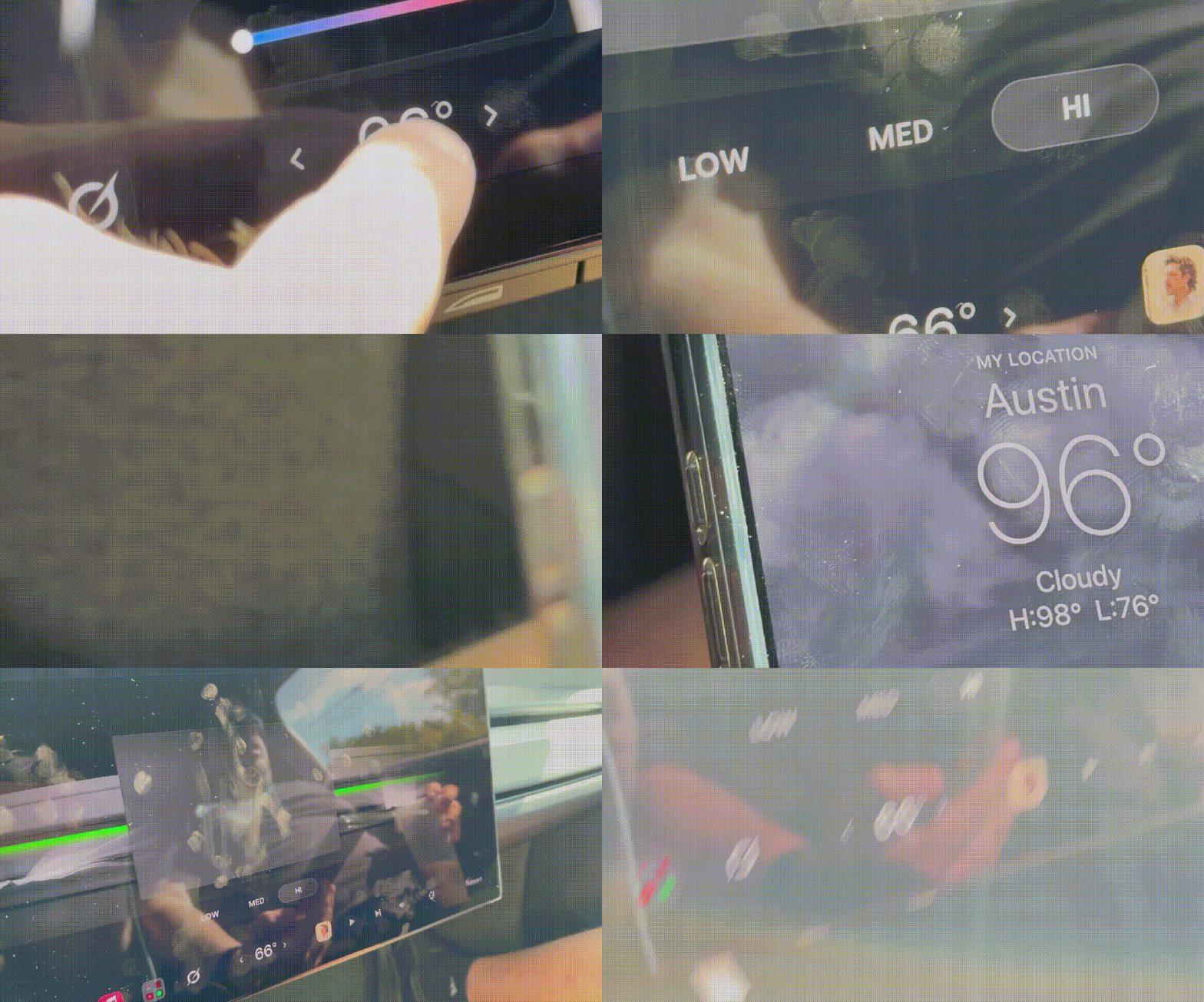
▲ Tesla Cybercab air conditioner temperature setting (Source from the Internet)
The user who posted this video said that although he did not feel particularly uncomfortable, it would be better to have a lower temperature option especially when the vehicle is not equipped with ventilated seats. If Tesla Cybercab will be put into operation in Las Vegas and Phoenix in the future, it needs to cope with the local temperature that often exceeds 110 degrees Fahrenheit (about 43.3 degrees Celsius).
Of course, overall, since Tesla Cybercab officially joined the Robotaxi fleet and opened test rides to the public, many users who have actually experienced Tesla Cybercab spoke highly of its performance, and some even left comments like "Rest in peace Uber, Waymo and Lyft. Sorry, Tesla Cybercab is going to take over the whole market".
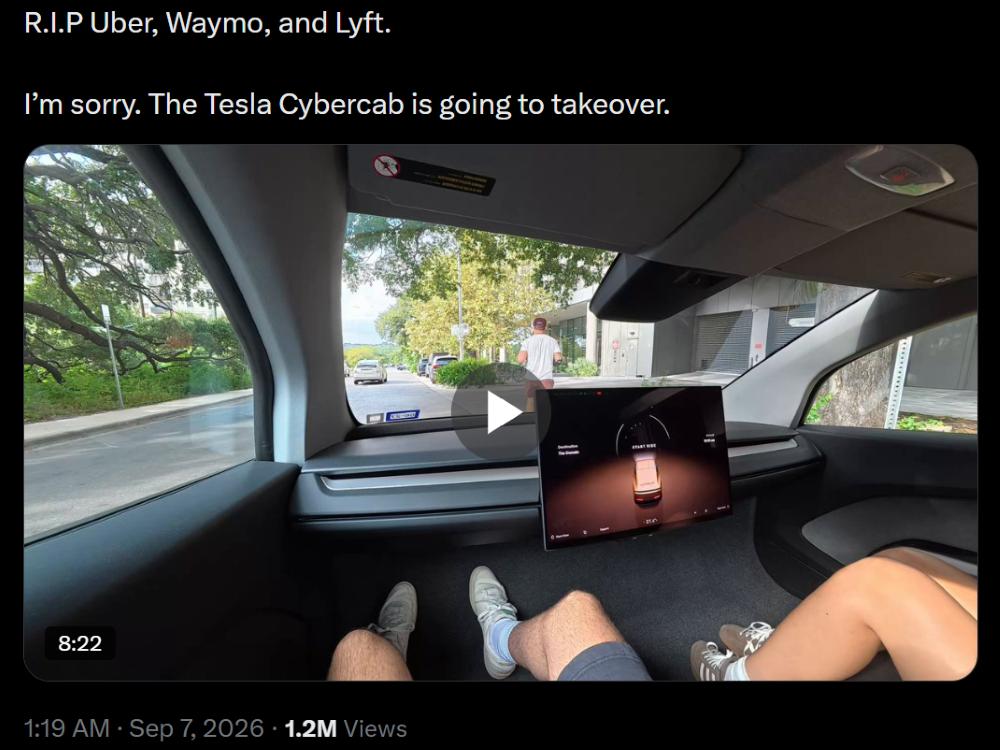
▲ Tesla Cybercab experience video shared by user
02.
Under review by NHTSA
Spotted outside the operating cities
On the morning of September 4 Beijing time, Tesla released the mass-produced Cybercab, which completely removed steering wheels, pedals and rearview mirrors, and realized full autonomous driving relying on FSD technology.
However, the launch event of Tesla Cybercab was extremely special and secret. There was no live broadcast, attendees were not allowed to share real-time updates, and even according to the videos posted by attendees after the meeting, Musk did not appear on stage, no new price was announced at the meeting, and individual car purchase channels were not opened.
Specifically for Tesla Cybercab itself, it adopts a golden body color, with a width of 1754mm (about 1.75 meters) and a height of only 1408mm (about 1.41 meters). This low-profile shape is expected to bring better wind resistance performance and high-speed stability.
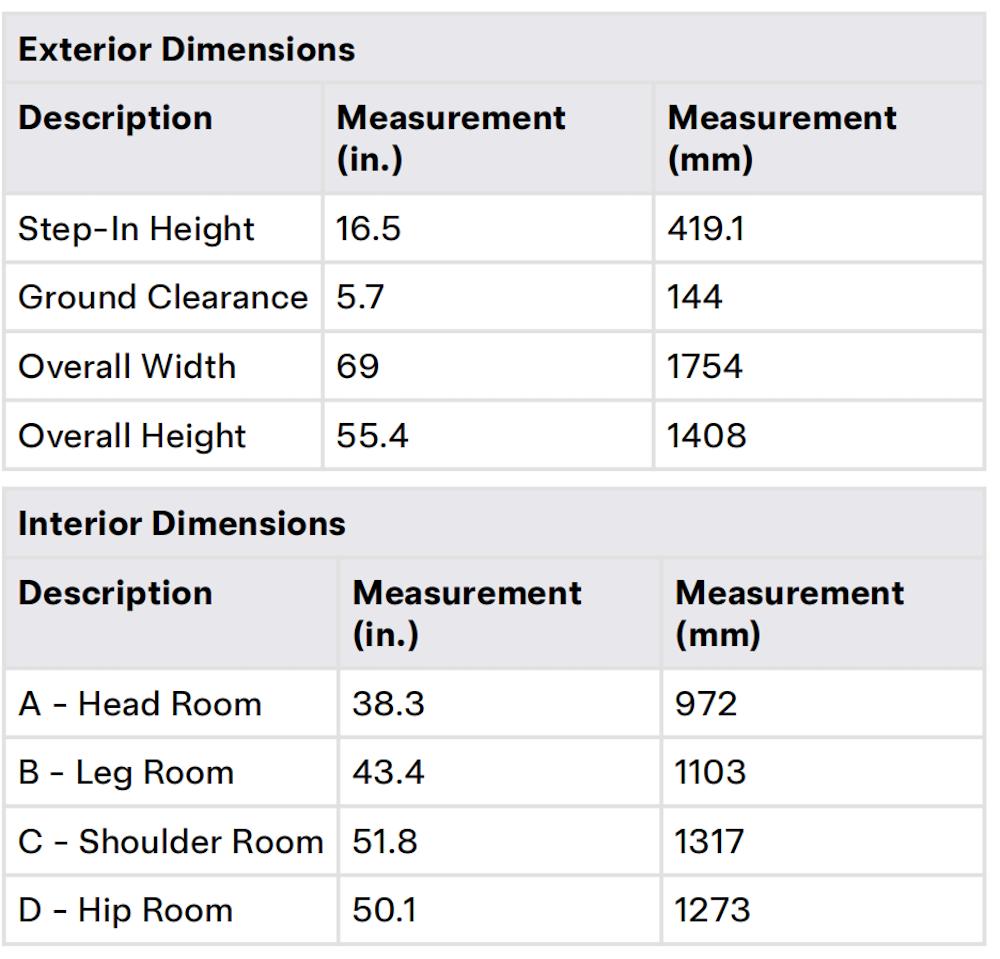
▲ Tesla Cybercab parameter information
In addition, the vehicle has a ground clearance of 144mm, combined with the butterfly door design that opens by rotating upwards, providing sufficient space for passengers to get on and off the vehicle.
Tesla Cybercab has no front trunk, the hood cannot be opened, the trunk volume is about 572 liters, and the maximum load capacity is 100 kg. According to the official demonstration, the trunk is large enough to hold two checked luggage plus two carry-on luggage, meeting daily travel needs such as airport transfers.
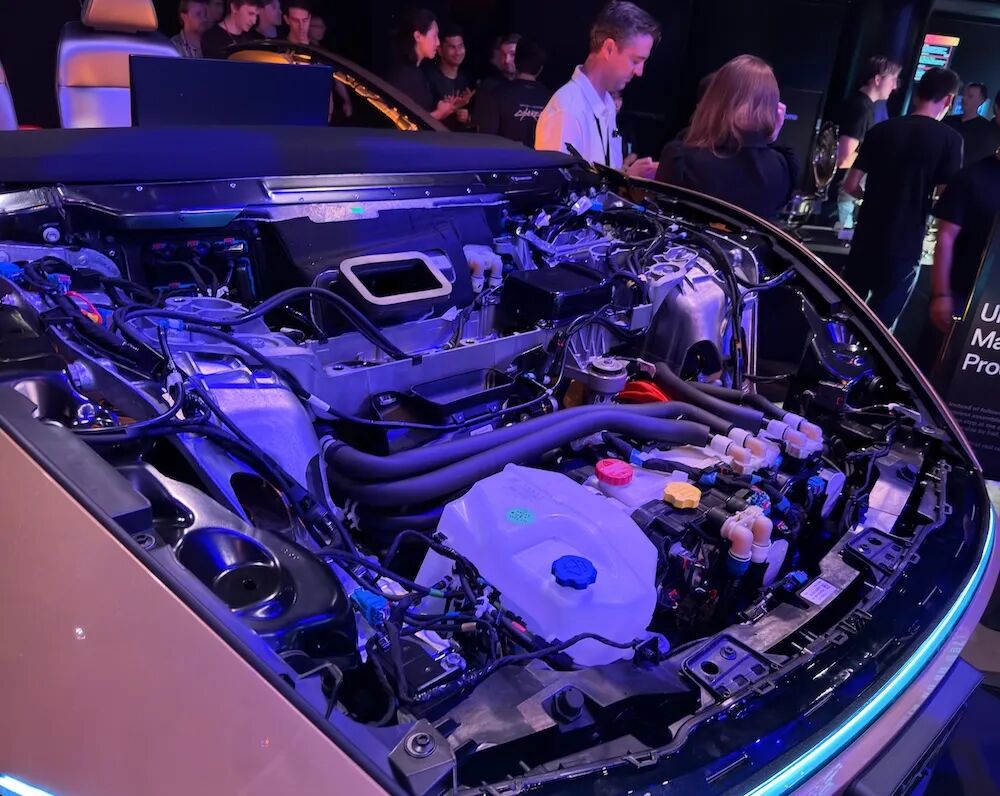
▲ Internal structure of Tesla Cybercab's hood
In terms of interior, the vehicle has a very minimalist configuration, with only two seats, no steering wheel, no accelerator pedal, no brake pedal, and no glove box. Instead, it is equipped with a 22-inch central touch screen and a physical emergency stop button.
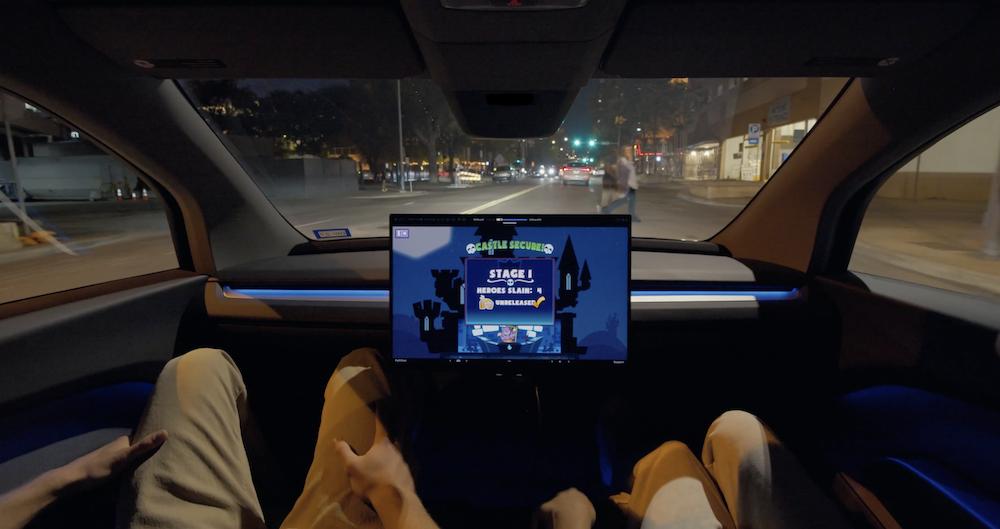
▲ Interior of Tesla Cybercab
Tesla Cybercab is also equipped with 9 cameras inside, among which the inward-facing cameras will check the cleanliness of the vehicle and whether users have left their belongings behind.
According to data from the Texas state government, as of Friday morning local time, the number of autonomous driving vehicles registered by Tesla in Texas reached 420, of which 45 are Tesla Cybercab.
After the launch event, most news about Tesla Cybercab is related to actual ride experiences. Judging from the amount of content on social media platforms, a considerable number of users and bloggers have experienced Tesla Cybercab in person.
At the same time, local users broke the news that Tesla Cybercab has been spotted in multiple cities outside Austin, which may mean that Tesla Cybercab will soon be launched in other cities.
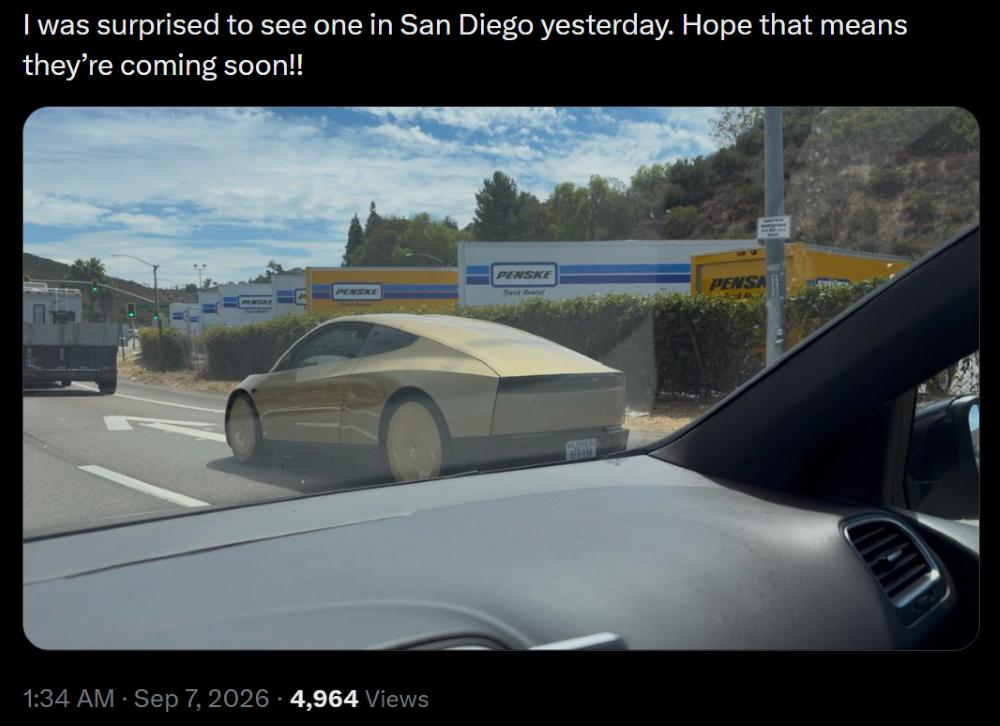
▲ User said he spotted Tesla Cybercab in other cities
However, Tesla Cybercab is currently facing a compliance investigation. According to Reuters, on the very day Tesla Cybercab was launched, the National Highway Traffic Safety Administration (NHTSA) launched a review of about 1000 Tesla Cybercab units, focusing on the certification process and technical data Tesla used to prove that the model meets federal vehicle safety standards.
The focus of the controversy is that Tesla Cybercab cancels traditional manual control devices such as steering wheels, brake pedals, accelerator pedals and rearview mirrors, but the current U.S. Federal Motor Vehicle Safety Standards (FMVSS) are mainly formulated for manned vehicles. NHTSA will review whether Tesla's basis for judging that some standards are not applicable to this model is sufficient.
03.
Conclusion: Tesla Cybercab still needs to withstand more tests
In Tesla's strategy, Robotaxi is regarded as Tesla's next core growth point, and Cybercab is the key tool for Tesla to tap into this huge market, which means it will bring more continuous service revenue for Tesla.
According to the sharing of users on social media platforms after their actual experience, in the 5 days since its public launch, Tesla Cybercab in the Robotaxi fleet has not had major "fatal failures", but many users have reported various minor problems.
As Tesla Cybercab appears in more and more other cities in the United States, it may soon be officially commercialized in more regions. After large-scale deployment, how the steering-wheel-free and pedal-free Tesla Cybercab will perform is still worthy of continuous attention.
This article is from WeChat official account "CheDongXi", Author: R, Editor: Zhihao, published by 36Kr with authorization.