Cinemas have started to join the cutthroat competition in the hotel sector.
01
These past two days, I came across a rather interesting piece of news.
According to multiple media reports, the Lumiere Cinema at Qujiang Creative Valley has begun to invite nearby office workers to come to the auditorium to take a nap on workdays at noon.
The service runs from 12:00 to 14:30. A single-person monthly card costs 39.9 yuan, and a two-person pass for two people traveling together costs 59.9 yuan. For roughly the price of one movie ticket, you can take a nap in the cinema for an entire month.
A reader of Travel Business Review who lives nearby said that around 12:30 at noon, guests coming for the midday nap check in at the front desk one after another, and then they can walk into the dedicated auditorium.
The lights in the hall have been dimmed, and the leather seats can be reclined slowly. Some people cover themselves with blankets and fall asleep quickly. When it is nearly time to go back to work in the afternoon, the staff will wake them up.
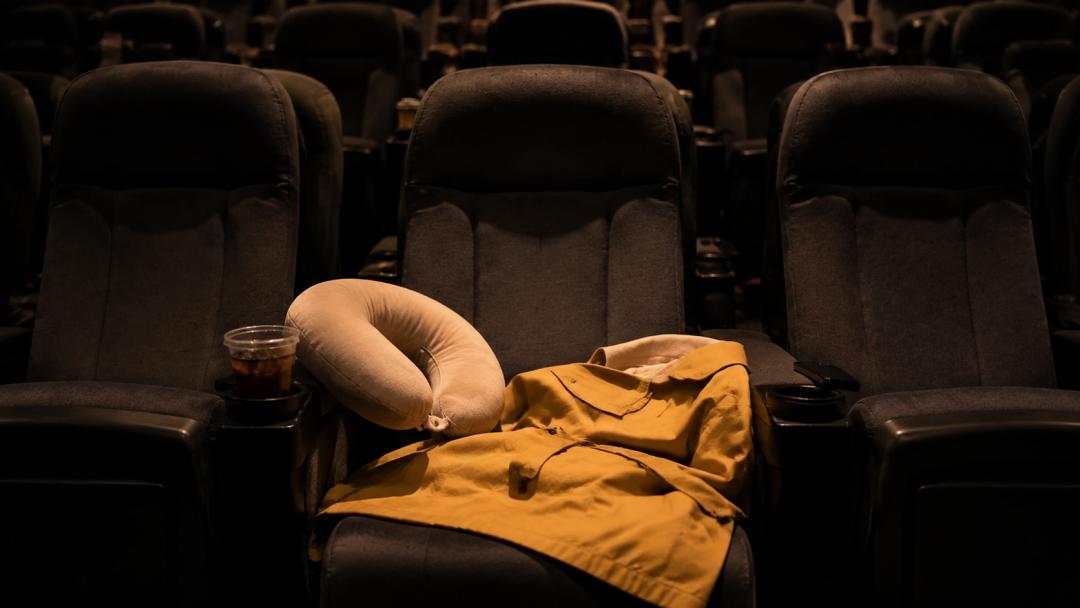
Photo provided by the reader of Travel Business Review
The person in charge of the cinema told the media that for this special group of guests, the cinema has opened two auditoriums with a total of 76 seats, and made simple partitions according to the actual situation. Female guests usually go to the lounge where they can lie completely flat, while male guests mostly use the hall with massage seats.
Not only can charging devices be used for free, the cinema also prepares coffee and mints. If you are sensitive to light or worried about others snoring, you can also buy an eye mask or earplugs for 5.9 yuan.
It is worth mentioning that the cinema midday nap service, which seems somewhat new, was actually launched as early as the spring of 2025, but it suddenly became popular on social media only recently.
According to the person in charge of the cinema, the utilization rate of the two halls on weekdays exceeds half. A 33-year-old office worker has renewed his card for three consecutive months, comes almost every workday, and usually falls asleep as soon as he lies down.
However, even if all 76 seats are sold, the cinema can only earn about 2000 yuan per month. The person in charge said that there is no plan to add more auditoriums at present, and the existing midday nap service will continue to be retained.
After the news from Xi'an spread, cinemas in other cities soon followed suit.
On September 1, the Jinan Happiness Blue Ocean Cinema Ginza Branch opened two midday nap auditoriums, providing a total of over 100 seats, with separate halls for men and women. The single-time charge is 9.9 yuan, the weekly card is 19.9 yuan, and the monthly card is only 39.9 yuan as well.
The local person in charge said that the cinema is still testing the waters at present.

The Zhengzhou China Film Shangzuo International Cinema has also opened its business VIP hall to office workers at noon on workdays. The single-person monthly card costs 59.9 yuan, the two-person monthly card costs 89.9 yuan, and a bottle of mineral water is given every day. Guests can bring their own blankets and pillows.
On social media, many netizens have begun to urge the cinemas near their homes to copy this model.
Some people asked where to find a midday nap auditorium in Beijing, and others hoped that cinemas could provide private compartments. After seeing the two-person monthly card, some netizens also seriously considered whether they could share the card with their colleagues.
There are also many doubts. Some netizens are worried that dozens of people sleeping in the same auditorium will interfere with each other, and they also have concerns about the hygiene of the seats. Other netizens think that sleeping while sitting is ultimately not as comfortable as sleeping in a bed, unless the cinema can really allow people to lie completely flat.
I forwarded the news to several hotel industry practitioners and asked for their opinions.
A peer from Shandong was envious at first, thinking that cinemas had unexpectedly dug up nap guests from under the noses of hotels. But after seeing the 39.9-yuan monthly card price, he shook his head quickly, repeatedly saying that hotels cannot compete in such a business.
After all, in many cities, you can't even book a two-hour hourly room with the same amount of money.
02
The sudden concern of cinemas about office workers' midday naps is more or less driven by operational pressure.
Data from the China Film Administration shows that in the first half of 2026, the total national film box office was only 17.354 billion yuan, a year-on-year decline of about 40.6%.
While the box office drops rapidly, the rent and equipment depreciation of cinemas will not decrease accordingly. The projection system still needs to be maintained, and the staff still have to go to work as usual.
By the end of 2025, the total number of urban cinema screens across the country had reached 93187, an increase of 2219 over the previous year. The limited movie-watching demand is split by more screens, so cinemas naturally start to think about what else the auditoriums can be used for besides showing movies.
Especially from Monday to Friday, most people are at work during the daytime, and it is difficult for popular movies to fill the noon shows.
As long as there are no audiences in front of the screens, dozens of leather seats will be left idle for several hours. The cinema uses two of its halls for midday naps. Even if it can only increase revenue by 2000 yuan per month, it is more cost-effective than leaving them unused.
What's more, the cost for cinemas to provide midday nap services is not very high.
The rent has already been paid, the air conditioner has to run anyway, and nap users do not need the cinema to play movies. The staff only need to clean the seats every day and send the blankets to be washed regularly to run this additional business.
The 39.9-yuan monthly card looks cheap, but the cinema does not need to prepare a separate space for each guest. Dozens of people share the same auditorium, and after the service cost is diluted, charging two yuan per day can barely make the business viable.
Coincidentally, the number of people willing to pay for a midday nap is increasing.
The China Sleep Research Report (2025) shows that 72% of the respondents take a midday nap of more than 30 minutes, and residents in first-tier cities usually sleep for 30 to 60 minutes.
It is uncomfortable to nap while lying on the desk in the company, and there is not enough time to go home. Booking an hourly room in a hotel seems too expensive. The cinema is just in the middle, providing seats where people can lie down, and the price is low enough that people do not need to hesitate repeatedly.
From a broader perspective, the cinema midday nap service is actually a common phenomenon in the stage of economic convergence.
In the past, there was sufficient market increment, and enterprises could achieve growth by relying on their main business. Now consumers are more cautious about spending, and the original business is getting harder and harder. All walks of life can only cross boundaries and compete to find new guests from others.
In the early years, it was actually hotels that took the initiative to cross boundaries.
Many hotels have moved projectors into guest rooms, converting ordinary king-bed rooms into audio-visual rooms. Youxi Movie Hotel even took private cinemas as its core selling point, and obtained 175 million yuan of financing in 2020, trying to allow guests to complete both accommodation and movie-watching in the hotel.
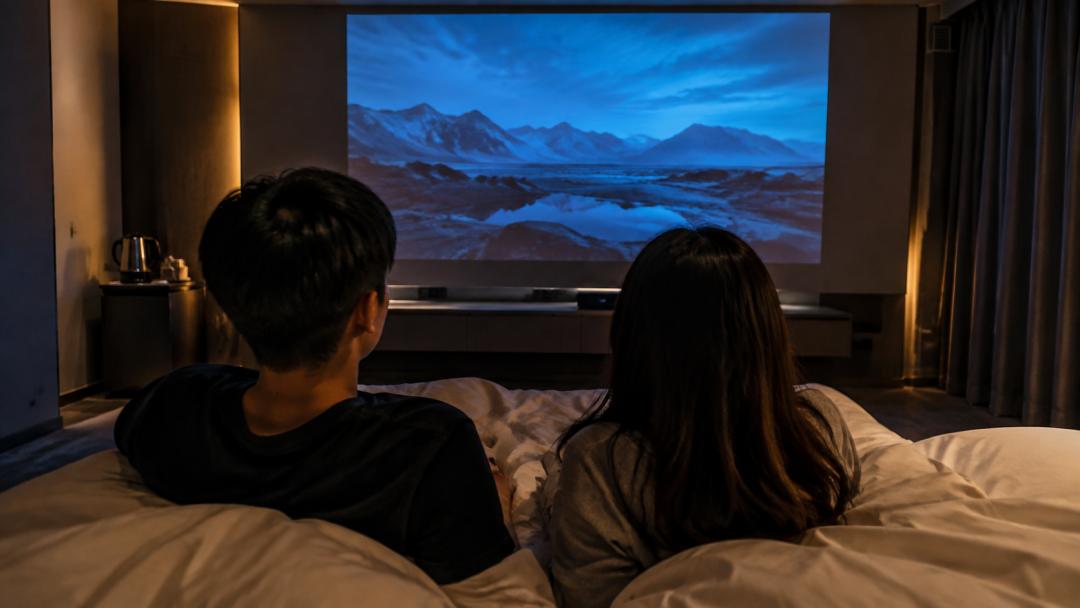
A few years later, the trend began to reverse. Cinemas have also set their sights on the sleep needs that hotels are most familiar with.
However, if hotels try to copy the 39.9-yuan monthly card model, it will be difficult to balance the accounts.
Cinemas can charge by the seat, but the smallest space that hotels can sell is a full guest room. Even if a guest only sleeps for half an hour, the room still needs to be checked after check-out, the used linen needs to be replaced, and the hygiene standards cannot be lowered just because the stay time is short.
Noon is the busiest period for hotel room turnover. The previous batch of guests usually checks out around 12:00, and the cleaning staff needs to finish cleaning before the afternoon check-in. Guests who come for midday naps also want to use the room from 12:00 to 14:00, which easily coincides with the peak period of concentrated check-out and room cleaning in hotels.
Therefore, hotels have not completely given up the midday business. Many outlets have long sold hourly rooms on OTA platforms, and some economy hotels have tried midday nap cards, but the price can hardly drop to the level of cinemas.
The 2000 yuan per month that cinemas earn is not scary. What is really worthy of hotels' attention is that more and more industries are beginning to learn to sell sleep services.
03
Cinemas are not the first non-hotel industry that has caught hotels' attention.
Many camper vans have long taken the ability to allow people to sleep inside as a standard configuration for their business. After the seats are reclined, the car windows automatically block light, and the air conditioner maintains a suitable temperature. The car for commuting then becomes a temporary lounge.

Massage parlors and barbershops in office buildings are also adjusting their products. The services that used to be charged by the full course have been shortened to 40 to 50 minutes suitable for midday use. Guests lie down to receive head massages, and many of them fall asleep before the service ends.
Sleep is leaving the traditional hotel guest room and becoming an urban service that can be purchased separately.
For hotels, there is not much point in competing with these non-hotel industries for low-price midday nap business.
In the final analysis, the cinema midday nap service makes hotels realize that the full set of services that used to be attached to the room rate can also be priced separately. Hotels do not have to wait for guests to book an overnight stay to make other spaces in the building generate revenue.
What is more worth learning from is their sales model after splitting the original complete service, so that they only retain the part that consumers need at the moment, and then sell it by shorter time units and smaller space units.
In fact, hotels can also adopt a divide-and-conquer strategy, no longer stuffing all sleep needs into overnight accommodation, and re-adjust the public spaces that have long-term low utilization rates.
For example, small meeting rooms can be converted into midday nap areas, with recliners that are easy to disinfect placed inside, and partitions are used to create private spaces. Guests do not need to use a full guest room, and hotels can also avoid linen consumption.
High-end hotels can include midday nap services in their daytime lifestyle products.
Guests living nearby can enter the hotel at noon, use the gym or SPA first, then take a short rest, and have a healthy light meal before leaving. The price will naturally be higher than that of cinemas, but it can give full play to the value of the hotel's existing facilities, and will not put the brand in the awkward position of low-price hourly rooms.
The customer acquisition method also needs to change accordingly. Midday nap services have strong regional attributes. Guests usually come from office buildings within a ten-minute walk, and few people will specifically take a taxi to sleep for half an hour. Instead of waiting for scattered guests to search, hotels may as well directly contact nearby enterprises and include midday nap packages in employee benefits.
Hotels located in industrial parks and large office buildings can also cooperate with property management, where enterprises purchase fixed quotas in advance. After the stable customer source is confirmed, the hotel can arrange available spaces, which will greatly reduce the operational pressure.
Of course, not all hotels are suitable for entering the midday nap market. If you affect the check-in of regular guests just to earn a little extra money, the revenue from midday nap services will soon be offset by complaints.
Looking back at that Shandong peer who claimed that he could not compete in the business, his calculation was actually correct.
But when more and more non-hotel industries start to accommodate the tired people in the city, if hotels still lock sleep services in guest rooms, their business will only become narrower and narrower.
This article is from the WeChat official account "Travel Business Review", Author: theodore Xishao, published with authorization from 36Kr.