If the plan remains unchanged, Lei Jun has to count on the two new car models to achieve monthly sales of 40,000 units.
"The cumulative deliveries of Xiaomi Auto have exceeded 800,000 units."
Two new Xiaomi Pengcheng models are set to launch tonight, and Lei Jun released a good-news announcement early in the morning to build momentum. Combined with previous announcements from Xiaomi Group, the total deliveries of new Xiaomi Auto units in 2024 and 2025 reached 547,927 units. Simple calculation shows that as of September 7, 2026, the deliveries of Xiaomi Auto are at the level of 250,000 to 260,000 units.
Relying on the two models Xiaomi SU7 and YU7 to achieve such results, especially in the increasingly competitive domestic auto market from January to August 2026, Xiaomi Auto has already demonstrated extremely strong competitiveness. After all, these two pure electric vehicles are positioned in the mid-to-high end market, targeting groups with a car purchase budget of at least 250,000 yuan.
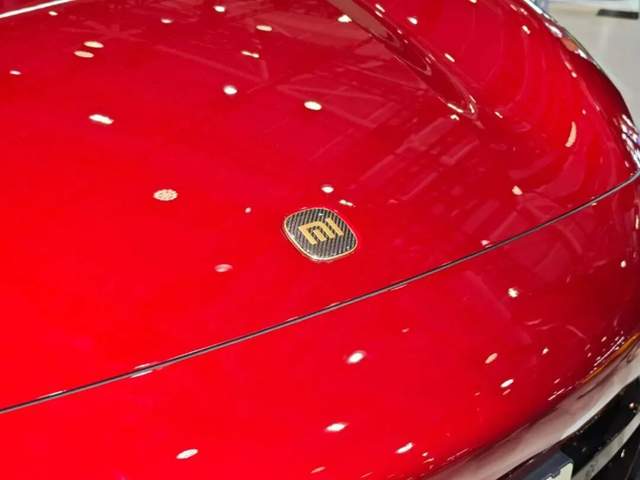
However, the domestic delivery target Lei Jun set at the beginning of this year is 550,000 units. In other words, if Xiaomi SU7 and YU7 continue the current average monthly sales of about 33,000 units from September to December, there will still be a gap of about 160,000 units for Xiaomi Auto to achieve its annual target.
This gap can only be filled by the two new Xiaomi Pengcheng models N70 and N90.
Compared with Xiaomi SU7 and YU7, Xiaomi Pengcheng N70 and N90 place more emphasis on family-oriented attributes, which means the target groups of these two new models are incremental users for Xiaomi Auto. With the target audience in place, the two Xiaomi Pengcheng models need to convert all potential users into car owners, and price is the key in this link.
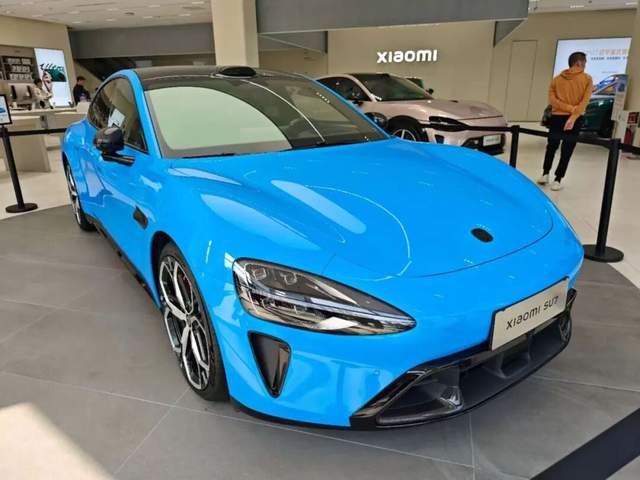
As of press time, only the two models Xiaomi Pengcheng N70 Max and N90 Max have announced their pre-sale prices, which are 259,900 yuan and 299,900 yuan respectively. Based on the model configurations and mainstream industry opinions, at the official launch event of the new models, the post-benefit starting price of Xiaomi Pengcheng N70 is expected to fall below 200,000 yuan, while Xiaomi Pengcheng N90 will become the "strict benchmark" for 9-series family SUVs in the industry in terms of cost performance.
If Xiaomi Pengcheng N70 can be purchased for less than 200,000 yuan, not to mention order conversion, at least the number of customers visiting stores to test and view the new car after its launch will not be worse than that of Xiaomi SU7 and YU7 in their launch period.
For Lei Jun and Xiaomi Auto, the two new Xiaomi Pengcheng models need to achieve a combined average monthly delivery of 40,000 units or even higher after launch, and the difficulty may lie more in production capacity.
Looking back at the production capacity ramp-up process of Xiaomi SU7 and YU7, although both models had their highlight moments of monthly deliveries exceeding 30,000 units, in the initial stage of delivery, both models took at least 2 months to reach the monthly delivery threshold of 10,000 units.
According to public information, the two new Xiaomi Pengcheng models will be produced at the Beijing Yizhuang Phase II factory and the Wuhan factory. The Tianyancha App shows that the annual production capacity planning of these two production bases is 150,000 units respectively. However, the Beijing Yizhuang Phase II factory also needs to arrange part of the production schedule for Xiaomi YU7, while the Wuhan factory may not reach full production capacity until 2027.
For reference, Goldman Sachs, an investment institution, once expected the full-year deliveries of Xiaomi Pengcheng in 2026 to be 110,000 units, while Deutsche Bank expected 70,000 to 100,000 units. It is worth mentioning that Lu Weibing, Partner of Xiaomi Group and President of the Group, said at the Q2 earnings call in August this year that the pre-order status of the two new Pengcheng models is better than the original internal expectation, and deliveries will start immediately after launch, "the delivery capability has been polished and improved much better than one or two years ago."
However, even if production capacity limits the deliveries of Xiaomi Pengcheng, it is expected that the arrival of the two new models will help Xiaomi Auto reverse the downward trend of gross profit margin.
According to the 2026 Q2 financial report of Xiaomi Group, the gross profit margin of the company's intelligent electric vehicle and AI innovation business segment during the reporting period was 19.2%, down more than 7 percentage points compared with the second quarter of 2025. In response, Xiaomi Group stated in the financial report that this was caused by the decline in the proportion of Xiaomi SU7 Ultra deliveries and the rise in prices of core components.
In addition, the average selling price of Xiaomi Auto has also dropped significantly. The financial report shows that the ASP (Average Selling Price) of Xiaomi's intelligent electric vehicles decreased by 9.6% from about 254,000 yuan per vehicle in the second quarter of 2025 to about 229,000 yuan per vehicle in the second quarter of 2026.
Looking back at the two new Xiaomi Pengcheng models, although their unit prices are certainly not comparable to the 500,000-yuan level Xiaomi SU7 Ultra, based on the relatively higher commonality rate of components, and the current market focus is all on N90 Max, the gross profit margin and even the average selling price of Xiaomi Auto are likely to stop falling and rebound.
"The range-extended system, electric drive system and chassis hardware of Xiaomi Pengcheng N70 and N90 are basically the same, plus the interior design is highly unified, which is different from SU7 and YU7 that have their own independent systems, so the amortization in R&D and production costs is more considerable. If most consumers tend to buy the higher-priced N90 Max or even the top trim version, the overall profit margin will actually be larger," a senior automotive engineer told Auto Source on September 7.
On the surface, it seems that Lei Jun and Xiaomi Auto's launch of the Pengcheng series is moving towards the direction of "high output and sufficient supply", but in fact this may be the key to returning to the momentum of simultaneous growth in sales volume and price.
Some pictures are cited from the Internet. Please notify us for deletion if there is any infringement.
This article is from the WeChat official account "Yuan Media", written by Pan Zhuolun, and published by 36Kr with authorization.