Frontline | The Freelander 8 is launched with a starting price of RMB 289,900, Jaguar Land Rover and Chery plan to rebuild a "global brand".
On September 3, FREELANDER's first mass-produced model, the FREELANDER 8, was officially launched.
The new vehicle starts at 289,900 yuan after applicable benefits, with the large 5-seat version priced from 289,900 yuan to 369,900 yuan and the large 6-seat version from 299,900 yuan to 379,900 yuan. Three trims are available in total: PRO, MAX and MAX+. Initial market feedback has been very positive: within 12 hours after launch, firm orders exceeded 5,000 units, and the 1,000-unit limited first-edition batch has been fully sold out.
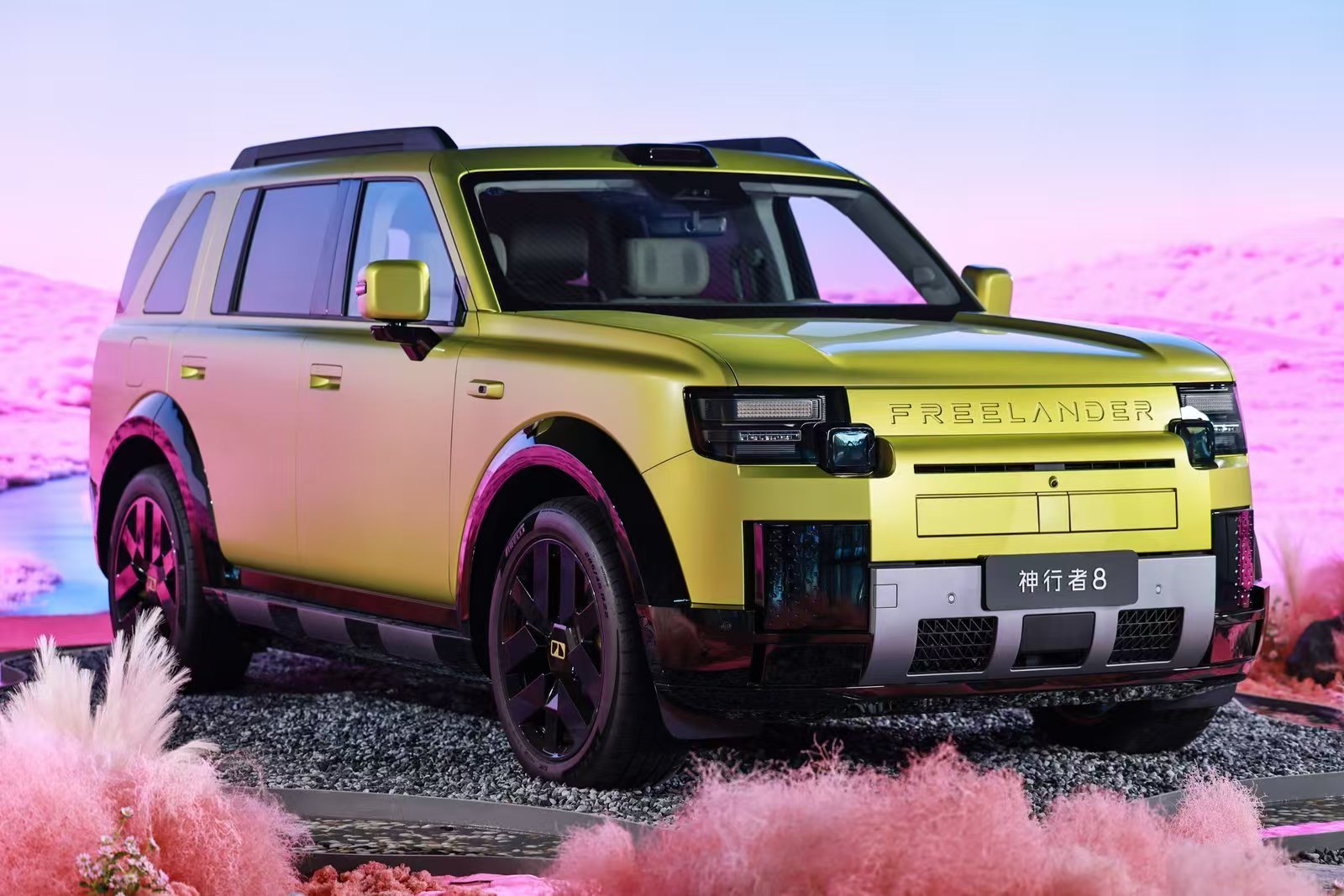
On-site shot of the FREELANDER 8
Compared with the pricing, the configuration strategy of the FREELANDER 8 is more noteworthy.
The new vehicle comes with 156 standard configurations across all trims, including an 800V high-voltage extended-range platform, dual-motor four-wheel drive, Huawei Qiankun ADS 5 intelligent driving system, Qualcomm Snapdragon 8397 automotive-grade chip, and 23-speaker Harman Kardon audio system, etc. The combined power of the dual motors reaches 610kW, enabling a 0-100km/h acceleration in 4.6 seconds, and a CLTC pure electric range of 310km.
This means the FREELANDER 8 does not follow the common configuration logic of new energy vehicles that "the entry-level trim lowers the price while the high-end trims deliver core capabilities". Instead, it adopts a high baseline configuration, directly turning the entry price of nearly 300,000 yuan into the main selling price range.
However, for the FREELANDER brand, the real problem to be solved is not whether the configuration is high enough, but what a new brand derived from Land Rover and operated by Chery Jaguar Land Rover can rely on to build its unique product identity.
The answer first lies in "all-terrain performance".
The FREELANDER 8 is equipped with a front mechanical differential lock, a digital energy central differential lock and a rear e-LSD electronic limited-slip differential, with a maximum wading depth of 900mm and a maximum ground clearance of 270mm. More importantly, it further intellectualizes Land Rover's past mechanically focused all-terrain capabilities: the i-ATS intelligent all-terrain system jointly calibrated with Huawei can scan and identify road conditions, and automatically adjust power output, suspension and locking status.
This is where the FREELANDER 8 tries to differentiate itself from a large number of current "box-style" new energy SUVs on the market.
Wen Fei, Global CEO of the FREELANDER brand, summarized its positioning as "Wander Freely, Ride Elegantly": on one hand, it inherits Land Rover's 78 years of accumulated all-terrain calibration experience and global database, on the other hand, it introduces suppliers including Huawei, ZF and Qualcomm to combine traditional mechanical capabilities with intelligent technologies. Its goal is not only to serve veteran off-road enthusiasts, but also to lower the usage threshold of all-terrain driving scenarios.
In other words, FREELANDER has not chosen to abandon Land Rover's most important brand asset in the new energy era. Instead, it tries to reinterpret it with electrification and intelligent technologies.
Behind this is Chery Jaguar Land Rover's larger strategic plan for FREELANDER — it is not a China-exclusive market-specific model, but a global brand initiative planned from the very beginning.
Wen Fei stated that the FREELANDER 8 is developed as a global model that needs to meet 9 major global safety regulation certifications. To enter more than 100 countries and markets around the world, the R&D team invested more than 1,000 test vehicles to conduct verification in different regions such as Northern Europe, Western Europe and South America, and then apply the data accumulated from global tests back to domestic product iterations.
This makes FREELANDER a rather special sample in the current Sino-foreign joint venture automotive industry: it is neither the traditional "foreign brand + made in China" model, nor a simple export of Chinese new energy technologies. Instead, it attempts to recombine Land Rover's accumulated brand equity, design capabilities and all-terrain expertise with China's mature new energy and intelligent supply chain.
At least starting from the FREELANDER 8, Chery Jaguar Land Rover wants to prove one thing: The value of Joint Venture 3.0 is to leverage China's automotive industry chain to recreate a brand that can go global.
However, Wen Fei also drew a clear realistic boundary for this ambition. FREELANDER is currently still operated by the Chery Jaguar Land Rover joint venture, with Chinese and foreign parties each holding a 50% stake, and it does not have the conditions for an independent listing at this stage. Compared with capital stories, he said that the more important task at present is to first do a good job in product development, delivery, user reputation and brand recognition, so as to achieve healthy operation of the joint venture.